
News
Grenada PM says Dangote Refinery will save Africa from being a Dumping Ground
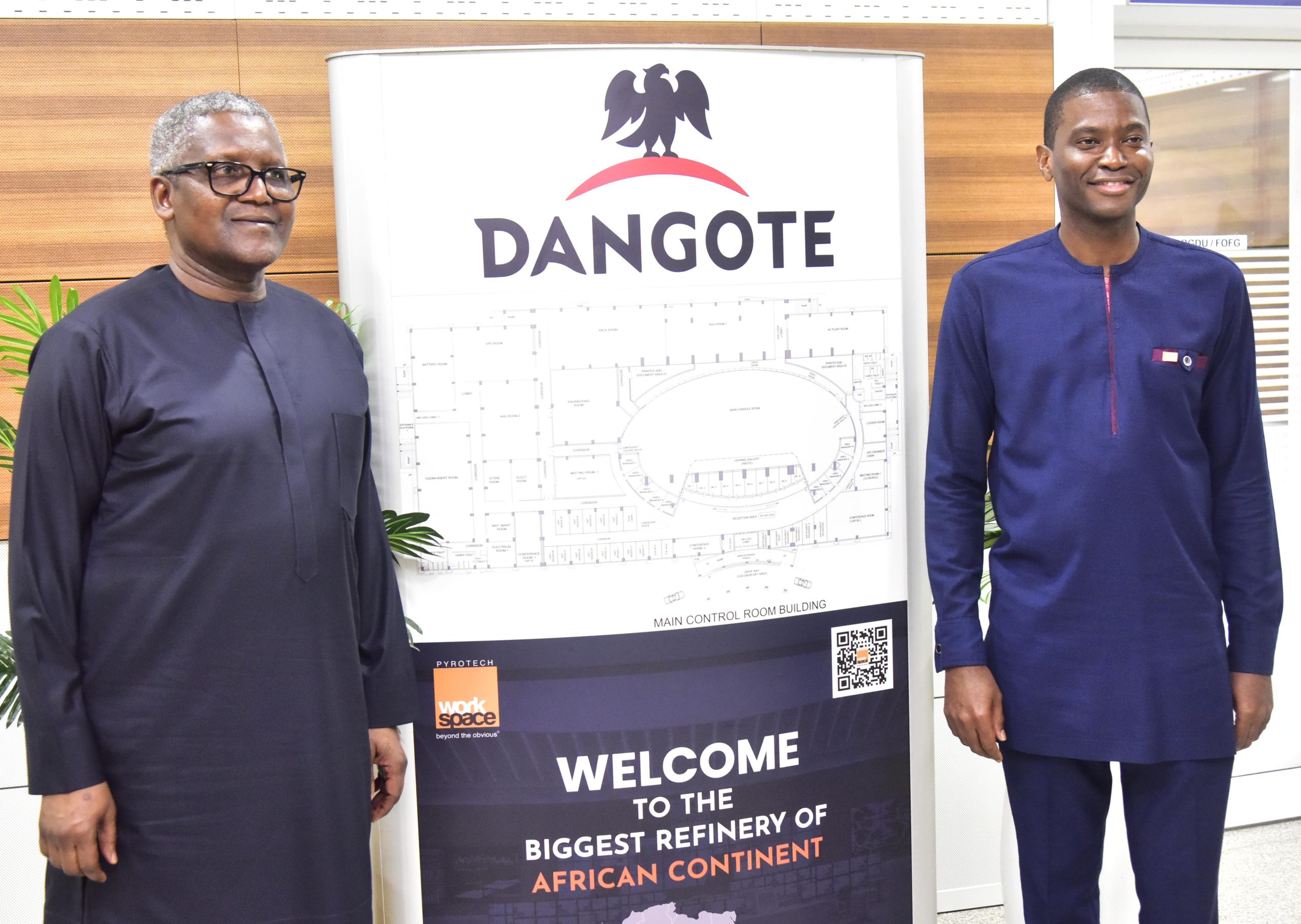
The Prime Minister of Grenada, Dickon Mitchell, has described the Dangote Petroleum Refinery and Petrochemicals as a significant investment in industrialisation and manufacturing needed by developing countries for their industrial growth.
He noted that it is through this type of investment that Africa and the developing countries can reverse the cycle of exporting raw materials while importing finished products from developed countries.
This is as Dangote hinted at potential partnerships with the Caribbean community in the production of cement and fertilisers as well as petroleum products.
Mitchell, who is the chairman of the Caribbean Community (CARICOM or CC) – a political and economic union of 15 member states and five associated members throughout the Americas, The Caribbean and Atlantic Ocean, disclosed this on Thursday during his tour of the Dangote Petroleum refinery and Petrochemicals complex in Ibeju Lekki, Lagos.
Mitchell said the investment is a tribute to the President of Dangote Group, Aliko Dangote and his vision not just for Nigeria but Africa as a whole.
“This investment is a tribute to Dangote and his remarkable vision. It is the first of its kind in Nigeria and Africa, symbolising what the developing world needs: significant investment in industrialisation and manufacturing. This is an incredible achievement and a testament to Mr. Dangote’s vision, not just for his company, but for Nigeria and Africa as a whole.
“Dangote exemplifies what an African leader should be. We need not just political leaders, but business leaders who are willing to invest in Africa, particularly in manufacturing and industrialisation. We must ensure that we don’t continue to export our raw materials to the developed world, where they can be turned into sophisticated products and sent back to us. We need to reverse that cycle; it is the only way to grow the wealth of Africa and the developing world. Additionally, we need to support this with training and invest in job opportunities,” he said.
Applauding the sophistication and automation at the refinery, the Prime Minister expressed optimism for Nigeria’s future, especially given the number of young Nigerians trained and working at both the refinery and fertiliser plants. The $20 billion refinery, the largest private investment in Africa, stands out for its team of young professionals, predominantly aged between 26 and 28, most of whom hold advanced degrees and were educated in Nigeria.
“It has been a wonderful experience to witness the shared skills, depth of sophistication, and automation here. Seeing so many bright young Nigerians, particularly in the laboratories, is truly inspiring. I believe this bodes well for the future development of Nigeria,” he added.
Mitchell stated that the Caribbean Community would be exploring partnership opportunities with the Dangote Group to enhance its economy.
“One of the reasons I am here is to pursue synergies and partnerships between the diaspora and Africa, particularly in areas such as the refinery, cement, and fertiliser. We believe there are fantastic opportunities to develop partnerships between the Caribbean and Africa,” he added.
On his part, Dangote described the visit as symbolic, noting that many Caribbean countries are beginning to discover crude oil and are exploring opportunities to build their own refineries. This would help them address the challenge of exporting crude while importing refined petroleum products at high costs.
“The visit shows that many countries are proud of what we have been able to achieve because a lot of countries have been unable to deliver their refineries. It shows their pride in seeing a Black person like them at the Caribbean, although I am from Nigeria, succeed. For them, this is a dream, especially as many Caribbean countries are beginning to discover oil but still depend largely on exporting crude while importing petroleum products, which is costlier than in America. Their dream is to set up a refinery—perhaps not of this size—but one that would cater to their people,” he said.
Africa’s wealthiest man emphasized that the company is looking for partnerships in the Caribbean not only in petroleum products but also in cement and fertilizer production. He mentioned ongoing discussions about importing crude from these countries while supplying them with refined products.
“There are numerous partnerships in place. He is not only the Prime Minister of Grenada but also the Chairman of the Caribbean Community (CARICOM). We are exploring collaboration in areas such as cement and petroleum, including the possibility of buying crude from them while selling some of our petroleum products to them. We already export to the U.S., Mexico, and other regions, so there is significant collaboration we are looking to develop between us and them,” he added.
The 650,000 barrels per day (bpd) Dangote Oil Refinery—the largest single-train refinery in the world—is designed to process a wide variety of crude oils, including those from Africa, the Middle East, and US Light Tight Oil. It conforms to Euro V specifications and is built to meet stringent standards set by the US Environmental Protection Agency (EPA), European emission norms, the Department of Petroleum Resources (DPR), and the African Refiners and Distributors Association (ARDA). The refinery has the capacity to satisfy 100% of Nigeria’s demand for petrol, diesel, kerosene, and aviation jet fuel, with additional surplus available for export.







News
ADC Rising: Salga hails influx of political heavyweights as a turning point for justice
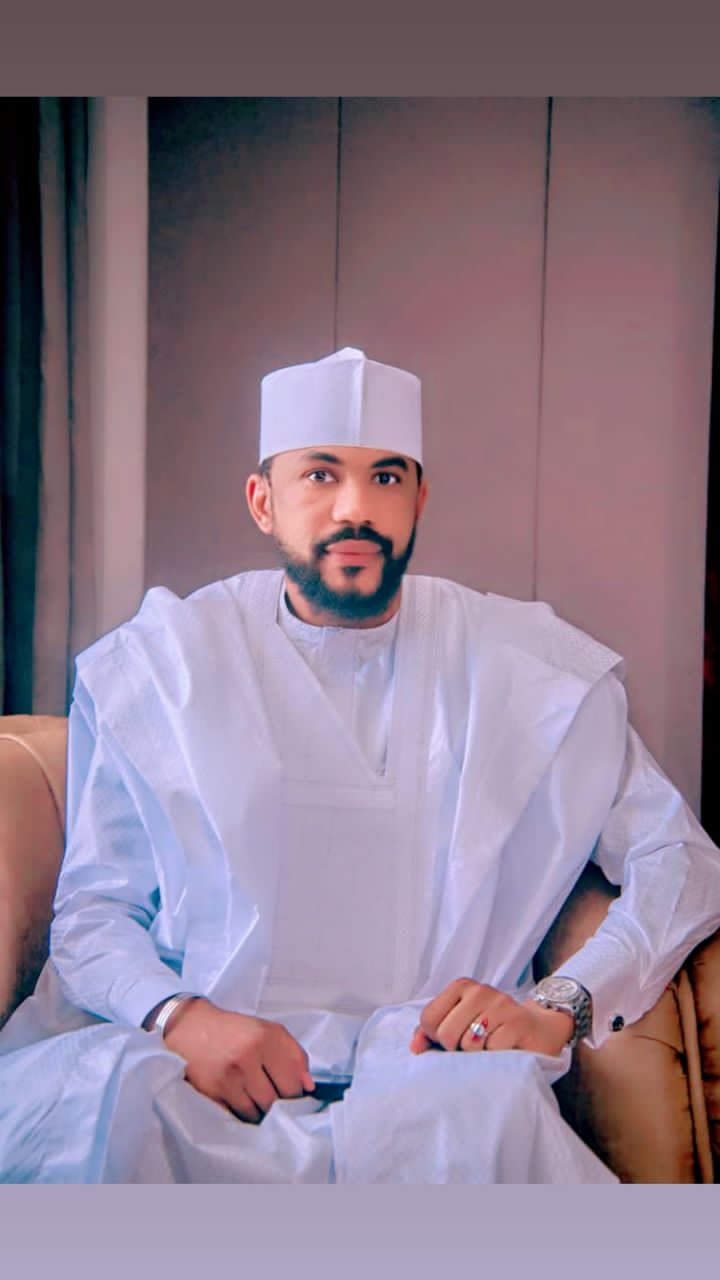
Ambassador Abdulrahman Mai Nasara Salga, a prominent ADC leader from Dala, Kano, has welcomed the influx of influential politicians into the party, describing it as a sign of ADC’s growing acceptance.
Salga, who contested for the federal legislature in Dala during the 2023 general election, says the party’s progress is heartening, having worked tirelessly to promote ADC’s agenda and position it as a viable alternative for good governance.
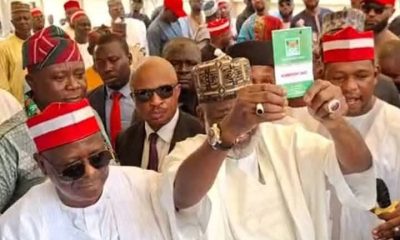
He highlights the entry of Kwankwasiyya leader Dr. Rabiu Musa Kwankwaso, former Kano State Deputy Governor Comrade Aminu Abdulsalam, and APC’s 2025 gubernatorial candidate Dr. Nasir Yusuf Gawuna, among others, as major boosts that are transforming ADC into a formidable opposition force.
Salga believes these developments signal a shift towards justice and better leadership in Kano and Nigeria. He urges party leaders, including Atiku Abubakar, Peter Obi, and Kwankwaso, to unite for success in 2027.
The ADC leader pledges continued efforts to promote the party’s ideals, expressing optimism for a brighter future with these influential additions.
News
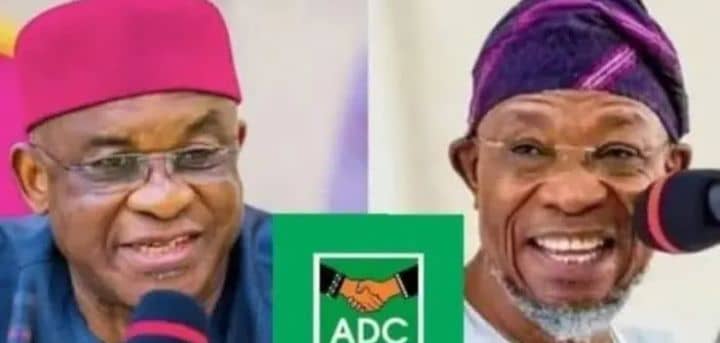
BREAKING: INEC Removes David Mark-Led NWC from Portal, Updates Records Amid ADC Leadership Crisis
By Yusuf Danjuma Yunusa
The Independent National Electoral Commission (INEC) has formally updated its official portal to reflect changes in the leadership of the African Democratic Congress (ADC), signaling the commission’s recognition of the leadership dispute within the party.
The commission confirmed that the removal of the National Working Committee (NWC) led by David Mark followed a detailed review of a recent Court of Appeal judgment and an ongoing suit at the Federal High Court in Abuja.
According to INEC, the decision comes after receiving conflicting legal representations from the two factions vying for control of the party. One faction, loyal to Nafiu Bala Gombe, urged the commission to enforce the appellate court’s ruling, which includes withdrawing recognition from the Mark-led NWC. The other faction, aligned with Mr. Mark, advised INEC against recognizing Mr. Gombe as acting national chairman, citing the pending legal proceedings.
The leadership crisis traces back to July 2025, when the ADC’s former leadership resigned, paving the way for a new executive committee headed by Mr. Mark. Mr. Gombe, a former vice-national chairman, has challenged this transition, arguing that the party’s constitution mandates his ascension to the leadership role.
In a ruling delivered on March 12, 2026, the Court of Appeal dismissed an interlocutory appeal filed by Mr. Mark. The court ordered all parties to maintain the status quo ante bellum—the state of affairs before the crisis—pending the resolution of the substantive suit at the Federal High Court.
News
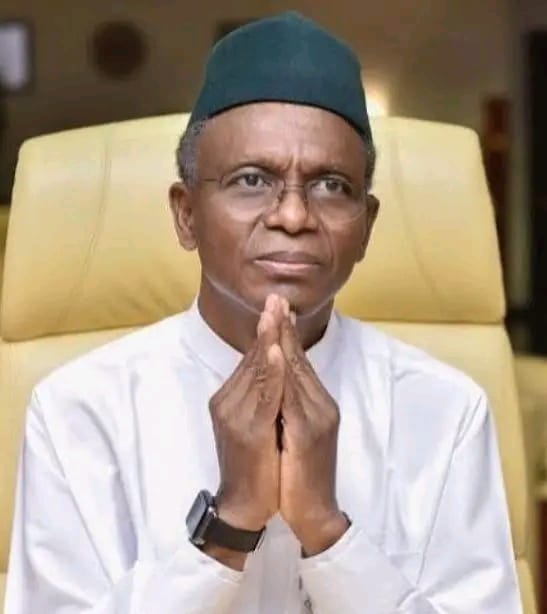
JUST IN: El-Rufai Detained as Bail Ruling Adjourned to April 14
By Yusuf Danjuma Yunusa
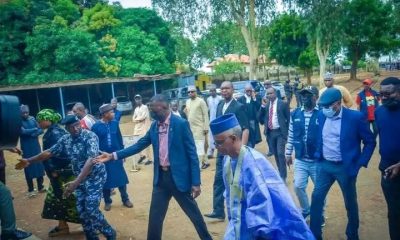
Operatives of the Department of State Services on Wednesday took former Kaduna State governor, Nasir El-Rufai, into custody moments after proceedings at the Federal High Court in Kaduna.
El-Rufai, standing trial over alleged corruption, had just concluded a hearing on his bail application filed by the Independent Corrupt Practices and Other Related Offences Commission when DSS operatives bundled him into a waiting vehicle and drove him away, reportedly heading to Abuja.
A heavy DSS presence around the court before the hearing had fuelled speculation that the former governor might be taken into custody.
Security sources said vehicles had been strategically positioned around the court prior to proceedings.
El-Rufai had arrived at the court at about 9:05 a.m. in a Hilux van, drawing attention from security personnel and observers.
Speaking to journalists after the proceedings, lead defence counsel, Oluwole Iyamu (SAN), confirmed that the court had fixed April 14 for ruling on the bail application.
“The bail application was argued and responded to, and the ruling has been fixed for April 14.
“We look forward to that day. We are hopeful. We have put our arguments before the court, and this is a court of justice.
“We await the decision of the court,” he added.
He also noted that the defence team is prepared for a related case scheduled for April 10 at the Federal High Court in Abuja, describing it as “a separate matter.”
“That is a separate matter. As lawyers, we are ready. We have filed all necessary processes and will be in court. That is the DSS matter,” he said.

ADC Rising: Salga hails influx of political heavyweights as a turning point for justice

BREAKING: INEC Removes David Mark-Led NWC from Portal, Updates Records Amid ADC Leadership Crisis

JUST IN: El-Rufai Detained as Bail Ruling Adjourned to April 14

Court Ends NNPP Crisis, Restores Party Leadership to Founder

Why Nura Manu Soro should be APC candidate in Bauchi State come 2027

Governor Abba Kabir Yusuf Holds Exclusive Prerogative to Choose Deputy – Malam Inuwa Waya

The Governor Who Chose His People Over His Politics: Abba Yusuf and the Moral Courage Behind Kano First
Restoring the Glory That Was Always There: Governor Abba Kabir Yusuf and the Historical Vision Behind Kano First

Tinubu to Swear in Olatunji Disu as Inspector-General of Police on Wednesday

NDLEA Clarifies: Drug Case Against Abba Kyari Still Active After Court Discharge
ADC Rising: Salga hails influx of political heavyweights as a turning point for justice
BREAKING: INEC Removes David Mark-Led NWC from Portal, Updates Records Amid ADC Leadership Crisis
JUST IN: El-Rufai Detained as Bail Ruling Adjourned to April 14
Court Ends NNPP Crisis, Restores Party Leadership to Founder
Why Nura Manu Soro should be APC candidate in Bauchi State come 2027
Governor Abba Kabir Yusuf Holds Exclusive Prerogative to Choose Deputy – Malam Inuwa Waya
The Governor Who Chose His People Over His Politics: Abba Yusuf and the Moral Courage Behind Kano First
Restoring the Glory That Was Always There: Governor Abba Kabir Yusuf and the Historical Vision Behind Kano First
Tinubu to Swear in Olatunji Disu as Inspector-General of Police on Wednesday
NDLEA Clarifies: Drug Case Against Abba Kyari Still Active After Court Discharge
-

 Opinion4 years ago
On The Kano Flyovers And Public Perception
-

 Features5 years ago
How I Became A Multimillionaire In Nigeria – Hadiza Gabon
-

 Opinion5 years ago
Kano As future Headquarters Of Poverty In Nigeria
-

 History5 years ago
Sheikh Adam Abdullahi Al-Ilory (1917-1992):Nigeria’s Islamic Scholar Who Wrote Over 100 Books And Journals
-

 Opinion4 years ago
My First Encounter with Nasiru Gawuna, the Humble Deputy Governor
-

 History5 years ago
The Origin Of “Mammy Market” In Army Barracks (Mammy Ochefu)
-

 History4 years ago
The History Of Borno State Governor Professor Babagana Umara Zulum
-

 News4 years ago
Federal University Of Technology Babura To Commence Academic Activities September