
News
FIFA World Cup 26 ticket: Nigeria football federation begs for spiritual help
By Abdulgafar Oladimeji
Nigeria Football Federation, NFF has resort to seeking spiritual assistance to rescue the ailing world cup qualifying campaign , so far mounted by the Super Eagles.
The president of the federation, Ibrahim Gusau has sent a passionate appeal to spiritual leaders to help the federation look up to heaven in search of redemption from the looming possibilities of Nigeria missing out from the next edition of the largest global football party.
Recall that Nigeria failed to show up for the prestigious football party at the immediate past edition of the senior men’s world cup hosted in Qatar.
Gusau speaking in Kano last Saturday night at the Kano state Football Association , KSFA awards nite had admitted that the Super Eagles of Nigeria were struggling in the chase for the sole FIFA world cup ticket , available in CAF qualifiers group C.
The NFF honcho directly appealed to the chairman, council of Ulamas, Kano state, Shiekh Ibrahim Khaleel, who graced the night to kindly and urgently present his request to the body of spiritual leaders in Kano and beyond seeking for their spiritual assistance to save the worrisome situation.
He said, it is not in doubt that , Nigeria’s national team is struggling in the world cup qualifier series , adding that at this time Nigeria’s world cup 26 fate is in dire need for prayers.
He noted that, the federation is not resting on its oars in doing the needful to get the team to fly Nigeria’s flag at the FIFA world 26, however he appealed to sheikh Khaleel to help the federation solicit for spiritual support from his clergy peers.
Nigeria is currently occupying 6th position in CAF group C, with 3 points from 4 matches, Rwanda is top on the group with 7 points from 4 matches been fiercely chased by Bafana Bafana of South Africa also with 7 points from 4 matches.
Benin republic is placed third on the group with 7 points from 4 matches, Lesotho is 4th place on the log with 5 points from 4 matches, Nigeria is 5th placed with 3 points from 4 matches, while Zimbabwe occupies the bottom of the table with two points from 4 matches.
The FIFA World cup 26 is the 23rd edition , it is the first in the quadrennial competition’s history that will be featuring 48 teams and the first to be co hosted by three countries, namely Canada, Mexico and USA.








News
El-Rufai’s Bail Hearing Adjourned to Wednesday as Security Tightens Around Kaduna Court
By Yusuf Danjuma Yunusa
The Federal High Court in Kaduna has adjourned the bail hearing for former Governor Nasir El-Rufai until Wednesday, March 31. Justice Rilwanu scheduled the new date after hearing arguments from both the defense and prosecution.
El-Rufai was arraigned by the Independent Corrupt Practices and Other Related Offences Commission (ICPC) on a 10-count charge involving the alleged conversion of public property and money laundering. The former governor pleaded not guilty to all charges.
In a separate case, El-Rufai also appeared before a Kaduna State High Court on charges of abuse of office, fraud, and intent to commit fraud. The ICPC filed charge number KDH/KAD/ICPC/01/26 against him and one other defendant, Amadu Sule, from the Kaduna State Development Agency (LEDA).
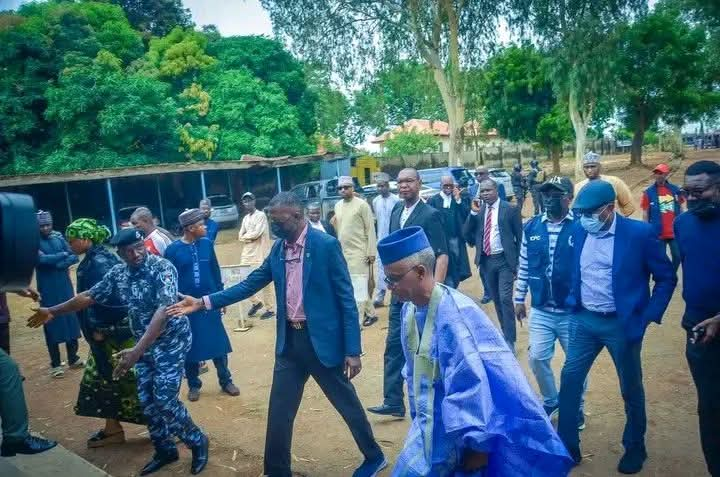
According to the News Agency of Nigeria, El-Rufai arrived at the Federal High Court premises at approximately 9:40 a.m. in the company of ICPC officers.
Security was heightened across the Kaduna metropolis ahead of the proceedings. Armed personnel from the police, the Department of State Services (DSS), and the Kaduna State Vigilance Service were deployed to strategic locations. Access to the court was restricted to accredited journalists and court officials, though media representatives were barred from entering the courtroom to cover the proceedings.
Counsel for El-Rufai, Abdul Adamu, declined to comment after the session, stating only that the case “has been adjourned till tomorrow.”
News
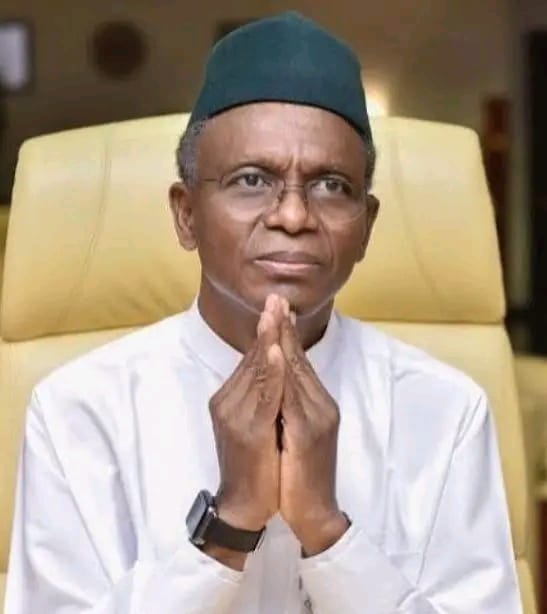
El-Rufai Taken Back To Custody
By Yusuf Danjuma Yunusa
The ICPC and DSS operatives, after the court session on Tuesday, 31 March, have taken Mallam Nasir El-Rufai with them to Abuja, a move which has raised questions about the status of his administrative bail.
The journey to Abuja followed his appearance at the Federal High Court, Kaduna, which was scheduled to hear his application for bail. The court adjourned to tomorrow, 1 April 2026, after the prosecution said it had just filed its counter affidavit.
He had been released on administrative bail on Friday following the death of his mother. Sources say that he was granted bail for 14 days. He hosted the fidau prayers for his mother yesterday in Abuja before proceeding to Kaduna for today’s court sessions. The latest development indicates that the bail has been revoked.
Mallam El-Rufai has first appeared this morning at the Kaduna State High Court. The absence of the second defendant stalled the hearing which was then adjourned to 10 April 2026.
News
Eight Kano Rep Members Abandon NNPP for APC
By Yusuf Danjuma Yunusa
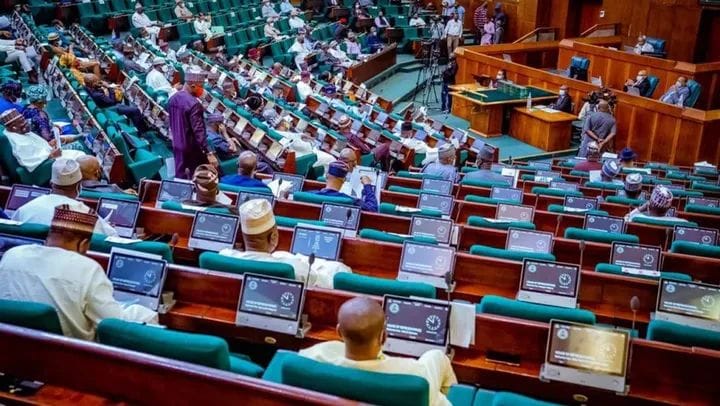
In a dramatic political realignment, eight members of the House of Representatives from Kano State formally defected from the New Nigeria Peoples Party (NNPP) to the ruling All Progressives Congress (APC) on Tuesday.
The mass defection, which signals a significant shift in the political dynamics of Nigeria’s most populous state, was announced during plenary at the Green Chamber. The move represents a major blow to the NNPP, which controls the Kano State Government House, and a substantial boost for the APC as it consolidates its federal influence.
The announcement drew a high-profile audience, underscoring the political weight of the development. Among those present to witness the defection were Kano State Governor Abba Kabir Yusuf, a prominent figure in the NNPP; Deputy Senate President Barau Jibrin; and former Kano governor Abdullahi Umar Ganduje, who now serves as a national leader of the APC. Their presence highlighted the escalating political contest for control and influence in the state.
Political analysts view the defection as a major realignment ahead of future electoral contests. For the APC, the addition of eight federal lawmakers strengthens its numerical standing in the House and deepens its foothold in a state where the NNPP had mounted a formidable challenge in the 2023 elections.
The lawmakers have yet to publicly detail their reasons for leaving the NNPP, but the coordinated switch points to intensifying factional battles and strategic maneuvering within Kano’s political landscape. The development is expected to further polarize the state’s political environment as both parties position themselves for the next electoral cycle.

El-Rufai’s Bail Hearing Adjourned to Wednesday as Security Tightens Around Kaduna Court

El-Rufai Taken Back To Custody

Eight Kano Rep Members Abandon NNPP for APC

Governor Abba Kabir Yusuf Holds Exclusive Prerogative to Choose Deputy – Malam Inuwa Waya

ADC Reports Surge in Membership Following Kwankwaso’s Defection, Calls Him ‘Game Changer’

The Governor Who Chose His People Over His Politics: Abba Yusuf and the Moral Courage Behind Kano First

FREEDOM OF SPEECH, NOT FREEDOM FROM CONSEQUENCE: A CITIZEN’S CALL FOR RESPONSIBLE PUBLIC COMMENTARY
Restoring the Glory That Was Always There: Governor Abba Kabir Yusuf and the Historical Vision Behind Kano First

Tinubu to Swear in Olatunji Disu as Inspector-General of Police on Wednesday

NDLEA Clarifies: Drug Case Against Abba Kyari Still Active After Court Discharge
El-Rufai’s Bail Hearing Adjourned to Wednesday as Security Tightens Around Kaduna Court
El-Rufai Taken Back To Custody
Eight Kano Rep Members Abandon NNPP for APC
Governor Abba Kabir Yusuf Holds Exclusive Prerogative to Choose Deputy – Malam Inuwa Waya
ADC Reports Surge in Membership Following Kwankwaso’s Defection, Calls Him ‘Game Changer’
The Governor Who Chose His People Over His Politics: Abba Yusuf and the Moral Courage Behind Kano First
FREEDOM OF SPEECH, NOT FREEDOM FROM CONSEQUENCE: A CITIZEN’S CALL FOR RESPONSIBLE PUBLIC COMMENTARY
Restoring the Glory That Was Always There: Governor Abba Kabir Yusuf and the Historical Vision Behind Kano First
Tinubu to Swear in Olatunji Disu as Inspector-General of Police on Wednesday
NDLEA Clarifies: Drug Case Against Abba Kyari Still Active After Court Discharge
-

 Opinion4 years ago
On The Kano Flyovers And Public Perception
-

 Features5 years ago
How I Became A Multimillionaire In Nigeria – Hadiza Gabon
-

 Opinion5 years ago
Kano As future Headquarters Of Poverty In Nigeria
-

 History5 years ago
Sheikh Adam Abdullahi Al-Ilory (1917-1992):Nigeria’s Islamic Scholar Who Wrote Over 100 Books And Journals
-

 Opinion4 years ago
My First Encounter with Nasiru Gawuna, the Humble Deputy Governor
-

 History5 years ago
The Origin Of “Mammy Market” In Army Barracks (Mammy Ochefu)
-

 History4 years ago
The History Of Borno State Governor Professor Babagana Umara Zulum
-

 News4 years ago
Federal University Of Technology Babura To Commence Academic Activities September