
News
Nigerian Police Grill FIJ Board Of Trustees Chair, Declare Award-winning Journalist, Fisayo Soyombo Wanted

FIJ recently exposed irregularities in the country’s customs service personnel and the invitation could be connected to that.
The Nigeria Police Force has asked the Foundation for Investigative Journalism (FIJ) Board of Trustees, Bukky Shonibare to produce the medium executive director and editor-in-chief, Fisayo Soyombo.
FIJ recently exposed irregularities in the country’s customs service personnel and the invitation could be connected to that.
Mrs Shonibare mentioned this while narrating what she faced when she honoured the initial invitation by the police in Abuja on the same matter, FIJ reports.
According to her, ‘Fisayo is willing to honour the police invitation if invited and clarified that the award-winning journalist is not on the run as assumed by the police.
She said, “The investigator closed his iPad, put his hands on the table and said, well we need to speak to ‘Fisayo. You need to produce ‘Fisayo. So I said, if he said I need to produce ‘Fisayo, that sounds like you have tried to get ‘Fisayo or you’ve invited him and he did not come, so you need me, in whatever capacity, to go and produce him.
“So, I had to clarify that ‘Fisayo was not on the run; it is not like they had invited him and he didn’t come. So, he asked when I could come with ‘Fisayo. I asked if he was inviting me again. He said, yes, but I had to return with ‘Fisayo.
“So, I told him we have to get back to ‘Fisayo and to know when he’ll be available to come, and when he’s around; ‘Fisayo is not running. He took the statement in and came back outside and asked us to come see the deputy director. He had exited at some point into the questioning.
“So, they took us in and he said, madam, how was it? I told him that questions were asked, and questions were answered. He asked if I was treated well, and I said that was subjective. He then said that he could see we were being careful and all of that, that we could be friends. He was doing everything possible to be nice and playful.
“He asked why FIJ was not like another specific non-profit organisation.
“The deputy director said that he was friends with this non-profit organisation. He said that they would go to do their research and bring the information to the police. ‘So, why are we publishing our work?’ he asked. ‘Why don’t we bring some findings to them and settle things amicably?’
“I told him that FIJ is the Foundation for Investigative Journalism. That’s the work that we do. We’re not another befriending non-profit bringing stories to them. We don’t work that way. Our job is to publish stories.”








News
Nigeria’s Power Supply to Improve in Two Weeks as Gas Pipeline Work Nears Completion
By Yusuf Danjuma Yunusa
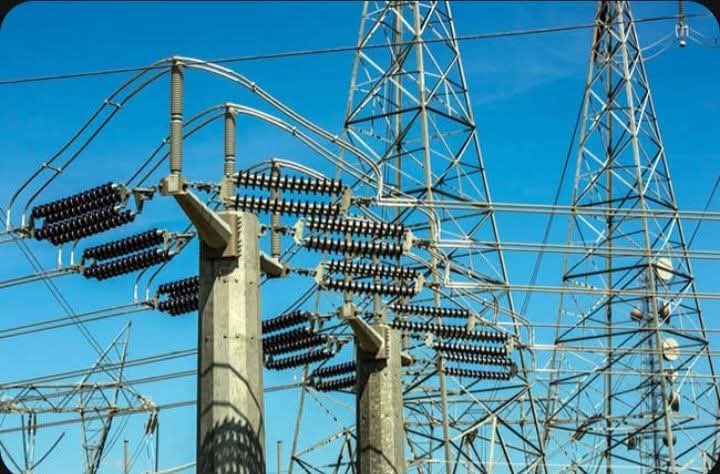
Nigerians can expect a steady improvement in electricity supply within the next two weeks, following the completion of maintenance work on a critical gas pipeline, according to Adebayo Olowoniyi, Chief Technical Adviser to the Minister of Power.
Speaking during an appearance on Arise TV on Thursday, Olowoniyi addressed the recent nationwide blackouts that have disrupted homes, businesses, and industries. His remarks came just days after the Minister of Power, Adebayo Adelabu, issued a public apology over the worsening power situation.
Olowoniyi defended the minister’s apology, framing it not as an admission of personal failure but as a demonstration of accountability. “I think, first of all, I’d like to start with the apology from the Honourable Minister, which we believe is all about taking leadership in the sector,” he said.
“It is not necessarily directly his fault for the challenges that we have, but as the Minister of Power, it was the right leadership step to say, ‘I take ownership of this issue, and I’m going to prefer a solution that would ensure power supply comes back in the shortest available time.'”
The adviser attributed the recent grid instability to disruptions in a major gas pipeline, which supplies fuel to power plants responsible for approximately 75 per cent of the nation’s electricity generation.
“One of the major gas pipelines in Nigeria was undergoing maintenance, and gradually that process is being completed,” Olowoniyi explained. “We’re sure that within the next two weeks, full gas pressure will be back on the gas pipelines, and the power plants will be able to get enough gas at least to go back to their level of generation that they had in the last two to three months.”
News
Court Orders Arrest of PDP Factional Chairman Kabiru Turaki for Skipping Trial
By Yusuf Danjuma Yunusa
A High Court in the Federal Capital Territory (FCT) has issued a bench warrant for the arrest of Kabiru Turaki, a factional national chairman of the Peoples Democratic Party (PDP), following his failure to appear before the court.
Justice U.P. Kekemeke issued the warrant on Thursday, ruling that the former minister had provided no valid justification for his absence from the proceedings.
The warrant stems from a one-count charge filed against Turaki by the Inspector-General of Police (IGP). The charge alleges that Turaki provided false information to the police in a petition dated October 2022.
News
Youth Call on Ibrahim Little to Contest for Kano Governorship Under ADC
The Kano Youth Concern Initiative has called on ADC chieftain Ibrahim Ali Amin Little to declare his intention to contest for the Kano State governorship under the platform of the African Democratic Congress (ADC).
The group made this known in a statement issued on Thursday, signed by its Chairman, Comrade Abubakar Junaid Binoni, and its Secretary, Saidu Muhammad Ahmad.
According to Binoni, it is high time the ADC chieftain stepped forward to contest for the governorship in order to salvage Kano from the grip of entrenched political godfathers who, in their view, have hindered the state’s progress.
“It is only an independent-minded leader with courage and vision that can drive rapid economic development in Kano, widely regarded as Nigeria’s commercial nerve centre,” Binoni stated.
He further emphasized that Little’s strong background in the private sector sets him apart from previous governors of the state, many of whom were largely career civil servants with limited exposure to private enterprise and, in some cases, products of political godfatherism.
“Ibrahim Ali Amin Little possesses the administrative competence, business acumen, and strategic thinking required to reposition Kano for sustainable growth. His experience in the private sector gives him a practical understanding of job creation, investment attraction, and economic diversification—qualities that are critical for a modern and thriving Kano State,” he added.
The group also noted that Little’s longstanding interest in serving the state, dating back over a decade, reflects a deep sense of patriotism, resilience, and commitment to the welfare of the people.
“His passion and consistent efforts toward the governorship over the years demonstrate that his ambition is driven not by personal gain, but by a genuine desire to uphold the integrity and advance the interests of the people of Kano,” the statement read.
They expressed confidence that under Little’s leadership, Kano could witness significant transformation in key sectors such as commerce, infrastructure, youth empowerment, and industrial development, ultimately restoring the state’s status as a leading economic hub in Nigeria.
The group concluded by urging him to heed the call of the youth and formally declare his intention, stressing that they would not hesitate to explore all legitimate means to compel him to do so if he fails to respond.
“We strongly believe that the future of Kano depends on visionary leadership, and Ibrahim Ali Amin Little has what it takes to lead the state to greater heights,” Binoni said.

Nigeria’s Power Supply to Improve in Two Weeks as Gas Pipeline Work Nears Completion

Court Orders Arrest of PDP Factional Chairman Kabiru Turaki for Skipping Trial

Youth Call on Ibrahim Little to Contest for Kano Governorship Under ADC

Attacks on the media: IPI Nigeria urges President Tinubu to call Governor Bago to order.

Governor Yusuf Sacks Sagagi as Kano Commissioner Of Commerce

The Governor Who Chose His People Over His Politics: Abba Yusuf and the Moral Courage Behind Kano First

FREEDOM OF SPEECH, NOT FREEDOM FROM CONSEQUENCE: A CITIZEN’S CALL FOR RESPONSIBLE PUBLIC COMMENTARY

How Kano Government Official Allegedly Intimidate And Insult Two Journalists On Lawful Duty

Press Freedom: IPI Nigeria Calls on New Acting IGP to End Police Harassment of Journalists
Tinubu to Swear in Olatunji Disu as Inspector-General of Police on Wednesday
Nigeria’s Power Supply to Improve in Two Weeks as Gas Pipeline Work Nears Completion
Court Orders Arrest of PDP Factional Chairman Kabiru Turaki for Skipping Trial
Youth Call on Ibrahim Little to Contest for Kano Governorship Under ADC
Attacks on the media: IPI Nigeria urges President Tinubu to call Governor Bago to order.
Governor Yusuf Sacks Sagagi as Kano Commissioner Of Commerce
The Governor Who Chose His People Over His Politics: Abba Yusuf and the Moral Courage Behind Kano First
FREEDOM OF SPEECH, NOT FREEDOM FROM CONSEQUENCE: A CITIZEN’S CALL FOR RESPONSIBLE PUBLIC COMMENTARY
How Kano Government Official Allegedly Intimidate And Insult Two Journalists On Lawful Duty
Press Freedom: IPI Nigeria Calls on New Acting IGP to End Police Harassment of Journalists
Tinubu to Swear in Olatunji Disu as Inspector-General of Police on Wednesday
-

 Opinion4 years ago
On The Kano Flyovers And Public Perception
-

 Features5 years ago
How I Became A Multimillionaire In Nigeria – Hadiza Gabon
-

 Opinion5 years ago
Kano As future Headquarters Of Poverty In Nigeria
-

 History5 years ago
Sheikh Adam Abdullahi Al-Ilory (1917-1992):Nigeria’s Islamic Scholar Who Wrote Over 100 Books And Journals
-

 Opinion4 years ago
My First Encounter with Nasiru Gawuna, the Humble Deputy Governor
-

 History5 years ago
The Origin Of “Mammy Market” In Army Barracks (Mammy Ochefu)
-

 History4 years ago
The History Of Borno State Governor Professor Babagana Umara Zulum
-

 News4 years ago
Federal University Of Technology Babura To Commence Academic Activities September