
News
PenCom Does Not Give Loans to Federal Government, says DG
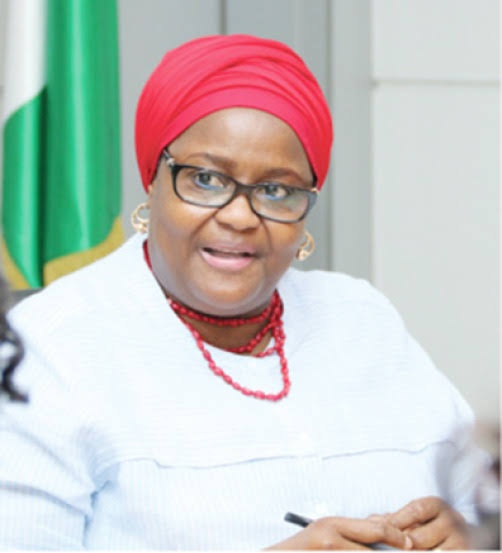
Mrs. Aisha Dahir-Umar, the Director General of National Pension Commission (PenCom), has described as “totally misleading” widespread reports that the Commission gave a N10 trillion loan to the Federal Government.
She also responded to claims that PenCom was owing Federal Government retirees arrears of pensions as well as insinuations that Pension Fund Administrators (PFAs) are not fulfilling their obligations to retirees with regards to access to their retirement savings.
Mrs. Dahir-Umar, in a media interview at the weekend, said apart from the fact that PenCom is not a bank and does not warehouse or manage pension funds, the Federal Government did not take a loan of N10 trillion from the Commission.
“Investments by the PFAs in the securities of the Federal Government of Nigeria (FGN) are not loans as erroneously portrayed, but investments in securities, through bonds and treasury bills, as approved by the relevant government agencies, in this case the Debt Management Office (DMO) and Securities and Exchange Commission (SEC). They are traded on authorized capital markets. That is, the Nigerian Exchange Limited and FMDQ OTC Securities Exchange,” she explained.
“Moreover, pension fund assets are not managed by PenCom. I have said it repeatedly that when we say pension assets have grown to N15 trillion, that does not mean PenCom has N15 trillion locked somewhere in its office or bank accounts. Pension fund assets are managed by the licensed PFAs and held in custody by the licensed Pension Fund Custodians (PFCs). The PFAs are responsible for investing pension fund assets in allowable asset classes, including FGN debts instruments. The objectives are safety and fair returns. All these are in line with the provisions of the enabling law, the Pension Reform Act 2014, and the rules issued by the Commission. It is obvious from the above that what is referred to ‘loan to FGN’ is just investment in FGN securities by the PFAs, as is done by other institutional investors such as banks, insurance companies, asset managers, etc.”
Mrs. Dahir-Umar added that it is an international best practice to invest in investible instruments issued or backed by the sovereign authority and that the FGN securities meet the objectives of safety and fair returns.
“The FGN has consistently met its repayment obligations, both principal amount and accrued interest, for all investments in bonds and T-bills to all investors including pension funds. The information is always in the open and accessible on our website, www.pencom.gov.ng,” she said.
The PenCom DG further clarified claims about outstanding benefits to Federal Government retirees.
“The delayed payment of retirement benefits to some Federal Government retirees and deceased employees is because of the inadequate and delayed funding for the payment of Accrued Pension Rights for those who were in service before the Contributory Pension Scheme (CPS) was introduced when PenCom was established in 2004,” she said.
“Payment of the accrued rights is subject to release of funds by the Federal Government. So, it is beyond the powers of the Commission. However, we have been engaging the Federal Ministry of Finance for more funds to be released to settle these liabilities, but it is not a secret that the government itself has budgetary constraints.”
She said all those enrolled under the CPS have been receiving their benefits through their PFAs and there is no unsolved complaint before the Commission.








News
JUST IN: Adelabu Resigns as Power Minister to Pursue Oyo Governorship Bid
By Yusuf Danjuma Yunusa
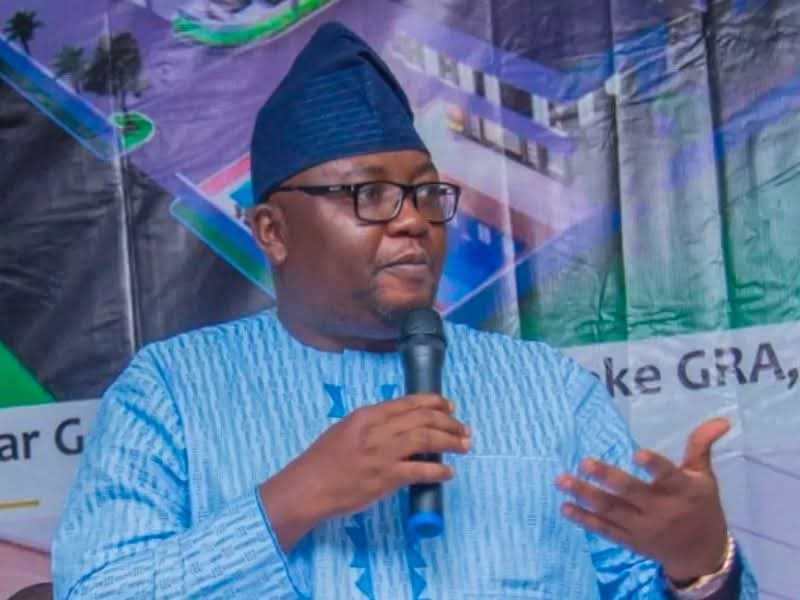
The Minister of Power, Adebayo Adelabu, has resigned his appointment to focus on his governorship ambition in Oyo State.
Adelabu disclosed this in a resignation letter addressed to the President Bola Ahmed Tinubu on Tuesday, and routed through the Secretary to the Government of the Federation.
In the letter titled “Resignation as Honourable Minister of Power”, Adelabu expressed gratitude to the President for the opportunity to serve in his administration.
He said it was a privilege to contribute to efforts aimed at strengthening Nigeria’s power sector in line with the administration’s Renewed Hope Agenda.
Adelabu added that his decision to step down was to enable him fully pursue his aspiration to contest for the office of Governor of Oyo State.
He noted that the move would allow him to dedicate his time and resources to the political ambition.
The former minister also conveyed his appreciation and respect to the President for the confidence reposed in him during his tenure.
News
After Kwankwaso Joins ADC, Party Alleges Plot by APC, Senior Lawyers to Force INEC Into Illegal Takeover
By Yusuf Danjuma Yunusa
The African Democratic Congress (ADC) has alleged that the All Progressives Congress (APC)-led federal government is mounting pressure on the Independent National Electoral Commission (INEC) to interfere in the party’s leadership affairs, following the defection of Senator Rabiu Musa Kwankwaso to its ranks.
In a statement issued on Tuesday, the ADC claimed that a coordinated effort is underway to compel INEC Chairman, Professor Joash Ojo Amupitan (SAN), to invalidate party actions and alter its leadership structure before courts have ruled on pending disputes.
According to Mallam Bolaji Abdullahi, the party’s National Publicity Secretary, a letter dated March 28, 2026, written by a team of Senior Advocates of Nigeria, is being used to pressure the electoral commission. The letter reportedly seeks to enforce a particular interpretation of a Court of Appeal ruling regarding “status quo ante bellum” — a legal principle referring to the restoration of a prior state of affairs.
The ADC said the legal representatives went as far as threatening the INEC chairman with arrest should he fail to accede to their request within seven days.
“The authors of this vexatious letter are attempting to pressure INEC to take sides and grant them what no court in Nigeria has granted,” Abdullahi said in the statement.
The party dismissed claims by Hon. Nafiu Bala Gombe, whom it described as an expelled former member, asserting that he was never the party’s chairman and had previously resigned his position.
“What we are witnessing is a convergence of legal pressure and political intent by a ruling party that is unsettled by the growing appeal of the ADC,” Abdullahi added.
The ADC described itself as “the only viable opposition party left in the country” and vowed to resist what it called a “grand plan” to destabilise its leadership using all constitutional means.
Kwankwaso, a former governor of Kano State and presidential candidate of the New Nigeria Peoples Party (NNPP) in the 2023 general election, recently defected to the ADC — a move the party claims has unsettled ruling party officials.
The ADC called on INEC to remain guided by the constitution and resist pressure, stating that the matter “is bigger than the ADC” and concerns whether Nigerians can freely choose an alternative political path.
News
Steron community development through football competition kicks off in Kano
By Abdulgafar Oladimeji
The Kano edition of the Steron national community development through football competition , on Tuesday flagged off in all the wards in across the 15 metropolitan local governments in Kano .
The football competition sponsored by Steron Community Development Foundation will feature grass root football clubs drawn from the wards .
The managing director, Steron Resources International, Abubakar Sadiq Omar briefing sports writers in Kano last Monday, said the major motives behind the football competition is use football as a vehicle to empower Nigerian youths.
According to him, the Steron football project is borne as part of the company’s Cooperate Social Responsibility , CSR with the set out target to assist the youths to achieve their football dreams , saying it is also to make life more meaningful to the future population of Nigerians.
The Managing director , who was represented by the head of the foundation, Mr Musa Mohammed said “ we recognize the power of football as a very strong national unifier and tool for empowerment.
“we hosted similar competitions in other parts of the country, now we are in Kano , Kano is going to be exceptional.
“it is going to be exceptional because, we have invited football scouts to come and watch the matches, so that they can identify those players with exceptional talent, then we can proceed to help them pursue their professional football development.
Mohammed further said that “throughout the duration of the competition, we will be offering free medical services to players, coaches, back room staff, referees and football fans.”
Kano state Football Association, KSFA described the Steron football project as a comprehensive package that would touch all spheres in the pursuit of football development in the state.
The chairman KSFA youths competition committee,, Hassan Garo , spoke on the behalf of the state FA disclosed that the football competition kicks off , March 31st and runs through the first week of April 2026.
He stated that the tournament is an open competition without age restrictions, explaining that this is to allow talented players within all age ranges to showcase their football qualities
He said, however ,players who have featured in any level in either of the national major football leagues are exempted from taking part in the tourney.
In his words “ the tournament will start at the wards level centres, the winners at the wards will proceed to compete to produce the local government champion, then each local government champion will now compete to determine the overall champion.
“our joy at the FA knows no bound, because all the clubs have reasons to celebrate the coming of Steron, once you make it to the local government level you will get consolatory prizes
“meaning that if you advance from the ward stages to the local government you will not go home empty handed, also the scouts will be here to scout for talents.
“the opening match in the inter local government phase, which will involve the clubs that qualified from each local government will be played at Sani Abach stadium.
“The remaining matches at this level of the matches will be played at Mahaha ports complex, the final matches will return to be played at Sani Abach stadium.
He disclosed that provisions have been made for adequate security presence , adding that the state FA has prioritize the essence to make the competition an entertaining event.
He added that the media will be given a pivotal role to bring to Kano living rooms, live reports of the matches .
Garo stressed that “we are not leaving anything to chance, we want to see more private entities like Steron come into the game, either for communal purposes like this one or for commercial purposes, therefore we will always live up to expectations.
He enjoined Kano fans and football stakeholders to grab the opportunity been offered by the sponsors in the area of medical outreach to improve their well being.
Our correspondent reports that, the matches have kicked off in the designated ward centres across the state.

JUST IN: Adelabu Resigns as Power Minister to Pursue Oyo Governorship Bid

After Kwankwaso Joins ADC, Party Alleges Plot by APC, Senior Lawyers to Force INEC Into Illegal Takeover

Steron community development through football competition kicks off in Kano

Kano Ex-Deputy Governor Gawuna Joins ADC After Resignation from APC

JUST IN: Senate Approves Tinubu’s $6 Billion Loan Request

The Governor Who Chose His People Over His Politics: Abba Yusuf and the Moral Courage Behind Kano First

FREEDOM OF SPEECH, NOT FREEDOM FROM CONSEQUENCE: A CITIZEN’S CALL FOR RESPONSIBLE PUBLIC COMMENTARY
Restoring the Glory That Was Always There: Governor Abba Kabir Yusuf and the Historical Vision Behind Kano First

Tinubu to Swear in Olatunji Disu as Inspector-General of Police on Wednesday

NDLEA Clarifies: Drug Case Against Abba Kyari Still Active After Court Discharge
JUST IN: Adelabu Resigns as Power Minister to Pursue Oyo Governorship Bid
After Kwankwaso Joins ADC, Party Alleges Plot by APC, Senior Lawyers to Force INEC Into Illegal Takeover
Steron community development through football competition kicks off in Kano
Kano Ex-Deputy Governor Gawuna Joins ADC After Resignation from APC
JUST IN: Senate Approves Tinubu’s $6 Billion Loan Request
The Governor Who Chose His People Over His Politics: Abba Yusuf and the Moral Courage Behind Kano First
FREEDOM OF SPEECH, NOT FREEDOM FROM CONSEQUENCE: A CITIZEN’S CALL FOR RESPONSIBLE PUBLIC COMMENTARY
Restoring the Glory That Was Always There: Governor Abba Kabir Yusuf and the Historical Vision Behind Kano First
Tinubu to Swear in Olatunji Disu as Inspector-General of Police on Wednesday
NDLEA Clarifies: Drug Case Against Abba Kyari Still Active After Court Discharge
-

 Opinion4 years ago
On The Kano Flyovers And Public Perception
-

 Features5 years ago
How I Became A Multimillionaire In Nigeria – Hadiza Gabon
-

 Opinion5 years ago
Kano As future Headquarters Of Poverty In Nigeria
-

 History5 years ago
Sheikh Adam Abdullahi Al-Ilory (1917-1992):Nigeria’s Islamic Scholar Who Wrote Over 100 Books And Journals
-

 Opinion4 years ago
My First Encounter with Nasiru Gawuna, the Humble Deputy Governor
-

 History5 years ago
The Origin Of “Mammy Market” In Army Barracks (Mammy Ochefu)
-

 History4 years ago
The History Of Borno State Governor Professor Babagana Umara Zulum
-

 News4 years ago
Federal University Of Technology Babura To Commence Academic Activities September