
News
Asia Arab Investment LLC and Federal Ministry of Transportation Partners to Digitize Nigerian Transportation Databank Project

In a groundbreaking endeavour to propel Nigeria’s transportation sector into the digital age, Asia Arab Investment LLC has forged a strategic alliance with the Federal Ministry of Transportation Nigeria. The collaboration aims to revolutionize the country’s transportation operations by investing in cutting-edge technologies that will generate real-time data from the system, marking a significant leap towards digitalization in line with the Renewed Hope Agenda of President Bola Ahmed Tinubu’s administration.
The visit to the headquarters of Asia Arab Investment LLC in Egypt, by the Nigerian Minister of Transportation, Sen Said Alkali and his team marked a pivotal moment in Nigeria’s pursuit of technological advancement in the transportation domain by finalizing discussions on the deployment of advanced technologies. The focus was on creating a digital ecosystem capable of generating real-time data from the transportation system.
The primary objective of this partnership is to harness state-of-the-art technologies to digitize and modernize the operations of Nigeria’s transportation system. By leveraging real-time data generated through these technologies, the initiative seeks to enhance operational efficiency, optimize resource allocation, and facilitate informed decision-making across the entire transport network.
Representative of Asia Arab Investment LLC, Hisham Ridwan expressed their unwavering commitment to deploying their technological expertise and resources to support the digital transformation of Nigeria’s transportation operations. They emphasized the potential of the partnership to drive substantial improvements in data generation and utilization, ultimately benefitting the government, industry stakeholders, and the public at large.
The Federal Ministry of Transportation Nigeria has hailed the collaboration as a pivotal step towards realizing the country’s vision for a digitally-driven transportation sector. The Ministry envisions that the infusion of advanced technologies will not only modernize operations but also lay the foundation for a data-centric governance framework, fostering sustainable progress and innovation in the transport industry.
As the partnership progresses, stakeholders anticipate a transformative impact on Nigeria’s transportation landscape, with the initiative poised to set new benchmarks for digital innovation and operational excellence.
The partnership between Asia Arab Investment LLC and the Federal Ministry of Transportation Nigeria signifies a significant stride in Nigeria’s journey towards a technologically advanced and data-rich transportation ecosystem, marking a pivotal transition towards a digitalized future for the nation’s transport infrastructure.











News
2027: ALKALANCI Mobilises Women Religious Leaders Against Fake News, Disinformation
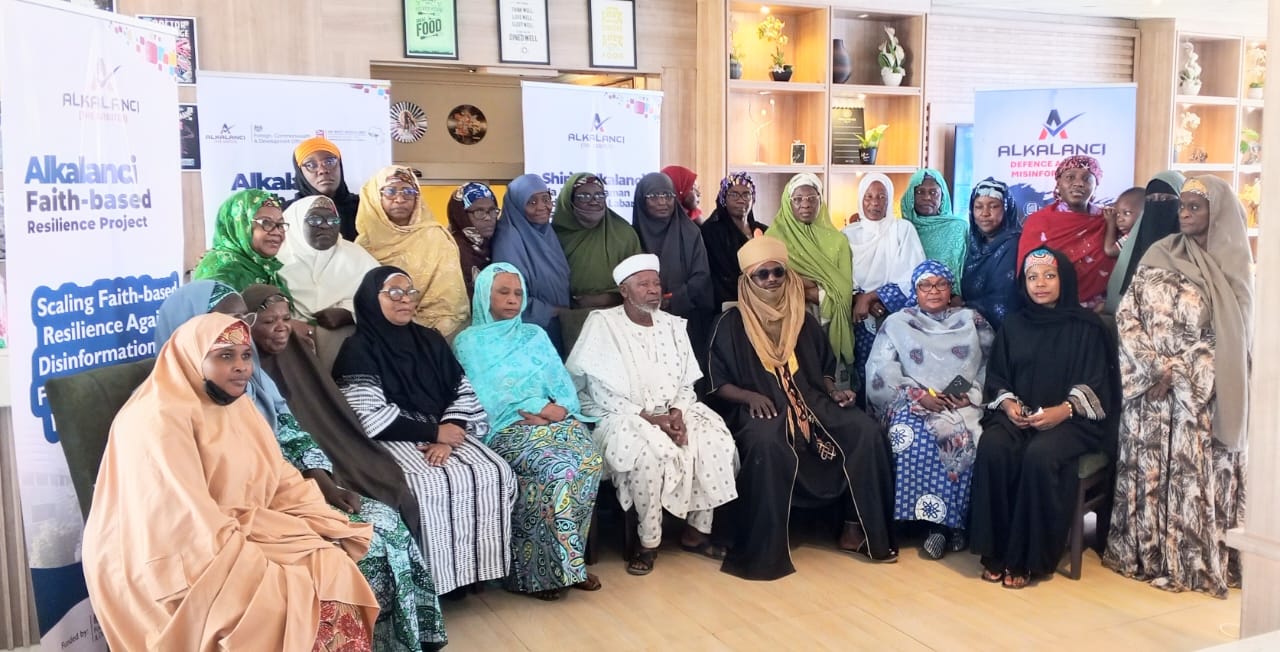
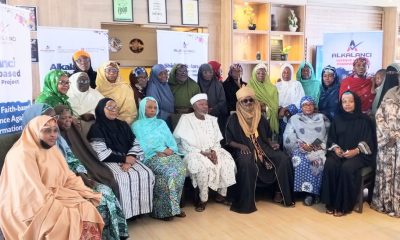
The ALKALANCI Faith-Based Resilience Project has organised a two-day capacity-building workshop for women religious leaders in Kano to equip them with the skills to identify, verify and prevent the spread of misinformation, disinformation and fake news ahead of the 2027 general elections.
The workshop, funded by the United Kingdom Government through the FCDO/ISF West Africa, was designed to strengthen community resilience against false information and promote responsible information sharing, particularly within religious and community settings.
The organisers said women religious leaders were targeted because of their significant influence in society, especially their roles in guiding families, shaping public opinion, communicating religious values and influencing decisions within their communities.
Speaking during an interview with journalists, Victoria, Programme Manager of ALKALANCI, said the initiative was aimed at strengthening the capacity of religious leaders to navigate the rapidly evolving information environment.
She explained that the widespread availability of mobile phones and internet access had transformed the information landscape, making it possible for virtually anyone to generate and circulate information, unlike in the past when traditional media organisations largely controlled information dissemination through established editorial and gatekeeping procedures.
According to her, the challenge is that many people do not possess the necessary knowledge and skills to distinguish credible information from false narratives, a development she said had contributed to misinformation with serious consequences, including health complications, loss of lives and communal conflicts.
Victoria said ALKALANCI, which operates in the fact-checking and information integrity sector, recognised that fact-checking organisations alone could not debunk false information at the same speed it spreads, making community participation critical to addressing the problem.
She explained that religious leaders were considered strategic partners because of the trust they enjoy within their communities and their ability to transmit knowledge acquired during the training to a wider audience.
She added that the workshop adopted a train-the-trainer approach, under which participants would not only benefit from the sessions but also educate other members of their communities on how to identify, question and reject misleading information.
Victoria further explained that the timing of the programme was deliberate, considering the significant role misinformation and disinformation have played in electoral processes in Nigeria and other countries.
She, however, clarified that the objective was not necessarily to prevent people from creating false information but to build what she described as information “inoculation”, where members of the public would develop the ability to recognise misleading content, reject it and avoid acting on it, irrespective of the source.
On his part, Alhassan Bala, Editor of the ALKALANCI fact-checking platform, urged Nigerians to cultivate the habit of critically examining information, establishing its accuracy and verifying its source before sharing it across social media platforms and other communication channels.
Bala said the women religious leaders would be equipped with critical-thinking skills to assess information received or intended for circulation before taking decisions or transmitting it to members of their communities.
He also cautioned journalists against allowing the pressure to break news ahead of competitors to undermine professional ethics and standards, insisting that every piece of information must be subjected to proper scrutiny and verification before publication.
According to him, the publication of unverified breaking news could undermine the credibility and integrity of media organisations that audiences have trusted over the years.
“As somebody is trying to break the news, he may end up breaking the organisation’s integrity,” Bala cautioned.
He maintained that journalists must resist the temptation to publish unverified reports, regardless of the pressure to be the first to inform the public.
The ALKALANCI editor also called on media organisations, including newspapers, online news platforms and television stations, to establish dedicated fact-checking desks to scrutinise information before publication or broadcast.
He recommended that media organisations that lack the resources to establish such units should strengthen partnerships and collaboration with independent fact-checking organisations to ensure that information disseminated to the public is accurate and credible.
In his remarks, the Chairman of the Nigerian Council of Ulama, Kano State Chapter, Sheikh Ibrahim Khalil, represented by Sheikh Abubakar Ibrahim Tofa, underscored the importance of information verification, citing Islamic teachings that discourage the spread of unsubstantiated reports.
Tofa specifically referred to Surah Al-Hujurat, verse 6 of the Holy Qur’an, which directs believers to verify information brought to them before acting on it to avoid causing harm to others out of ignorance.
He assured the ALKALANCI Faith-Based Resilience Project of the Kano State Council of Ulama’s readiness to support initiatives aimed at addressing misinformation, disinformation and the spread of fake news.
Similarly, the Emir of Kano, Khalifa Muhammad Sanusi II, represented by Adam Auwal Mudi Yakasai, representing the District Head of Rimin Gado, welcomed the initiative, describing the training as timely in view of the growing challenges associated with the circulation of false information.
He also assured the ALKALANCI fact-checking project of the Kano State Emirate Council’s support for efforts to promote information integrity and discourage the spread of misinformation and disinformation.
The two-day workshop brought together women religious leaders and other stakeholders for sessions on information verification, critical thinking, responsible communication and the dangers of circulating unsubstantiated claims.
The organisers expressed the expectation that participants would use the knowledge acquired to promote information integrity, particularly at the grassroots, and strengthen public awareness against the manipulation of information ahead of the 2027 general elections.
News
Just In: Court Nullifies Atiku’s Candidacy ,David Mark’s ADC Leadership

A federal high court in Abuja has nullified the leadership of the African Democratic Congress (ADC) led by David Mark.
In a judgment delivered on Thursday, Peter Lifu, presiding judge, declared the Mark-led caretaker committee illegal, ruling in favour of Nafiu Bala Gombe, a former national deputy chairman (north-east) of the party.
Lifu also invalidated all decisions taken by the party’s caretaker committee, including the nomination of Atiku Abubakar as the ADC presidential candidate for the 2027 election.
News
President Tinubu Departs Jeddah for Abuja After Completing Umrah
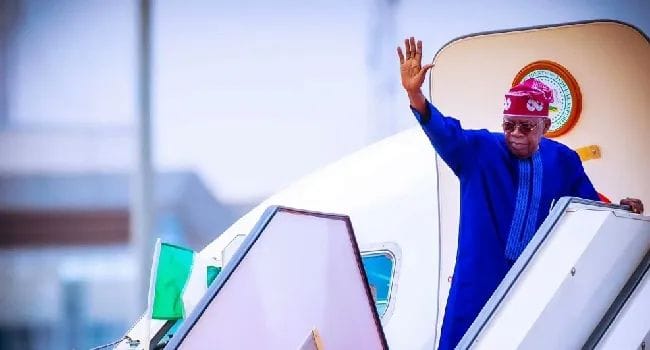
By Yusuf Danjuma Yunusa
President Bola Ahmed Tinubu, on Wednesday, departed from King Abdulaziz International Airport in Jeddah, Saudi Arabia, for Abuja, following the successful completion of his Umrah pilgrimage in the holy city of Makkah.
Accompanying Mr Tinubu to the airport were the Deputy Governor of the Makkah Region, Saud bin Mishaal bin Abdulaziz Al Saud; Nigeria’s Ambassador to Saudi Arabia, Yakubu Gambo and the Consul-General, Muazam Ibrahim Nayaya.
Before Mr Tinubu’s departure, he had a brief meeting with Mr Mishaal bin Abdulaziz Al Saud at the Royal Guest Palace at the airport.
While in Saudi Arabia, Mr Tinubu, alongside members of the Nigerian delegation, performed the Umrah rites, including circumambulating the Holy Ka’aba. On Sunday, Mr Tinubu was granted the rare privilege of entering the sacred structure, where he and members of his delegation performed two raka’at prayers.
Mr Tinubu expressed his gratitude to the Custodian of the Two Holy Mosques, King Salman bin Abdulaziz Al Saud and Crown Prince Mohammed bin Salman for the special courtesies and hospitality extended to him and the Nigerian delegation, particularly the privilege of accessing the Holy Ka’aba to offer prayers.
Members of Bola Ahmed Tinubu, on Wednesday, departed from King Abdulaziz International Airport in Jeddah, Saudi Arabia, for Abuja, following the successful entourage included the National Security Adviser, Nuhu Ribadu, and the governors of Sokoto, Jigawa, Kaduna, Borno and Yobe states, among others.

2027: ALKALANCI Mobilises Women Religious Leaders Against Fake News, Disinformation

Just In: Court Nullifies Atiku’s Candidacy ,David Mark’s ADC Leadership

President Tinubu Departs Jeddah for Abuja After Completing Umrah

2027: Atiku Kicks off Campaign in Sokoto

Abdul El-Sayed Becomes First Muslim Senator in U.S.

Kano Monitors ₦48.9bn Projects Across Six LGAs

Kano Spends ₦10.36bn on Hospitality, Sitting Allowances, Others in Six Months

Open The Social Sciences “A Tribute to a Heterodox Scholar: Mallam Ibrahim Muazzam

Senate Passes Barau’s Bill to Provide Legal Framework for Yusuf Maitama Sule Federal University of Education, Kano
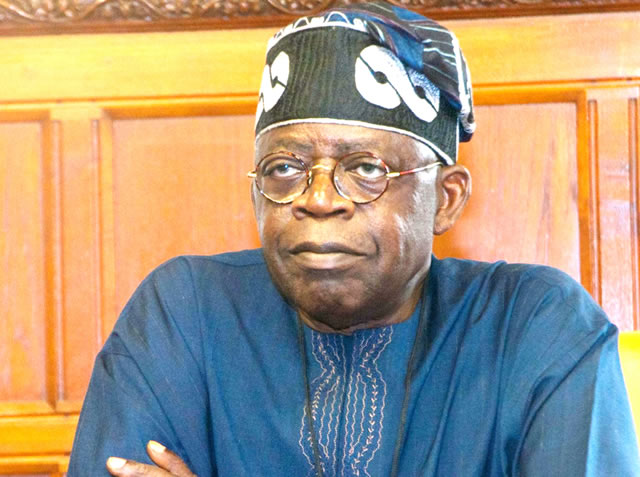
OPEN LETTER TO HIS EXCELLENCY, MR. PRESIDENT BOLA AHMED TINUBU, GCFR PRESIDENT AND COMMANDER-IN-CHIEF OF THE FEDERAL REPUBLIC OF NIGERIA
2027: ALKALANCI Mobilises Women Religious Leaders Against Fake News, Disinformation
Just In: Court Nullifies Atiku’s Candidacy ,David Mark’s ADC Leadership
President Tinubu Departs Jeddah for Abuja After Completing Umrah
2027: Atiku Kicks off Campaign in Sokoto
Abdul El-Sayed Becomes First Muslim Senator in U.S.
Kano Monitors ₦48.9bn Projects Across Six LGAs
Kano Spends ₦10.36bn on Hospitality, Sitting Allowances, Others in Six Months
Open The Social Sciences “A Tribute to a Heterodox Scholar: Mallam Ibrahim Muazzam
Senate Passes Barau’s Bill to Provide Legal Framework for Yusuf Maitama Sule Federal University of Education, Kano
OPEN LETTER TO HIS EXCELLENCY, MR. PRESIDENT BOLA AHMED TINUBU, GCFR PRESIDENT AND COMMANDER-IN-CHIEF OF THE FEDERAL REPUBLIC OF NIGERIA
-

 Opinion5 years ago
On The Kano Flyovers And Public Perception
-

 Features5 years ago
How I Became A Multimillionaire In Nigeria – Hadiza Gabon
-

 Opinion6 years ago
Kano As future Headquarters Of Poverty In Nigeria
-
 History6 years ago
Sheikh Adam Abdullahi Al-Ilory (1917-1992):Nigeria’s Islamic Scholar Who Wrote Over 100 Books And Journals
-

 Opinion5 years ago
My First Encounter with Nasiru Gawuna, the Humble Deputy Governor
-
 History5 years ago
The History Of Borno State Governor Professor Babagana Umara Zulum
-

 History6 years ago
The Origin Of “Mammy Market” In Army Barracks (Mammy Ochefu)
-
 News5 years ago
Federal University Of Technology Babura To Commence Academic Activities September