
News
Breaking:Alleged N109bn Fraud, Court Revokes Ex-AGF Bail
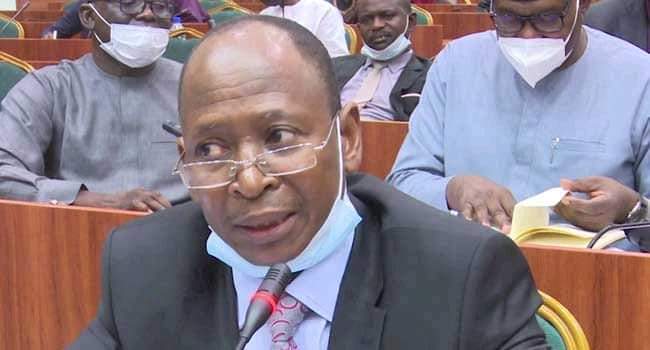
Justice Yusuf Halilu of an FCT, Maitama, Abuja, on Tuesday revoked the bail earlier granted a former Accountant-General of the Federation, Ahmed Idris and one of the defendants in the trial of over an alleged fraudulent diversion of public fund to the tune of N109.5 Billion
The defendant, Geoffrey Olusegun Akindele’s bail was revoked by the judge following his non-appearance in court for continuation of trial.
Mr Akindele, who is the second defendant in the case marked, CR/199/2022, and Idris are standing trial alongside Mohammed Kudu Usman and Gezawa Commodity Market and Exchange Limited.
The Economic and financial crimes commission, EFCC, dragged them to court on a 14-count charge bordering on stealing, fraudulent diversion of public fund to the tune of N109.5 billion.
Idris, among others, was alleged to have between February and December 2021, while being a public servant by virtue of his position as Accountant-General of the Federation accepted from Olusegun Akindele, the second defendant, a gratification of the aggregate sum of N15, 136, 221, 921.46, which was converted to dollars equivalent by Akindele.
The money, according to the prosecution, did not form part of Idris’s remuneration but a motive for accelerating the payment of 13% derivation to nine oil producing states in the federation through the Office of the Accountant-General of the Federation.
EFCC alleged they thereby committed an offence contrary to Section 155 of the Penal Code Act Cap 533 Laws of the Federation of Nigeria 1990 and punishable under the same section.
Messrs Idris and Akindele, who was Technical Assistant to the Accountant-General of the Federation, were accused of committing criminal breach of trust while being entrusted with certain property, to wit N84,390,000,000 between Feb. and Nov. 2021 by dishonestly receiving the said amount from the Federal Government through Godfrey Olusegun Akindele, trading under the name and style of Olusegun Akindele & Co.
By this, according to EFCC, the first and second defendants were alleged to have committed an offence punishable under Section 315 of the Penal Code Act Cap 532 Laws of the Federation of Nigeria.
The defendants, however, pleaded not guilty to the charges preferred against them by the anti-corruption commission.
At the resumed hearing of the matter on Tuesday, Mr Akindele was absent in court as of the time the case was called, though Idris and Usman were in court.
Despite pleas by counsel for Mr Akindele, S.E. Adino that his client was on the way to court, submitting that he (Akindele) has always been in court to face trial, Justice Halilu insisted on revoking the second defendant’s bail.
The judge held that after listening to what Adino said, when a court grants a defendant bail, such person must reciprocate the gesture by attending court for trial.
He added that, Mr Akindele had clearly not shown good character and conduct by his refusal to attend court.
”The second defendant had abuse the terms of his bail.”
Mr Halilu subsequently revoked his bail and ordered the FCT Commissioner of Police and the EFCC to arrest Mr Akindele and produce him in court in the next adjourned date.
He then adjourned the case until February 1, 2024 for definite hearing.
Earlier, the prosecuting counsel, Oluwaleke Atolagbe, had informed the court that the prosecution received a letter from counsel for Idris and did not receive any from the counsel for Gezawa Commodity Market and Exchange Limited.
Mr Atolagbe said despite the fact that there were competent lawyers in the office of Idris’ lawyer, none of them announced appearance for the former Accountant-General of the Federation.
He added that he saw two lawyers from the office yesterday morning in court, saying that, “This is not fair on the prosecution. It is definitely a ploy to delay trial.”
NAN











News
Education Stakeholders, SBMC Train Students on Skills for Self-Reliance
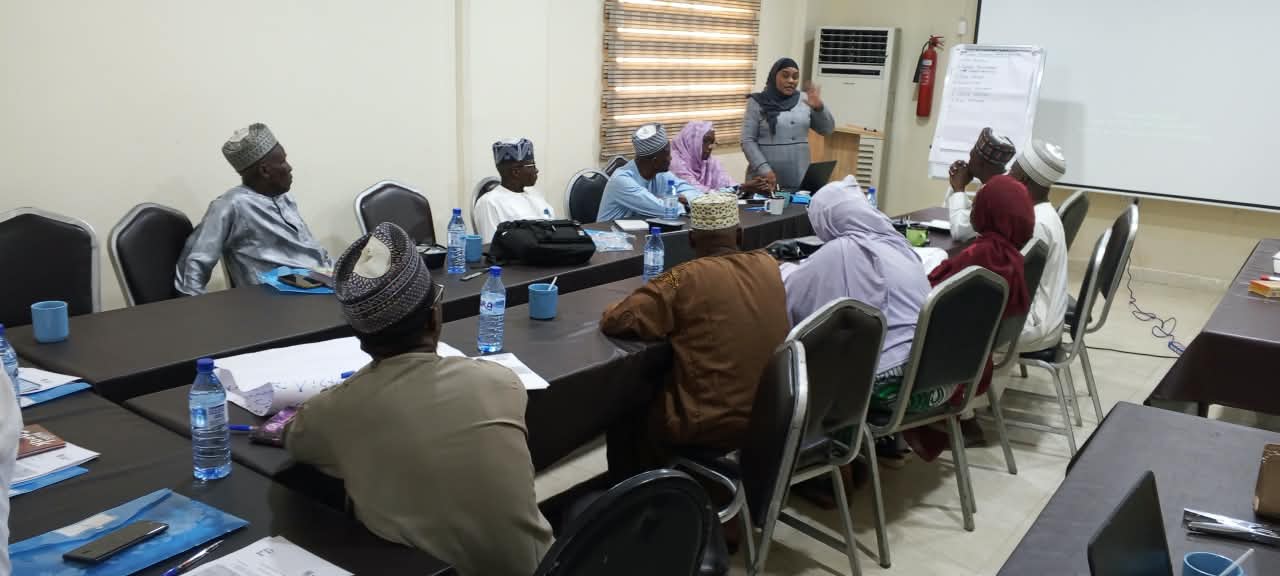
Education stakeholders and School-Based Management Committees (SBMC) in Kano State have stressed the need to equip students with practical skills alongside formal education to prepare them for self-reliance and reduce dependence on government employment.
Chairman of the School-Based Management Committees (SBMC) in Kano State, Tijjani Haladu Baraya, said the skills training programme was important because education should not only prepare students to obtain certificates but should also equip them with practical knowledge that can enable them to earn a living after graduation.
Baraya explained that the initiative was designed to teach students various skills while they are still in school, stressing that having formal education does not necessarily guarantee automatic access to government employment.
According to him, the reality of the current employment market makes it necessary for students to acquire additional skills that would enable them to create opportunities for themselves rather than waiting for government jobs.
He said, “If you study, you will not necessarily get a government job,” adding that the programme was specifically introduced to teach children in schools practical skills that would enable them to rely on themselves after completing their education.
Baraya further emphasised the importance of encouraging female students to acquire vocational and entrepreneurial skills, noting that such knowledge could help women become economically independent and contribute meaningfully to their families and communities.
The SBMC chairman said the committees were fully supporting the initiative because students could graduate with both academic certificates and practical skills, which, according to him, would give them a better chance of becoming self-reliant.
He added that equipping students with skills would also enable them to support their parents and reduce the financial pressure on families, particularly at a time when employment opportunities were becoming increasingly competitive.
Similarly, the Chairman of the Parent-Teachers Association (PTA) in Kano State, Dalhatu Salhu Maijumuri, described the training of students in practical skills as a highly important initiative capable of producing significant benefits for students, families and society.
Maijumuri said the programme would have a far-reaching impact because students who acquired practical skills could use them to establish businesses or provide services for themselves instead of waiting indefinitely for formal employment.
According to him, the era when students completed their education and immediately secured government jobs had largely passed, making it necessary for the education system to respond to the changing realities of the labour market.
“Gone are the days when students finish school and they will immediately get a government job,” Maijumuri said, pointing to the intense competition for the limited employment opportunities available.
He explained that where an organisation had only a few vacancies, thousands of qualified applicants could compete for the same positions, making reliance solely on formal employment an increasingly difficult option for young people.
“For example, now if there is a vacancy for like ten personalities, you will see hundred thousand people jostling for it,” the PTA chairman said, stressing the need for students to develop alternative means of livelihood.
Maijumuri therefore urged stakeholders in the education sector to continue supporting skills acquisition programmes in schools, saying that practical training would give students the ability to become self-reliant and productive members of society.
He further said that empowering students with vocational and entrepreneurial skills would not only benefit the individuals involved but would also reduce pressure on government to provide jobs for every graduate.
The PTA chairman also maintained that investment in skills acquisition would benefit future generations because children who received both formal education and practical training would be better positioned to contribute to economic development and build sustainable livelihoods.
He said the combination of academic education and practical skills would therefore strengthen the education system and ensure that students were prepared not only to seek employment but also to create employment opportunities for themselves and others.
The initiative, being implemented by the Society for Child Support and Economic Empowerment (SOCSEE) in partnership with Room to Read, will run from August to December 2026 across six Local Government Areas of Nasarawa, Fagge, Dala, Gwale, Kano Municipal and Kumbotso.
Speaking during a strategic one-day stakeholders’ meeting organised by SOCSEE in Kano, the organisation’s Executive Director, Sunusi Hashim, said the meeting was convened to review the project documentation and curriculum ahead of implementation.
News
Economists Project 12–20 Years Before Nigerians Reap Gains from Tinubu Reforms

By Yusuf Danjuma Yunusa
Economists say Nigerians may have to wait between 12 and 20 years to fully feel the benefits of President Bola Tinubu’s economic reforms.
According to them, the measures are likely to deliver gradual improvements in productivity and real incomes rather than immediate relief from high prices and declining purchasing power.
The economists told Nairametrics that major structural reforms typically involve a painful adjustment period before their benefits become evident, adding that the pace of improvement would depend largely on policy stability, infrastructure development, the rule of law and investments in productive sectors of the economy.
Chief Economist and Partner at SPM Professionals, Dr. Paul Alaje, said structural reforms generally take 12 to 20 years before their impact becomes significantly visible, although some countries have recorded meaningful results within six to 10 years.
“On the average, it takes 12 to 20 years before nations start feeling the impact of reforms. That does not necessarily mean such countries will see overnight reduction in their exchange rate. But what they will see is growth in real income as productivity expands,” Alaje told Nairametrics.
Financial economist at Nnamdi Azikiwe University, Dr. Felix Echekoba, also said major economic restructuring usually imposes short-term sacrifices before delivering long-term benefits.
“Most successful economic restructurings around the world imposed short-term sacrifices on the masses before long-term benefits.
“The challenge is working hard enough to ensure that the adjustment period does not become unnecessarily prolonged and that vulnerable citizens are protected,” he said.
According to Professor Tayo Bello, a development economist at Adeleke University, Nigeria’s experience is consistent with the pattern observed in other countries that have undertaken major subsidy and exchange rate reforms.
“There is no case of any country implementing major subsidy removal and exchange rate reforms without experiencing temporary economic distress. What matters are policy stability and whether the reforms ultimately fuel productivity and investment,” Bello said.
Why Nigerians are yet to feel the benefits
Tinubu introduced a series of far-reaching economic reforms after assuming office in May 2023, including the removal of petrol subsidies, liberalisation of the foreign exchange market, electricity tariff increases and tax reforms aimed at improving government revenue and fiscal sustainability.
The reforms have received support from international financial institutions, but their immediate impact has been overshadowed by elevated food and service prices, high interest rates and declining household purchasing power.
Alaje said the absence of key conditions needed to support structural reforms is limiting the speed at which Nigerians can benefit from the government’s policies.
According to him, countries that have achieved faster results from reforms typically had functional institutions, respect for the rule of law, adequate infrastructure and a high level of citizen awareness.
“A functional system where the rule of law is respected and obeyed, abundant infrastructure evident in the availability of roads, electricity and rail system, as well as high level of citizen awareness” are among the factors that can accelerate the benefits of reforms,” he said.
Alaje said Nigeria still faces significant gaps in these areas, particularly infrastructure and institutional effectiveness.
“Businesses are now approaching the banks, but interest rates are not coming down. It ranges between 30 and 40%. Households are now struggling with a minimum wage of N70,000, with the country’s poverty rate at over 140 million, more than 60% of the population,” he said.
He added that the poorest Nigerians would bear much of the burden during the adjustment period, warning that reforms alone would not be enough to lift millions of people out of poverty within a few years.
“It will take more than a decade for the masses to feel any positive impact of Tinubu’s reforms,” Alaje said.
Infrastructure, investment key to reform gains
Bello said macroeconomic stability achieved through reforms would only provide the foundation for broader economic transformation.
“Macroeconomic stability is only the first step. The real benefits come when reforms are buttressed by investments in infrastructure, manufacturing, agriculture, education and technology,” he said.
He added that countries that successfully transformed their economies combined fiscal and monetary reforms with aggressive industrialisation strategies.
Echekoba similarly said the government must ensure that the adjustment period does not become unnecessarily long while putting measures in place to protect vulnerable households.
The economists’ assessment is consistent with experiences from countries that undertook major economic reforms before recording broader improvements in living standards.
India’s economic liberalisation programme, introduced in 1991 following a balance of payments crisis, helped restore macroeconomic stability within about two years. However, broader gains in foreign investment, industrial growth and poverty reduction became more evident over the following decade.
Ghana’s Economic Recovery Programme, introduced in the 1980s, also took several years before inflation declined significantly and economic growth became more sustainable.
Indonesia’s reforms following the 1997 Asian financial crisis similarly took several years to restore investor confidence and return the economy to a stronger growth path.
Egypt’s 2016 currency flotation and subsidy reforms initially triggered a sharp rise in inflation, which exceeded 30%. The economy subsequently recorded stronger growth, increased foreign investment and improved macroeconomic stability after several years of implementation.
These experiences suggest that the economic benefits of major structural reforms can take several years to become widely visible, particularly where reforms are accompanied by significant increases in the cost of living during the initial adjustment period.
Before the removal of petrol subsidies in 2023, the Federal Government was budgeting about N3.36 trillion annually for fuel subsidy payments.
The Tinubu administration had argued that ending the subsidy would free up resources for infrastructure development and social programmes designed to cushion the impact of the policy on households.
However, the economists said the extent to which Nigerians ultimately benefit from the reforms will depend on how effectively the government deploys the savings and creates conditions for higher productivity, investment and real income growth.
Source: Nairametric
News
C-JTF Kano Urges Government to Strengthen Community-Based Security Groups
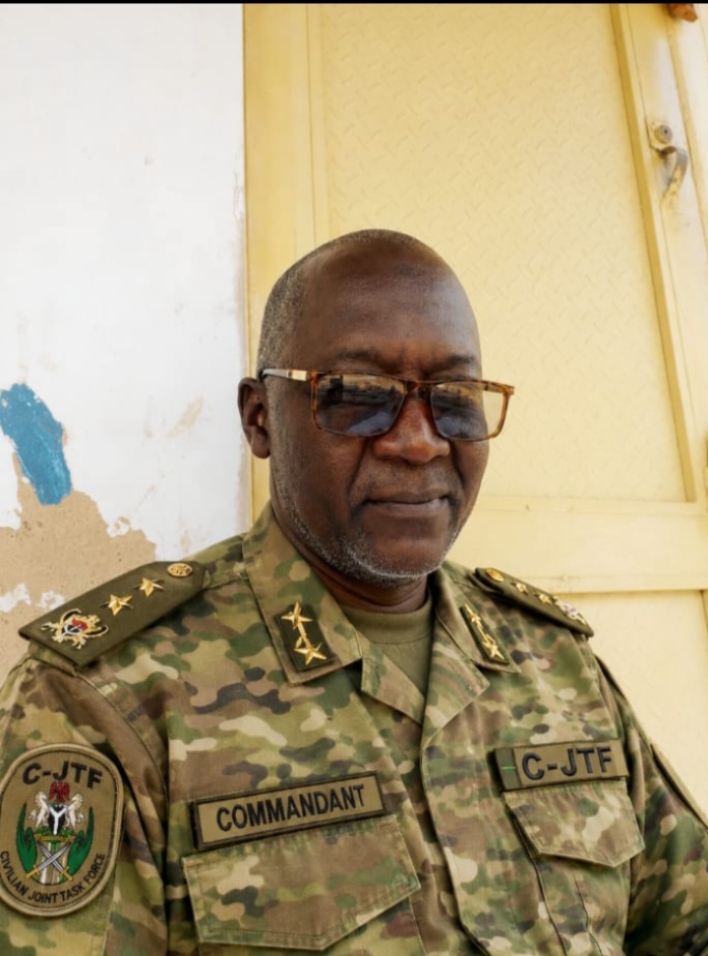
The Commander General of the Coalition for Community-Based Security Organisation (C-JTF), Kano State Command, Sani Elmansur, has urged the Kano State Government to strengthen and properly integrate community-based security groups into the state’s security architecture to address growing challenges of insecurity, drug abuse and street gang activities.
Elmansur made the call while offering recommendations on ways the government could improve security across Kano State, stressing that the complexity of contemporary security challenges requires stronger collaboration between conventional security agencies and community-based organisations.
According to him, the Kano State Government should bring together registered community-based security groups that have been established to support conventional security agencies, rather than allowing their activities to operate without adequate coordination and supervision.
Elmansur said the leadership of many of the recognised community security organisations possesses considerable knowledge of community safety and security matters, adding that their experience should be properly harnessed in the fight against crime.
He explained that community-based security personnel are not merely individuals who patrol neighbourhoods, but include leaders and members with knowledge of local security conditions and the ability to identify emerging threats within their communities.
The C-JTF commander further called for specialised training for government-established initiatives such as the “Anti-Phone Snatching” groups, saying their effectiveness could be improved if they were exposed to modern security techniques and professional methods of crime prevention.
According to Elmansur, the government should ensure that such groups receive adequate training in modern security operations, surveillance, intelligence gathering, communication and appropriate responses to security threats.
He expressed concern over situations in which suspected street gangs or “Yan Daba” allegedly operate for long periods in some neighbourhoods without immediate intervention from conventional security personnel, despite reports being made by residents.
Elmansur said that in some instances, residents could report the activities of street gangs and wait for between one and two hours before security personnel arrive at the affected locations, a situation he said could expose residents and their property to unnecessary danger.
He, however, noted that security patrols and checkpoints alone may not be sufficient to deter criminal elements if the criminals are able to identify the security personnel and avoid their locations.
According to him, criminals may simply stay away from areas where they see security personnel conducting regular patrols, only to resume their activities after the officers leave, thereby reducing the effectiveness of conventional patrol strategies.
Elmansur therefore recommended the establishment of security posts in areas identified as hotspots for youth gangs and other criminal activities, saying such locations should have a continuous security presence rather than occasional patrols.
He said the government should identify neighbourhoods where large numbers of unruly youths and suspected criminal elements congregate and establish security structures that can remain operational around the clock.
The C-JTF commander explained that a system of continuous community surveillance would enable security personnel and community-based organisations to respond more quickly whenever suspicious activities are detected.
Elmansur also advocated stronger intelligence gathering at the grassroots, stressing that residents are often the first to notice unusual movements, gatherings or activities that could develop into serious security threats.
He maintained that if information about suspicious activities is obtained early and promptly transmitted to the appropriate security authorities, security agencies would have a better opportunity to prevent crimes before they occur.
According to him, the adoption of such a proactive security strategy would help reduce street violence, clashes and other forms of criminal activity within Kano metropolis and surrounding communities.
Elmansur emphasised that the objective of the recommendations is not to replace conventional security agencies, but to create stronger cooperation between them and properly trained, registered and coordinated community-based security organisations.
He urged the Kano State Government to consider a comprehensive framework for coordinating the various community security groups operating across the state, including clear responsibilities, reporting channels, training requirements and supervision.
The C-JTF commander said such coordination would prevent duplication of efforts and ensure that community security organisations complement the work of the police and other conventional security agencies.
He further stressed the importance of protecting the lives and property of residents, describing security as a collective responsibility requiring the participation of government, security agencies, community organisations and citizens.
“Those are some of the recommendations we are giving to the government in order to protect the lives and property of the people,” Elmansur said.
He added that a properly coordinated community-based security system, backed by modern training and effective collaboration with conventional security agencies, could significantly contribute to restoring peace and reducing criminal activities across Kano State.

Education Stakeholders, SBMC Train Students on Skills for Self-Reliance

Economists Project 12–20 Years Before Nigerians Reap Gains from Tinubu Reforms

C-JTF Kano Urges Government to Strengthen Community-Based Security Groups

You’re a Hypocrite!” – Bashir el-Rufai Goes Nuclear on Brother Bello Over Uba Sani Loyalty

Court Ultimatum Forces FBI to Hand Over Tinubu’s Fraud Records to Judge—But Keeps Them Hidden from Public

How Kano Digitized Land Turns N50m to N750m Monthly

Borders, Visas and the Beautiful Game: How U.S. Immigration Policies Shaped Global Perceptions During the 2026 FIFA World Cup

From World’s 9th Most Populous City to Perfect: As Gov Yusuf Revisits Kano Master Plan

Kano Islamic Scholar Declares Kano Widow Marriage Programme ‘Haram’, Urges Government to Stop It

95% of Governor Abba Kabir Yusuf’s Promises Have Been Fulfilled — CPS Interview By Musa Diso, In Kano
Education Stakeholders, SBMC Train Students on Skills for Self-Reliance
Economists Project 12–20 Years Before Nigerians Reap Gains from Tinubu Reforms
C-JTF Kano Urges Government to Strengthen Community-Based Security Groups
You’re a Hypocrite!” – Bashir el-Rufai Goes Nuclear on Brother Bello Over Uba Sani Loyalty
Court Ultimatum Forces FBI to Hand Over Tinubu’s Fraud Records to Judge—But Keeps Them Hidden from Public
How Kano Digitized Land Turns N50m to N750m Monthly
Borders, Visas and the Beautiful Game: How U.S. Immigration Policies Shaped Global Perceptions During the 2026 FIFA World Cup
From World’s 9th Most Populous City to Perfect: As Gov Yusuf Revisits Kano Master Plan
Kano Islamic Scholar Declares Kano Widow Marriage Programme ‘Haram’, Urges Government to Stop It
95% of Governor Abba Kabir Yusuf’s Promises Have Been Fulfilled — CPS Interview By Musa Diso, In Kano
-

 Opinion5 years ago
On The Kano Flyovers And Public Perception
-

 Features5 years ago
How I Became A Multimillionaire In Nigeria – Hadiza Gabon
-

 Opinion6 years ago
Kano As future Headquarters Of Poverty In Nigeria
-

 History5 years ago
Sheikh Adam Abdullahi Al-Ilory (1917-1992):Nigeria’s Islamic Scholar Who Wrote Over 100 Books And Journals
-

 Opinion5 years ago
My First Encounter with Nasiru Gawuna, the Humble Deputy Governor
-

 History5 years ago
The History Of Borno State Governor Professor Babagana Umara Zulum
-

 History5 years ago
The Origin Of “Mammy Market” In Army Barracks (Mammy Ochefu)
-

 News4 years ago
Federal University Of Technology Babura To Commence Academic Activities September