
News
Kayi KMC Launches Micro Finance Headquarters in Kano, Aims for Global Reach

Kano, Nigeria – The launch of the Kayi KMC Micro Finance application in Kano has marked a significant milestone in the financial technology sector. The innovative technology, designed to safeguard people’s deposits, is gaining momentum both locally and globally.
Speaking at the launch event, Saadina Dantata, the driving force behind Kayi KMC Micro Finance, emphasized the application’s core mission of protecting individuals’ savings. The wallet boasts robust security features, functioning as a second layer of protection. It seamlessly integrates with financial institutions worldwide, ensuring users’ financial security.
Dantata highlighted the versatility of the application, enabling users to purchase items such as recharge cards, data plans, and pay electricity bills. Additionally, it provides a platform for trading in various financial assets, including silver and commodities. Notably, Kayi KMC has acquired a significant stake, owning 50 percent of the company.
The impact of the Kayi KMC Micro Finance application extends far beyond Nigeria, with users worldwide numbering a staggering 33 million and counting. The global community’s interest reflects the growing demand for secure and efficient financial technology solutions.
Emir of Bichi, Nasiru Ado Bayero, spoke at the launch, expressing his belief that Kayi KMC would contribute to reducing crime rates. He recognized the necessity of such financial innovations, particularly in the context of current economic challenges.
Meanwhile, Emir of Kano, Aminu Ado Bayero, acknowledged the application’s potential to counteract financial decline and highlighted the remarkable successes achieved by the global economy. He emphasized the urgency of introducing such innovations in Kano and its surrounding regions, underscoring the significance of Kayi KMC’s efforts.
Abdulganiyu Rufai Yakubu, the product lead for Kayi KMC, shared insights into the application’s capabilities. He stated that Kayi KMC transcends conventional internet services, offering a broader spectrum of services, including insurance and healthcare. Furthermore, the application’s adaptability enables its operation in remote and underserved communities. The company’s ambitious goal is to extend its reach across the entire African continent, starting from Kano and expanding to four Northern states. Their vision includes making financial inclusion accessible to all Nigerians.
The launch of Kayi KMC Micro Finance has set a course for financial empowerment, security, and accessibility, not only for Kano but also for the broader Nigerian and African population.
A New Era in Financial Innovation Begins”
KMC-KAYI Bank stands as a trailblazing financial institution headquartered in Kano, Nigeria,
with a resolute mission to reshape the financial landscape through innovative and secure digital
banking solutions. This visionary digital bank is deeply committed to augmenting financial
accessibility, fortifying security, and embracing a customer-centric ethos.
During his inaugural address, the Managing Director of KMC-KAYI Bank articulated that the
bank signifies more than just a financial entity; it embodies a catalyst for change, a gateway to
empowerment, and an emblem of security, agility, and customer contentment.
Addressing the unique features of KMC-KAYI Bank, Abdulganiyu Rufai, the Product Lead,
expounded, “At KMC-KAYI Bank, we harness the formidable potentials of web3 technologies to
fashion a seamlessly secure financial ecosystem. Our integration with top-tier cybersecurity
solutions guarantees the safeguarding of financial transactions against potential threats.”
“In the contemporary world, characterized by relentless swiftness, speed is of paramount
importance. Our cutting-edge ML server architecture empowers us to facilitate lightning-fast
transactions, enabling you to send and receive money with unmatched speed and unwavering
reliability,” emphasized Dr. Rufai.
Furthermore, Alhaji Saadina Dantata, Chairman of KMC-KAYI Bank, elaborated, “KMC-KAYI
Bank is poised to redefine modern banking by offering a comprehensive array of services.
Ranging from stock investments and insurance to loan facilities and a savings structure with an
exceptional return on investment, we cater to all your financial requisites under one roof.”
Dantata further expounded, “Our journey commences with inclusivity, targeting the unbanked
and underbanked segments of society, thereby ensuring access to financial services that were
hitherto out of reach. We also extend our services to the diaspora community, proffering cuttingedge cross-border payment solutions and supplying contemporary banking solutions for urban
professionals.”
The official opening of KMC-KAYI Bank was graced by the presence of esteemed dignitaries,
including His Royal Highness, The Emir of Kano, Alhaji Aminu Bayero, OFR, SP, who delivered
a heartfelt address said that He wished KMC KAYI well and assurred them of his full support
and that of the Emirate .
His Royal Highness also said “I am very optimists it will contribute immensely to the economic
and social well being of our people” before officially inaugurating KMC-KAYI Bank.
Also in attendance was His Royal Highness Mai Martaba Sarkin Bichi, Alhaji Nasiru Ado Bayero,
and he showed his excitement about the KMC-KAYI Bank , he explained that this platform will
help the people in terms of running their business, receiving payments and also an avenue for
creating job opportunities to the Kano population.
Kano State Elder Statesman and legendary Businessman, Maigirma Alhaji Aminu Alhassan
Dantata who was represented by Alhaji Tajudeen Dantata mentioned that “This a great.development for the people of kano and Nigeria at large, he called on his fellow business ment o accept KMC KAYI”
Recall that last week in Abuja, the Minister of Communications, Innovation and Digital Economy,
Dr. Bosun Tijani unveiled the Kayi App, promoted by KMC-KAYI Bank, which envisions a future where finance is not just accessible but also transformational.
The Kayi App is committed to enhancing financial inclusion through a customer-centric approach. Local agents are onboarding customers, promoting transactions, and boosting financial literacy. Next up: the launch of our efficient web app, followed by the mobile app release for an enhanced customer experience.








News
Eight Kano Rep Members Abandon NNPP for APC
By Yusuf Danjuma Yunusa
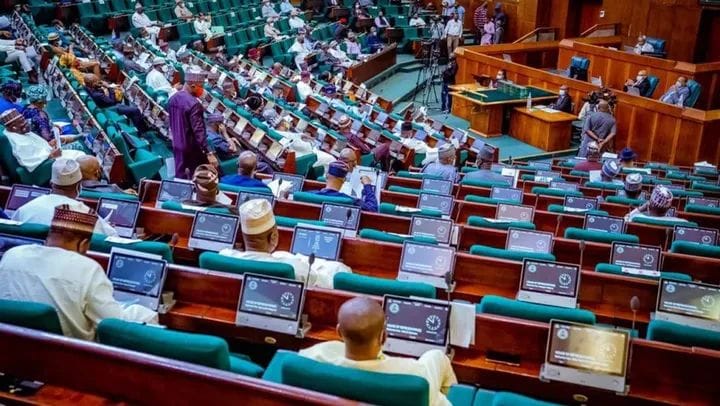
In a dramatic political realignment, eight members of the House of Representatives from Kano State formally defected from the New Nigeria Peoples Party (NNPP) to the ruling All Progressives Congress (APC) on Tuesday.
The mass defection, which signals a significant shift in the political dynamics of Nigeria’s most populous state, was announced during plenary at the Green Chamber. The move represents a major blow to the NNPP, which controls the Kano State Government House, and a substantial boost for the APC as it consolidates its federal influence.
The announcement drew a high-profile audience, underscoring the political weight of the development. Among those present to witness the defection were Kano State Governor Abba Kabir Yusuf, a prominent figure in the NNPP; Deputy Senate President Barau Jibrin; and former Kano governor Abdullahi Umar Ganduje, who now serves as a national leader of the APC. Their presence highlighted the escalating political contest for control and influence in the state.
Political analysts view the defection as a major realignment ahead of future electoral contests. For the APC, the addition of eight federal lawmakers strengthens its numerical standing in the House and deepens its foothold in a state where the NNPP had mounted a formidable challenge in the 2023 elections.
The lawmakers have yet to publicly detail their reasons for leaving the NNPP, but the coordinated switch points to intensifying factional battles and strategic maneuvering within Kano’s political landscape. The development is expected to further polarize the state’s political environment as both parties position themselves for the next electoral cycle.
News
Governor Abba Kabir Yusuf Holds Exclusive Prerogative to Choose Deputy – Malam Inuwa Waya
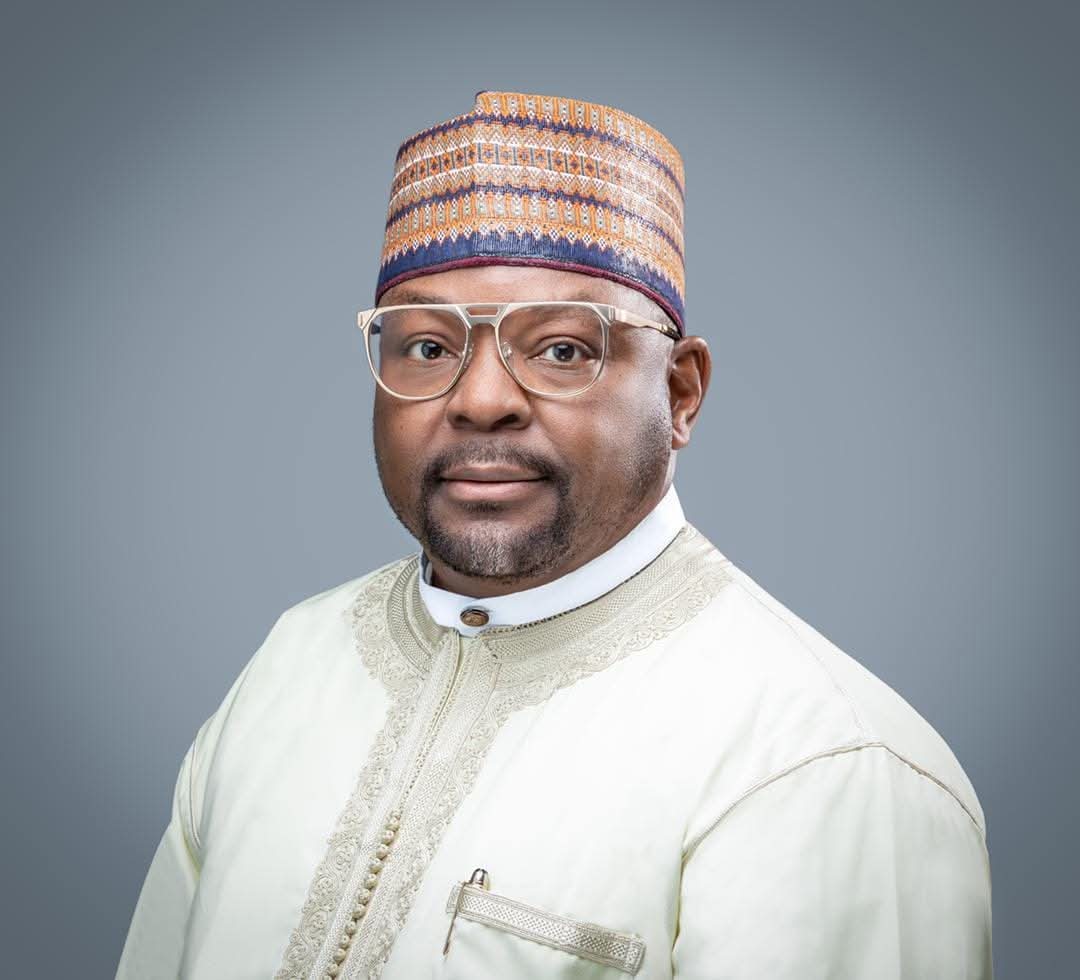
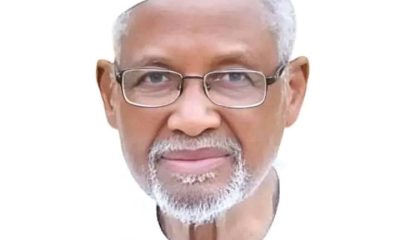
Malam Inuwa Waya, a chieftain of the All Progressives Congress (APC) in Kano, has reaffirmed that the constitutional prerogative to appoint a new Deputy Governor rests solely with His Excellency, Governor Abba Kabir Yusuf.
Speaking to journalists in Kano, Malam Waya cautioned against undue interference from individuals on social media who have been attempting to dictate the Governor’s choice following the resignation of the former Deputy Governor, Comrade Aminu Abdulsalam.
“It is only Governor Abba Kabir Yusuf who has the prerogative to choose his deputy. People should stop coming to social media to tell him who to appoint. The constitution does not mandate him to select from any particular zone; it is entirely his decision,” Malam Waya stated.
He further explained that while political balancing may encourage consideration of candidates from Kano North or South since the Governor hails from Kano Central, such arrangements remain political strategies rather than constitutional requirements.
Malam Waya also commended Governor Yusuf’s infrastructural strides, noting that within two years, the administration has revived water projects, advanced public-private partnerships in power, and accelerated development across education, agriculture, and investment.
“The Governor has revived the glory of Kano. With the infrastructure projects ongoing, it will be an easy sail for all of us as we prepare for 2027. He has put Kano first, and that is what matters,” he said.
On the issue of inclusivity, Malam Waya emphasized that all stakeholders, including former APC members, are being carried along in governance. He urged the people of Kano to unite behind the Governor’s vision.
“We, the old APC members, have no problem with Governor Yusuf. We are knit together in Kano, and our priority is Kano first, not any individual. The Governor knows who he will pick as his deputy, and we trust his judgment,” he concluded.
Malam Waya also extended prayers for the acceptance of Ramadan fasting and congratulated the Muslim Ummah in Kano for celebrating Sallah peacefully.
News
ADC Reports Surge in Membership Following Kwankwaso’s Defection, Calls Him ‘Game Changer’
By Yusuf Danjuma Yunusa
The African Democratic Congress (ADC) has officially welcomed former Kano State Governor and 2023 presidential candidate Senator Rabiu Musa Kwankwaso into its fold, touting his defection as a pivotal move that strengthens a growing coalition for political realignment in Nigeria.
In a statement released for immediate effect, the party described Kwankwaso as a “game-changer,” announcing that he has directed his network of supporters nationwide to join the ADC. According to the party, this call has already triggered a significant uptick in registrations on its online platform over the past 24 hours.
The ADC’s National Publicity Secretary, Mallam Bolaji Abdullahi, framed the defection as part of a broader recognition among Nigerians of the need for a credible political alternative. The statement emphasized Kwankwaso’s experience in governance, grassroots influence, and capacity to unify as assets to the party’s ambition to “rebuild Nigeria.”
Notably, the ADC highlighted the presence of several high-profile leaders at the defection event, including the party’s National Chairman, Senator David Mark; National Secretary, Ogbeni Rauf Aregbesola; and leading presidential aspirants such as former Vice President Atiku Abubakar, Mr. Peter Obi, and Rt. Hon. Rotimi Amaechi. Their attendance, the party stated, reflects a united front and growing momentum.
The party characterized the surge in online registrations as evidence that Nigerians are aligning with what it called a “different path forward.” In its appeal to Kwankwaso’s supporters and the broader public, the ADC positioned itself as a vehicle for restoring dignity, opportunity, and public trust in governance.
“Change does not happen by chance,” the statement concluded. “It happens when people come together with purpose.”
The development marks a significant realignment in Nigeria’s opposition political landscape, with the ADC seeking to position itself as a converging point for influential politicians and their followings ahead of future elections.

Eight Kano Rep Members Abandon NNPP for APC

Governor Abba Kabir Yusuf Holds Exclusive Prerogative to Choose Deputy – Malam Inuwa Waya

ADC Reports Surge in Membership Following Kwankwaso’s Defection, Calls Him ‘Game Changer’

Foreign Affairs Minister Resigns to Pursue Bauchi Governorship Election

Kwankwaso Officially Joins ADC

The Governor Who Chose His People Over His Politics: Abba Yusuf and the Moral Courage Behind Kano First

FREEDOM OF SPEECH, NOT FREEDOM FROM CONSEQUENCE: A CITIZEN’S CALL FOR RESPONSIBLE PUBLIC COMMENTARY
Restoring the Glory That Was Always There: Governor Abba Kabir Yusuf and the Historical Vision Behind Kano First

Tinubu to Swear in Olatunji Disu as Inspector-General of Police on Wednesday

NDLEA Clarifies: Drug Case Against Abba Kyari Still Active After Court Discharge
Eight Kano Rep Members Abandon NNPP for APC
Governor Abba Kabir Yusuf Holds Exclusive Prerogative to Choose Deputy – Malam Inuwa Waya
ADC Reports Surge in Membership Following Kwankwaso’s Defection, Calls Him ‘Game Changer’
Foreign Affairs Minister Resigns to Pursue Bauchi Governorship Election
Kwankwaso Officially Joins ADC
The Governor Who Chose His People Over His Politics: Abba Yusuf and the Moral Courage Behind Kano First
FREEDOM OF SPEECH, NOT FREEDOM FROM CONSEQUENCE: A CITIZEN’S CALL FOR RESPONSIBLE PUBLIC COMMENTARY
Restoring the Glory That Was Always There: Governor Abba Kabir Yusuf and the Historical Vision Behind Kano First
Tinubu to Swear in Olatunji Disu as Inspector-General of Police on Wednesday
NDLEA Clarifies: Drug Case Against Abba Kyari Still Active After Court Discharge
-

 Opinion4 years ago
On The Kano Flyovers And Public Perception
-

 Features5 years ago
How I Became A Multimillionaire In Nigeria – Hadiza Gabon
-

 Opinion5 years ago
Kano As future Headquarters Of Poverty In Nigeria
-

 History5 years ago
Sheikh Adam Abdullahi Al-Ilory (1917-1992):Nigeria’s Islamic Scholar Who Wrote Over 100 Books And Journals
-

 Opinion4 years ago
My First Encounter with Nasiru Gawuna, the Humble Deputy Governor
-

 History5 years ago
The Origin Of “Mammy Market” In Army Barracks (Mammy Ochefu)
-

 History4 years ago
The History Of Borno State Governor Professor Babagana Umara Zulum
-

 News4 years ago
Federal University Of Technology Babura To Commence Academic Activities September