
News
A bridge collapses as women are carried on shoulders to cross the river in Takai local government

Aminu Abdullahi Ibrahim
The bridge collapsed at Fajewa village of Takai Local government in Kano state causing suffering for women and children.
In my visit to the local government, I found how youths carry women and children on their shoulders to romp them out of the river.
The people in the village which is also 10 kilometers from the Secretariat of Takai local government have been suffering from the dilapidated road and the collapse of the bridge which connects four communities in the local government.
The villages affected are Fajewa, Birnin Bako, Tumbushi, and Gidan Malam all in Takai local government. It is also said that the road links to the border of Bauchi State.
Likewise, the ruination of the bridge prevents the villagers from accessing schools, and hospitals, and bringing their farm products to the main markets of the Takai local government.
With dismay, I noticed that people must pay dues before they are shouldered out of the river whenever they have to travel or go to the neighboring communities. It was said that there was a pregnant woman who died in an attempt to swim out of the river to the general hospital of Takai.
Mr Hassan the 27 years old one of the swim hoaders said they collect money ranging from 200 to 300 hundred naira and 500 to 700 hundred naira for a person with his baggage to cross them over the river.
Some women that I interviewed said that they had no other resort but to pay the money to cross the river to various places.
They added that it is sad and also prohibited in Islam to allow a man who is not biologically related to you to carry you as a woman on his shoulder but in a condition like this, they have no other options than this.
Some people in the area said that the breakage of the bridge was a trauma for them as they could not go to the hospital while sick. They corroborated that if the bridge is rebuilt the difficulties they face while traveling will come to an end.
They call on their politicians, especially the senator representing Kano South, members representing their constituency, and the Kano State government to help them reconstruct the bridge.
When I contacted the member representing the Takai constituency in the state house of assembly Mr. Musa Ali Kachako explained that he had presented a motion that sought the state government to repair the bridge recently, and they are waiting for it to be considered.
He also said that he hopes the state government will quickly bring emergency succor to the affected communities by rebuilding the bridge.








News
Kano APC Chieftain Calls For Re-election Of President Tinubu, Governor Yusuf
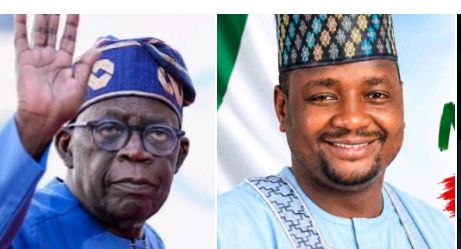
A philanthropist and prominent APC chieftain in Kano from Fagge Local Government Area, Hon. Haruna Kabiru Wakili, has called on Nigerians to re-elect President Bola Ahmed Tinubu and all APC candidates at every level in the 2027 elections.
Speaking, Hon. Wakili said as loyal members of the APC, President Bola Ahmed Tinubu is a leader with “focus” and “target” on the things he wants to achieve.
“He has not turned a blind eye like past leaders who understood the problems but refused to take proper action because they feared losing votes in an election. So they did nothing about it,” he said.
He added that history shows that anyone who tried to remove fuel subsidy did so in their second term.
“For example, former President Olusegun Obasanjo tried to remove the subsidy in his second term. At that time, Adams Oshiomhole was NLC President and organized protests, and Nigerians came out and said they did not agree.
The same thing happened to Jonathan in 2012. Even President Buhari, before he won the election, asked, ‘Who is subsidizing who?’ Is it the Nigerian Government that is giving Nigerians subsidy, or are Nigerians giving the Nigerian Government subsidy?”
Hon. Wakili said even when Buhari got into office, he realized there was a fundamental problem affecting the country’s economy, but he could not solve it because of fear of protests. “In his second term he said he would remove the subsidy, but he could not remove it completely.”
“But when President Bola Ahmed Tinubu came in, he said, ‘Let us tell ourselves the truth. There is no way we can continue walking with a broken leg. One day if we fall, we will not get up.’ On the very first day he was sworn in as President, he announced the removal of fuel subsidy. It was a painful decision. Even we did not understand it at first and we opposed it. But now we understand where he was headed.
“Today, anyone with knowledge of Nigeria’s economy knows that the problem has already been addressed. This fracture that was troubling the country, President Tinubu has fixed. What remains is for the leg to heal completely. Once we are fully healed, we will get up and run. No one will be able to catch us in Africa in terms of economic strength.”
He added that Tinubu has reformed the foreign exchange market. “Before, if you went to look for US Dollars you would be in distress. There were different rates everywhere. Some people were just sitting doing nothing and they were given dollar ‘allocations’ and were making billions without adding any ‘value’. Now the rate has been unified. Businessmen are seeing progress. Investors are coming in every day because the economy is improving.”
Hon. Wakili also commended the work of Governor Abba Kabir Yusuf. He said since Kano State was created, there has never been a Governor who turned it into a modern city comparable to major cities in the world except Abba.
“In places where you did not think a road would be built, new roads have now been constructed in the city and rural areas. Even the 5-kilometer roads abandoned by past governments are now being completed. Work is also ongoing on quality drainage systems and solar-powered streetlights.”
Wakili said that in the upcoming 2027 election, Governor Abba Kabir Yusuf has strong acceptance and stands a good chance of winning a second term under the APC.
“The party will defeat all governorship candidates of the opposition parties, especially *NDC* candidates who have no record of assisting the development of the people in all the political positions they have held.”
Hon. Wakili expressed optimism about the success of Deputy Senate President, Senator Barau I. Jibrin of Kano North in the 2027 election.
“If it were not because Governor Abba Kabir Yusuf joined the APC, Senator Barau I. Jibrin would be our governorship candidate. When the APC had no Governor in Kano, he was the one sustaining the party for almost 3 years. As a Senator and Deputy President of the Senate, he has given people jobs and appointments, and is distributing empowerment funds to thousands. That is why the people of Kano North will vote for him again.”*
He said in Kano Central they have Malam Ibrahim Shekarau, a highly respected person, a former Governor and former Senator, who is also the current APC Kano Central Senatorial candidate.
“He played a major role in developing Kano when he was Governor. When he was Senator he brought many constituency projects. Unlike Kwankwaso who, when he became Senator, did not bring even one brick in the name of constituency projects.”
In Kano South, he commended *Senator Kawu Sumaila* for working harder in his first term than the one who spent 16 years in the seat. He urged the people of Kano South to re-elect Kawu Sumaila as Senator for a second term in 2027 to continue enjoying the dividends of democracy.
Hon. Haruna Kabiru Wakili called on the people of Kano and Nigeria to vote for APC candidates in 2027.
“Because President Tinubu has the intention to improve the economy and solve the security problem. This is not about politics. It affects everyone. Let us support the Government at every level.”
News
ADC Urges INEC to Bar Partisan Lecturers from Serving as Returning Officers in 2027 Elections
By Yusuf Danjuma Yunusa
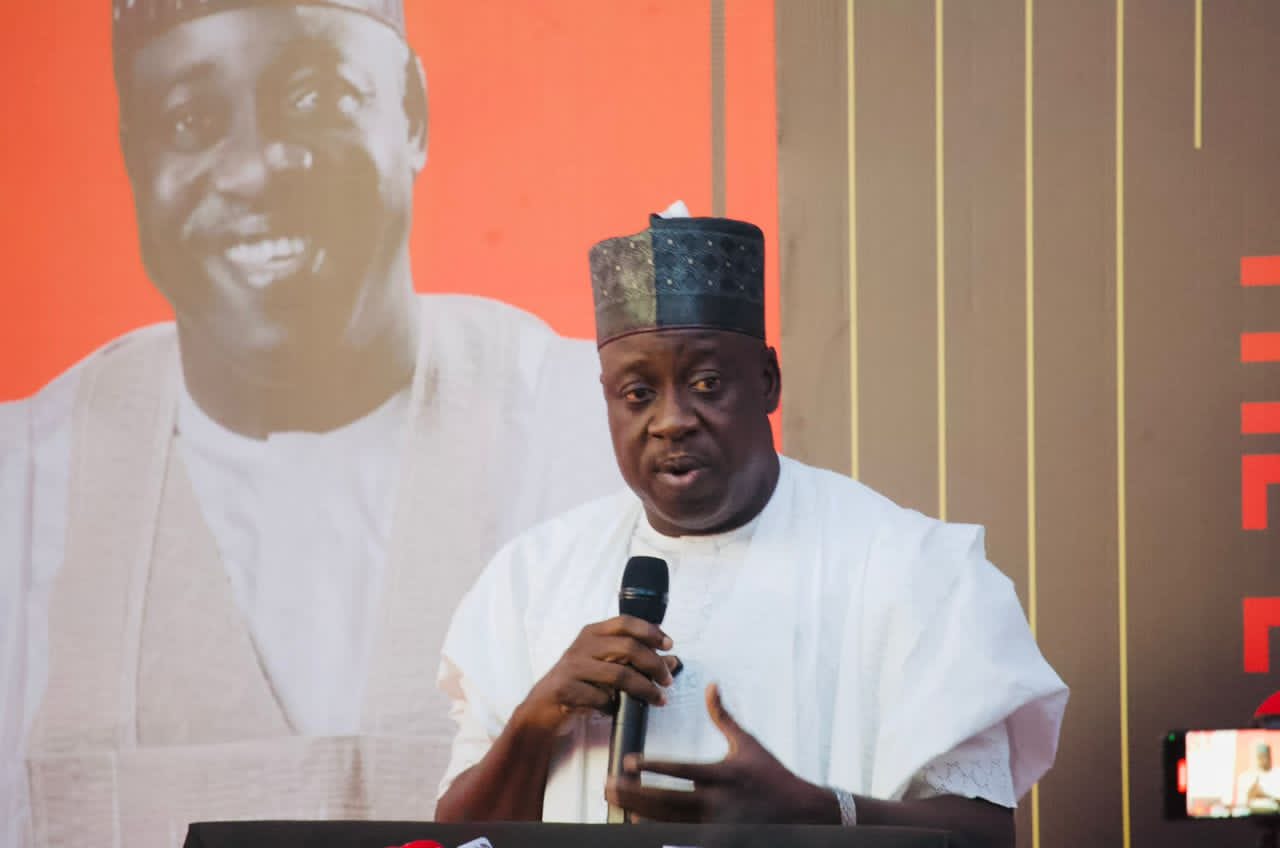
The African Democratic Congress (ADC) has called on the Independent National Electoral Commission (INEC) to review the appointment of politically exposed academics as Returning and Collation Officers for the 2027 general elections.
In a press statement issued on Monday, the party expressed concern over a newspaper report revealing that over 600 senior lecturers from public universities across Northern Nigeria have endorsed President Bola Ahmed Tinubu for the 2027 presidential election.
The ADC argued that this development raises fundamental questions regarding electoral credibility and conflict of interest, noting that university lecturers and vice chancellors are routinely entrusted with the sensitive responsibility of collating election results and declaring winners.
While acknowledging the constitutional right of every Nigerian, including academics, to support or endorse any political candidate, the party insisted that no individual who has openly taken a partisan position should be entrusted with determining the outcome of an election involving that candidate.
“The principle is straightforward,” the ADC stated. “You cannot campaign for a candidate and then be entrusted with counting the votes and declaring winners in the same election that your candidate is contesting in.”
The party, therefore, urged INEC to establish and publish clear criteria disqualifying academics and other prospective election officials who have publicly endorsed candidates, participated in partisan political activities, or otherwise demonstrated an obvious political affiliation.
Additionally, the ADC called on INEC to publish the names of proposed Returning and Collation Officers sufficiently ahead of the elections. This, the party said, would allow political parties and the public to identify and raise legitimate conflict-of-interest concerns.
“The integrity of an election does not begin when the first ballot is cast,” the statement read.
“It begins with the neutrality of the people entrusted to administer, collate, and declare its outcome. Nigerians must never be placed in a position where those who have publicly chosen a side are subsequently presented as neutral arbiters of the contest.”
The statement was signed by Mallam Bolaji Abdullahi, National Publicity Secretary of the African Democratic Congress.
News
Male Heir Not My Priority ; My Daughters Are Doing Well, Says Dangote
By Yusuf Danjuma Yunusa
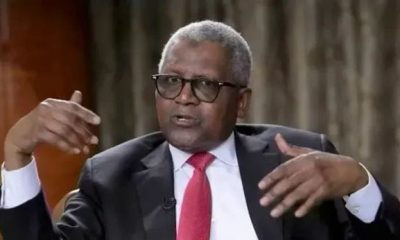
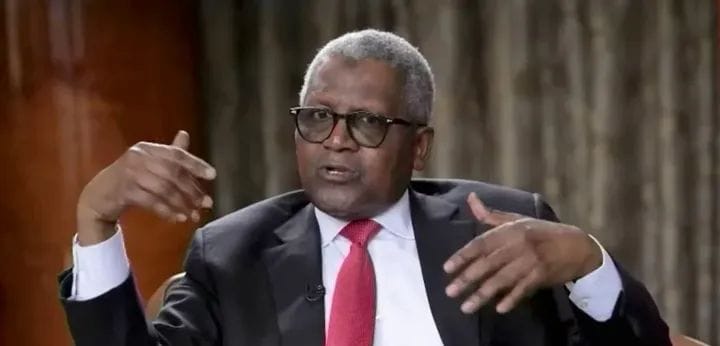
Aliko Dangote, President of the Dangote Group
Africa’s richest man, Aliko Dangote, says having a male child to sustain his family name and business empire is not his priority.
He noted that he has three daughters doing well.
Mr Dangote, 69, who is the president of Dangote Group and Dangote Refinery, made the statement during an interview on Arise TV, on Tuesday.
Asked if he was making efforts to have a son to sustain his legacy, Mr Dangote said, “That’s not really my priority. Let me say it blurntly. It is not really my priority. God controls everything. Sometimes you can pray to have a son but the son could be the one to drag the family name down.”
The Africa’s richest man further said he didn’t think a son would do better than the three girls he already has.
“Sometimes when God does give you a something don’t push it. I don’t think a son would have done better than the three girls I have,” he said.
Mr Dangote’s three daughters; Fatima, Halima and Mariya are holding key executive and leadership positions in the Dangote Group.

Kano APC Chieftain Calls For Re-election Of President Tinubu, Governor Yusuf

ADC Urges INEC to Bar Partisan Lecturers from Serving as Returning Officers in 2027 Elections

Male Heir Not My Priority ; My Daughters Are Doing Well, Says Dangote

BREAKING: APC Governors Hold Closed-Door Meeting Over Wike’s ‘Rainbow Coalition’

Oil Prices Rise After Saudi Pipeline Halt and Delayed Hormuz Talks

From World’s 9th Most Populous City to Perfect: As Gov Yusuf Revisits Kano Master Plan

95% of Governor Abba Kabir Yusuf’s Promises Have Been Fulfilled — CPS Interview By Musa Diso, In Kano

Bello Sharada: A Great Writer, A Bookish Soul, Gone Too Soon

Call Me Chairman, Not Tony!’: Elumelu’s Blunt Correction of Trainee Splits Internet as Old Video Sparks Double Standard Fury

Nigerians Are Tired of Promises’ — CAN Demands Action on Insecurity, Hardship In Eid-el-Maulud Message
Kano APC Chieftain Calls For Re-election Of President Tinubu, Governor Yusuf
ADC Urges INEC to Bar Partisan Lecturers from Serving as Returning Officers in 2027 Elections
Male Heir Not My Priority ; My Daughters Are Doing Well, Says Dangote
BREAKING: APC Governors Hold Closed-Door Meeting Over Wike’s ‘Rainbow Coalition’
Oil Prices Rise After Saudi Pipeline Halt and Delayed Hormuz Talks
From World’s 9th Most Populous City to Perfect: As Gov Yusuf Revisits Kano Master Plan
95% of Governor Abba Kabir Yusuf’s Promises Have Been Fulfilled — CPS Interview By Musa Diso, In Kano
Bello Sharada: A Great Writer, A Bookish Soul, Gone Too Soon
Call Me Chairman, Not Tony!’: Elumelu’s Blunt Correction of Trainee Splits Internet as Old Video Sparks Double Standard Fury
Nigerians Are Tired of Promises’ — CAN Demands Action on Insecurity, Hardship In Eid-el-Maulud Message
-

 Opinion5 years ago
On The Kano Flyovers And Public Perception
-

 Features5 years ago
How I Became A Multimillionaire In Nigeria – Hadiza Gabon
-

 Opinion6 years ago
Kano As future Headquarters Of Poverty In Nigeria
-

 History5 years ago
Sheikh Adam Abdullahi Al-Ilory (1917-1992):Nigeria’s Islamic Scholar Who Wrote Over 100 Books And Journals
-

 Opinion5 years ago
My First Encounter with Nasiru Gawuna, the Humble Deputy Governor
-

 History5 years ago
The History Of Borno State Governor Professor Babagana Umara Zulum
-

 History5 years ago
The Origin Of “Mammy Market” In Army Barracks (Mammy Ochefu)
-

 News4 years ago
Federal University Of Technology Babura To Commence Academic Activities September