
News
Stakeholders call for judicious utilization of subsidy funds
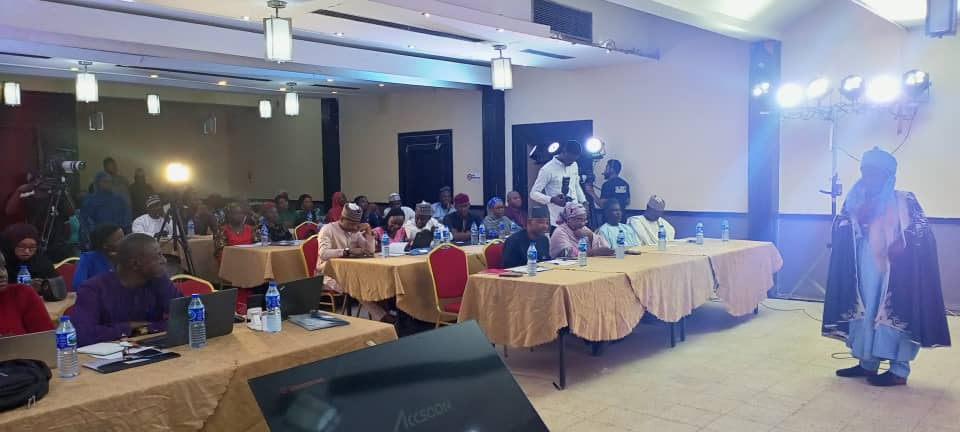
The federal government have been advised, to channel funds removed from subsidy into providing some interventions in Agriculture, minimum wage, healthcare, education and subsidized production.
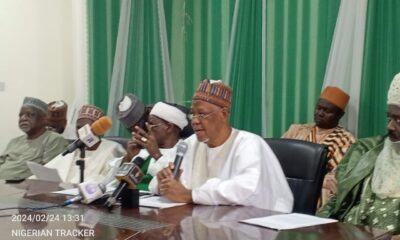
The call was part of recommendations by citizens, civil society organizations (CBOs), PWDs, Unions, Professionals groups and traditional leaders, during a northern regional town hall meeting, held in Kano.
In his opening remarks, the executive director connected development (CODE), Hamzat Lawal explained that, as citizens and stakeholders, the fuel subsidy removal has affected people at the grassroots level,hence the need to come together to profer lasting solutions.
He described citizens engagement as a major catalyst to help improve their engagements in the northern region, states and Communities and be more effective at promoting transparency and accountability.
In his presentation tagged : understanding the NG cares initiative of federal government,financed by world bank: the national Coordinator Nigeria COVID-19, action recovery and Economic stimulus NG-CARES,program Dr. Abdulkarim Obaje called for enforcement of Funds release policy to ensure timely release of palliatives.
“The fund should not stay more that 10 working days in the account of the state government and immediately be disbursed to the beneficiaries.
He highlighted that, there’s the need for citizens to effectively monitor the subsidy savings and spendings to promote transparency and accountability at sub national level.
In his key note presentation titled : fuel subsidy Savings and other FG policies: How can citizens optimally benefit? Eze Onyekpere noted that, an Infrastructure support fund has been set up by proclamation and can be used to alleviate suffering due to fuel subsidy removal.
He identified engagement of organized labour,private sector, professionals, women,information workers and the public in good faith disclosure and negotiations with relevant information and design a social Intervention program to cushion the hardship.
Speaking during a panel discussion, the Falakin Bichi Alhaji Abba Wada Waziri, emphasized the need for more efforts, by CIBa, to ensure that palliatives are distributed at the grasssroots level.
Others who spoke during the town hall meeting are Hajiya Mairo Bello from AHIP, Safiyanu Lawan Bichi from Kano budget working group,Fatima Musa Aliyu Bridge connect Africa and representative from NYFF Gambo Yakubu.
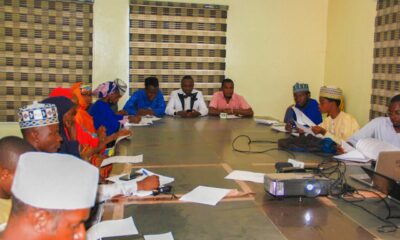
The Townhall meeting themed “How citizens can best benefit from government policies, fuel subsidy, electricity social interventions” was organized by partnership for amplified voice (PAV), with support from world bank.
The event brought together civil society organizations, media practitioners, traditional institutions, vulnerable groups, women groups, person with disabilities, youth groups, trade unions, private sector and civil society across 19 Northern States, to have diverse voices,and robust conversations for the development of an action plan.













News
ASUU Threatens Nationwide Shutdown

By Yusuf Danjuma Yunusa
The Academic Staff Union of Universities has warned the Federal Government of Nigeria to immediately implement the newly approved salary structure for university lecturers or face a possible nationwide shutdown of public universities.
The union issued a four-day ultimatum on Thursday, with its president, Christopher Piwuna, saying failure to act within the deadline would trigger a strong response.
Speaking at Sa’adu Zungur University in Bauchi State, Piwuna said the government must begin payment under the new salary arrangement without further delay.
“We have issued a four-day ultimatum from today to the federal government to commence payment of the newly approved salary structure. Failure to comply will attract a strong response from the union,” he said.
The warning comes months after ASUU and the federal government signed a renegotiated agreement in January, aimed at resolving long-standing disputes and preventing the recurring strikes that have plagued Nigeria’s university system.
At the heart of the agreement is a revised salary structure designed to improve lecturers’ welfare and finally address issues stemming from the controversial 2009 FG-ASUU pact, which remained largely unimplemented for years.
News
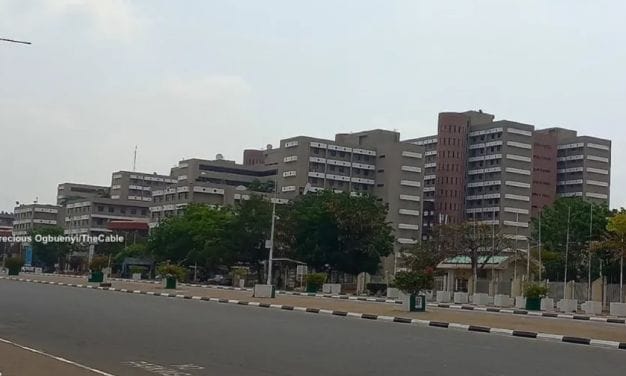
APC Convention:FG Orders Remote Work for Offices Near Eagles Square
By Yusuf Danjuma Yunusa
The Federal Government has directed all civil servants working in offices around Eagle Square and the Federal Secretariat complex in Abuja to work from home this weekend.
The directive, issued in a circular by the Office of the Head of the Civil Service of the Federation, is aimed at easing congestion ahead of the All Progressives Congress (APC) national convention. The event is scheduled to hold on March 27 and 28 at Eagle Square.
The measure is intended to ensure smooth access and security around the convention venue.
News
Nigeria’s Power Supply to Improve in Two Weeks as Gas Pipeline Work Nears Completion
By Yusuf Danjuma Yunusa
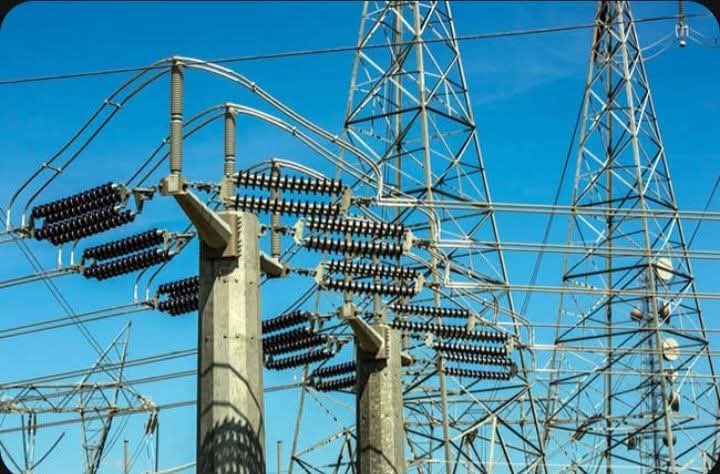
Nigerians can expect a steady improvement in electricity supply within the next two weeks, following the completion of maintenance work on a critical gas pipeline, according to Adebayo Olowoniyi, Chief Technical Adviser to the Minister of Power.
Speaking during an appearance on Arise TV on Thursday, Olowoniyi addressed the recent nationwide blackouts that have disrupted homes, businesses, and industries. His remarks came just days after the Minister of Power, Adebayo Adelabu, issued a public apology over the worsening power situation.
Olowoniyi defended the minister’s apology, framing it not as an admission of personal failure but as a demonstration of accountability. “I think, first of all, I’d like to start with the apology from the Honourable Minister, which we believe is all about taking leadership in the sector,” he said.
“It is not necessarily directly his fault for the challenges that we have, but as the Minister of Power, it was the right leadership step to say, ‘I take ownership of this issue, and I’m going to prefer a solution that would ensure power supply comes back in the shortest available time.'”
The adviser attributed the recent grid instability to disruptions in a major gas pipeline, which supplies fuel to power plants responsible for approximately 75 per cent of the nation’s electricity generation.
“One of the major gas pipelines in Nigeria was undergoing maintenance, and gradually that process is being completed,” Olowoniyi explained. “We’re sure that within the next two weeks, full gas pressure will be back on the gas pipelines, and the power plants will be able to get enough gas at least to go back to their level of generation that they had in the last two to three months.”

ASUU Threatens Nationwide Shutdown

APC Convention:FG Orders Remote Work for Offices Near Eagles Square

Nigeria’s Power Supply to Improve in Two Weeks as Gas Pipeline Work Nears Completion

Court Orders Arrest of PDP Factional Chairman Kabiru Turaki for Skipping Trial

Youth Call on Ibrahim Little to Contest for Kano Governorship Under ADC

The Governor Who Chose His People Over His Politics: Abba Yusuf and the Moral Courage Behind Kano First

FREEDOM OF SPEECH, NOT FREEDOM FROM CONSEQUENCE: A CITIZEN’S CALL FOR RESPONSIBLE PUBLIC COMMENTARY

Press Freedom: IPI Nigeria Calls on New Acting IGP to End Police Harassment of Journalists
Tinubu to Swear in Olatunji Disu as Inspector-General of Police on Wednesday
Restoring the Glory That Was Always There: Governor Abba Kabir Yusuf and the Historical Vision Behind Kano First
ASUU Threatens Nationwide Shutdown
APC Convention:FG Orders Remote Work for Offices Near Eagles Square
Nigeria’s Power Supply to Improve in Two Weeks as Gas Pipeline Work Nears Completion
Court Orders Arrest of PDP Factional Chairman Kabiru Turaki for Skipping Trial
Youth Call on Ibrahim Little to Contest for Kano Governorship Under ADC
The Governor Who Chose His People Over His Politics: Abba Yusuf and the Moral Courage Behind Kano First
FREEDOM OF SPEECH, NOT FREEDOM FROM CONSEQUENCE: A CITIZEN’S CALL FOR RESPONSIBLE PUBLIC COMMENTARY
Press Freedom: IPI Nigeria Calls on New Acting IGP to End Police Harassment of Journalists
Tinubu to Swear in Olatunji Disu as Inspector-General of Police on Wednesday
Restoring the Glory That Was Always There: Governor Abba Kabir Yusuf and the Historical Vision Behind Kano First
-

 Opinion4 years ago
On The Kano Flyovers And Public Perception
-

 Features5 years ago
How I Became A Multimillionaire In Nigeria – Hadiza Gabon
-

 Opinion5 years ago
Kano As future Headquarters Of Poverty In Nigeria
-

 History5 years ago
Sheikh Adam Abdullahi Al-Ilory (1917-1992):Nigeria’s Islamic Scholar Who Wrote Over 100 Books And Journals
-

 Opinion4 years ago
My First Encounter with Nasiru Gawuna, the Humble Deputy Governor
-

 History5 years ago
The Origin Of “Mammy Market” In Army Barracks (Mammy Ochefu)
-

 History4 years ago
The History Of Borno State Governor Professor Babagana Umara Zulum
-

 News4 years ago
Federal University Of Technology Babura To Commence Academic Activities September