
News
CITAD Urges INEC, NITDA, Others To Respect Citizens’ Data Rights,Privacy
By Ozumi Abdul
The Centre for Information Technology and Development (CITAD) has called on the Independent National Electoral Commission (INEC) and its sister government agencies such as National Information Technology Development Agency (NITDA), Nigeria Communications Commission (NCC), Nigeria Data Protection Bureau (NDPB), National Identity Management Commission (NIMC), Federal Ministry of Communications and Digital Economy, National Human Rights Commission, as well as all the security agencies in the country to ensure the protection of citizens data, privacy and respect their rights online, during and after the 2023 general elections.
The call was made during a press conference held at the organization’s head office in Kano on Thursday.
While delivering the text of the press conference, the CITAD Digital Right Manager, Ali Sabo declared that it is important to note that the African Declaration on Internet Rights and Freedoms has clearly spelt out that the freedom and privacy of individual online are respected and protected.
He added that these rights correspond to the fundamental rights provided in the Declaration on Human Rights as Freedom of Expression, Right to Information, Freedom of Assembly and Association, as well as the right to personal privacy and dignity.
He said that the UN has recognized the right to Internet as fourth generation rights, and the right to Internet as means to access these offline rights has at its core the issues of Privacy and Personal Data Protection.
Sabo noted that any breach of the above is a negation to Nigerian commitment to Human Rights as well as other international covenants on human rights, including the African Charter on Peoples and Human Rights.
Sabo recalled that before the month of February, preceding the presidential and national assembly elections, that his organization held similar press conference to draw the attentions of the INEC and its sister government agencies to the need to protect and respect the digital rights of the citizens during and after elections.
He said security agencies, especially the police were also enjoined to avoid doing the hatchet job for politicians by unnecessarily arresting citizens as criticisms are part and parcel of democracy, but however regretted that despite this call, that serious cases of intimidations and harassments by the security agents were still recorded in some parts of the country during the last month’s 25, presidential and national assembly elections.
“Gentlemen of the press, you are aware that in the month of February before the presidential and national assembly elections, we held similar press conference were we drew the attention of the INEC and its sisters government agencies on the need to ensure the protection of the citizens data and privacy.
“Similarly, in the same month we called the attention of the Nigerian Police Force against the arbitrary arrest of citizens on the order of some overzealous politicians who misused their offices to trample on the fundamental human rights of the citizens. It is a well-known fact that “criticism is part and parcel of any democracy and it is one of the cardinal pillars through which democracy is being build”, but governments in Nigeria on many occasions, have displayed arrogance, impunity and lack of tolerance where at any slight instance they have ordered the arrest of the citizens for excising their fundamental human rights of expressing their opinions.
“If you could recall, in presidential and national assembly elections which is being held on the 25th of February, 2023 sad incidences happened in some part of the country, where reported cases of intimidation, harassment and malfunctioning of elections materials such as Biomodal Accreditation System (BVAS) were recorded.
“This month’s press conference is necessary at this time looking at what has happened in the presidential and national assembly elections. It is imperative for us as an organization working on the area of upholding electoral integrity, human rights and digital rights in Nigeria to draw the attention of all the stakeholders, especially security agencies and those who have citizens’ data in their custody, on the importance of protecting and safeguarding the rights of the Nigerian citizens, both online and offline and ensuring that their data is safe and not be misused or tempered with.
“This call is necessary because there is genuine information as we indicated in the previous press conference that government agencies have purchased surveillance systems to track and monitor people, most especially activists, journalists, opponents and those they consider threat to their interests. As Civil Society actors we consider this as a threat to not only the fundamental human rights of the citizens but to our democracy as this exposes citizens to privacy abuse.
“Furthermore, it is important to emphasize the need for respecting the privacy of individuals and ensuring that their data is being kept in a safer place and not allow third person to have access to it.
Consequently, he now called on the Independent National Electoral Commission (INEC) to ensure the protection and confidentiality of the people’s mandate and not allow anybody to tamper with it, to ensure that all the election electronic materials such BVAS are in good condition in order to avoid what happened in the presidential and national assembly election
He also enjoined the INEC to ensure the early delivery of election materials to polling units across the country, as well as ensuring that all election results are being uploaded to INEC Result Viewing Portal (IREV) as stipulated in the 2022 Electoral Act.
The CITAD Digital Right manager also charged the Nigeria Police Force to desist from being used by politicians to intimidate voters, journalists and election observers during the election , while also calling on the National Information Technology Development Agency, Nigeria Communications Commission, Nigeria Data Protection Bureau, National Identity Management Commission, Federal Ministry of Communications and Digital Economy to not allow themselves to be used or transmit citizens data to a third person for any reason unless this request is by a competent court.








News
Ahmad Hamisu Gwale Wins NBMA National Award for Best Male Newscaster 2026
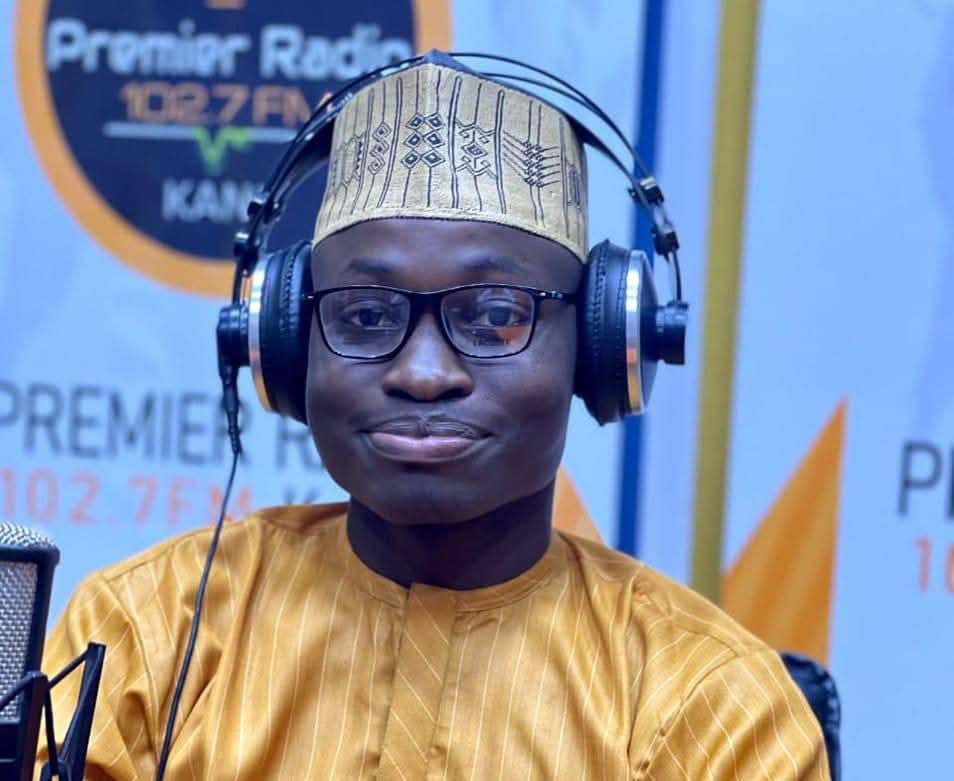
Kano-born journalist and broadcaster Ahmad Hamisu Gwale of Premier Radio 102.7 FM, Kano, has emerged as the winner of the Best Radio Newscaster (Male) National category at the seventh edition of the Nigerian Broadcasters Merit Awards (NBMA) 2026.
The awards ceremony was held on Saturday, 10 October 2026, at the Oriental Hotel, Lagos, bringing together broadcasting and media professionals to recognise excellence, professionalism and innovation across Nigeria’s media industry.
The annual awards featured more than 85 categories spanning television, radio and digital media.
Gwale emerged as the winner ahead of five other nominees: Gbenga Alli-Balogun of Eko FM; Nnah Douglas of Wazobia FM Abuja; Nyamgul Agaji of City 105.1 FM; Augustus “GUS” Aigbe of Cool FM; and Chike Osuji of Orient FM/IBC Owerri.
His achievement marks a significant milestone in his broadcasting career, further highlighting his work in radio news presentation and journalism.
From Sports Broadcasting to National Recognition.
Before winning the NBMA national award, Gwale received recognition from the Sports Writers Association of Nigeria (SWAN), Kano State chapter, as Best Radio Sports Presenter of the Year 2024.
The award was presented on 6 February 2025 during the association’s calendar launch in Kano, recognising his contributions to sports broadcasting.
His recognition at both the SWAN awards and NBMA reflects his professional experience across two important areas of radio broadcasting: sports presentation and news reading.
Early Life and Education
Ahmad Hamisu Gwale was born in Sani Mainagge, Gwale Local Government Area of Kano State, Nigeria.
He developed an interest in journalism and communication, which led him to pursue formal training in mass communication. He graduated from the School of Basic Mass Communication (BMC), Kano, in 2018.
He subsequently studied Computer Science at Kano State Polytechnic, completing his programme on 15 May 2026. He is currently advancing his studies in Computer Science through the Ahmadu Bello University, Zaria.
His educational background combines communication and journalism training with technical knowledge, supporting his interests in digital publishing, multimedia production and technology-driven media.
Journalism and Broadcasting Career
Gwale began his journalism career at Freedom Radio Kano in 2021 before joining Premier Radio 102.7 FM Kano in 2023.
At Premier Radio, he has worked in different capacities, including newsreader, reporter, sports presenter and multimedia journalist. His experience covers news preparation and presentation, editorial work, current affairs reporting, sports coverage and digital content production.
His professional responsibilities and interests include presenting news bulletins, writing and editing reports, covering football competitions, conducting interviews and producing content for broadcast and online audiences.
He has also contributed to sports programmes, including Zauren Wasanni, through which audiences receive updates and discussions about sporting developments.
Through these roles, Gwale has built experience in communicating news and sports information to diverse audiences.
Contributions to Sports Journalism and Barau FC
Beyond radio broadcasting, Gwale has been involved in football media and communications, particularly through his work with Barau Football Club, popularly known as the Maliya Boys.
His contributions have included preparing match reports, previews, player profiles, official announcements, post-match updates and digital content for supporters.
His involvement in football communications has also focused on promoting players, documenting club activities and bringing developments in Kano football to a wider audience.
His experience in sports journalism has complemented his broadcasting career and contributed to his recognition by SWAN Kano.
Publishing and Media Entrepreneurship
In addition to his broadcasting career, Gwale is the founder and chief executive officer of AHG Mirror Media Services Company.
He is also associated with Independent Mirror, an online newspaper established in September 2023, where he serves in a leadership and publishing capacity.
His media interests span online newspaper publishing, news reporting, digital content creation, multimedia production, social media management, online branding and media consultancy.
Through these initiatives, he seeks to expand access to news and information while exploring opportunities offered by digital communication and contemporary media platforms.
Combining Journalism with Technology
Gwale’s interest in Computer Science complements his work in journalism and digital publishing.
His technical education supports his broader interests in online media development, digital communication and multimedia production.
By combining journalism with technology, he is developing a professional profile that spans traditional broadcasting, online publishing, sports communications and media entrepreneurship.
A Milestone in His Broadcasting Career
Winning the Best Radio Newscaster (Male) — National award at NBMA 2026 adds to Gwale’s professional recognition and marks another milestone in his journey through Nigeria’s broadcasting industry.
From his early career at Freedom Radio Kano to his work at Premier Radio and his involvement in digital publishing and football communications, his experience reflects a career built across news presentation, sports journalism and media enterprise.
His latest recognition at the Nigerian Broadcasters Merit Awards places his name among the award recipients celebrated at the seventh edition of the national broadcasting event.
Ahmad Hamisu Gwale continues to pursue opportunities at the intersection of journalism, sports, technology and digital media.
News
Senate Passes Barau’s Bill to Provide Legal Framework for Yusuf Maitama Sule Federal University of Education, Kano
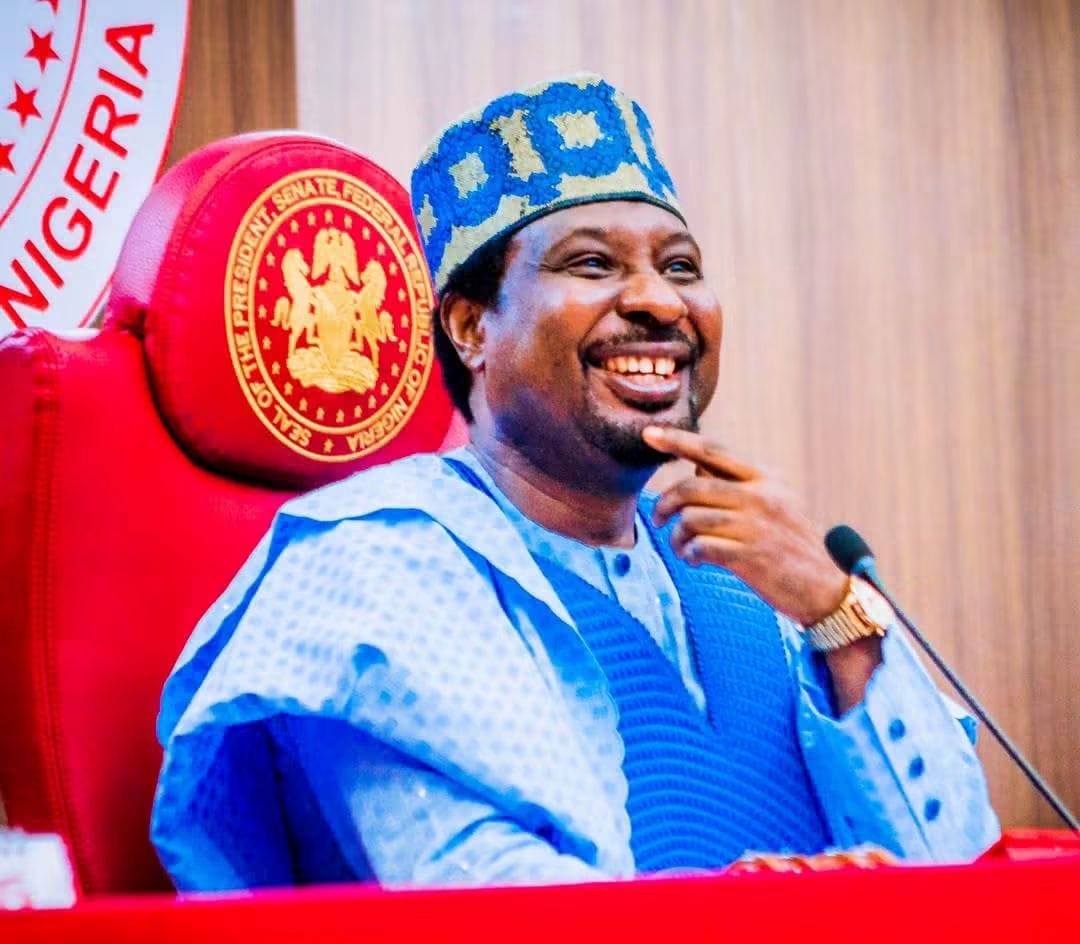
The Senate on Tuesday passed a bill sponsored by the Deputy President of the Senate, Senator Barau I. Jibrin (APC, Kano North), to provide a legal framework for the Yusuf Maitama Sule Federal University of Education, Kano, Kano State.
The bill was passed during plenary presided over by the President of the Senate, Senator Godswill Obot Akpabio, GCON. It seeks to provide the statutory foundation for the effective management and administration of the institution.
Recall that in September 2024, President Bola Ahmed Tinubu approved the conversion of the Federal Colleges of Education in Kano and Zaria into federal universities of education.
Following Senator Barau’s request on behalf of the people of Kano, President Tinubu, on May 10, 2025, also approved the renaming of the institution as the Yusuf Maitama Sule Federal University of Education, Kano.
To give the institution a legal framework, Senator Barau sponsored the bill, which passed through the legislative process and was approved by the Senate for second and third readings. The bill scaled first reading on Wednesday, March 25, 2025.
While leading the debate on the bill, Senator Barau said the legislation was necessary to give legal backing to the institution.
He commended President Tinubu for approving the institution’s upgrade and renaming, explaining that the bill would provide a legal framework for the promotion and development of teacher education and make comprehensive provisions for the university’s management and administration.
He said: “Mr Senate President, this institution has already been established by the President of the Federal Republic of Nigeria.
“You may recall, my colleagues, that in the last Senate, I made efforts to facilitate the establishment of these institutions, including the Federal College of Education, Zaria, which was to be upgraded to a full-fledged university, as well as Alvan Ikoku College of Education and Adeyemi College of Education. The bills were passed and transmitted to the late President Muhammadu Buhari, but they were not assented to.
“When President Bola Ahmed Tinubu assumed office, I approached him and conveyed the desire of my people to have the Federal College of Education, Kano, upgraded to a full-fledged university. He assured me that, since it was the request of the people, it would be done. The President subsequently approved the upgrade of the institution.
“But we were not done yet. At the request of my people, I returned to the President to seek approval for the institution to be named after the late Yusuf Maitama Sule. The President immediately approved the request. Today, the institution is a full-fledged university offering degrees in various fields of education.
” We cannot thank Mr President enough. He loves Kano and has consistently acceded to our requests. Beyond this institution, he has also approved the establishment of the Federal University of Science and Technology in Kabo and the Federal Polytechnic in Rano. We cannot thank him enough for these interventions.”
In his remarks, Senate President Godswill Akpabio commended Senator Barau for sponsoring the bill and thanked senators for supporting its swift passage.
He expressed optimism that President Tinubu would assent to the bill upon its transmission to him, thereby providing the university with the necessary statutory and regulatory framework to fulfil its mandate and continue contributing to national development.
Signed:
Ismail Mudashir
Special Adviser to the Deputy President of the Senate
(Media and Publicity)
October 13, 2026
News
APC London branch confers development award on Gov Abba Kabiru Yusuf
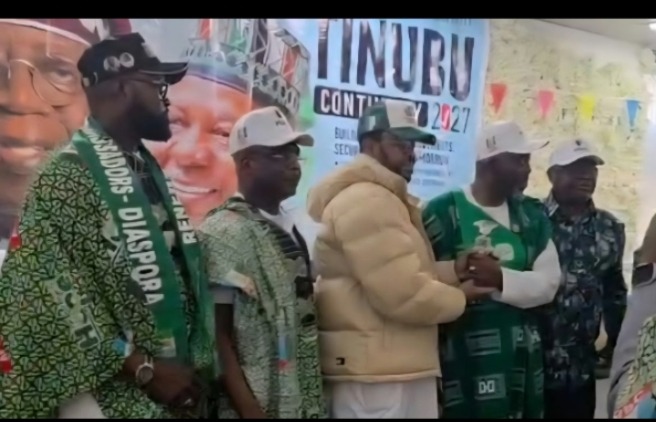
The ruling All Progressive Congress, APC London chapter has conferred an award of honour, on Kano state governor, Eng Abba Kabir Yusuf.
The chairman APC UK , London Branch, Hon Tunde Doherty , at the pageant presentation ceremony held at Double Tree By Hilton London, said the award was conferred on governor Yusuf in recognition of his contributions to the development of the party at the grass root levels.
He added that , the sterling leadership qualities of the recipient and his style of democratic governance were exemplarity saying this resulted to his been nominated by members of the UK branch of the party to be conferred with the award .
The Special Adviser on Youth and Sports Development to the Executive Governor of Kano State, Sani Musa Danja .expressed profound appreciation to the APC UK leadership for the honour, bestowed on the governor, describing it as a clear testimony to the contributions of governor Abba Kabir Yusuf to the growth of the party across board.
He stated that , the awardee has continued to champion the values of unity, service, development and progress within the All Progressives Congress (APC).
According to him, Governor Yusuf has been an evangelist of the importance of strengthening relationships between party members and supporters in Nigeria and the diaspora.
Danja said that the award was earned owing to the sacrifices of the people of Kano State, alongside those working towards a united, prosperous and progressive Nigeria.
He commended Hon. Tunde Doherty and the APC UK leadership for promoting party solidarity and strengthening political engagements within the Nigerian diaspora community.
Danja conveyed the Governor’s appreciation to the Nigerian community in the United Kingdom for remaining actively connected to Nigeria’s political and developmental aspirations.
He affirmed that Kano State Government under the leadership of Abba Kabir Yusuf has remained focus towards its commitment to youth empowerment, sports development, creating economic opportunities and pursuing the general wellbeing of the good people of Kano.
Our correspondent reports that , the occasion also featured the inauguration of the Tinubu Must Stay Organisation, UK Chapter, marking another step in organising the supporters of President Bola Ahmed Tinubu in the United Kingdom and strengthening diaspora engagement in their support of the President’s leadership and the Renewed Hope Agenda.

Ahmad Hamisu Gwale Wins NBMA National Award for Best Male Newscaster 2026

Senate Passes Barau’s Bill to Provide Legal Framework for Yusuf Maitama Sule Federal University of Education, Kano

APC London branch confers development award on Gov Abba Kabiru Yusuf

Kano Monitors ₦48.9bn Projects Across Six LGAs

Muhammad Hussari Makes INEC Final List as APM Governorship Candidate in Kano

Zamfara Varsity ASUU Threatens Warning Strike Over FG-ASUU Agreement, Promotion Arrears

PCACC Arrests Man Over Alleged ₦4.5m Sale, Illegal Leasing of Kano Government Horse Stable

Goje’s Electoral War:The Confrontation With Tinubu,Governor Inuwa,Usman Kumo And APC candidates Ahead Of 2027

Prof Yusuf Adamu Delivers BUK’s 63rd Professorial Inaugural Lecture, Reflects on Medical Geography and Academic Legacy

Al-Istiqama University to Hold Convocation, Honours Late Aminu Dantata, Sheikh Ibrahim Khalil
Ahmad Hamisu Gwale Wins NBMA National Award for Best Male Newscaster 2026
Senate Passes Barau’s Bill to Provide Legal Framework for Yusuf Maitama Sule Federal University of Education, Kano
APC London branch confers development award on Gov Abba Kabiru Yusuf
Kano Monitors ₦48.9bn Projects Across Six LGAs
Muhammad Hussari Makes INEC Final List as APM Governorship Candidate in Kano
Zamfara Varsity ASUU Threatens Warning Strike Over FG-ASUU Agreement, Promotion Arrears
PCACC Arrests Man Over Alleged ₦4.5m Sale, Illegal Leasing of Kano Government Horse Stable
Goje’s Electoral War:The Confrontation With Tinubu,Governor Inuwa,Usman Kumo And APC candidates Ahead Of 2027
Prof Yusuf Adamu Delivers BUK’s 63rd Professorial Inaugural Lecture, Reflects on Medical Geography and Academic Legacy
Al-Istiqama University to Hold Convocation, Honours Late Aminu Dantata, Sheikh Ibrahim Khalil
-

 Opinion5 years ago
On The Kano Flyovers And Public Perception
-

 Features5 years ago
How I Became A Multimillionaire In Nigeria – Hadiza Gabon
-

 Opinion6 years ago
Kano As future Headquarters Of Poverty In Nigeria
-

 History6 years ago
Sheikh Adam Abdullahi Al-Ilory (1917-1992):Nigeria’s Islamic Scholar Who Wrote Over 100 Books And Journals
-

 Opinion5 years ago
My First Encounter with Nasiru Gawuna, the Humble Deputy Governor
-

 History5 years ago
The History Of Borno State Governor Professor Babagana Umara Zulum
-

 History6 years ago
The Origin Of “Mammy Market” In Army Barracks (Mammy Ochefu)
-

 News5 years ago
Federal University Of Technology Babura To Commence Academic Activities September