
News
I Will Defeat Kabiru Gaya Despite APC Power Of Incumbency- Kawu Sumaila
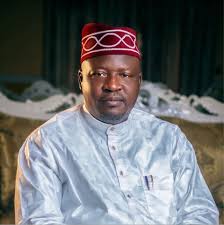
The senatorial candidate for Kano South under the platform of the New Nigeria People’s Party (NNPP), Abdulrahman Suleiman Kawu Sumaila, on Saturday, boasted that he will defeat Senator Ibrahim Kabiru Gaya of the All Progressive Congress (APC), despite the party’s power of incumbency in Kano and at the Federal level.
Kabiru Gaya is re-contesting to represent Kano South at the Senate for the fourth time under the platform of APC, but Kawu Sumaila said the people of Kano South are clamouring for a better representation, citing the crowd that graced his campaign at Sumaila recently.
Kawu, who is the founder, Al-Istiqama University located in Sumaila town, Kano represented Takai/Sumaila Federal Constituency in the House of Representatives between 2003 and 2012.
He was among politicians who left APC to join NNPP, shortly after party primaries in Kano because of what he described as lack of internal democracy.
According to Kawu, “I was a founding member of APC, but I left APC because the party derailed… I joined the party that gave everybody equal opportunity (NNPP) ”
Asiwaju/Osinbajo And The Abrogation Of Acerbic Animosity
The former Senior Special Assistant to President Muhammadu Buhari on National Assembly Matters spoke during a Media Dialogue organized by NUJ Kano Correspondents’ Chapel, held at Grand Central Hotel, Kano.
According to him, “in Kano, the power of incumbency is inconsequential… As far as Kawu Sumaila is concerned, as far as our gubernatorial candidate, Abba Yusuf is concerned, as far as our Grand Commander and presidential candidate, Dr. Rabi’u Musa Kwankwaso is concerned, Kabiru Gaya and other APC candidates are inconsequential.
“They can not defeat us in Kano. In Kano South, people are tired of them. Can’t you see what happened when I launched my campaign, can’t you see the crowd…”
Kawu Sumaila, however, said if elected as a Senator, his political philosophy will be pegged on the principles of Social Justice.
“My take on legislative agenda is to have Social Justice. I will ensure Social Justice in three areas—-education, health and water resources.
“I will make sure there is Social Justice in the distribution of wealth. Here in Kano, I Will make sure there is a powerful Consultative Forum headed by me that will project our interest and ensure we get our fair share of democratic dividends from the federal level.”
He regretted that the mounting insecurity and agitation in the South East and some parts of the North are as a result of lack of Social Justice in the system, assuring that his agenda as a Senator of the Federal Republic of Nigeria is to ensure that there is Social Justice for the benefit of all irrespective of tribe, ethnicity and religion.









News
Breaking: Kwankwaso Resigns from NNPP
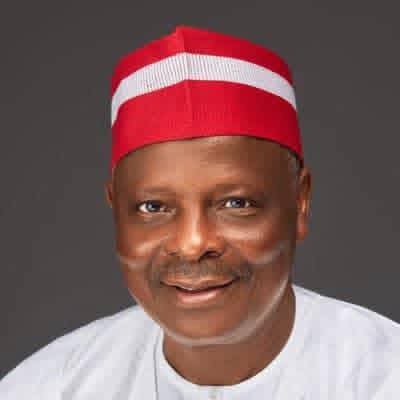
Former Governor of Kano State and 2023 Presidential Candidate of the New Nigeria People’s Party (NNPP), Senator Rabiu Musa Kwankwaso, has announced his resignation from the party. The declaration was made through a statement posted on his verified Facebook page earlier today.
Kwankwaso, who served as the NNPP’s National Leader and spearheaded its presidential campaign in the 2023 general elections, described the decision as “not an easy one.” He explained that his departure was driven by the need for “strategic realignment” in Nigeria’s evolving political landscape.
“Considering the current trajectory of the nation’s political landscape, which calls for strategic realignment, I have found it necessary to identify with another political platform that offers the best opportunity to effectively change the nation,” Kwankwaso stated.
In his resignation letter, Kwankwaso expressed gratitude to the NNPP’s leadership, including National Chairman Ajuji Ahmed, the National Working Committee, Board of Trustees, and members across all levels of the party. He also acknowledged the unwavering support of the Kwankwasiyya Movement, his loyal political base, pledging continued collaboration toward building “a better and more prosperous future for our dear nation.”
Kwankwaso’s exit marks a significant moment for the NNPP, which rose to prominence under his leadership and made notable gains in the 2023 elections. His next political move is expected to reshape alignments ahead of the 2027 general elections, though he has yet to disclose the platform he intends to join.
Political analysts suggest that Kwankwaso’s resignation could trigger a wave of defections within the NNPP, particularly among members of the Kwankwasiyya Movement, who have historically followed his political trajectory.
News
Northern Youth Group Backs Doguwa for Kano APC Leadership, Urges National Role
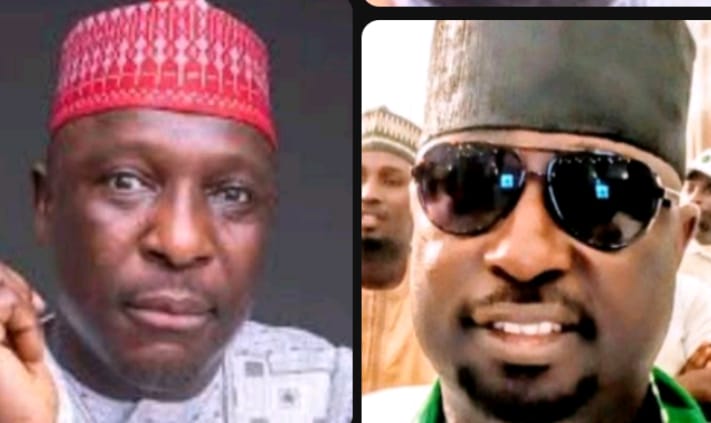
The Northern Youths Merger Groups under the All Progressives Congress (APC) has congratulated Hon. Umar Haruna Doguwa on his election as the APC State Chairman in Kano.
In a statement, the group’s National Coordinator, Hon. Musa Mujahid Zaitawa, described Doguwa as a hardworking and experienced politician capable of leading the party to victory.
The group highlighted Doguwa’s track record, noting his four-time leadership of political parties in Kano, as well as his service in two commissioner roles. According to the group, his vast experience will significantly contribute to the success of the APC.
The Northern Youths Merger Groups also called on APC stakeholders to nominate and support Doguwa for appointment as Chairman of the APC States Chairmen Forum, which comprises representatives from all 36 states and the Federal Capital Territory.
They expressed confidence that such an appointment would strengthen efforts toward securing victory for President Bola Ahmed Tinubu and the APC in the 2027 general elections, particularly in the North-West region.
The group further noted that the North-West zone is expected to deliver massive votes in the 2027 elections, describing it as one of the APC’s strongest strongholds with seven sitting governors.
They emphasized that Doguwa’s leadership, experience, and political influence would play a crucial role in ensuring the party’s success in both the presidential and gubernatorial elections.
News
Kwankwaso to Join ADC on Monday
By Yusuf Danjuma Yunusa
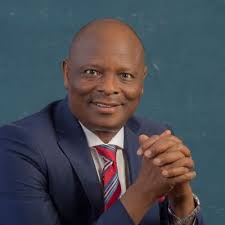
The Kwankwasiyya Movement has announced that former Kano State governor, Rabiu Musa Kwankwaso, will formally defect to the African Democratic Congress (ADC).
In a statement released on Saturday, the movement confirmed that Kwankwaso is expected to complete his registration with the party on Monday, 30 March 2026, in what observers describe as a significant shift in Nigeria’s political landscape ahead of future elections.
The announcement signals a new chapter for the influential northern politician and his loyal political base, widely known as the Kwankwasiyya Movement, whose backing could reshape party alignments and electoral calculations nationwide.
The full statement reads
PRESS STATEMENT
FOR IMMEDIATE RELEASE
Date: 28th March, 2026
The Kwankwasiyya Movement wishes to formally inform all its members across Nigeria and the general public that our Supreme Leader sanetor Rabiu Musa Kwankwaso has concluded all necessary arrangements to join the African Democratic Congress (ADC).
In furtherance of this decision, he will officially register with the party on Monday, 30th March 2026, at his residence, Gidan Kwankwasiyya, Miller Road, Kano, by 12pm.
Consequently, all members of the Kwankwasiyya Movement are hereby directed to proceed and register with the African Democratic Congress (ADC) in their respective wards, local government areas, and states immediately thereafter. Members are also encouraged to fully engage in all party activities and contribute actively toward the growth, development, and success of the party at all levels.
This strategic decision, as always, has been taken in the best interest of the movement, our state, and the nation at large. It reflects our unwavering commitment to the advancement of democratic values, good governance, and the collective aspirations of the people.
We emphasize that democracy must be protected, and the will of the people must always be respected.
The Kwankwasiyya Movement remains resolute, united, and committed to building a better and more inclusive Nigeria.
Signed
Dr. Habibu Sale Mohammed
Spokesperson
Kwankwasiyya Movement

Breaking: Kwankwaso Resigns from NNPP

Northern Youth Group Backs Doguwa for Kano APC Leadership, Urges National Role

Kwankwaso to Join ADC on Monday

Radiographers Kick Against Controversial Health Bills, Demand Immediate Withdrawal

2027 Race : President Tinubu’s Aide, Ja’oji Resigns to Contest

The Governor Who Chose His People Over His Politics: Abba Yusuf and the Moral Courage Behind Kano First

FREEDOM OF SPEECH, NOT FREEDOM FROM CONSEQUENCE: A CITIZEN’S CALL FOR RESPONSIBLE PUBLIC COMMENTARY
Restoring the Glory That Was Always There: Governor Abba Kabir Yusuf and the Historical Vision Behind Kano First

Tinubu to Swear in Olatunji Disu as Inspector-General of Police on Wednesday

NDLEA Clarifies: Drug Case Against Abba Kyari Still Active After Court Discharge
Breaking: Kwankwaso Resigns from NNPP
Northern Youth Group Backs Doguwa for Kano APC Leadership, Urges National Role
Kwankwaso to Join ADC on Monday
Radiographers Kick Against Controversial Health Bills, Demand Immediate Withdrawal
2027 Race : President Tinubu’s Aide, Ja’oji Resigns to Contest
The Governor Who Chose His People Over His Politics: Abba Yusuf and the Moral Courage Behind Kano First
FREEDOM OF SPEECH, NOT FREEDOM FROM CONSEQUENCE: A CITIZEN’S CALL FOR RESPONSIBLE PUBLIC COMMENTARY
Restoring the Glory That Was Always There: Governor Abba Kabir Yusuf and the Historical Vision Behind Kano First
Tinubu to Swear in Olatunji Disu as Inspector-General of Police on Wednesday
NDLEA Clarifies: Drug Case Against Abba Kyari Still Active After Court Discharge
-

 Opinion4 years ago
On The Kano Flyovers And Public Perception
-

 Features5 years ago
How I Became A Multimillionaire In Nigeria – Hadiza Gabon
-

 Opinion5 years ago
Kano As future Headquarters Of Poverty In Nigeria
-

 History5 years ago
Sheikh Adam Abdullahi Al-Ilory (1917-1992):Nigeria’s Islamic Scholar Who Wrote Over 100 Books And Journals
-

 Opinion4 years ago
My First Encounter with Nasiru Gawuna, the Humble Deputy Governor
-

 History5 years ago
The Origin Of “Mammy Market” In Army Barracks (Mammy Ochefu)
-

 History4 years ago
The History Of Borno State Governor Professor Babagana Umara Zulum
-

 News4 years ago
Federal University Of Technology Babura To Commence Academic Activities September