
News
Solace base organizes town hall meeting for health stakeholders in Jigawa
By Aliyu Mansur
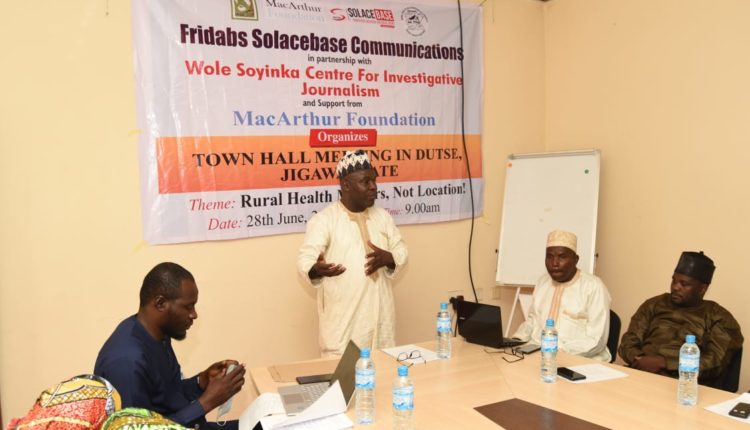
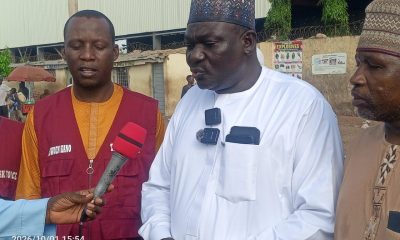
Fridabs Solacebase Communications, the publishing organization of Solacebase online newspaper has conducted a town hall meeting for health stakeholders in Jigawa State.
Solacebase reports that the meeting aimed at improving healthcare services at the grass-root with the theme, ‘’ Community Health Development through Participatory Involvement’’, was part of an investigative and accountability project tagged Rural Health Accountability Project (RHAP).
Speaking earlier at the event, Solacebase Publisher, Abdullateef Abubakar Jos, said the meeting was geared towards addressing the challenges militating access to quality health care services at rural areas and epidemics preparedness of the state.
With our visit to some PHCs in some of the communities in Jigawa , we believe that the people and the government can interface on what needed to be done to improve access to health care at the grass-root.’’
On his part, a medical expert, Dr. Muhammad Namadina with Aminu Kano Teaching Hospital calls for collaboration between the government and the community as a measure to improve health care services at rural areas.
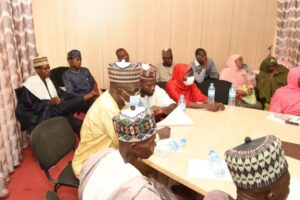
Participants during the workshop
He urged the government to give priority to epidemic preparedness with sensitization of the populace on measures to adopt in case of outbreaks and participatory deployment of resources for transparency.
Some of the participants whom are health care givers decried lack of motivation from the state government to health workers.
‘’One of our major problem is lack of promotion and good incentives that can encourage a person to want to do more,’’ the health professionals lamented.
Also, some of the participants raised concern on inadequate health personnel at Primary Health Care centers in the state.
In a remark, the Jigawa State House of Assembly Chief Whip, Alhaji Lawan Garba Muhammad said the assembly has always been supportive of the state government with legal frame work that would improve access to health care delivery in the state.
The support of the house of assembly to the executive as measure to address shortage of manpower include the law establishing two more colleges of Nursing in Hadejia and Babura as well as improving that of Birnin- Kudu, ‘’Muhammad said.
Muhammad appreciated the initiative of the town hall meeting for stakeholders to evolve ways of improving the healthcare delivery in Jigawa.
Participants at the meeting include community leaders, civil society organizations, health care givers, lawmakers, policy implementers and security agents.
Meanwhile, a campus outreach and advocacy was also conducted by Fridabs Solacebase Communications, at Jigawa State School of Nursing and Midwifery, Birnin Kudu on Wednesday on the need for students to embrace rural posting as a measure to improve manpower shortage at grass-root.











News
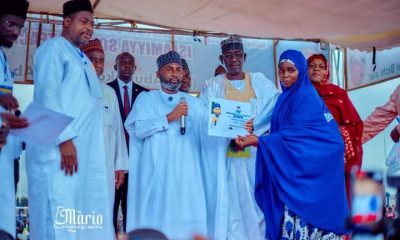
KIRS seeks wider tax compliance to boost Kano revenue
The Executive Chairman, Kano State Internal Revenue Service (KIRS), Alhaji Bashir Maitama has urged taxpayers to pay their taxes correctly and as when due.
Maitama made the call while speaking in Kano on Wednesday during the Customer Service Week of the service.
He said the celebration provided an opportunity for the agency to appreciate taxpayers for their contributions to the development of the state.
The chairman described taxpayers as important stakeholders whose contributions were valued by the agency and the state government.
Maitama said KIRS’ digital tax platforms had made tax payment easier, adding that the agency was committed to resolving challenges experienced by taxpayers.
He urged taxpayers facing difficulties with the platforms to contact the agency for prompt assistance.
On revenue performance, the chairman said KIRS had recorded significant improvement in its collections and expressed confidence that it would meet the revenue target set by the state government.
He said the agency would continue to promote voluntary compliance and expand the tax net by bringing more eligible taxpayers into the system.
“There are many people doing businesses who are not yet in the tax net. We want to ensure that more taxpayers are captured and encouraged to comply voluntarily,” he said.
The chairman explained that the digitization of KIRS operations was aimed at blocking revenue leakages, improving transparency and simplifying tax payment.
He said the agency would continue to adopt technology to improve efficiency, revenue collection and service delivery.
Maitama, therefore, urged taxpayers to fulfil their tax obligations promptly and correctly.
Earlier, The Executive Director, Revenue Operations, (KIRS), Kasim Ismael urged taxpayers to pay their taxes correctly and as when due, describing tax payment as essential to the development of the state.
He said taxes were an important source of revenue for the government to provide essential services, maintain institutions and promote peace and development.
The executive director also called for improved cooperation between the agency and taxpayers to strengthen compliance and revenue generation in the state.
Speaking also, Mr Michael Daniel, who spoke on behalf of the customers, said that taxpayers appreciated the efforts of KIRS in improving its services and strengthening its relationship with taxpayers.
He urged the agency to sustain its commitment to transparency, professionalism and efficient service delivery, saying improved customer service would encourage more people to comply with their tax obligations.
NAN
News
Breaking:FG Offers 30 Day Fuel Subsidy To Nigerians

The Federal Government has announced a 30-day discount on petrol sold through the Nigerian National Petroleum Company Limited (NNPCL), with public transport operators expected to receive priority under the arrangement.
The Minister of Finance and Coordinating Minister of the Economy, Taiwo Oyedele, disclosed this on Thursday in Abuja during a briefing on petrol pricing and the Federal Government’s position on fuel subsidy.
Oyedele explained that the initiative should not be interpreted as a return to petrol subsidy, stressing that the government’s intention was to make the product available at cost for the period.
He said the measure would initially run for 30 days and would focus particularly on public transporters across the country.
“We are offering a discount on petrol dispensed by NNPC limited for the next 30 days in the first instance with priority for public transporters nationwide. So, it’s not a subsidy, government is just saying we sell to you at cost.”
The announcement comes amid renewed concerns over the rising cost of petrol and its impact on transportation and household expenses across the country.
The minister did not immediately provide further details on the size of the discount or the mechanism through which eligible public transport operators would access the benefit
News
Waiya Urges Northern Appointees to Take Tinubu’s Renewed Hope Message to Grassroots
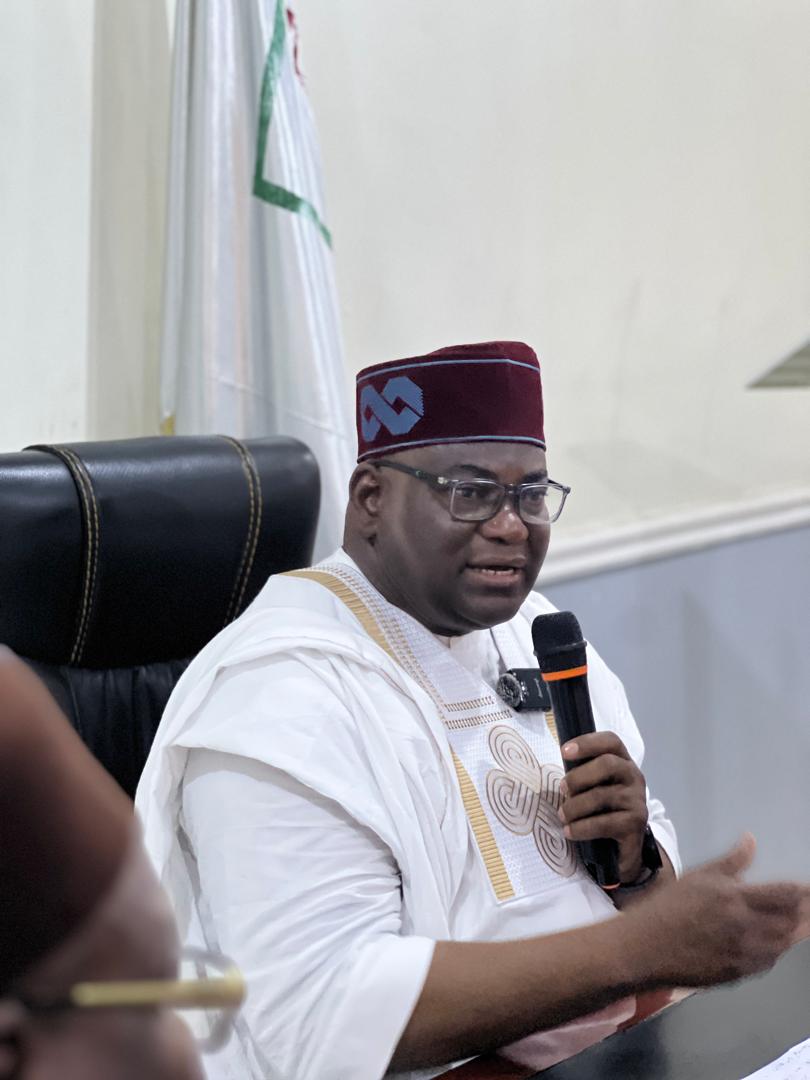
Comrade Ibrahim Abdullahi Waiya, Co-Convener of the Nigeria Forward Project, has urged political appointees of President Bola Ahmed Tinubu from Northern Nigeria to take the message and achievements of the administration’s Renewed Hope Agenda to the grassroots.
Waiya made the call in a statement in which he said those entrusted with public responsibilities must communicate the policies and achievements of the Federal Government more effectively to citizens, particularly as the country approaches the 2027 general elections.
According to him, the call by the Secretary to the Government of the Federation, Senator George Akume, for ministers, special advisers, chairmen and chief executive officers of federal government agencies to improve communication of the administration’s achievements should be taken seriously by appointees across the country.
Waiya said Akume made the call at the Federal Appointees Strategic Summit in Abuja, where he reportedly urged government officials to communicate the impact of the administration’s policies and programmes to Nigerians more effectively.
He said the call had assumed greater political significance as political activities ahead of the 2027 presidential election intensify, with various groups and political leaders beginning grassroots mobilisation for President Tinubu.
Waiya noted that reports of heads of federal government agencies describing themselves as “foot soldiers of the Renewed Hope Agenda” demonstrated the growing mobilisation around the administration ahead of the 2027 elections.
He also referred to reports that Senator Akume had led North-Central political leaders in launching a grassroots mobilisation campaign for President Tinubu and Vice President Kashim Shettima, saying such activities should go beyond political mobilisation.
According to Waiya, the mobilisation should provide an opportunity for government officials and political leaders to explain to Nigerians how the Renewed Hope Agenda affects their daily lives and the development of their communities.
He urged Northern appointees of the Federal Government to communicate what he described as the positive reforms of the Tinubu administration, while presenting measurable achievements in areas such as infrastructure, institutional reforms, economic development and opportunities for citizens.
Waiya said the message should not be restricted to Abuja or other major cities, urging Northern appointees to take the administration’s message to markets, farms, businesses, universities, local communities and households across the region.
He stressed that the concerns and aspirations of ordinary Nigerians should remain central to any campaign for the administration, arguing that citizens would ultimately assess the government based on what they have experienced, seen and understood.
“The 2027 elections will ultimately belong to Nigerians. They will judge the administration by what they have seen, experienced and understood,” Waiya said.
He urged President Tinubu’s appointees not only to campaign for continuity but also to explain the reasons for seeking another mandate, defend the administration’s record with evidence and communicate its future plans clearly to the electorate.
Waiya said the Renewed Hope Agenda should be presented to Nigerians in a manner that enables citizens to understand the policies, programmes and reforms of the administration and their potential impact on communities.
He called on Northern appointees to intensify grassroots engagement, saying the message of the administration must reach people at the community level if it is to be properly understood.
“Now is the time to take the Renewed Hope message to the people. Let the story be told. Let the achievements speak. Let the vision be explained,” Waiya said.
He further urged government officials and supporters of the administration to demonstrate to Nigerians why they believe the Tinubu administration deserves another mandate in 2027.
“Renewed Hope must not remain a government slogan. It must become a story Nigerians can see and feel,” Waiya said.
The statement was signed by Waiya in his capacity as Co-Convener of the Nigeria Forward Project.

KIRS seeks wider tax compliance to boost Kano revenue

Breaking:FG Offers 30 Day Fuel Subsidy To Nigerians
OPEN LETTER TO HIS EXCELLENCY, MR. PRESIDENT BOLA AHMED TINUBU, GCFR PRESIDENT AND COMMANDER-IN-CHIEF OF THE FEDERAL REPUBLIC OF NIGERIA

Waiya Urges Northern Appointees to Take Tinubu’s Renewed Hope Message to Grassroots

Obasanjo Recalls Asaba Massacre, Urges Forgiveness

Zamfara Varsity ASUU Threatens Warning Strike Over FG-ASUU Agreement, Promotion Arrears

Goje’s Electoral War:The Confrontation With Tinubu,Governor Inuwa,Usman Kumo And APC candidates Ahead Of 2027

Per Ishaq Samaila: “Waziri” for Strategy. “Mai Jama’a” for Service. One Man. One Mission. Ibrahim Kabir Masari

PCACC Arrests Man Over Alleged ₦4.5m Sale, Illegal Leasing of Kano Government Horse Stable

Prof Yusuf Adamu Delivers BUK’s 63rd Professorial Inaugural Lecture, Reflects on Medical Geography and Academic Legacy
KIRS seeks wider tax compliance to boost Kano revenue
Breaking:FG Offers 30 Day Fuel Subsidy To Nigerians
OPEN LETTER TO HIS EXCELLENCY, MR. PRESIDENT BOLA AHMED TINUBU, GCFR PRESIDENT AND COMMANDER-IN-CHIEF OF THE FEDERAL REPUBLIC OF NIGERIA
Waiya Urges Northern Appointees to Take Tinubu’s Renewed Hope Message to Grassroots
Obasanjo Recalls Asaba Massacre, Urges Forgiveness
Zamfara Varsity ASUU Threatens Warning Strike Over FG-ASUU Agreement, Promotion Arrears
Goje’s Electoral War:The Confrontation With Tinubu,Governor Inuwa,Usman Kumo And APC candidates Ahead Of 2027
Per Ishaq Samaila: “Waziri” for Strategy. “Mai Jama’a” for Service. One Man. One Mission. Ibrahim Kabir Masari
PCACC Arrests Man Over Alleged ₦4.5m Sale, Illegal Leasing of Kano Government Horse Stable
Prof Yusuf Adamu Delivers BUK’s 63rd Professorial Inaugural Lecture, Reflects on Medical Geography and Academic Legacy
-

 Opinion5 years ago
On The Kano Flyovers And Public Perception
-

 Features5 years ago
How I Became A Multimillionaire In Nigeria – Hadiza Gabon
-

 Opinion6 years ago
Kano As future Headquarters Of Poverty In Nigeria
-

 History5 years ago
Sheikh Adam Abdullahi Al-Ilory (1917-1992):Nigeria’s Islamic Scholar Who Wrote Over 100 Books And Journals
-

 Opinion5 years ago
My First Encounter with Nasiru Gawuna, the Humble Deputy Governor
-

 History5 years ago
The History Of Borno State Governor Professor Babagana Umara Zulum
-

 History6 years ago
The Origin Of “Mammy Market” In Army Barracks (Mammy Ochefu)
-

 News5 years ago
Federal University Of Technology Babura To Commence Academic Activities September