
News
Friday Sermon] This Is How To Love The Prophet Muhammad (Peace Be Upon Him)!
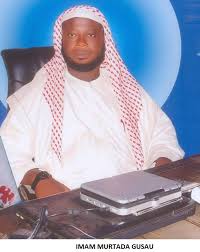
By Imam Murtadha Gusau
In the name of Allah, the Most Gracious, the Most Merciful
All praise is due to Allah, the Lord of all creation. May the salutations of Allah, His peace and blessings be upon our beloved Prophet, his family, his companions and his true and sincere followers until the Last Day – then to proceed:
Dear brothers and sisters! As Muslims, we are commanded to love the Messenger of Allah (Peace be upon him) and to follow in his path without religious deviations or innovations, in order to worship Allah Almighty in the way that He commanded. Sometimes, unfortunately, our claims of love fall short, and thus there are signs that we can reflect on in order to analyse how much love we truly have for the greatest human being to walk this earth, Peace and blessings be upon him.
Respected servants of Allah! The strength of love for the Messenger of Allah (Peace be upon him) is connected to the Muslim’s faith. When his faith increases, his love for the Prophet (Peace be upon him) increases. Loving the Prophet (Peace be upon him) is an act of obedience to Allah and a means of drawing closer to Him. Loving the Prophet (Peace be upon him) is one of the obligatory duties in Islam.
It was narrated that Anas (RA) said: The Prophet (Peace be upon him) said:
“None of you truly believes until I am more beloved to him than his father, his child and all the people.” [Bukhari and Muslim]
You can increase your love of the Messenger of Allah (Peace be upon him) by realising the following:
1. He was sent by his Lord who chose him above all of creation to convey the religion of Allah to mankind. Allah chose him because He loved him and was pleased with him. If Allah were not pleased with him, He would not have chosen him. So we must love the one whom Allah loves and be pleased with the one with whom Allah is pleased. We must realise that he is the close friend of Allah (Khalil) and that close friendship is a higher status and it is the highest degree of love. Jundub (RA) is said to have narrated that:
“I heard the Prophet (Peace be upon him) say: ‘I declare before Allah that I have no close friend from among you. Allah has taken me as a close friend as he took Ibrahim as a close friend. If I were to have taken a close friend from among my Ummah, I would have taken Abu Bakr as a close friend.” [Muslim]
2. We should realise the high status to which Allah has raised him, for he (Peace be upon him) is the best of mankind. It was narrated that Abu Hurairah (RA) said:
“The Messenger of Allah (Peace be upon him) said: “I will be the leader of mankind on the Day of Resurrection, the first whose grave will be opened, the first to intercede and the first to be asked to intercede.” [Muslim]
3. We should realise that he suffered trials and difficulties in order to bring Islam to us. We should remember that the Messenger of Allah (Peace be upon him) was persecuted, hit, slandered and insulted; the closest people to him disowned him and accused him of being a madman, a liar and a sorcerer. He fought the people in order to protect the religion so that it could reach us; they fought him, expelled him from his people and homeland, and gathered armies against him.
4. We should follow the example of his companions who loved him deeply and sincerely. They loved him more than wealth and sons, and more than their own selves. There follow some examples of that:
“It was narrated that Anas (RA) said: I saw the Messenger of Allah (Peace be upon him) when the barber was cutting his hair and his companions were going around him wanting to ensure that his hair would fall only into someone’s hand.” [Muslim]
CITAD Decries Alleged Gender Based Violence At Kano Higher Institution
It was narrated that Anas (may Allah be pleased with him) said:
“On the Day of Uhud some of the people fled and left the Prophet (Peace be upon him), but Abu Talhah stood before him covering him with a shield. Abu Talhah was a powerful archer who broke two or three bows that day. When a man passed by carrying a quiver containing arrows, he would say: Give them to Abu Talhah. Whenever the Prophet (Peace be upon him) raised his head to look at the people, Abu Talhah would say: “O Prophet of Allah, may my father and my mother be sacrificed for you, do not raise your head lest you be struck by an arrow shot by the enemy. My neck is before your neck.” [Bukhari and Muslim]
5. You should follow his Sunnah in word and deed, so that his Sunnah is the path you follow in your whole life, and you put his words before any other words and put his command before everything else; and you should follow the Aqidah (belief) of his noble Companions, and the Aqidah of the Tabi’in who followed them, and the Aqidah of those who followed their path until the present day, namely Ahlus-Sunnah wal-Jama’ah, and avoid bid’ah (innovation).
We ask Allah to help us to love His Messenger (Peace be upon him) and to make him dearer to us than our children, parents, families and our own selves.
Dear and respected servants of Allah! Also, following are some signs that you love Prophet Muhammad (Peace be upon him) sincerely:
1. You follow the message that he conveyed (the Qur’an): This entails reciting, studying, and implementing the rulings of the Creator that were revealed through His Messenger. Belief in the divine scripture is just one part of faith; implementing its rulings in your life is another. Study the Qur’an on a daily basis. Recite, understand, implement, and memorise what you can.
2. You love to follow the Sunnah: Every individual will vary in their love of the Sunnah and thus their love of the Messenger (Peace be upon him). The more you love the Sunnah, the more you’ll try to implement it in your life. You’ll never hear the words “It’s just a Sunnah” coming out of your mouth, primarily because you’ll do anything to follow his path. Instead, every time you learn about a Sunnah, you’ll be eager to implement it in your life. When you learn that something contradicts the Sunnah, you tend to stay away from it lest you fall into religious innovation (Bid’ah). You also ensure that what you’re doing on a daily basis is legitimate and has some basis in the Qur’an or his Sunnah (Peace be upon him). Study the Sunnah from an authentic source and implement it into your life.
3. You study his Sirah and encourage others to do so: Every Muslim should study the biography of the Prophet (Peace be upon him); his compassion, his love, his dedication, his sincerity, his beauty, his exalted character, his concern for his Ummah, and what he went through to convey this message to the rest of the world. The companions used to teach their children the Sirah from a young age. This is one of the greatest signs you love the Messenger of Allah (Peace be upon him) because you want to know more about him and his life, and oftentimes you’ll see those who love him study the sirah multiple times. Study the Sirah from a reputable, authentic source. You have so many resources in this day and age that there’s no excuse for not reading a summarised version of the Sirah or listening to a video series. Furthermore, encourage your family and friends to also study the sirah and share gems from your studies in order to encourage others.
Studying the Prophet’s Sirah is a sign for our love for the Prophet (Peace be upon him); one cannot truly love someone except that they must know about them. This love for the Prophet (Peace be upon him) should supersede our love for our fathers, mothers, relatives, children and even ourselves.
By studying the Sirah we learn about the sacrifices and struggles made by the Prophet (Peace be upon him) in his life to spread Islam. This love must be sincere love for him and it must be translated into obeying him in what he commanded and following his example as a way of life. Imam Shafi‘i would say:
“لَوْ كانَ حُبُّكَ صَادِقاً لأَطَعْتَهُ, إنَّ الْمُحِبَّ لِمَنْ يُحِبُّ مُطِيعُ”
“If your love is sincere, you would have obeyed Him. For verily the lover for the one he loves, obeys him.”
We must understand, to love the Prophet (Peace be upon him) is an obligation for every Muslim.
Shaykhul-Islam Ibn Taimiyyah (may Allah have mercy on him) said:
“The reason why it is obligatory to love the Prophet (Peace be upon him) and venerate him more than any other person is that we cannot attain the greatest good in this world or in the Hereafter except at the hands of the Prophet (Peace be upon him), by believing in him and following him. That is because no one can be saved from the punishment of Allah, and the mercy of Allah cannot reach him except by means of the Prophet (Peace be upon him), by believing in him, loving him, being loyal to him and following him. This is the means by which Allah will save him from punishment in this world and in the Hereafter. This is the means by which he will attain what is good in this world and in the Hereafter.” [See Majmu‘ al-Fatawa, volume 27, page 246]
Let us spend time every day to study the life of our beloved Prophet so we can increase in love for him. How is it we spend so much time knowing friends, spouses, people we admire, but we do not spend time learning about the best of mankind.
Read even a minimum of 15 mins a day on the Sirah of the Prophet (Peace be upon him). Start with the book ‘The Sealed Nectar’ by Shaykh Safiyur-Rahman Al-Mubarakpuri, then move to more advanced books.
4. You ask Allah to send prayers upon him often: Saying “Allahummah salli ala Muhammad” in any of its appropriate variations is asking Allah to send peace and blessings and mercy upon the beloved Messenger, and every time you do it, Allah Almighty will send upon you 10 times the blessings and mercy in your life. Furthermore, every time you send salutations upon him, an angel appointed next to the Messenger (Peace be upon him) to conveys your prayers to him. Finally, the more you send prayers upon him, the closer you’ll be to him on the Day of Resurrection and the more of his intercession you’ll have on that severe day.
Try to at least begin the basic habit of sending 10 prayers upon him in the morning and 10 in the evening and work your way up from there throughout the day and night, especially every time you remember him or when his name is mentioned (Peace be upon him).
5. You love the things he loved and the people he loved: This includes acts of worship (fasting Mondays and Thursdays or praying at night) and countless Sunnan (such as using the siwak) as well as the people he loved and those who loved him, such as Abu Bakr, Umar, Uthman, Ali, his entire family, and the companions in general. This is a litmus test for many who claim to love the Messenger but believe in fabrications against his noble companions.
6. You frequently remember his life and wish to be with him: When you love someone, you find yourself thinking
The more you love the Messenger of Allah (Peace be upon him), the more you’ll refer back to his life and the more you’ll pray that Allah grants you reunion with him in the Hereafter, in the highest levels of Paradise.
Dear brothers and sisters! I have no doubt, no any Muslim worth the name will be happy or will support, agree or accept an insult on the personality of our beloved Prophet Muhammad (Peace be upon him), and at the same time we are telling the whole world with a strong voice that wallahi, you cannot also love the Prophet Muhammad (Peace be upon him) by going against his Shari’ah or his laws!
Prophet (Peace be upon him)’s Shari’ah prohibited you to take the law into your own hands, you are doing it or inciting people to do so all in the name of showing your love to him, which is a great lie!
His Shari’ah prohibited you to punish anybody through burning with fire, and you are doing it all in the name of loving him (Peace be upon him)!!
Imam Abu Dawud (may Allah have Mercy on him) collected three Hadiths in a chapter of his Sunan called:
“The Detestable Nature of Burning the Opposing Forces (in Military Confrontation) With Fire.”
The first two Hadiths narrated by Abu Hamzah al-Aslami and Abu Hurairah – may Allah be pleased with them – include the following clear prohibition:
“No one may punish using fire other than the Lord of the Fire (Allah).”
The third Hadith narrated by Abdullah Ibn Mas’ud – may Allah be pleased with him – includes the wording:
“It is not befitting for anyone to punish using fire, other than the Lord of the Fire (Allah).”
All the three Hadiths were classified as “Sahih” (authentic) by Shaykh Al-Albani (may Allah have Mercy on him) in his checking of the Sunan. In Silsilatul-Ahadith as-Sahihah, he adds a discussion of the authentic narration of when Ali, the fourth Caliph of the Muslims, ordered some people to face the death penalty by fire. When news of this reached Ibn Abbas, he disapproved of the decision and relayed a Hadith of the Prophet (Peace be upon him) with a similar wording:
“Do not punish with the punishment of Allah!” [Bukhari]
Imam at-Tirmizi also collected it in his Jami’, adding that when this comment got back to Ali, he said, “Ibn Abbas has spoken correctly.”
So the narrations clearly prove the impermissibility of harming or killing people with fire, in both wars and punishments for crimes, as understood and narrated by at least four of the Companions.
Allah is the only One who has the right to punish anyone with fire.
Our beloved Prophet Muhammad (Peace be upon him) commanded us to listen to and obey our leaders, but we said No, and still claiming that we love him (Peace be upon him)!!!
“So let those who oppose the Prophet’s command beware, lest fitnah strike them or a painful punishment.” [Qur’an, 24:63]
And lastly, my message to all of you is the saying of Allah Almighty:
“Say: “Our Lord will assemble us all together (on the Day of Resurrection), then He will judge between us with truth. And He is the (Most Trustworthy) AllKnowing Judge.” [Qur’an, 34:26]
O Allah, grant us true and complete love for your Messenger and his Sunnah and allow us to be upon his path in this life and to rejoice with him in the next life.
We ask Allah to help us to love His Messenger (Peace be upon him) and to make him dearer to us than our children, parents, families and our own selves.
All praises and thanks are due to Allah alone, Lord of the worlds. May the peace, blessings and salutations of Allah be upon our noble Messenger, Muhammad, and upon his family, his Companions and his true and sincere followers.
Murtadha Muhammad Gusau is the Chief Imam of Nagazi-Uvete Jumu’ah and the late Alhaji Abdur-Rahman Okene’s Mosques, Okene, Kogi State, Nigeria. He can be reached via: gusauimam@gmail.com or +2348038289761.
This Jumu’ah Khutbah (Friday sermon) was prepared for delivery today, Friday, Shawwal 19, 1443 AH (May 20, 2022).
News
Kano First Forum Petitions Police Over Alleged Inciting Statements by Aminu Babba Dan Agundi
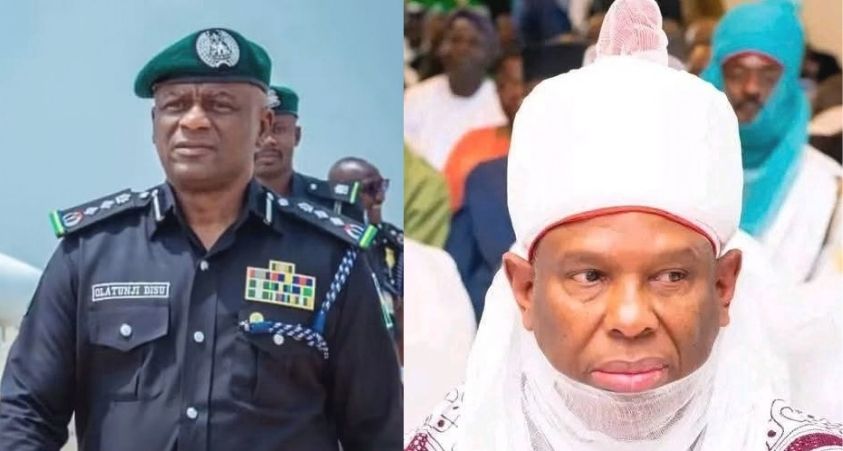
The Incorporated Trustees of the Kano First Forum have petitioned the Kano State Commissioner of Police over alleged public statements by Alhaji Aminu Babba Dan Agundi which the organisation said could heighten tension and threaten public peace in the state.
The petition, signed by the Forum’s solicitor, Barrister Badamasi Suleiman Gandu, urged the police to conduct a discreet, impartial and comprehensive investigation into the statements allegedly made by Dan Agundi during a press briefing on October 1, 2026.
According to the petition, the press briefing followed the participation of Khalifa Muhammadu Sanusi II, the Emir of Kano, in the Independence Day celebration and touched on issues surrounding the reported use of a horse by the monarch during the event.
The Forum alleged that the issue was particularly significant because of an existing directive by the Kano State Government concerning the use of horses, adding that the circumstances surrounding the Emir’s participation in the celebration had generated public discussion.
Kano First Forum, however, said its major concern was a statement allegedly made by Dan Agundi during the briefing in which he was quoted as telling the people of Kano State to “await their return and await further directives from them.”
The organisation described the statement as sensitive in view of the longstanding disagreements surrounding the Kano Emirate and urged security agencies to establish the context and intention behind the words.
According to the Forum, leaving members of the public to speculate about who would return, what such a return would mean and what the reference to “further directives” entailed could create unnecessary fear, anxiety and tension among residents.
The Forum said its decision to petition the police was motivated by the need to prevent statements or actions that could potentially escalate existing disagreements into confrontation.
It stressed, however, that its intervention should not be interpreted as an attempt to suppress legitimate political expression, traditional disagreements, criticism or other lawful forms of public discourse.
Rather, Kano First Forum said its objective was to ensure that disagreements concerning the Kano Emirate were addressed through lawful and peaceful channels without exposing residents to unnecessary tension or the risk of conflict.
The organisation therefore called on the Kano State Police Command to examine the circumstances surrounding the alleged statements, establish their full context and determine whether they amounted to any breach of the law or conduct capable of disturbing public peace.
The Forum also appealed to political, traditional, religious and community leaders in Kano State to exercise restraint in their public communications, particularly when commenting on sensitive matters relating to the Kano Emirate.
It maintained that Kano occupies an important commercial, social and political position and that any development capable of undermining peace in the state could have consequences for millions of residents.
The organisation consequently urged all stakeholders to place the safety and security of residents above personal, political or institutional interests.
“Whatever differences may exist concerning the Kano Emirate, they must be resolved through the courts and other lawful institutions, rather than through statements that could be interpreted as threats, directives or calls for confrontation,” the Forum stated in the petition.
Kano First Forum further said it remained committed to the protection of peace, public safety and the rule of law, explaining that the petition was filed in an effort to prevent avoidable conflict and protect lives and property.
The petition was addressed to the Commissioner of Police, Kano State Command, while copies were also forwarded to the Inspector-General of Police and the Department of State Services for their attention.
The Forum subsequently appealed to the security agencies to independently assess the allegations and take any lawful measures considered necessary to preserve peace and prevent developments that could threaten public order in Kano State.
News
Kano South Senator Constructs Over 6,000 Tube Wells, Unveils 102 Projects Since Election
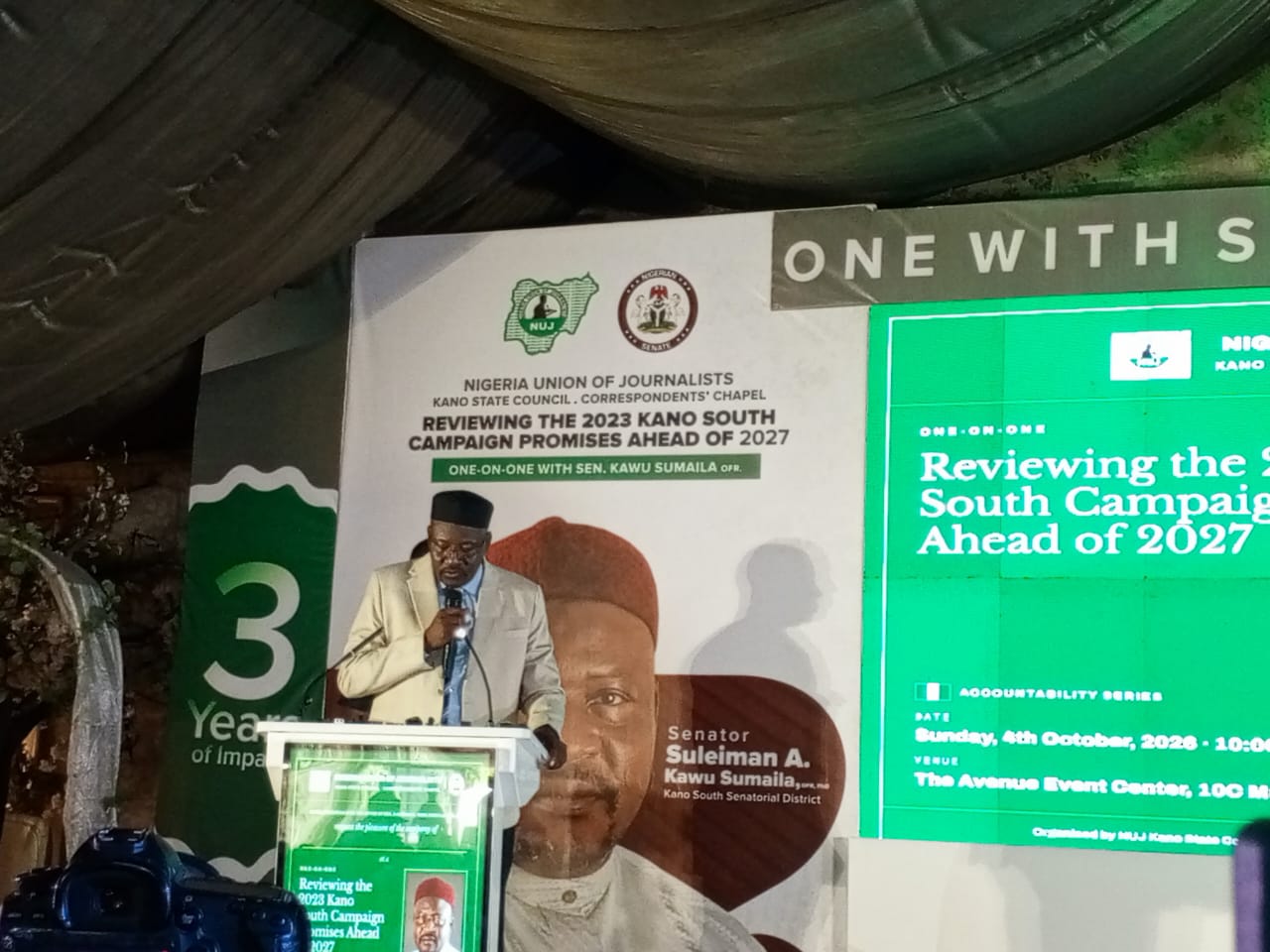
The Senator representing Kano South Senatorial District, Abdurrahman Kawu Sumaila, has said he has constructed more than 6,000 tube wells across the district as part of efforts to boost irrigation farming and improve the livelihoods of rural communities.
Sumaila disclosed this during an interactive session with members of the Nigeria Union of Journalists (NUJ) in Kano, organised to review his performance and assess the implementation of his campaign promises ahead of the 2027 general elections.
The interactive session, titled “Reviewing the 2023 Kano South Campaign Promises Ahead of 2027,” provided an opportunity for the senator to highlight what he described as key legislative interventions, constituency projects and community development initiatives undertaken since his election to the Senate.
Sumaila, who represents Kano South, described the district as the largest senatorial district in Nigeria, comprising 16 local government areas, and said the size of the constituency had made it necessary for him to focus on projects capable of directly improving the lives of constituents.
The senator said the construction of more than 6,000 tube wells across Kano South was one of his major interventions, particularly because of the importance of irrigation to agricultural production in the largely agrarian communities of the district.
According to Sumaila, the tube wells were provided to expand access to water for irrigation and enable farmers to cultivate their land throughout the year, rather than depending solely on rainfall.
He said his interventions were not limited to irrigation infrastructure, stressing that his record since 2023 included a combination of legislative activities, educational projects, road interventions and other constituency development programmes.
Sumaila said he had unveiled a total of 102 projects and interventions since his election to the Senate, adding that the projects were spread across the 16 local government areas that make up Kano South.
The senator also highlighted his legislative efforts, saying that in 2023 he participated in efforts that led to the reversal of the concession of the Mallam Aminu Kano International Airport (MAKIA).
He said he also sponsored a motion backing the resolution on constituency projects, which he described as an important mechanism for ensuring that elected representatives could attract development projects to their constituencies.
On foreign policy, Sumaila said he opposed any military intervention in the Niger Republic, arguing that Nigeria should prioritise diplomatic and peaceful solutions to regional political crises.
He also said he moved a motion calling for an end to the Israel-Hamas war and the killings of civilians in Gaza, stressing the need for the protection of innocent civilians and respect for international humanitarian principles.
The senator said he sponsored a bill in 2024 seeking the creation of Tiga State, arguing that the proposed state would bring governance and development closer to the people in the affected areas.
Sumaila also said he sponsored a motion seeking an investigation into suspected budget padding and multiple overlapping budgets, stressing the need for greater transparency and accountability in the management of public resources.
He said he also moved a motion calling for the completion of the Kano-Maiduguri Road, with particular emphasis on the Wudil-Gaya axis, which he described as an important road corridor for Kano South and the wider region.
On the persistent farmer-herder conflict, Sumaila said he made contributions on the floor of the Senate towards finding lasting solutions to the crisis, particularly through measures aimed at promoting peaceful coexistence between farming and pastoral communities.
The senator said he also sponsored a bill seeking the establishment of a Federal University of Agriculture in Kura, Kano State, saying the institution would strengthen agricultural education, research and human capital development in the state.
Sumaila further disclosed that he sponsored a motion seeking stronger legislative action against drug abuse and trafficking, which he said had become a serious concern, particularly among young Nigerians.
He said he also moved a motion urging the Federal Government to condemn and investigate the killings of Kano indigenes in Uromi, Edo State, stressing the importance of ensuring accountability whenever lives were lost through violence.
The senator also listed among his legislative initiatives a bill seeking the establishment of a Federal College of Education (Special) in Karaye, saying the institution would expand access to teacher education and support the development of specialised education.
Sumaila said he had also moved a motion calling on the Senate to invite the service chiefs to brief lawmakers on the state of insecurity in the country and the measures being taken by security agencies to protect citizens.
Beyond legislative activities, the senator said his constituency interventions included educational infrastructure, road construction and support for students.
He disclosed that arrangements had also been made for the payment of student hostel rent, describing education as one of the key areas requiring sustained intervention to reduce the financial burden on students and their families.
Sumaila also listed the Rimi-to-Magami-to-Sumaila road project among the interventions associated with his representation, saying road infrastructure remained critical to the movement of people, agricultural produce and commercial activities across the district.
He further said classroom blocks had been constructed as part of his educational interventions, including the construction of six classrooms to improve the learning environment for pupils and students.
The senator also said he had undertaken the general renovation of Almajiri schools as part of efforts to improve facilities and create a better learning environment for children enrolled in the schools.
Sumaila said his record in the Senate and his constituency development initiatives should be the basis upon which his constituents assess his performance ahead of the 2027 elections.
“I want my constituents to re-elect me based on my performance,” Sumaila said, urging voters to evaluate his representation based on the projects delivered and legislative interventions made since he assumed office.
He said the interactive engagement with journalists was intended to provide the public with an opportunity to scrutinise his activities and compare his 2023 campaign promises with what had been achieved so far.
Sumaila added that he remained committed to representing the interests of Kano South at the National Assembly and ensuring that the district continued to benefit from government projects and interventions.
News
Kano, IBP sign MoU on health financing transparency dashboard
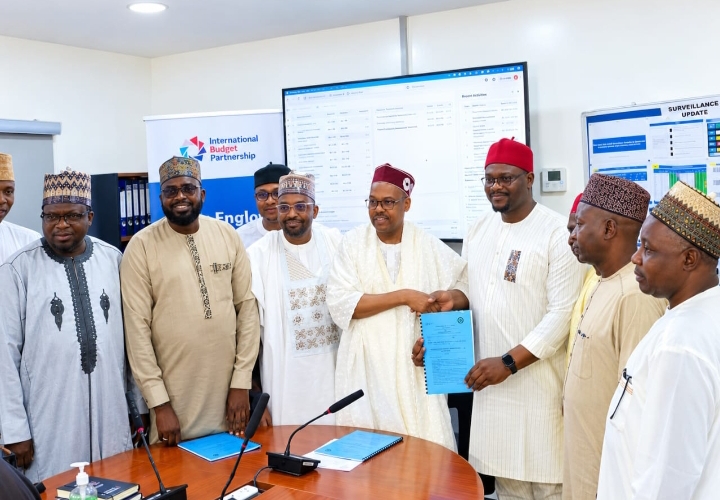
The International Budget Partnership (IBP), Nigeria, and the Kano State Government on Saturday in Kano signed a Memorandum of Understanding (MoU) to strengthen transparency and accountability in health sector financing.
The partnership will support the development of a health financing dashboard to enable stakeholders monitor budget planning, releases, expenditure and performance across health sector agencies in the state.
The Commissioner for Health, Dr Abubakar Labaran, said the partnership had brought significant improvements in budget planning, execution and tracking in the ministry.
Labaran said the dashboard would enable the ministry to monitor the performance of its various units and agencies in real time.
He said the state government would continue to work with IBP and other partners to improve budget performance, releases and other issues relating to health financing.
IBP Country Director, Dr Olayinka Babalola,
said the dashboard was aimed at improving transparency around health budgeting and providing a comprehensive picture of expenditure.
Represented by Policy and Strategy Lead, Onyekachi Chukwu, said Kano was already making significant investments in the health sector alongside development partners, but tracking where the funds were going had been a challenge.
According to him, the MoU will support the state in developing a health financing dashboard that will enable stakeholders to monitor expenditure by various agencies in the health sector.
He said the dashboard would also provide information on the full range of investments in the sector and show where the funds were being spent.
Babalola, said the platform would help stakeholders track reasons why certain health services were not being delivered.
He said the information would enable relevant authorities to identify gaps in service delivery and take appropriate measures to address them.
Dr Shamsuddin Sani, State Representative of the Gates Foundation in Kano, said the foundation was supporting the initiative to address longstanding challenges in monitoring fund flow within the health sector.
Sani said the project would particularly focus on primary healthcare service delivery and provide clearer information on resources coming into the sector.
He said over the years, the health sector in Kano had faced challenges in tracking the amount of funding coming into the system, how much was being spent and how much was not reaching the intended areas.
According to him, government and development partners working in the sector have not had a clear picture of the resources coming into the health system and how they are being utilised.
“With this project, we want to close that gap by ensuring that we know exactly how much resources are coming into the primary healthcare system and the broader health sector in the state,” he said.
Sani said the initiative would also help determine the resources required by the sector and compare government funding with contributions from development partners.
He said the grant for the project was conceived to address the identified gaps, adding that implementation began earlier in the year.
The dashboard is expected to provide stakeholders with timely information on health financing and expenditure to support better planning, monitoring and service delivery in the state.

Kano First Forum Petitions Police Over Alleged Inciting Statements by Aminu Babba Dan Agundi

Kano South Senator Constructs Over 6,000 Tube Wells, Unveils 102 Projects Since Election

Kano, IBP sign MoU on health financing transparency dashboard

Kano Gov Abba Kabiru Yusuf bags international sports award in UK

President Tinubu Salutes Hon. Kabir Bichi, Chair Appropriation Committee Of The House Of Representatives On His 45th Birthday

Zamfara Varsity ASUU Threatens Warning Strike Over FG-ASUU Agreement, Promotion Arrears

Kano Chemists Threaten Warning Strike Over Alleged PCN Pressure

Per Ishaq Samaila: “Waziri” for Strategy. “Mai Jama’a” for Service. One Man. One Mission. Ibrahim Kabir Masari

Goje’s Electoral War:The Confrontation With Tinubu,Governor Inuwa,Usman Kumo And APC candidates Ahead Of 2027

Prof Yusuf Adamu Delivers BUK’s 63rd Professorial Inaugural Lecture, Reflects on Medical Geography and Academic Legacy
Kano First Forum Petitions Police Over Alleged Inciting Statements by Aminu Babba Dan Agundi
Kano South Senator Constructs Over 6,000 Tube Wells, Unveils 102 Projects Since Election
Kano, IBP sign MoU on health financing transparency dashboard
Kano Gov Abba Kabiru Yusuf bags international sports award in UK
President Tinubu Salutes Hon. Kabir Bichi, Chair Appropriation Committee Of The House Of Representatives On His 45th Birthday
Zamfara Varsity ASUU Threatens Warning Strike Over FG-ASUU Agreement, Promotion Arrears
Kano Chemists Threaten Warning Strike Over Alleged PCN Pressure
Per Ishaq Samaila: “Waziri” for Strategy. “Mai Jama’a” for Service. One Man. One Mission. Ibrahim Kabir Masari
Goje’s Electoral War:The Confrontation With Tinubu,Governor Inuwa,Usman Kumo And APC candidates Ahead Of 2027
Prof Yusuf Adamu Delivers BUK’s 63rd Professorial Inaugural Lecture, Reflects on Medical Geography and Academic Legacy
-

 Opinion5 years ago
On The Kano Flyovers And Public Perception
-

 Features5 years ago
How I Became A Multimillionaire In Nigeria – Hadiza Gabon
-

 Opinion6 years ago
Kano As future Headquarters Of Poverty In Nigeria
-

 History5 years ago
Sheikh Adam Abdullahi Al-Ilory (1917-1992):Nigeria’s Islamic Scholar Who Wrote Over 100 Books And Journals
-

 Opinion5 years ago
My First Encounter with Nasiru Gawuna, the Humble Deputy Governor
-

 History5 years ago
The History Of Borno State Governor Professor Babagana Umara Zulum
-

 History6 years ago
The Origin Of “Mammy Market” In Army Barracks (Mammy Ochefu)
-

 News4 years ago
Federal University Of Technology Babura To Commence Academic Activities September