
News
CAJA Drags Kano Chief Judge To National Judicial Council
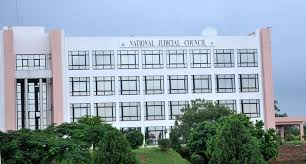
A Civil Society Organisation, Centre for Awareness on Justice and Accountability (CAJA), has petitioned the National Judicial Council, over Kano State Chief Judge inaction on petitions of misconducts against Magistrates, particularly, Aminu Muhammad Gabari and for improper administration of the state’s Judicial Service Commission.
In a three page petition addressed to NJC Chairman and Chief Justice of Nigeria , dated March 15th 2022 and cited by NIGERIAN TRACKER on Wednesday, accused the leadership of Kano judiciary of inaction to complaints on various acts of corruption, discriminatory/preferential treatments of litigants and biases in the direction of cases to the Magistrate Courts.
The petition was signed by Executive Director, CAJA , Kabiru Saidu Dakata
The petition read in part,’’ CAJA has observed after thorough investigation that in spite of having over 80 Magistrates, successive Chief Registrars of the Kano State High Court have been in the predictable habit of directing all politically exposed cases involving the Kano State Governor, His Excellency Dr. Abdullahi Umar Ganduje or any member of the ruling party, against any perceived political opponent, to one Senior Magistrate in person of Aminu Muhammad Gabari of Magistrate court No. 58, Nomansland, Kano.’’
Former Jigawa Chief Judge Appreciates BIKOBA Leadership Style
‘’The said Magistrate, who our findings reveal is notorious among lawyers and litigants alike is evidently favoured by State’s Chief Judge who in spite of many petitions against the Magistrate and indeed many other erring magistrates in the State has failed and refused to take any administrative action; hence this petition is against the Chief Judge in his capacity as Chairman Judicial Service Commission, Kano State.’’
According to the petition, ‘’While it is predictable to all and sundry that all cases (mostly defamation of character-an ordinarily bailable offence considered a civil wrong in many jurisdiction of the world) against any perceived opponent of the Kano State government goes to the Senior Magistrate in question, the said Magistrate has never failed the State Governor and general public’s expectation by consistently imposing stringent and sometimes impossible bail conditions against anyone arraigned before him in this respect.’’
My lord, it is also our keen observation that similar cases involving nonentities never get the type of treatment given to cases involving Kano State governor, members of the first family or other eminent members of the government or ruling party all of whom for obvious reasons prefer Aminu Gabari’s court over 80 other available options.’’
‘’The almost predictable pattern of the Magistrate is always to send the defendants to correctional centers on arraignment, after taking a simple bail application which would almost always be adjourned for ruling while ordering for the remand of the defendants. On the day of ruling for bail, the magistrate will normally impose stringent bail conditions apparently incompatible with the nature of the offence and in some cases, the learned magistrate will refuse to sit in the court for one excuse or another thereby prolonging the defendants’ incarceration.’’
To cite a few instances, Engineer Ma`az Magaji Dan Sarauniya, Abdulmajid Almustapha (Danbilki Kwamanda), Salisu Yahaya Hotoro, Rufaida Ahmad, Damina Ali Gwarzo and Dalha Yusuf, all of whom are political opponents of the Kano State governor, have at various times suffered the above fate from the same magistrate. We will be ready in due course to furnish further particulars of even more cases and persons who suffer the same “justice” which my lord before now decreed must not only be done, but evidently be seen to be done by all and sundry.
While we recognize the constitutional right of the governor to seek redress where he feels his character has been defamed, it is a cause for concern, under a rule of law regime, to devise special procedure in the determination of cases involving key government officials as our constitution requires fair and equitable treatment of all Nigerians.
It is worthy of mention also that the lack of confidence in the administration of the Chief Judge of Kano State against many corrupt and erring magistrates has reached its height in Kano state, in that some complainants have resorted to file court cases against the persons of sitting magistrates before Kano State High court for a far-fetched judicial instead of administrative remedy. To cite an example here also, there is currently a civil case pending before Hon. Justice Ubale of the Kano State High Court against the same Aminu Gabari bordering on receipt of bribes via his bank account.
While we remain utterly disturbed by the trend of administration of justice in Kano state, My lord, we are confident, Sir, that your good office will swiftly and expansively investigate this and even many other cases in order that Kano and indeed all other suitors for justice get the best justice they deserve.
News
Attacks on the media: IPI Nigeria urges President Tinubu to call Governor Bago to order.
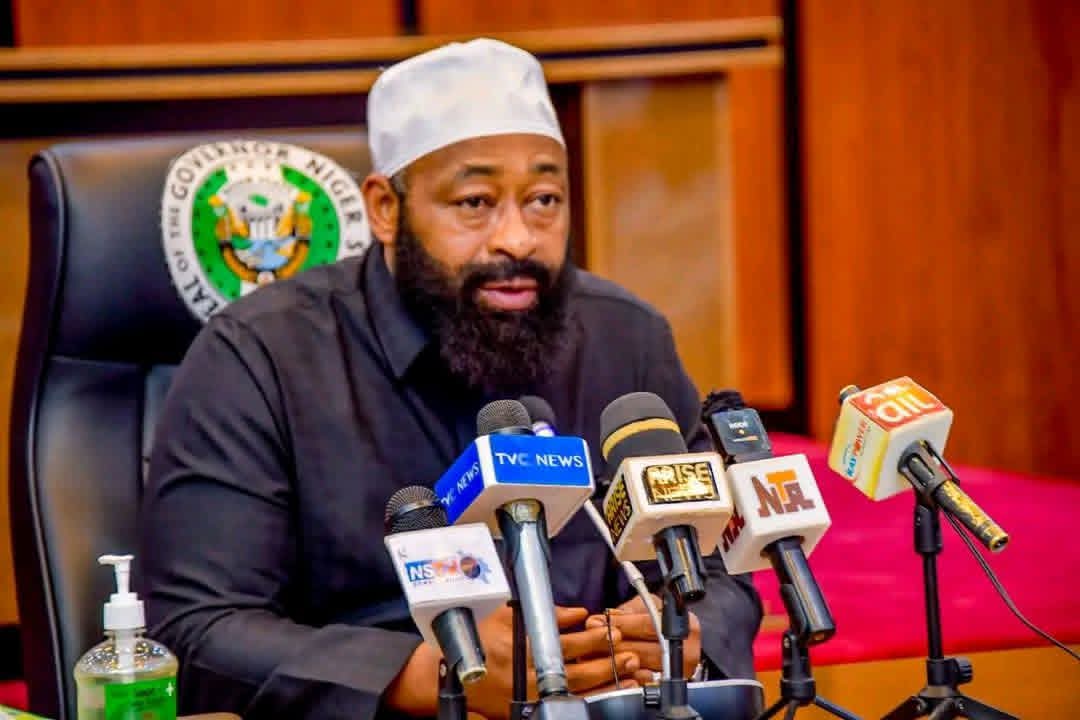
The International Press Institute (IPI) Nigeria has called on Bola Ahmed Tinubu to intervene in what it describes as a pattern of actions by Mohammed Umar Bago that threaten press freedom, warning that such conduct undermines journalists’ ability to perform their constitutional duties within Niger State. The appeal was made in a formal statement issued by the institute’s Nigerian chapter, highlighting growing concerns about the safety and independence of the media.
In the statement jointly signed by Fidelis Mbah and Tobi Soniyi, Deputy President and Legal Adviser respectively, IPI Nigeria said recent actions linked to the Niger State governor and his aides have directly infringed on press freedom. The organisation cited the assault on a reporter with the Nigerian Television Authority (NTA) as the latest example of hostility toward journalists, stressing that such incidents are becoming increasingly frequent and troubling.
The journalist at the centre of the latest controversy, Musa Mikail, was reportedly attacked while covering a Ramadan Iftar event held at the palace of the Etsu Nupe in Bida on March 13, 2026. According to accounts, private security personnel allegedly acting on the directive of Shehu Abdullahi Maikano, the Chief Security Officer to Governor Bago, forced the reporter out of the venue after physically assaulting him.
Recounting the incident, Mikail said he and his cameraman were quietly performing their duties when confronted. He explained that despite clarifying they were not obstructing proceedings, the governor’s CSO allegedly pushed him, after which other security operatives joined in the assault and ejected him from the event. The account has since raised concerns among media stakeholders about the safety of journalists covering public functions in the state.
IPI Nigeria described the attack as part of a “disturbing trend” of violations against journalists, accusing Governor Bago’s administration of fostering an environment hostile to press freedom. The organisation noted that such repeated incidents not only intimidate reporters but also erode democratic accountability by restricting the free flow of information to the public.
The institute also pointed to earlier cases, including the detention of Ahmed Isah Sakpe, a reporter with Prestige FM in Minna, who was summoned by the police over alleged defamation of a government protocol officer. It further referenced the closure of Badeggi FM Radio in November 2025 on grounds that its broadcasts were deemed critical of the state government, describing the action as arbitrary and disproportionate.
Other incidents highlighted include the arrest of freelance journalist Ibrahim Ndamitso in May 2025 after he questioned the governor about insecurity, and the interrogation of journalist Yakubu Mustapha Bina by the State Security Service following a report about the governor’s convoy. IPI Nigeria also recalled the 2023 assault on Voice of America correspondent Mustapha Batsari by a senior state official within Government House, Minna.
According to IPI Nigeria, the cumulative effect of these incidents led to Governor Bago’s inclusion in its “Book of Infamy,” a publication that documents individuals and institutions accused of undermining press freedom. The list, unveiled in December 2025, underscores what the institute describes as persistent attempts by certain public officials to silence critical voices and suppress freedom of expression.
Reacting specifically to the assault on the NTA reporter, the organisation called on the Inspector General of Police, Tunji Disu, to launch an immediate investigation and ensure that those responsible, particularly the governor’s CSO, are held accountable. It stressed that failure to act decisively could embolden further attacks on journalists across the country.
IPI Nigeria reiterated that safeguarding press freedom is essential to democracy, urging federal authorities to take a firm stance against any abuse of power that targets the media. The organisation maintained that journalists must be allowed to operate without fear of harassment, intimidation, or violence, warning that continued violations could damage Nigeria’s democratic credentials and global reputation.
News
Governor Yusuf Sacks Sagagi as Kano Commissioner Of Commerce
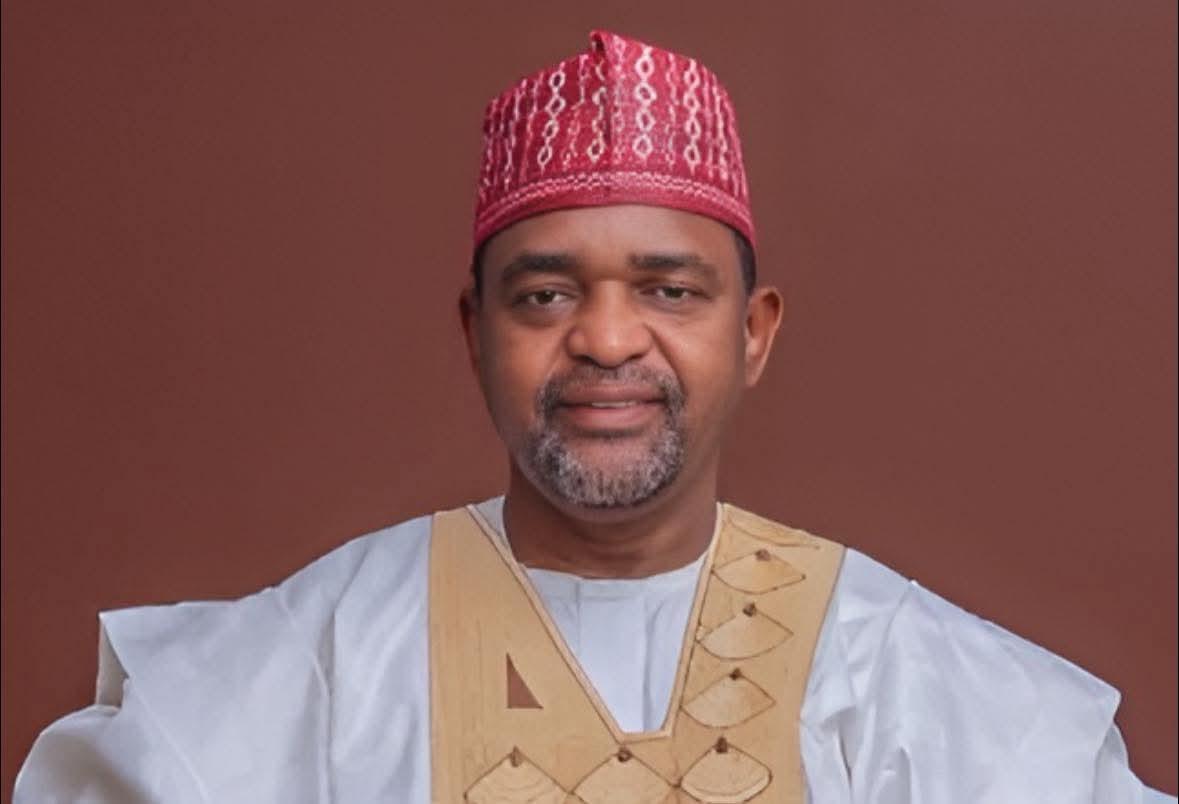
Kano State Governor, Alhaji Abba Kabir Yusuf, has relieved Alhaji Shehu Wada Sagagi of his appointment as Commissioner for Investment, Commerce and Industry with immediate effect.
This was contained in a statement signed by the governor’s spokesperson, Sunusi Bature Dawakin Tofa, on Thursday.
According to the statement, the former Commissioner is directed to hand over the affairs of the ministry to the Director Commerce with immediate effect.
Governor Yusuf expressed appreciation for the services rendered by the former commissioner during his tenure.
He acknowledged Sagagi’s contributions to the development of the state, particularly in the areas of politics, religion, small and medium enterprises.
The Governor wished him success in his future endeavours as he reassured the public of his administration’s continued commitment to efficient service delivery and good governance in the state.
This decision is part of the ongoing strategic realighment of government structures for systematic growth and sustainable development.
News
Terrorist Logistics Suppliers Apprehended in Borno
By Yusuf Danjuma Yunusa
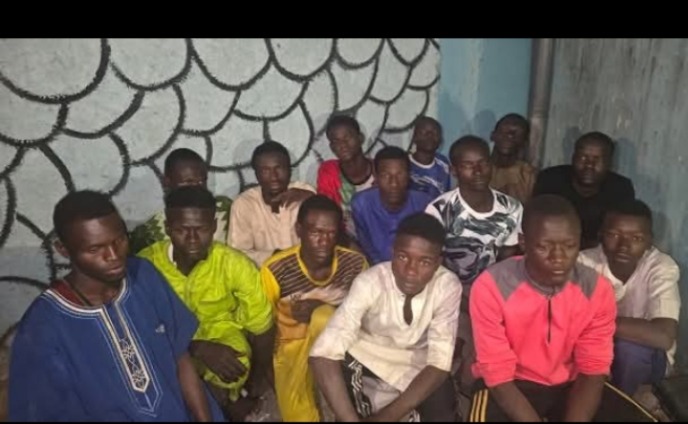
Troops of Operation Hadin Kai, OPHK, have apprehended 18 suspected logistics suppliers allegedly enroute Gubio, with plans to proceed to the Gudumbali axis, a known Boko Haram terrorists, BHTs, enclave.
Troops of Operation Hadin Kai, OPHK, have apprehended 18 suspected logistics suppliers allegedly enroute Gubio, with plans to proceed to the Gudumbali axis, a known Boko Haram terrorists, BHTs, enclave.
This is contained in a daily operational report made available to the News Agency of Nigeria on Wednesday.
The military said the suspects were intercepted while travelling towards the location to deliver the goods to the terrorists.
According to the report, preliminary investigation revealed that all 18 suspects confessed to engaging in the supply of goods to the terrorist group.
“They admitted that they routinely purchase and convey items to the terrorists.
“Their justification was lack of employment, which points to a deeper socio-economic challenge in Maiduguri and its environs,” the army said.
The development, according to the reportt, validates recent remarks by the Chief of Defence Staff on the link between economic hardship and the sustenance of insurgency logistics networks.
“The arrest highlights the critical role of civilian collaborators in sustaining terrorist operations, particularly in remote areas such as Gubio and Gudumbali,” it added.
The army called for a comprehensive approach combining military operations with economic empowerment and job creation to address the root causes of insurgency in the region.

Attacks on the media: IPI Nigeria urges President Tinubu to call Governor Bago to order.

Governor Yusuf Sacks Sagagi as Kano Commissioner Of Commerce

Terrorist Logistics Suppliers Apprehended in Borno

Kano Gov’t Offers Study Scholarship to SWAN Members

OPINION: Examining the Sanity of Saner Climes

The Governor Who Chose His People Over His Politics: Abba Yusuf and the Moral Courage Behind Kano First

FREEDOM OF SPEECH, NOT FREEDOM FROM CONSEQUENCE: A CITIZEN’S CALL FOR RESPONSIBLE PUBLIC COMMENTARY

How Kano Government Official Allegedly Intimidate And Insult Two Journalists On Lawful Duty

Press Freedom: IPI Nigeria Calls on New Acting IGP to End Police Harassment of Journalists
Tinubu to Swear in Olatunji Disu as Inspector-General of Police on Wednesday
Attacks on the media: IPI Nigeria urges President Tinubu to call Governor Bago to order.
Governor Yusuf Sacks Sagagi as Kano Commissioner Of Commerce
Terrorist Logistics Suppliers Apprehended in Borno
Kano Gov’t Offers Study Scholarship to SWAN Members
OPINION: Examining the Sanity of Saner Climes
The Governor Who Chose His People Over His Politics: Abba Yusuf and the Moral Courage Behind Kano First
FREEDOM OF SPEECH, NOT FREEDOM FROM CONSEQUENCE: A CITIZEN’S CALL FOR RESPONSIBLE PUBLIC COMMENTARY
How Kano Government Official Allegedly Intimidate And Insult Two Journalists On Lawful Duty
Press Freedom: IPI Nigeria Calls on New Acting IGP to End Police Harassment of Journalists
Tinubu to Swear in Olatunji Disu as Inspector-General of Police on Wednesday
-

 Opinion4 years ago
On The Kano Flyovers And Public Perception
-

 Features5 years ago
How I Became A Multimillionaire In Nigeria – Hadiza Gabon
-

 Opinion5 years ago
Kano As future Headquarters Of Poverty In Nigeria
-

 History5 years ago
Sheikh Adam Abdullahi Al-Ilory (1917-1992):Nigeria’s Islamic Scholar Who Wrote Over 100 Books And Journals
-

 Opinion4 years ago
My First Encounter with Nasiru Gawuna, the Humble Deputy Governor
-

 History5 years ago
The Origin Of “Mammy Market” In Army Barracks (Mammy Ochefu)
-

 History4 years ago
The History Of Borno State Governor Professor Babagana Umara Zulum
-

 News4 years ago
Federal University Of Technology Babura To Commence Academic Activities September