
News
2023:Senate Removes Direct Primaries From The Electoral Act

The Senate on Wednesday removed the clause that makes direct primary mandatory for the election of candidates in political parties from the electoral act amendment bill.
The Senate in late 2021 passed a version of the bill and transmitted it to President Muhammadu Buhari who declined assent to the bill.
Besides the amendment to Clause 84 of the Electoral Act (Amendment) Bill, Senate President, Ahmad Lawan has informed lawmakers that any further proposals for amendments will be considered and incorporated during the “clean up” of the Bill.
Senate resolved to rescind its decision on the affected Clause of the Bill as passed and re-commit same to the Committee of the Whole for consideration.
Buhari had said that the mandatory use of direct primaries for all political parties in the country will be too expensive to execute, saying that it will put a financial burden on Nigeria’s lean resources.
Alleged N29bn Fraud: Appeal Court Rules Nyako Has Case to Answer
He also expressed fears that the proposed mandatory use of direct primaries will amount to the violation of citizens’ rights will be violated and will lead to marginalisation for miniature political parties.
Buhari advised the National Assembly to look into the areas of concern and transmit the bill to him for assent.
House of Representatives speaker Femi Gbajabiamila and Lawan on Tuesday said the National Assembly will work on the proposed legislation and send it to Buhari.
Meanwhile, the Independent National Electoral Commission (INEC) on Tuesday said it will not release an election timetable till the electoral amendment bill is passed.
“On the Electoral Amendment Bill currently before the National Assembly, the commission is encouraged by the Senate President’s assurance to give priority attention to the Bill when the National Assembly reconvenes from its recess today, and the commitment by the President to assent to the Bill as soon as the issue of mode of primaries by political parties is resolved,” INEC chairman Mahmood Yakubu said in Abuja.












News
APC PCC Reinforces Gov. Yusuf’s Peace Deal Between Deputy Senate President Barau Jibrin and Rep. Abubakar Bichi
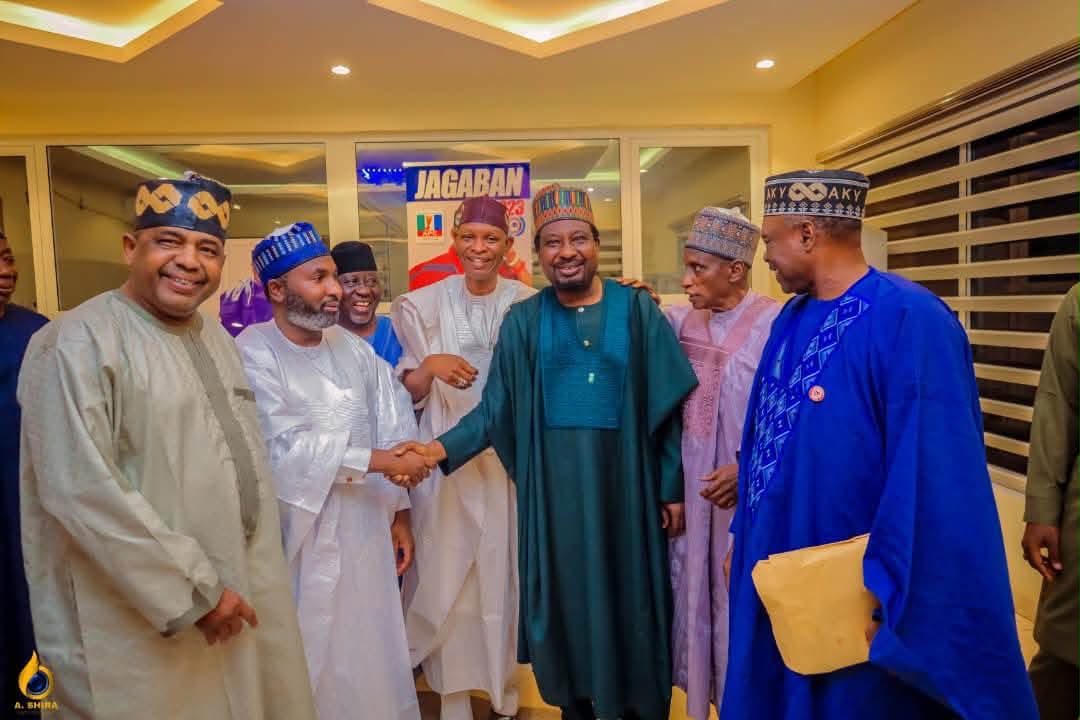
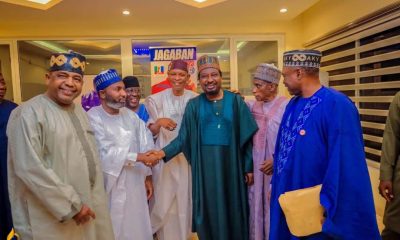
The Presidential Campaign Council (PCC) of the All Progressives Congress (APC) has reinforced the peace agreement between the Deputy President of the Senate, Senator Barau I. Jibrin, and the Member representing Bichi Federal Constituency, Hon. Abubakar Kabir Bichi, following a reconciliation meeting aimed at strengthening unity within the party in Kano State.
The meeting, which lasted nearly two hours, was led by Senator Habu Ibrahim, Chairman of the Presidential Campaign Council’s Reconciliation Committee for the North-West.
Members of the committee summoned the two prominent Kano APC stakeholders to reaffirm their commitment to the peace agreement earlier facilitated by Kano State Governor, Alhaji Abba Kabir Yusuf, about two months ago.
The intervention was aimed at consolidating the existing understanding between the two leaders and encouraging APC stakeholders in Kano to work together under one umbrella for the success of the party at all levels.
Other members of the reconciliation committee included Senator Umaru Tanko Al-Makura and Senator Adamu Aliero, former Governors of Nasarawa and Kebbi States respectively.
At the end of the meeting, Senator Barau Jibrin and Hon. Abubakar Bichi renewed their commitment to working together, resolving their differences and supporting the APC’s political objectives in Kano State.
The committee emphasised the importance of unity, mutual understanding and cooperation among party leaders, noting that internal harmony remains essential to strengthening the party’s structures and achieving its objectives.
A follow-up meeting is scheduled to take place in Kano to monitor compliance with the renewed peace agreement and ensure that the understanding reached is fully implemented.
Both leaders expressed their readiness to uphold the agreement and work collectively towards the success of the APC in Kano State and beyond.
News
Women Seek 40% Representation in Nigeria’s Digital Governance by 2027

Women participating in the 2026 Women Internet Governance Forum have called on the Federal and State Governments to ensure at least 40 per cent representation of women in national artificial intelligence, digital economy and data governance bodies by 2027.
The forum also urged governments and technology providers to strengthen measures to protect women’s rights, privacy and safety in the deployment of artificial intelligence and other emerging digital technologies.
The calls were contained in a communiqué issued at the end of the 2026 Women Internet Governance Forum, organised by the Centre for Information Technology and Development (CITAD) in collaboration with the Nigeria Internet Governance Forum (NIGF).
The forum, held virtually on November 17, 2026, had as its theme, “Women Shaping Nigeria’s Digital Future: Leadership, Trust and Inclusion in the Age of Intelligence.”
The communiqué was signed by Madam Mary Uduma, Chair of the West African Internet Governance Forum; Harira Wakili of CITAD; and Priscillia Uzoamaka Igba of the Internet Society Nigeria Chapter.
It brought together stakeholders in internet governance, digital rights, connectivity, media and information literacy, policy and civil society to examine women’s leadership and inclusion in Nigeria’s digital future.
The forum observed that women remained underrepresented in technology leadership and digital governance, while rural women, girls, persons with disabilities and informal traders continued to face multiple barriers to access and participation.
It also expressed concern over unequal and unaffordable internet connectivity, citing the 2025 Mobile Gender Gap Report, which showed that mobile internet access stood at 32 per cent among women, compared with 52 per cent among men.
The communiqué stated that “tokenistic representation is inadequate,” insisting that women must be involved in shaping agendas and decisions from problem definition and policy design to technology development, procurement, deployment and evaluation.
It further warned that artificial intelligence systems could reproduce existing inequalities when their data, categories and decision-making criteria failed to reflect women’s lived realities, particularly those working in informal economies.
On online safety, the forum raised concerns over harassment, bullying, disinformation, fraud, sexualised imagery and AI-enabled impersonation, noting that such threats could discourage women from speaking out and participating in public life.
It called on public institutions and regulators to make gender and social impact assessments mandatory for artificial intelligence and digital systems affecting human rights or essential services.
The forum also urged technology providers to disclose when artificial intelligence had influenced decisions and provide understandable explanations, human review, correction, complaints and redress mechanisms.
It called for stronger measures to embed privacy, consent, data minimisation, accessibility and safety into the design, procurement and deployment of digital systems.
The communiqué further urged stakeholders in the connectivity sector to expand affordable and reliable internet access, particularly for women and girls in rural communities and persons with disabilities, alongside increased investment in digital and media literacy.
It also called on relevant institutions and digital platforms to strengthen reporting and response mechanisms for online violence against women, with clear responsibilities, timely feedback and effective remedies.
To ensure meaningful participation, the forum urged donors and civil society organisations to provide resources, including accessible materials, childcare, compensation for participants’ time, capacity development and support for grassroots organisations.
It also called on the NIGF Secretariat to improve communication and outreach, including exploring WhatsApp-based engagement and accessible communication formats alongside existing mailing lists.
The forum emphasised the importance of media and information literacy in enabling women to assess information, question digital systems, analyse content and participate safely and confidently in the digital space.
It stressed that women should not be treated merely as consumers of digital technologies but recognised and supported as creators, innovators, leaders and decision-makers.
“Nigeria’s digital transformation will be inclusive and sustainable only when women have equitable access, meaningful influence and effective protection of their rights,” the communiqué stated.
News
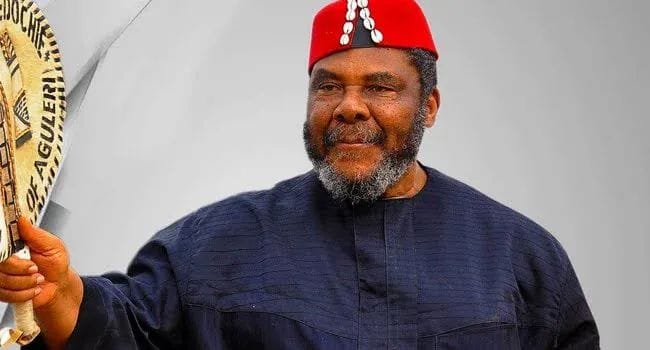
Veteran Actor Pete Edochie Dies at 79
By Yusuf Danjuma Yunusa
Veteran Nigerian actor and broadcaster, Chief Pete Edochie, has died at the age of 79.
Edochie died at 12:30am on Wednesday, November 25, 2026, in Enugu, after a prolonged battle with prostate cancer.
His death was announced in a statement signed by his son, Leo Pete Edochie, on behalf of the family and shared on Instagram on Wednesday.
The statement described the deceased as a beloved husband, father, brother and kinsman, adding that he hailed from Akamnato, Ifite Nteje, Anambra State.
The statement read, “With profound sadness and hearts bowed in total submission to the will of Almighty God,we announce the passing of our beloved husband, father, brother and kinsman, Chief Dr Pete EDOCHIE, MON (Ononenyi) a retired broadcaster and veteran actor, who departed this life on Wednesday,25th November 2026 at 12.30am after a protracted battle with prostate cancer in Enugu, Nigeria. He was aged 79 years.
“Chief Dr Pete EDOCHIE hailed from Akamnato Ifite Nteje and is survived by his beloved wife, Barrister Mrs Josephine Edochie, his children, siblings and numerous other relations.
“Funeral arrangements will be announced in due course.
“As we mourn this painful loss,we pray that Almighty God grants his gentle soul eternal rest and gives the entire family the fortitude to bear this irreparable loss.May God be with us all at this trying time.Amen. Chief Leo Pete EDOCHIE For the Family”
Edochie was one of Nigeria’s most recognisable actors, renowned for his commanding screen presence and portrayal of traditional patriarchal figures.
He rose to national and international prominence for his role as Okonkwo in the 1987 Nigerian Television Authority adaptation of Chinua Achebe’s novel, Things Fall Apart.
His performance in the television adaptation established him as a prominent figure in Nigerian acting and helped introduce his work to audiences beyond the country.
Before becoming widely known as an actor, Edochie had a career in broadcasting.
He began working as a broadcaster in 1967 before transitioning into acting, where he built a career spanning several decades and featured in numerous Nigerian films.
His contributions to the entertainment industry earned him the national honour of Member of the Order of the Niger (MON).

APC PCC Reinforces Gov. Yusuf’s Peace Deal Between Deputy Senate President Barau Jibrin and Rep. Abubakar Bichi

Women Seek 40% Representation in Nigeria’s Digital Governance by 2027

Veteran Actor Pete Edochie Dies at 79

Kano Rewrites Nigeria’s Emergency Healthcare Story: 484 Wards, 484 Ambulances, Zero Excuse Left

Dangote Cement Honours 35 Top-Performing Customer Drivers, 5 In North Central

Kano’s War On Drugs: How Barr. Muhyi’s Taskforce Is Changing The Game

Begging in Northern Nigeria: What Future Are We Preparing for Our Society?

NDC Deputy Governorship Candidate Gives Kano Information Commissioner 48-Hour Ultimatum Over Alleged Defamation

Bauchi Govt Suspends Emir over Alleged Misconduct, Inaugurates Probe Panel

Tinubu’s Jigawa Rally Signals Growing Northern Support, TMS Says as President Defends Economic Reforms
APC PCC Reinforces Gov. Yusuf’s Peace Deal Between Deputy Senate President Barau Jibrin and Rep. Abubakar Bichi
Women Seek 40% Representation in Nigeria’s Digital Governance by 2027
Veteran Actor Pete Edochie Dies at 79
Kano Rewrites Nigeria’s Emergency Healthcare Story: 484 Wards, 484 Ambulances, Zero Excuse Left
Dangote Cement Honours 35 Top-Performing Customer Drivers, 5 In North Central
Kano’s War On Drugs: How Barr. Muhyi’s Taskforce Is Changing The Game
Begging in Northern Nigeria: What Future Are We Preparing for Our Society?
NDC Deputy Governorship Candidate Gives Kano Information Commissioner 48-Hour Ultimatum Over Alleged Defamation
Bauchi Govt Suspends Emir over Alleged Misconduct, Inaugurates Probe Panel
Tinubu’s Jigawa Rally Signals Growing Northern Support, TMS Says as President Defends Economic Reforms
-

 Opinion5 years ago
On The Kano Flyovers And Public Perception
-

 Features5 years ago
How I Became A Multimillionaire In Nigeria – Hadiza Gabon
-

 Opinion6 years ago
Kano As future Headquarters Of Poverty In Nigeria
-
 History6 years ago
Sheikh Adam Abdullahi Al-Ilory (1917-1992):Nigeria’s Islamic Scholar Who Wrote Over 100 Books And Journals
-

 Opinion5 years ago
My First Encounter with Nasiru Gawuna, the Humble Deputy Governor
-

 History5 years ago
The History Of Borno State Governor Professor Babagana Umara Zulum
-
 History6 years ago
The Origin Of “Mammy Market” In Army Barracks (Mammy Ochefu)
-
 News5 years ago
Federal University Of Technology Babura To Commence Academic Activities September