
News
Ganduje lost 2019 election but Imposed by powerful forces -Kwankwaso
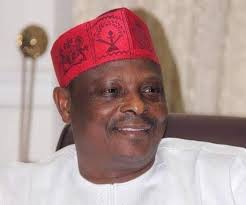
Rabiu Kwankwaso, former governor, says Abdullahi Ganduje, governor of Kano, lost his reelection bid in 2019 but powerful forces imposed him on the state.
In an interview with The PUNCH, Kwankwaso described the alleged imposition on Kano residents as the “worst crime in a democracy”.
The former governor said many have realised their mistake and are ready for real change in the state in 2023.
“This country is fully aware that Ganduje lost the election in 2019 in Kano, but the powers that be ensured that they imposed him on the majority,” he said.
BUK 1991 Alumni Association Initiates Endowment Fund And Donates Medications To Its Almamater
“They imposed the will of the minority on the majority which is the worst crime in a democracy. I think everybody is paying the price now. I think some of them are trying to correct their mistakes now after the maximum damage made to the state. It is very unfortunate that many people could not see what the masses were seeing.
“There were reasons he would not have been allowed to contest in 2019, but the powers that be at the time insisted that he should continue. The masses decided to do what the leaders couldn’t do. They still came out to use power at that time and those of us who believe in peace didn’t want to start a crisis in Kano.”
The former minister said there are many young people joining the Peoples Democratic Party (PDP) ahead of the 2023 polls.
“Instead of us being weak, they are the ones getting weaker. Every day, we have people, the masses crossing to our side. Many of them who were below 18 years of age during the last elections, but are now of age, are coming to register with us,” he said.
Kwankwaso said direct primary mode is more democratic but governors do not want it because their power will be curtailed.
“After practising the indirect primary, I can easily compare and say the direct one is more democratic and better than the indirect,” he said.
“One thing that I believe is that the governors and other powerful people will never want to approve a direct primary because the power will get out of the government houses and land in the hands of the voters and members of the party.
“So, they will never want it.”










News
Kano Monitors ₦48.9bn Projects Across Six LGAs
By Abbas Yushau Yusuf
The Kano State Government says it has intensified monitoring and evaluation of public projects across six local government areas, with 106 projects valued at approximately ₦48.91 billion assessed during routine inspections in September 2026.
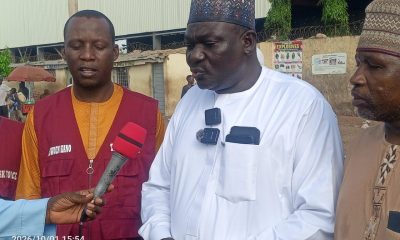
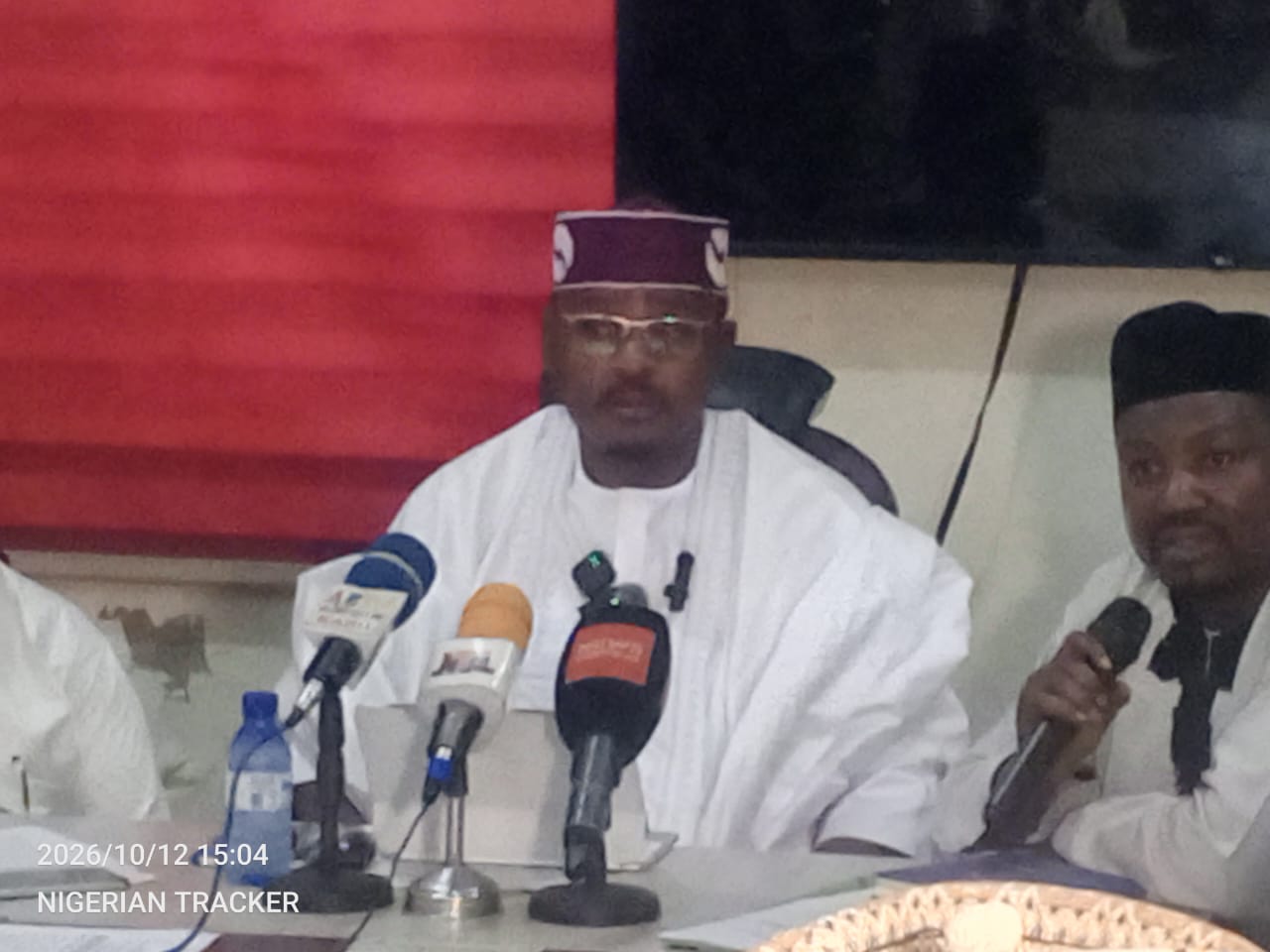
The Commissioner for Public Procurement, Projects Monitoring and Evaluation, Nura Iro Maaji, disclosed this while briefing journalists in Kano on the findings of the ministry’s monitoring exercises, which covered Kabo, Dawakin Tofa, Tofa, Shanono, Gwarzo and Bagwai local government areas.
Maaji said the inspections were designed to assess the physical progress of government-funded projects, examine the quality of executed works, identify implementation challenges and determine the extent to which public investments were delivering benefits to residents.
According to the commissioner, the monitoring exercise formed part of the commitment of the administration of Governor Abba Kabir Yusuf to transparency, accountability and improved service delivery across Kano State.
He explained that the monitoring teams comprised professionals and technical officers from the ministry, supported by its media team, who visited project sites to evaluate construction works and assess the condition and functionality of public facilities.
The commissioner said the projects inspected covered roads, classroom construction and renovation, healthcare facilities, neighbourhood security divisional offices, solar-powered streetlighting, drainage systems, water supply and other essential infrastructure.
Maaji stressed that government projects should not be assessed solely on the basis of contract awards, adding that their quality, functionality, sustainability and measurable benefits to communities were equally important.
80 Projects Recorded at 100 Per Cent Progress
Providing a breakdown of the monitoring findings, Maaji said 80 of the 106 project entries, representing approximately 75.5 per cent, were recorded as having attained 100 per cent physical progress.
He said another 20 projects were at various stages of implementation, while six had recently been awarded, bringing the total number of project entries covered by the six local government schedules to 106.
The commissioner, however, emphasised that the ministry would continue to conduct follow-up inspections to establish compliance with contractual obligations, verify the quality of work and ensure that outstanding issues were addressed before projects were formally closed out.
According to the project schedules accompanying the monitoring report, the 106 entries had a reconstructed aggregate contract value of ₦48,910,349,389.07, or approximately ₦48.91 billion.
The figures represent entries in the monitoring schedules and physical progress recorded during the inspections; they do not, by themselves, constitute independently verified completion certificates for all projects listed as 100 per cent complete.
Kabo Records Highest Project Value
A comparison of the six local government areas showed that Kabo had 15 project entries valued at approximately ₦15.52 billion, the highest aggregate value among the areas covered by the exercise.
The monitoring schedules recorded 12 of the Kabo projects as having reached 100 per cent physical progress, while two were ongoing and one had recently been awarded.
In Dawakin Tofa, the ministry assessed 16 project entries valued at approximately ₦11.16 billion, with 12 recorded at 100 per cent completion, three ongoing and one recently awarded.
Tofa had 15 project entries valued at approximately ₦3.14 billion, of which 12 were recorded at 100 per cent physical progress and three were ongoing, according to the schedules.
Shanono accounted for 21 project entries valued at approximately ₦7 billion, with 14 recorded at 100 per cent progress, four ongoing and three recently awarded.
In Gwarzo, the monitoring schedules contained 23 project entries valued at approximately ₦6.08 billion, with 21 recorded at 100 per cent physical progress and two ongoing.
Bagwai had 16 project entries valued at approximately ₦6.01 billion, comprising nine recorded at 100 per cent progress, six ongoing and one recently awarded.
Major Road Projects Require Further Monitoring
Despite the progress recorded in several areas, the monitoring report identified a number of major road projects that remained under construction and would require further assessment.
The report placed the Janguza–Durum–Kabo–Karaye road corridor in Kabo at 48 per cent physical progress, while the Hawan Ganji–Badari–Kadere road in Gwarzo was recorded at 67 per cent.
Similarly, the five-kilometre road project in Shanono was recorded at 65 per cent physical progress, according to the monitoring schedules.
The commissioner said the ministry would continue to engage implementing agencies and contractors to address delays, incomplete works and quality concerns, with follow-up inspections expected to focus on compliance with project specifications and agreed implementation milestones.
Maaji also said the ministry would apply corrective measures where necessary and pursue further technical reviews to ensure that public funds translated into infrastructure that met the required standards.
Education Projects Show Mixed Progress
On educational infrastructure, the commissioner said investments in classroom construction, school renovations, furniture and sanitation facilities were intended to improve learning environments and support access to quality education across the state.
However, the monitoring schedules showed varying levels of progress among some education projects, including classrooms at Government Junior Secondary School, Badau, in Bagwai, which were recorded at 55 per cent completion.
The report also placed the GAA/GGSS Badau project at 16 per cent physical progress, while the Government Technical College project in Gwarzo was recorded at 72 per cent.
Maaji said the ministry would continue to monitor such projects and work with the relevant implementing agencies to address delays and ensure that construction and rehabilitation works were completed in accordance with approved specifications.
He added that the government’s investment in schools and related facilities must produce tangible improvements for students and communities rather than remain limited to expenditure on contracts.
Security, Streetlighting and Healthcare Facilities
The monitoring exercise also covered neighbourhood security facilities, solar-powered streetlighting, healthcare infrastructure and water supply projects across the six local government areas.
According to the report, neighbourhood security divisional offices in several areas were recorded at 100 per cent physical progress, while the corresponding project in Dawakin Tofa stood at 85 per cent.
The report further indicated that solar streetlighting projects in Bagwai and Shanono were at 35 per cent progress, while the project monitored in Kabo was recorded at 100 per cent.
In the health sector, the rehabilitation of Shanono Primary Health Centre was recorded at 84 per cent physical progress, while a hand-pump borehole project in the area was listed as completed.
Maaji said investments in healthcare, water supply, rural electrification and security infrastructure were important to public welfare, community safety and improved living conditions.
He explained that the ministry would continue to assess the quality and functionality of such facilities to ensure that they served their intended purposes and provided lasting benefits to residents.
Kano Introduces Digital Project Monitoring System
Beyond physical inspections, Maaji announced that the ministry was strengthening project oversight through a digital initiative under the Kano State Integrated Project Monitoring System, accessible at kanoprocurement.ng.
He said the system was intended to improve the organisation of project information, geographical tracking, visibility and reporting of implementation progress, while allowing field evidence to inform management decisions.
According to him, the ministry would continue to improve the completeness and reliability of project data and strengthen follow-up reporting as part of efforts to make monitoring more effective.
Maaji said the use of digital tools would enable the government to improve access to information about public projects and strengthen its ability to identify implementation challenges and take appropriate action.
Digital Procurement Platform Goes Live
The commissioner also announced that the Kano State Digital Public Procurement Platform had gone live at procurement.kn.gov.ng, describing the initiative as an important step towards improving transparency and accountability in public procurement.
He said the platform was designed to promote structured and traceable procurement processes, improve planning and documentation, strengthen audit trails, widen access to procurement opportunities and reduce administrative bottlenecks.
Maaji added that the initiative was also expected to support more efficient procurement processes and improve value for money in government spending.
He said the reform was intended to support the objectives of the Kano State Public Procurement Law, 2021, but stressed that its effectiveness would depend on adoption by the 10 pilot ministries, departments and agencies, sustained capacity development and compliance with applicable regulations.
The commissioner maintained that digital infrastructure alone could not guarantee accountability, noting that effective implementation, proper documentation and adherence to established procedures remained essential to achieving the desired results.
Government to Extend Monitoring Across 44 LGAs
Maaji said the ministry’s priorities included sustaining routine and follow-up monitoring across all 44 local government areas in Kano State and engaging implementing agencies and contractors to resolve delays and incomplete projects.
He added that the government would strengthen project data management and geographical reporting through the Integrated Project Monitoring System while supporting the gradual adoption of the digital procurement platform.
According to him, the ministry would also prioritise quality assurance, procurement compliance and demonstrable value for money in the execution of public projects.
Maaji further announced plans to sustain evidence-based public communication and transparent reporting of monitoring findings through town hall meetings across the state’s 44 local government areas.
He called on implementing agencies, contractors, professional bodies, civil society organisations, the media and members of the public to support the government’s efforts to improve project monitoring and public accountability.
The commissioner commended Governor Abba Kabir Yusuf for his leadership and acknowledged the contributions of the ministry’s technical officers and media team to the monitoring exercise.
He said the ministry remained committed to ensuring that monitoring served as a practical instrument for accountability and improved service delivery.
Maaji said every public project must be accounted for, every public investment justified and every public resource translated into meaningful benefits for the people of Kano State, with measurable value for money.
News
Muhammad Hussari Makes INEC Final List as APM Governorship Candidate in Kano
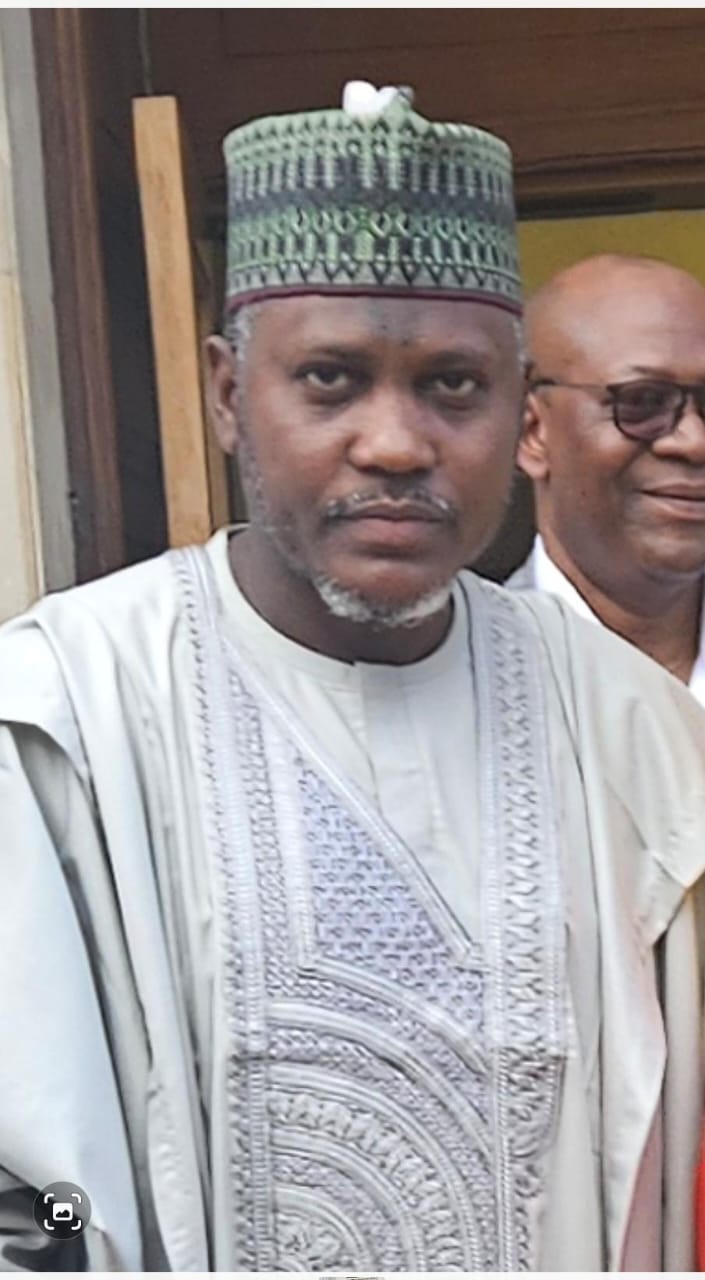
Former member of the House of Representatives, Muhammad Hussari Bashir Galadanchi, has made the final list released by the Independent National Electoral Commission (INEC) as the governorship candidate of the Allied Peoples Movement (APM) in Kano State.
Hussari’s name appeared on the list alongside that of his running mate, Abdullahi Umar Protocol.
Hailing from Sarina in Garko Local Government Area of Kano State, Hussari is set to challenge incumbent Governor Abba Kabir Yusuf and the African Democratic Congress (ADC) candidate, Ibrahim Ali Amin Little, in the governorship election.
Born in 1979, Hussari is an Oxford-trained negotiator. He obtained a degree in Business Administration from Bayero University Kano in 2006 and a certificate in Negotiation Skills from the University of Oxford, United Kingdom.
He began his formal education at Gwale Special Primary School before proceeding to Rumfa College, Kano, for his secondary education.
Hussari served as a member of the House of Representatives from 2011 to 2015, representing Gwale Federal Constituency. Between 2015 and 2019, he served as Senior Special Assistant to former Speaker of the House of Representatives, Yakubu Dogara.
Beyond politics, Hussari also served as Chairman of Success Vision International Limited in the United Kingdom.
His background in business, legislative affairs and negotiation is expected to feature prominently in his campaign as he seeks to secure the governorship of Kano State under the APM platform.
News
Court Directs ICPC to Produce El-Rufai for Next Hearing
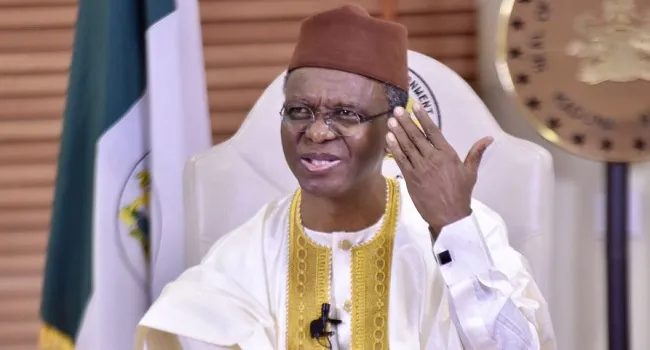
The Kaduna State High Court on Monday directed the Independent Corrupt Practices and Other Related Offences Commission (ICPC) to produce former Kaduna State Governor Nasir Ahmad El-Rufai for the next hearing in his trial.
Justice Darius Khobo gave the directive while adjourning proceedings after counsel for the defence and the prosecution agreed to the adjournment.
Speaking before the court, ICPC lead counsel, Ayodeleji Adelukpe, SAN, explained that the defence had requested an adjournment to enable its lead counsel, Paul Erokoro, SAN, to attend the swearing-in ceremony for a new set of Senior Advocates of Nigeria at the Supreme Court.
Adelukpe said Erokoro had sent him a WhatsApp message requesting that the proceedings scheduled for Monday and Tuesday be vacated, followed by a telephone call to explain the request.
He said he agreed to the adjournment for Monday out of respect for Erokoro and in recognition of the importance of the Supreme Court event but proposed that the case continue on Tuesday.
According to him, he suggested 10 a.m. for the continuation of proceedings, subject to the judge’s approval, but Erokoro requested that the sitting be fixed for noon.
The ICPC counsel, however, expressed surprise that El-Rufai was also absent from court, saying the communication he received from the defence counsel did not indicate that the defendant would be unavailable.
Adelukpe told the court that the information available to him was that El-Rufai would not attend because he wanted to review the results of his medical tests.
The court subsequently adjourned the proceedings until Tuesday and directed the ICPC to produce the former governor at the next hearing.

Kano Monitors ₦48.9bn Projects Across Six LGAs

Muhammad Hussari Makes INEC Final List as APM Governorship Candidate in Kano

Court Directs ICPC to Produce El-Rufai for Next Hearing

2027: Nigeria Forward Calls for Issue-Based Campaigns, Warns Against Personal Attacks

Beyond Connectivity: How a Community Network Is Changing Life in Dakwa

Zamfara Varsity ASUU Threatens Warning Strike Over FG-ASUU Agreement, Promotion Arrears

PCACC Arrests Man Over Alleged ₦4.5m Sale, Illegal Leasing of Kano Government Horse Stable

Goje’s Electoral War:The Confrontation With Tinubu,Governor Inuwa,Usman Kumo And APC candidates Ahead Of 2027

Prof Yusuf Adamu Delivers BUK’s 63rd Professorial Inaugural Lecture, Reflects on Medical Geography and Academic Legacy

Al-Istiqama University to Hold Convocation, Honours Late Aminu Dantata, Sheikh Ibrahim Khalil
Kano Monitors ₦48.9bn Projects Across Six LGAs
Muhammad Hussari Makes INEC Final List as APM Governorship Candidate in Kano
Court Directs ICPC to Produce El-Rufai for Next Hearing
2027: Nigeria Forward Calls for Issue-Based Campaigns, Warns Against Personal Attacks
Beyond Connectivity: How a Community Network Is Changing Life in Dakwa
Zamfara Varsity ASUU Threatens Warning Strike Over FG-ASUU Agreement, Promotion Arrears
PCACC Arrests Man Over Alleged ₦4.5m Sale, Illegal Leasing of Kano Government Horse Stable
Goje’s Electoral War:The Confrontation With Tinubu,Governor Inuwa,Usman Kumo And APC candidates Ahead Of 2027
Prof Yusuf Adamu Delivers BUK’s 63rd Professorial Inaugural Lecture, Reflects on Medical Geography and Academic Legacy
Al-Istiqama University to Hold Convocation, Honours Late Aminu Dantata, Sheikh Ibrahim Khalil
-

 Opinion5 years ago
On The Kano Flyovers And Public Perception
-

 Features5 years ago
How I Became A Multimillionaire In Nigeria – Hadiza Gabon
-

 Opinion6 years ago
Kano As future Headquarters Of Poverty In Nigeria
-

 History5 years ago
Sheikh Adam Abdullahi Al-Ilory (1917-1992):Nigeria’s Islamic Scholar Who Wrote Over 100 Books And Journals
-

 Opinion5 years ago
My First Encounter with Nasiru Gawuna, the Humble Deputy Governor
-

 History5 years ago
The History Of Borno State Governor Professor Babagana Umara Zulum
-

 History6 years ago
The Origin Of “Mammy Market” In Army Barracks (Mammy Ochefu)
-

 News5 years ago
Federal University Of Technology Babura To Commence Academic Activities September