
News
MacArthur Announced The Funds Supporting An Equitable Recovery
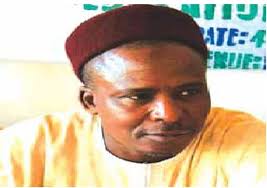
MAcArThur has awarded Centre for Information Technology and Development (CITAD) FUNDS SUPPORTING AN EQUITABLE RECOVERY
The grant will support CITAD’s work to promote vaccine acceptance and access for marginalized groups in northern regions of Nigeria
CITAD was awarded a grant from the John D. and Catherine T. MacArthur Foundation for its work to promote vaccine acceptance and access for marginalized groups in northern regions in Nigeria
The grant is part of roughly $80 million in awards MacArthur announced today in support of the foundation’s Equitable Recovery initiative, centered on advancing racial and ethnic justice. The initiative is funded by MacArthur’s social bonds, issued in response to the crises of the pandemic and racial inequity.
In its announcement, The John D. and Catherine T. MacArthur Foundation said “As we emerge from this moment of crisis, we have an opportunity to improve the critical systems that people and places need to thrive. Our systems and structures must be rebuilt,” said MacArthur President John Palfrey. “We are committed to ensuring that our response to the pandemic is focused on supporting the reimagining of systems that create a more just, equitable, and resilient world.”
CITAD is one of the organizations receiving grants advancing the Public Health Equity and COVID-19 Mitigation and Recovery focus area of the Foundation’s initiative.
The Incomparable Comparison Between The Feeble And The Noble Man
To advance Public Health Equity and COVID-19 Mitigation and Recovery support improving access to resources for immediate health challenges while advancing new policies, models, and structures to support a more equitable and resilient public health sector in the future, MacArthur is supporting work in that focus, as well as three other areas:
- Racial Justice Field Support, with a focus on combatting anti-Blackness, supports building Black power by supporting Black-led and -focused philanthropic organizations. MacArthur also will take a leadership role in positioning reparations and racial healing as issues that philanthropy helps to meaningfully address.
- Self-determination of Indigenous Peoples supports uplifting Indigenous communities to enable the autonomous pursuit of a recovery guided by their priorities, cultures, and practices.
- An Equitable Housing Demonstration Project supports restoring communities and reducing incarceration and housing instability by generating an array of housing solutions that can help to permanently end the use of jails and prisons as housing of last resort.
MacArthur identified the areas through a participatory process with a diverse group of external advisors, who informed its strategic approach. The participatory process aimed to center the voices of communities that are affected by the Foundation’s decisions and have a stake in the grant-making outcomes.
Almost two-thirds of the awards represent new grantee relationships, and most of the organizations are Black, Indigenous, and People of Color-led or -serving. The grants also reflect MacArthur’s global reach: 45 percent of the new funding supports work outside of the U.S., including 12 percent in India, and 14 percent in Nigeria, where MacArthur has offices.
Equitable Recovery Initiative
In the fall of 2020, MacArthur established a $125 million Equitable Recovery Initiative. The Foundation deployed $40 million of bond proceeds through 24 grants. Initial grants focused on strengthening voter mobilization and election protection, addressing anti-Black racism, and supporting Native Americans impacted by COVID-19. Grants also supported Black, Latinx, Asian, and Indigenous arts organizations in Chicago, technology and justice, and a fund for social entrepreneurs advancing racial equity.
News
ADC Rejects INEC’s Ruling Interpretation, Vows to Clarify Contradictions
By Yusuf Danjuma Yunusa
The African Democratic Congress (ADC) has sharply criticized the Independent National Electoral Commission (INEC) over its interpretation of a recent Court of Appeal statement, alleging that the commission has abandoned its neutrality by siding with the federal government.
In a press release issued on Wednesday, the ADC’s National Publicity Secretary, Mallam Bolaji Abdullahi, rejected INEC’s position, describing it as “contradictory and inconsistent with facts.” The party claimed that INEC was acting under pressure from a government it characterized as “jittery” due to the ADC’s growing momentum.
“We reject INEC’s interpretation of the Court of Appeal ruling,” the statement read. “We knew that INEC was being pressured by a government that has become jittery from the ADC’s rising momentum even in the face of its relentless assault on all opposition parties.”
The ADC accused the electoral commission of caving to political pressure, asserting that it has effectively chosen to align with the government against the Nigerian people. The party vowed to publicly clarify what it called the contradictions in INEC’s statement.
According to the release, the ADC is currently reviewing its legal and political options and will announce its next steps in the coming days. The party urged its members and the public to remain steadfast.
“We are currently reviewing our options, and we shall make these known soon. Meanwhile, we call on our members and all Nigerians to remain steadfast as they await further directives,” the statement concluded, adding the slogans: “Nigeria is rising. ADC is rising.”
News
ADC Rising: Salga hails influx of political heavyweights as a turning point for justice

Ambassador Abdulrahman Mai Nasara Salga, a prominent ADC leader from Dala, Kano, has welcomed the influx of influential politicians into the party, describing it as a sign of ADC’s growing acceptance.
Salga, who contested for the federal legislature in Dala during the 2023 general election, says the party’s progress is heartening, having worked tirelessly to promote ADC’s agenda and position it as a viable alternative for good governance.
He highlights the entry of Kwankwasiyya leader Dr. Rabiu Musa Kwankwaso, former Kano State Deputy Governor Comrade Aminu Abdulsalam, and APC’s 2025 gubernatorial candidate Dr. Nasir Yusuf Gawuna, among others, as major boosts that are transforming ADC into a formidable opposition force.
Salga believes these developments signal a shift towards justice and better leadership in Kano and Nigeria. He urges party leaders, including Atiku Abubakar, Peter Obi, and Kwankwaso, to unite for success in 2027.
The ADC leader pledges continued efforts to promote the party’s ideals, expressing optimism for a brighter future with these influential additions.
News
BREAKING: INEC Removes David Mark-Led NWC from Portal, Updates Records Amid ADC Leadership Crisis

By Yusuf Danjuma Yunusa
The Independent National Electoral Commission (INEC) has formally updated its official portal to reflect changes in the leadership of the African Democratic Congress (ADC), signaling the commission’s recognition of the leadership dispute within the party.
The commission confirmed that the removal of the National Working Committee (NWC) led by David Mark followed a detailed review of a recent Court of Appeal judgment and an ongoing suit at the Federal High Court in Abuja.
According to INEC, the decision comes after receiving conflicting legal representations from the two factions vying for control of the party. One faction, loyal to Nafiu Bala Gombe, urged the commission to enforce the appellate court’s ruling, which includes withdrawing recognition from the Mark-led NWC. The other faction, aligned with Mr. Mark, advised INEC against recognizing Mr. Gombe as acting national chairman, citing the pending legal proceedings.
The leadership crisis traces back to July 2025, when the ADC’s former leadership resigned, paving the way for a new executive committee headed by Mr. Mark. Mr. Gombe, a former vice-national chairman, has challenged this transition, arguing that the party’s constitution mandates his ascension to the leadership role.
In a ruling delivered on March 12, 2026, the Court of Appeal dismissed an interlocutory appeal filed by Mr. Mark. The court ordered all parties to maintain the status quo ante bellum—the state of affairs before the crisis—pending the resolution of the substantive suit at the Federal High Court.

ADC Rejects INEC’s Ruling Interpretation, Vows to Clarify Contradictions

ADC Rising: Salga hails influx of political heavyweights as a turning point for justice

BREAKING: INEC Removes David Mark-Led NWC from Portal, Updates Records Amid ADC Leadership Crisis

JUST IN: El-Rufai Detained as Bail Ruling Adjourned to April 14

Court Ends NNPP Crisis, Restores Party Leadership to Founder

Governor Abba Kabir Yusuf Holds Exclusive Prerogative to Choose Deputy – Malam Inuwa Waya

The Governor Who Chose His People Over His Politics: Abba Yusuf and the Moral Courage Behind Kano First
Restoring the Glory That Was Always There: Governor Abba Kabir Yusuf and the Historical Vision Behind Kano First

Tinubu to Swear in Olatunji Disu as Inspector-General of Police on Wednesday

NDLEA Clarifies: Drug Case Against Abba Kyari Still Active After Court Discharge
ADC Rejects INEC’s Ruling Interpretation, Vows to Clarify Contradictions
ADC Rising: Salga hails influx of political heavyweights as a turning point for justice
BREAKING: INEC Removes David Mark-Led NWC from Portal, Updates Records Amid ADC Leadership Crisis
JUST IN: El-Rufai Detained as Bail Ruling Adjourned to April 14
Court Ends NNPP Crisis, Restores Party Leadership to Founder
Governor Abba Kabir Yusuf Holds Exclusive Prerogative to Choose Deputy – Malam Inuwa Waya
The Governor Who Chose His People Over His Politics: Abba Yusuf and the Moral Courage Behind Kano First
Restoring the Glory That Was Always There: Governor Abba Kabir Yusuf and the Historical Vision Behind Kano First
Tinubu to Swear in Olatunji Disu as Inspector-General of Police on Wednesday
NDLEA Clarifies: Drug Case Against Abba Kyari Still Active After Court Discharge
-

 Opinion4 years ago
On The Kano Flyovers And Public Perception
-

 Features5 years ago
How I Became A Multimillionaire In Nigeria – Hadiza Gabon
-

 Opinion5 years ago
Kano As future Headquarters Of Poverty In Nigeria
-

 History5 years ago
Sheikh Adam Abdullahi Al-Ilory (1917-1992):Nigeria’s Islamic Scholar Who Wrote Over 100 Books And Journals
-

 Opinion4 years ago
My First Encounter with Nasiru Gawuna, the Humble Deputy Governor
-

 History5 years ago
The Origin Of “Mammy Market” In Army Barracks (Mammy Ochefu)
-

 History4 years ago
The History Of Borno State Governor Professor Babagana Umara Zulum
-

 News4 years ago
Federal University Of Technology Babura To Commence Academic Activities September