
Politics
A Memo To Sen. Rabiu Musa Kwankwaso
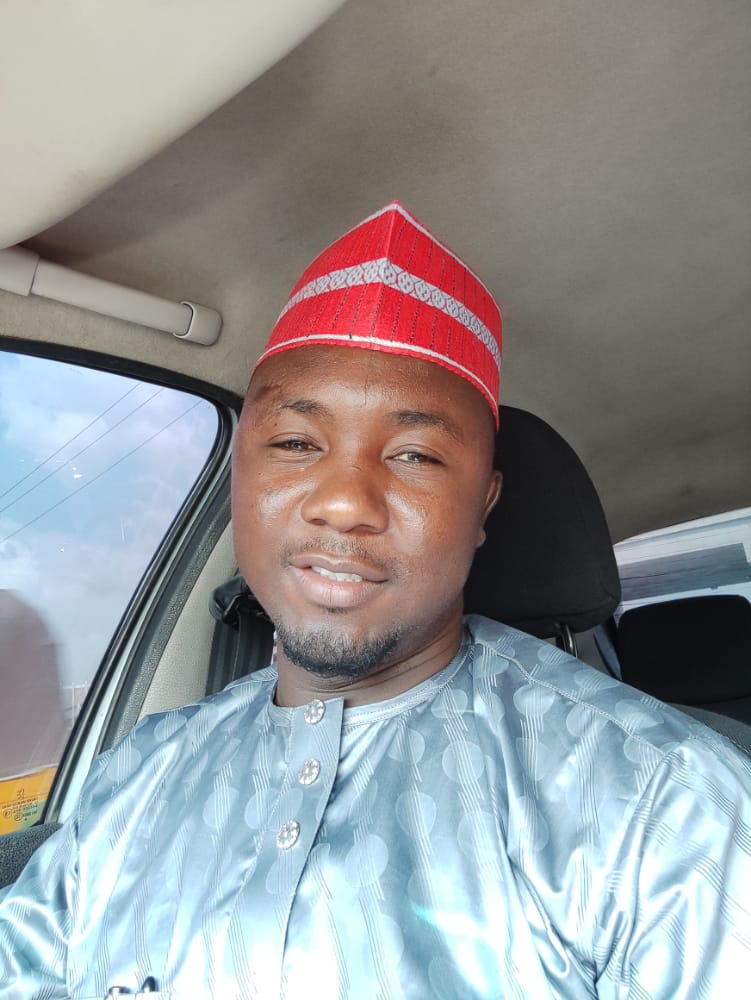
By Salisu Yahaya Hotoro
With due respect sir, I want to implore on Allah (SWA) to bestow upon you His mercy and favor as this message reaches you.
Before I venture into what prompted me to write to you with full empathy concerning the recent unfortunate activities surrounding you politically (courtesy of your venomous enemies who want to drag you down with them) by all means, permit me to brag at length on my ardent support for your visions and missions wholeheartedly.
I, Salisu Yahaya Hotoro, popularly known as Sarkin Yaƙi from the kwankwasiya sect of Kano State will want you to know that I can be your last man standing when it comes to dedication and sacrifice for your cause and while I’m at it, I promise to uphold your honor and integrity to the best of my ability Insha Allah.
Repent Or Be Repatriated-Jigawa LG Orders Commercial Sex Workers
You will forever be my hero in the political arena and I’ll forever be indebted to you for the uncountable blessings I and thousands of youths have gained through your toils.
Without much ado, I’ll delve into my main reason for this message sir. I have been part of most if not all of your rallies and have witnessed firsthand the surge of love and hope people have for you. You have excelled among your peers when it comes to reaching out to the poor masses and has touched lives in the most astonishing way any politician is yet to.
We have seen how you’ve mastered your game in awe by setting the standards so high to the extent that people tag you as the father of the fatherless.
Who apart from you Sir has singlehandedly supported the children of the poor who had nothing but rays of hope to actually rub shoulders with the elites through thousands of scholarships and student grants? Absolutely no one! Your name alone sends fear to the minds of your corrupt counterparts.No public office holder has dared to be selfish during your regime, everyone knew the consequence!
Why am I saying all these? to remind you Sir of how you are revered by the good people of Kano state and Nigeria at large. I can’t recall any political icon that has firm base and roots in all the 36 states of Nigeria apart from you, Kwankwasiyya rings loud and clear all over Nigeria all thanks to Allah (S.W.A) .
Having said all these, we need no soothsayer to tell us how desperate your political opponents are to pull you down sir at all costs. As the election dates are fast approaching,so are the vicious assaults on your personality and goals.
The more you’re bent on making a positive change to the masses, the more you’re acquiring truckloads of enemies of progress from within and outside your political ring.
Please Sir, as a concerned patriot I’ll like to advice you to please choose your next steps very carefully because at this point nothing matters more to us more than your political career. If you rise we’re safe and vice versa.
May I also state here that it’s no secret how your political party stakeholders are working tirelessly to seek for your downfall. Permit me Sir to please air my views regarding your presidential ambition come 2023 election.
In saner climates, no one! Absolutely no one dares to compete against you for fear of mockery and ridicule but here we are, whosoever wishes for cheap popularity can and will be allowed to run for any political seat notwithstanding competence or not.
We all know and believe in your cause (to impact positive change across the Nation) and we’ll all be elated if it happens but then is it possible? at the rate in which your predecessors have squandered precious time and resources to a stupor?
Sir it’s known to all of us in Kwankwasiyya family that there’s a tussle within our camp (Kwankwasiyya movement) on who will ascend the hot seat in Kano come 2023?
And if care is not taken, shocking outcome will be recorded for what you might consider as a small issue that needs no urgent intervention. Failure to calm the waves here in Kano will lead to a massive backwardness in the presidential elections with you as our candidate Sir.
Our political opponents will capitalize on this tussle and apply the ‘divide and rule’ method if care is not taken.
My stand!!!
With all due respect Sir, please I’m here to implore you to please, for now, drop your presidential ambition and concentrate fully on Kano for the time being please.
We will want you to come out next time fully prepared with no sects in your camp and with full support from your party stakeholders to avoid waste of resources and your precious time. These people are full of venom and can go to any extent to sabotage your ideologies.
I pray to Allah (S.W.A) to guide and protect you for us. May your good intentions always prevail and may you succeed in all your endeavors. The Lord has and will always be your strength and we will insha Allah never cease to be at your back and call with our time, strength, wealth and life.
Salisu Yahaya Hotoro writes from Kano
Politics
Kano’s Peculiar Politics in Swap of Political Godfathers
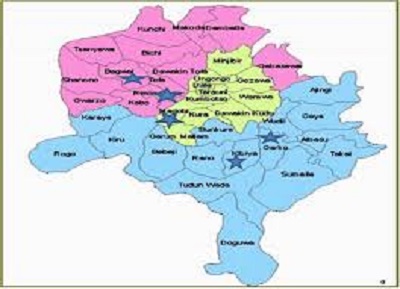
By Abba Anwar
In less than four years, major political actors who challenged each other in the 2023 gubernatorial race on different political platforms, who were diametrically opposed to each other, swapped platforms and political godfathers. A rare political reality which manifests in decades in some political settings.
When the winner of 2023 gubernatorial race, His Excellency Abba Kabir Yusuf, joined All Progressives Congress (APC), under the leadership of the former Governor of the state, His Excellency, Dr Abdullahi Umar Ganduje, CON, his major challenger His Excellency Dr Nasiru Yusuf Gawuna, exited from APC to African Democratic Congress (ADC) and principally under the former Governor of the state, His Excellency Rabi’u Musa Kwankwaso, leader of Kwankwasiyya.
But what is so fascinating is the fact that, all the running mates of these gubernatorial candidates did not change the direction of their loyalty, neither did they change political platforms to join their hitherto arch-rivals. As governor Yusuf run to Ganduje, by extension, President Bola Ahmed Tinubu, Gawuna in a swift move, inches towards Kwankwaso.
Yusuf’s running mate and later Deputy Governor, His Excellency, Aminu Abdussalam Gwarzo, remains intact with Kwankwaso. As Gawuna’s running mate His Excellency Murtala Sule Garo, remains with Ganduje and APC. My reader should know that, only Allah can make this arrangement possible. Something beyond quick human comprehension.
Some observers translated the action of the two running mates, as genuine and honest display of loyalty to their bosses. As some also believe that, the actions of both Yusuf and Gawuna are not stark betrayal of the process, but soul search and safeguarding their steps.
In recent political development in the country, such kind of loyalty switchover, happens only in Kano in decades. I stand to be corrected.
Going by the understanding that, both Garo and Gwarzo remain intact and obedient in their display of true loyalty to the cause they believe in and the political direction, that also means they are reliable in their own right. Coincidentally the duo come from the same zone, Kano North. But with different political relevance, strength and influence.
While Garo can boast of solid and complete political structure across all the 44 local governments, Gwarzo can hardly boast of that across Kano North alone. Their political influence is ocean apart. Not to talk of political dominance in the true manifestation of reality.
There could be no much qualms in swapping godfathers between Yusuf and Gawuna. The major concern according to some observers, is how to manage the environment around their new bosses. The environment is largely political, followed by social understanding and meaning attach to new realities of alignment and realignment.
The legal environment is more visible and effective around Gawuna’s new place, the ADC. You remember what the electoral umpire, Independent National Electoral Commission (INEC) said recently about the possibility or impossibility of ADC’s chance to stand for an election come 2027?
Both Yusuf and Gawuna are prone to challenges in their new platforms. For the governor, his challenges are largely self-inflicted. The ball and players are all in his court, to make or mar. I’m sure His Excellency the governor, is aware that among those who cross-carpeted to Tinubu’s APC with him, there are moles, who have since started spying on him on all inches in governance and political decisions. No doubt about this.
Frankly speaking, the people’s governor, Yusuf, has four fundamental issues that need to be address immediately and squarely. If he really needs to remain in the corridor of power beyond 2027. There could be smaller attachments of issues that also need his attention.
First and foremost, is the Emirship tussle. Though the case is in court, but still, as number one citizen and Chief Security officer of the state, he knows pretty well that, the people of Kano are more comfortable with His Highness, Aminu Ado Bayero, as Emir of Kano. Anything short of this, is minus and virus. So for him to continue romancing with Mr Sanusi Lamido Sanusi, is self-destructive and evasive.
Secondly, this issue of who occupies the seat of Deputy Governor after the resignation of the former Deputy, Gwarzo, is only delicate and fragile, if our able governor makes it as such. It is very clear, open and un-arguable for all, to tell you who the cap fits, sentiment apart. This is where governor Yusuf, as a leader, I won’t say MUST, but SHOULD, work it out himself. Without being told or directed. He knows the danger of where he came from and he knows what he needs, the most now. So deep inside his mind, he knows the right choice for him, his government and the state.
There is an array of potential suitors here, as being carried out in the media, in private discussions, around politicians, etc etc. See the list, Malam Salihu Sagir Takai, one time gubernatorial candidate under the defunct All Nigeria People’s Party (ANPP), and a former Commissioner during Malam Ibrahim Shekarau administration and Kabiru Alhassan Rurum, former Speaker, Kano State House of Assembly, and now member, House of Representatives.
Others are Murtala Sule Garo former State Chairman of Association of Local Governments of Nigeria (ALGON), former State Organizing Secretary of People’s Democratic Party (PDP), former Commissioner for Local Governments and Chieftaincy Affairs, and Deputy Gubernatorial candidate during 2023 election and the current State Chairman of ALGON, the Chairman of Tudunwada local government, Sa’adatu Yusha’u.
So also the current Speaker State House of Assembly, Right Hon Jibril Ismail Falgore.
Whether true or false, President Tinubu “directed” or adviced that Garo should be picked, I think governor Yusuf knows what trouble Garo can prevent for the government when he partakes in the administration of the state. He also knows what tragedy and trouble can befall his administration and re-election bid when Garo is deliberately and persistently sidelined.
I’m not interested in verifying what Tinubu said to governor Yusuf or Ganduje recently at the Villa. I’m also not interested in knowing what exactly transpired between Yusuf and Ganduje after their separate meetings with Tinubu.
But I came across a story that, during governor’s meeting with Ganduje at latter’s residence in Asokoro, it was reported that, the governor pledged to make consultation on the issue of Garo’s choice as deputy governor. So if there was really a directive from Mr President concerning the choice of Garo, it is obvious that, the governor may not even think of making consultation.
But one thing, a bitter and probably uncomfortable truth is, keeping Garo away from the seat of the deputy governor is as equal as running away, in high speed, from victory, come 2027. If I may say a word to the governor, this issue of deputy governorship position, should not be as dilly-dallying as his (governor’s) entry into APC. Governor should just make a decision once and for all.
Before governor Yusuf joined APC many possible dates were given, with so many postponements. His Excellency the governor should please know that, this issue of deputy governorship seat is much more important than any other thing when it comes to preparation for re-election bid. Slightest mistake could be suicidal.
Based on the assessment conducted, I said it above, sentiment aside, qualities or criteria, people set for a rightful person for the position of deputy governor, Garo possesses them all above other contenders. I’m saying this without any bias or sentiment.
Some of such qualities are, political spread of an individual across the state, with structures across all the 44 local governments, a man of his word, his yes is yes and his no is no, reserve and calculative. Someone who can get support across all the parties, even from Kwankwasiyya, PDP and ADC. Whose magnanimous engagement is still intact. Someone whose loyalty does not dangle, neither his belief in what he believes in. Please our governor, the deputy governor should not be starved. He should get such opportunity to discharge his responsibilities diligently and effectively.
The third issue on the list, is, it is absolutely important for the governor to make sure that he, even if it means singlehandedly, should strive hard and amend all fences, especially within the traditional APC members. All factions, imagined and real, within APC, should come back to the drawing board and work together for his government and the state. Anything short of this is a political blunder.
The fourth and the last issue in this category, is, His Excellency Yusuf should please release resources, that are releaseable to local government councils for them to manage people at the grassroot. Local government chairmen are closer to the people Sir.
The same thing should apply to all his appointees, ranging from cabinet members, Advisers, Heads of Agencies and his Special Assistants. Particularly his Media Aides and Special Assistants. His Excellency should know that, we are now in an emergency situation, where many hands must be on deck.
Anwar writes from Kano
Friday, 3rd April, 2026
Politics
Why Nura Manu Soro should be APC candidate in Bauchi State come 2027
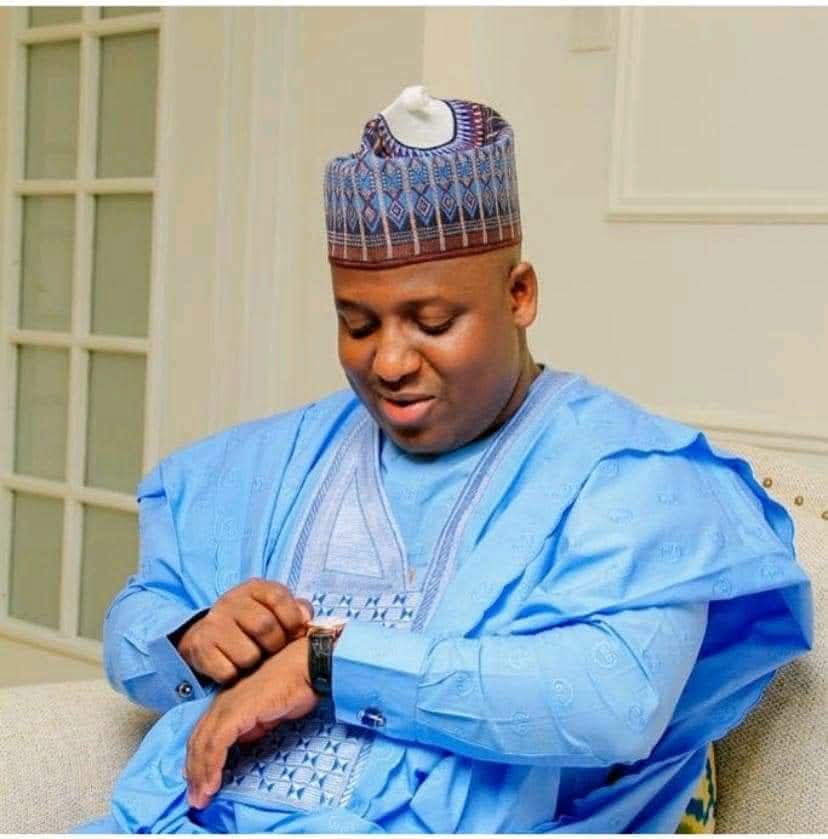
Sani Adnan
As Planning Is Essential for a Political Campaign, Nura, if given the opportunity, will ensures that the party’s campaign activities are structured, resources are used efficiently, and every effort supports the central objective of winning voter trust and turnout.
Steps He May Take in Building a Political Campaign Plan
Professionals and other relevant stakeholders will be widely consulted where strategic views will be carefully collated and embedded in his vision, mission, and values, analyzing voter demographics needs and setting measurable campaign goals, among others.
*An Inclusive Campaign Foundation*
Nura Manu’s campaign foundation cover party core values, valuable insights, and specific objectives such as turnout targets, fundraising benchmarks, and win margins against major opposition elements.
*Who May Serve As Key Members of His Campaign Team*
In order to guarantee and seamless victory, Nura Manu Soro has assembled array of professional politicians, technocrats with essential roles include the campaign manager, communications lead, digital strategist, field organizer, and finance director, supported by a structured volunteer network of versatile young men and women from all walks of life.
Nura Manu Soro Represent a Strong Campaign Message That’s Important At The Moment
Nura Manu Soro is sine qua non with a strong message which will naturally connects the APC candidate to voter concerns, builds credibility, and provides consistency across campaign speeches, political advertisements, and digital platforms.
Nura Manu Soro Represent The Role a Slogan (Tafiyar Matasa Sabon Jini) Play in Campaign
A slogan captures the campaign’s vision in a short, memorable phrase, supported by talking points that reinforce the message across all outreach. Persons like him with towering intellect, global exposure and academic distinction, who understand how power truly operates, will play politics which might reveals realities that libraries, laboratories and lecture halls couldn’t fully expose. ‘NMS’ as I fondly called him, is a master strategist who excelled in engineering negotiations, manoeuvres, interests, alliances and contradictions that quietly shape greater outcomes at different fora.
In conclusion, NMS will utilise social media to expands reach, engages different voter segments, and provides real-time interaction. Platforms like Facebook, Instagram, TikTok, and X, among many others to target different demographics effectively.
Sani Adnan, wrote from Alkaleri in Bauchi State, Nigeria.
Politics
Beyond the Verdict: How NNPP Loss Vindicates Governor Yusuf’s Political Foresight
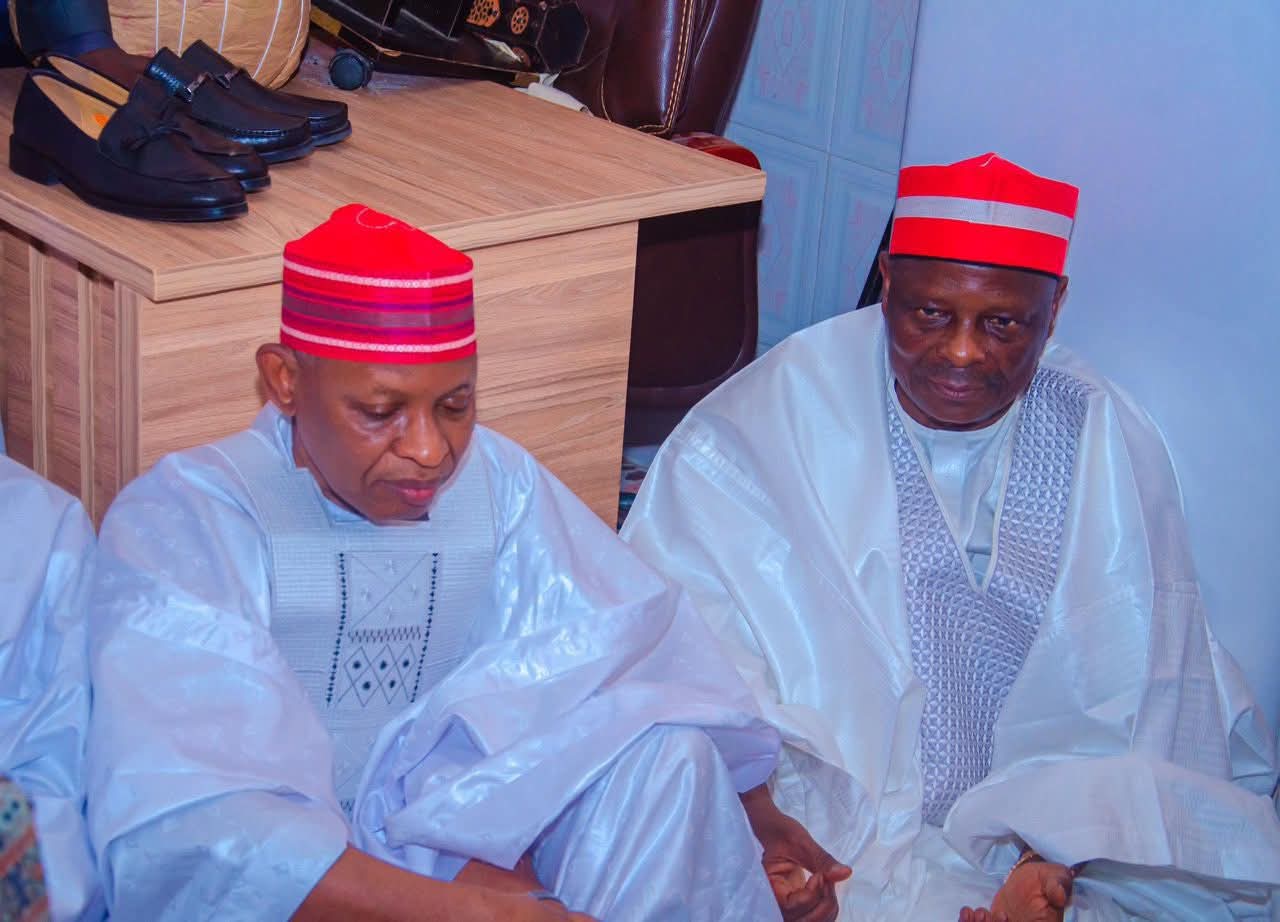
By: Sanusi Bature Dawakin Tofa
A defining political moment unfolded in Lagos as loyalists of NNPP founder, Boniface Aniebonam, converged at his Apapa office in celebration of a decisive court victory that has reshaped the party’s leadership structure. The ruling of the Federal Capital Territory High Court in Abuja, which directed INEC to recognise the Agbo Major led National Working Committee, effectively nullified the claims of the faction aligned with Rabiu Musa Kwankwaso and the Kwankwasiyya Movement, setting the stage for what many now regard as a turning point in the NNPP’s internal power dynamics.
The celebration was not merely symbolic but deeply political. Songs, dancing and thanksgiving echoed through the venue, signaling what many within the camp see as the final collapse of the rival structure. In their view, the ruling has drawn a clear line under the prolonged leadership tussle, affirming ownership and restoring the party to its original custodians.
While the Kwankwasiyya faction has dismissed the judgment and signaled its intention to appeal, the optics of the Lagos celebration suggest a deeper reality. It portrays a movement that is steadily losing institutional footing. What was once projected as a dominant bloc within the NNPP now appears increasingly isolated and weakened by legal setbacks and internal contradictions.
Within this unfolding scenario, the earlier decision of Abba Kabir Yusuf to exit the NNPP now stands out as not just strategic but profoundly prophetic. At a time when many still believed the crisis could be contained, the governor had already read the signs of a looming structural breakdown. His defection to the All Progressives Congress was a calculated move to shield Kano from the instability that has now fully consumed the party.
Since the entrance of Rabiu Musa Kwankwaso into the NNPP in late 2022, the party has been embroiled in persistent internal wranglings. What should have been a smooth political expansion quickly degenerated into disputes, counter claims and a cycle of litigations across multiple courts. These legal battles not only fractured the party’s leadership but created an environment too volatile for any serious governance to thrive.
For a sitting government, such instability is more than a political inconvenience. It is a direct threat to focus, peace of mind and administrative efficiency. Governor Yusuf clearly understood that a state like Kano could not afford to be governed from within a party constantly entangled in courtrooms. Governance requires clarity, stability and direction, conditions that had become increasingly absent within the NNPP.
The events of today have validated that judgment. The celebrations by Aniebonam’s loyalists underscore the extent to which the party structure has shifted away from the Kwankwaso bloc. In stark terms, the former political stronghold has been reduced to a shadow of its past influence within the party.
Indeed, a harsh but unavoidable metaphor now defines the situation. Rabiu Musa Kwankwaso appears politically like a wandering herdsman without shepherds, disconnected from a recognised structure and navigating an uncertain terrain without institutional backing. The court’s affirmation of a rival leadership has effectively placed him in a position where his relevance within the NNPP is severely diminished.
In practical terms, this leaves him perilously close to being politically homeless, a figure without a firmly recognised platform and with a future clouded by legal and structural dislocations. His refusal to align with Governor Yusuf in the strategic move to the APC now appears in hindsight as a significant political miscalculation, one that may carry lasting consequences for his political journey.
The contrast could not be clearer. While Kano under Abba Kabir Yusuf has secured stability within a broader national framework, the NNPP remains trapped in cycles of litigation and internal strife. The governor’s decision ensured that his administration would not be distracted by endless legal battles, thereby preserving the focus required to deliver democratic dividends to the teeming people of Kano.
In the final analysis, politics rewards those who can read the future before it arrives and act before circumstances impose their will. Power is never sustained by sentiment but by structure, clarity and timing. What is unfolding within the NNPP is a reminder that when a political house becomes divided against itself, its strongest voices can quickly fade into irrelevance. In contrast, leadership that prioritises stability over attachment secures not just survival but continuity. In this moment, the lesson is clear that history does not remember hesitation, it remembers decision.
Sanusi Bature Dawakin Tofa, is the Spokesperson to Gov. Abba Yusuf of Kano State

Kano’s Peculiar Politics in Swap of Political Godfathers

ADC crisis rooted in legal process, not external influence — lawyers explain

APC Dismisses ADC’s Claims, Calls Leadership Crisis ‘Self-Inflicted’

INEC Dismisses Calls for Chairman’s Removal, Clarifies Voter Revalidation Decision

INEC, David Mark, And Coming Abachaian Coronation

Governor Abba Kabir Yusuf Holds Exclusive Prerogative to Choose Deputy – Malam Inuwa Waya

The Governor Who Chose His People Over His Politics: Abba Yusuf and the Moral Courage Behind Kano First
Restoring the Glory That Was Always There: Governor Abba Kabir Yusuf and the Historical Vision Behind Kano First

NDLEA Clarifies: Drug Case Against Abba Kyari Still Active After Court Discharge

Table Water Producers Increase New Price for Sachet Water in Kano
Kano’s Peculiar Politics in Swap of Political Godfathers
ADC crisis rooted in legal process, not external influence — lawyers explain
APC Dismisses ADC’s Claims, Calls Leadership Crisis ‘Self-Inflicted’
INEC Dismisses Calls for Chairman’s Removal, Clarifies Voter Revalidation Decision
INEC, David Mark, And Coming Abachaian Coronation
Governor Abba Kabir Yusuf Holds Exclusive Prerogative to Choose Deputy – Malam Inuwa Waya
The Governor Who Chose His People Over His Politics: Abba Yusuf and the Moral Courage Behind Kano First
Restoring the Glory That Was Always There: Governor Abba Kabir Yusuf and the Historical Vision Behind Kano First
NDLEA Clarifies: Drug Case Against Abba Kyari Still Active After Court Discharge
Table Water Producers Increase New Price for Sachet Water in Kano
-

 Opinion4 years ago
On The Kano Flyovers And Public Perception
-

 Features5 years ago
How I Became A Multimillionaire In Nigeria – Hadiza Gabon
-

 Opinion5 years ago
Kano As future Headquarters Of Poverty In Nigeria
-

 History5 years ago
Sheikh Adam Abdullahi Al-Ilory (1917-1992):Nigeria’s Islamic Scholar Who Wrote Over 100 Books And Journals
-

 Opinion4 years ago
My First Encounter with Nasiru Gawuna, the Humble Deputy Governor
-

 History5 years ago
The Origin Of “Mammy Market” In Army Barracks (Mammy Ochefu)
-

 History4 years ago
The History Of Borno State Governor Professor Babagana Umara Zulum
-

 News4 years ago
Federal University Of Technology Babura To Commence Academic Activities September