
News
2023 Elections: INEC commences review of polling units in Nigeria
Ahead of the 2023 general elections the Independent National Electoral Commission (INEC) has assured Nigerians of a well-organized, conducive, and secured environment for voting as it is currently reviewing and expanding Polling Units across the country to give voters an exciting voting experience.
Speaking at a presentation to the joint committee on INEC and electoral matters, the INEC Chairman, Prof. Mahmood Yakubu identified access to polling units as a major challenge militating against voter turnout during the election and emphasized the need to expand the access if a free, fair and credible election must be achieved in 2023.
Business Tycoon,Dahiru Manga Loses Son To Accident
He said; “Between 1999 and 2019, a period of 20years voter turnout in Nigeria declined by 17%. So one election after another, the voter turnout keeps declining. In the last general election for the presidential and national assembly, for the presidential in particular, about 35% voter turn out whereas between 2000 and 2020 a period of 20 years, the voter turnout in Ghana increased by 17%. What did they get in Ghana right that we have not in Nigeria that theirs is on the upswing and ours is on the downswing?”
President of the Senate, Ahmad Lawan, who also spoke at the presentation, assured that the National Assembly would support the electoral body in achieving its goal by 2023.
He said; “Let me assure the chairman of INEC and indeed Nigerians that the National Assembly will support INEC fully, completely, and wholly in ensuring that we provide a better voting environment for our citizens, whatever it will take, we will do so because democracy is about participation by the people. In addition to creating more polling units, we need to also mobilize voters to go to those polling units to vote.”
The commission believes the challenge of low voter turnout can be curbed to the barest minimum if polling units can be decongested.
Yakubu said; “The right to vote cannot be exercised without a place to vote. This time around we decided to start 2years ahead of the next general election. The commission believes that converting the voting points, and voting point settlements into polling units offer the least controversial, timely, and inexpensive solution.”
News
Hajiya Umma El-Rufai, Mother of Former Kaduna Governor, Passes Away
By Yusuf Danjuma Yunusa
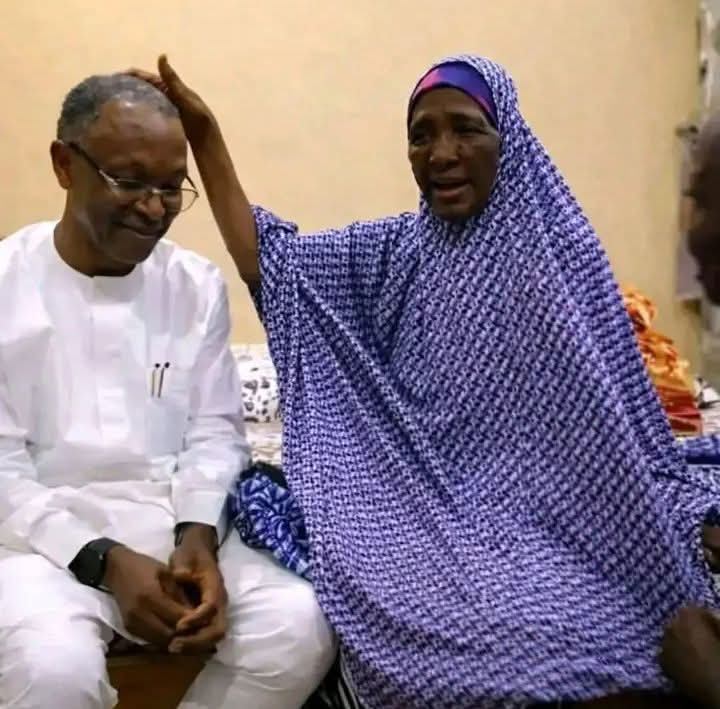
Hajiya Umma El-Rufai, the mother of former Kaduna State governor, Mallam Nasir El-Rufai, has died.
According to family sources, she passed away on Friday afternoon. While details surrounding her death remain unclear at this time, the family has since confirmed the sad event.
The announcement was made public by her grandson, Bello El-Rufai, in a statement shared on Facebook. The statement read:
“Inna lillahi wa inna ilayhi raji’un. From Allah SWT we came and to Him we shall all return.
I would like to inform the public of the demise of my grandmother, Hajiya Umma El-Rufai, who passed away a few hours ago.
She is the biological mother of our father, Mallam Nasir El-Rufai. We are grateful for the life she lived and pray that Allah SWT bless her gentle soul.
May He bless the souls of the parents we have lost. On behalf of our family, we seek your prayers. Thank you.”
The family is expected to release further details regarding funeral arrangements in due course.
News
ASUU Threatens Nationwide Shutdown

By Yusuf Danjuma Yunusa
The Academic Staff Union of Universities has warned the Federal Government of Nigeria to immediately implement the newly approved salary structure for university lecturers or face a possible nationwide shutdown of public universities.
The union issued a four-day ultimatum on Thursday, with its president, Christopher Piwuna, saying failure to act within the deadline would trigger a strong response.
Speaking at Sa’adu Zungur University in Bauchi State, Piwuna said the government must begin payment under the new salary arrangement without further delay.
“We have issued a four-day ultimatum from today to the federal government to commence payment of the newly approved salary structure. Failure to comply will attract a strong response from the union,” he said.
The warning comes months after ASUU and the federal government signed a renegotiated agreement in January, aimed at resolving long-standing disputes and preventing the recurring strikes that have plagued Nigeria’s university system.
At the heart of the agreement is a revised salary structure designed to improve lecturers’ welfare and finally address issues stemming from the controversial 2009 FG-ASUU pact, which remained largely unimplemented for years.
News
APC Convention:FG Orders Remote Work for Offices Near Eagles Square
By Yusuf Danjuma Yunusa
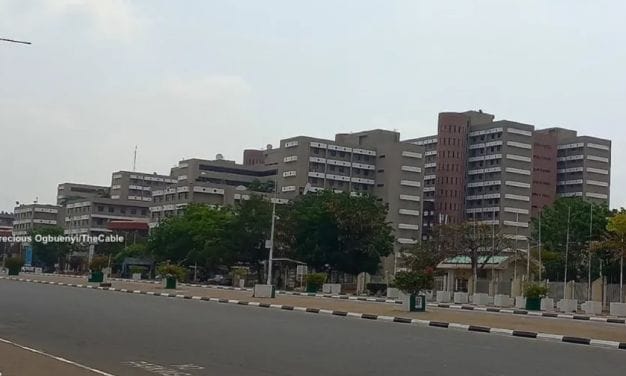
The Federal Government has directed all civil servants working in offices around Eagle Square and the Federal Secretariat complex in Abuja to work from home this weekend.
The directive, issued in a circular by the Office of the Head of the Civil Service of the Federation, is aimed at easing congestion ahead of the All Progressives Congress (APC) national convention. The event is scheduled to hold on March 27 and 28 at Eagle Square.
The measure is intended to ensure smooth access and security around the convention venue.

Hajiya Umma El-Rufai, Mother of Former Kaduna Governor, Passes Away

ASUU Threatens Nationwide Shutdown

APC Convention:FG Orders Remote Work for Offices Near Eagles Square

Nigeria’s Power Supply to Improve in Two Weeks as Gas Pipeline Work Nears Completion

Court Orders Arrest of PDP Factional Chairman Kabiru Turaki for Skipping Trial

The Governor Who Chose His People Over His Politics: Abba Yusuf and the Moral Courage Behind Kano First

FREEDOM OF SPEECH, NOT FREEDOM FROM CONSEQUENCE: A CITIZEN’S CALL FOR RESPONSIBLE PUBLIC COMMENTARY

Press Freedom: IPI Nigeria Calls on New Acting IGP to End Police Harassment of Journalists
Tinubu to Swear in Olatunji Disu as Inspector-General of Police on Wednesday
Restoring the Glory That Was Always There: Governor Abba Kabir Yusuf and the Historical Vision Behind Kano First
Hajiya Umma El-Rufai, Mother of Former Kaduna Governor, Passes Away
ASUU Threatens Nationwide Shutdown
APC Convention:FG Orders Remote Work for Offices Near Eagles Square
Nigeria’s Power Supply to Improve in Two Weeks as Gas Pipeline Work Nears Completion
Court Orders Arrest of PDP Factional Chairman Kabiru Turaki for Skipping Trial
The Governor Who Chose His People Over His Politics: Abba Yusuf and the Moral Courage Behind Kano First
FREEDOM OF SPEECH, NOT FREEDOM FROM CONSEQUENCE: A CITIZEN’S CALL FOR RESPONSIBLE PUBLIC COMMENTARY
Press Freedom: IPI Nigeria Calls on New Acting IGP to End Police Harassment of Journalists
Tinubu to Swear in Olatunji Disu as Inspector-General of Police on Wednesday
Restoring the Glory That Was Always There: Governor Abba Kabir Yusuf and the Historical Vision Behind Kano First
-

 Opinion4 years ago
On The Kano Flyovers And Public Perception
-

 Features5 years ago
How I Became A Multimillionaire In Nigeria – Hadiza Gabon
-

 Opinion5 years ago
Kano As future Headquarters Of Poverty In Nigeria
-

 History5 years ago
Sheikh Adam Abdullahi Al-Ilory (1917-1992):Nigeria’s Islamic Scholar Who Wrote Over 100 Books And Journals
-

 Opinion4 years ago
My First Encounter with Nasiru Gawuna, the Humble Deputy Governor
-

 History5 years ago
The Origin Of “Mammy Market” In Army Barracks (Mammy Ochefu)
-

 History4 years ago
The History Of Borno State Governor Professor Babagana Umara Zulum
-

 News4 years ago
Federal University Of Technology Babura To Commence Academic Activities September