
News
NSITF Ag MD dragged to NASS, ICPC over nepotism
From Ahmad Nakano
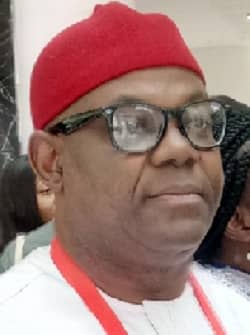
A petition against the Acting Managing Director of the Nigerian Social Insurance Trust Fund (NSITF), Dr. Kelly Nwagha, has been tabled before the Independent Corrupt Practices and Other Related Offenses Commission (ICPC).
The Acting MD is being accused of nepotism and other dubious practices regarding the reinstatement of the sacked staff of the Fund.
Why EFCC’s chiefs are always booted out of office?
A group, The Social Justice Initiative (T.S.J.I), which tabled the petition before the commission dated 8th October 2020, said the need for “an external investigation into this matter,” informed their decision to approach the anti-corruption agency.
Signed by the Executive Secretary, Azikiwe Chianu, it accused Nwagha of “using his office and position for gratification.”
The petition, which has the acknowledgment stamp of ICPC, said the issue has since been on the public domain, including the National Assembly Committee on Public Petition, which is awash with requests for reinstatement from many members of staff dismissed by the past administration.
It added that “Dr. Kelly Nwagha was appointed in June 2020 as Acting Managing Director of the NSITF. Prior to his appointment, many staff of the NSITF had their appointments terminated for various offenses.
“A notable case amongst these was that of about eight (8) members of staff of the NSITF (Mararaba branch) whose appointment was duly terminated under the previous management after internal investigations found them complicit in the forgery of official documents to obtain personal loans from a Microfinance bank.
“These members of staff had their appointments terminated after they were found guilty by a duly constituted disciplinary committee of having breached some of the conditions of service of the NSITF.”
The petition stated that the appointment of Nwagha, however, saw some of the dismissed staff found their way back into the Fund.
“We are aware through reliable information that some of the eight members of staff dismissed by the previous management have been reinstated into the service of the Fund through the backdoor,” it said.
T.S.J.I, whose motto is: Good Governance Through Transparency & Accountability, said the reinstatement was conducted via personal ties.
It said some of the dismissed staff, “who have close and personal ties with Dr. Kelly Nwagha are being reinstated at an alarming speed.”
Nwagha, the group said, has been “actively cherry-picking” those staff and reinstating them back “without recourse to due process.”
It, therefore, urged the commission to investigate with a view to ensuring that the Acting MD.discharges his duties in an open and transparent manner, devoid of sentiments and personal interests








News
Muhammad Hussari Makes INEC Final List as APM Governorship Candidate in Kano
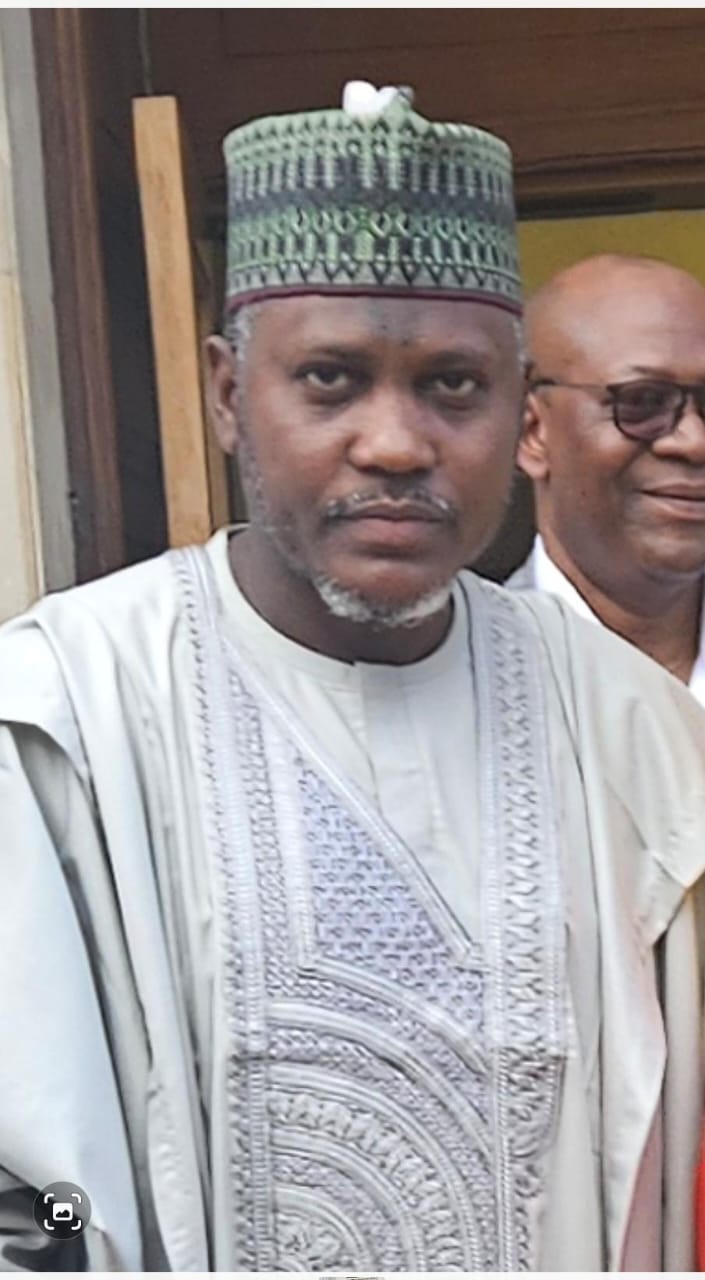
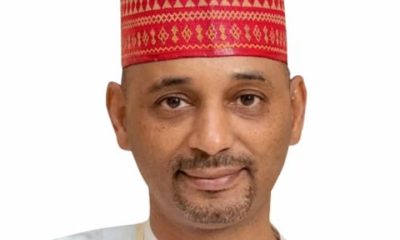
Former member of the House of Representatives, Muhammad Hussari Bashir Galadanchi, has made the final list released by the Independent National Electoral Commission (INEC) as the governorship candidate of the Allied Peoples Movement (APM) in Kano State.
Hussari’s name appeared on the list alongside that of his running mate, Abdullahi Umar Protocol.
Hailing from Sarina in Garko Local Government Area of Kano State, Hussari is set to challenge incumbent Governor Abba Kabir Yusuf and the African Democratic Congress (ADC) candidate, Ibrahim Ali Amin Little, in the governorship election.
Born in 1979, Hussari is an Oxford-trained negotiator. He obtained a degree in Business Administration from Bayero University Kano in 2006 and a certificate in Negotiation Skills from the University of Oxford, United Kingdom.
He began his formal education at Gwale Special Primary School before proceeding to Rumfa College, Kano, for his secondary education.
Hussari served as a member of the House of Representatives from 2011 to 2015, representing Gwale Federal Constituency. Between 2015 and 2019, he served as Senior Special Assistant to former Speaker of the House of Representatives, Yakubu Dogara.
Beyond politics, Hussari also served as Chairman of Success Vision International Limited in the United Kingdom.
His background in business, legislative affairs and negotiation is expected to feature prominently in his campaign as he seeks to secure the governorship of Kano State under the APM platform.
News
Court Directs ICPC to Produce El-Rufai for Next Hearing
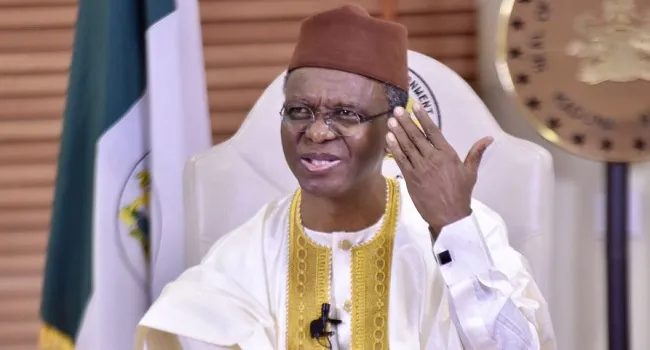
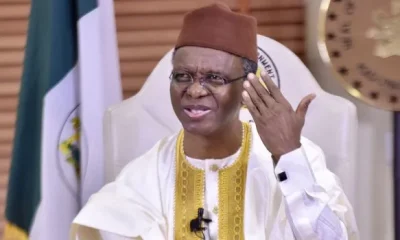
The Kaduna State High Court on Monday directed the Independent Corrupt Practices and Other Related Offences Commission (ICPC) to produce former Kaduna State Governor Nasir Ahmad El-Rufai for the next hearing in his trial.
Justice Darius Khobo gave the directive while adjourning proceedings after counsel for the defence and the prosecution agreed to the adjournment.
Speaking before the court, ICPC lead counsel, Ayodeleji Adelukpe, SAN, explained that the defence had requested an adjournment to enable its lead counsel, Paul Erokoro, SAN, to attend the swearing-in ceremony for a new set of Senior Advocates of Nigeria at the Supreme Court.
Adelukpe said Erokoro had sent him a WhatsApp message requesting that the proceedings scheduled for Monday and Tuesday be vacated, followed by a telephone call to explain the request.
He said he agreed to the adjournment for Monday out of respect for Erokoro and in recognition of the importance of the Supreme Court event but proposed that the case continue on Tuesday.
According to him, he suggested 10 a.m. for the continuation of proceedings, subject to the judge’s approval, but Erokoro requested that the sitting be fixed for noon.
The ICPC counsel, however, expressed surprise that El-Rufai was also absent from court, saying the communication he received from the defence counsel did not indicate that the defendant would be unavailable.
Adelukpe told the court that the information available to him was that El-Rufai would not attend because he wanted to review the results of his medical tests.
The court subsequently adjourned the proceedings until Tuesday and directed the ICPC to produce the former governor at the next hearing.
News
2027: Nigeria Forward Calls for Issue-Based Campaigns, Warns Against Personal Attacks
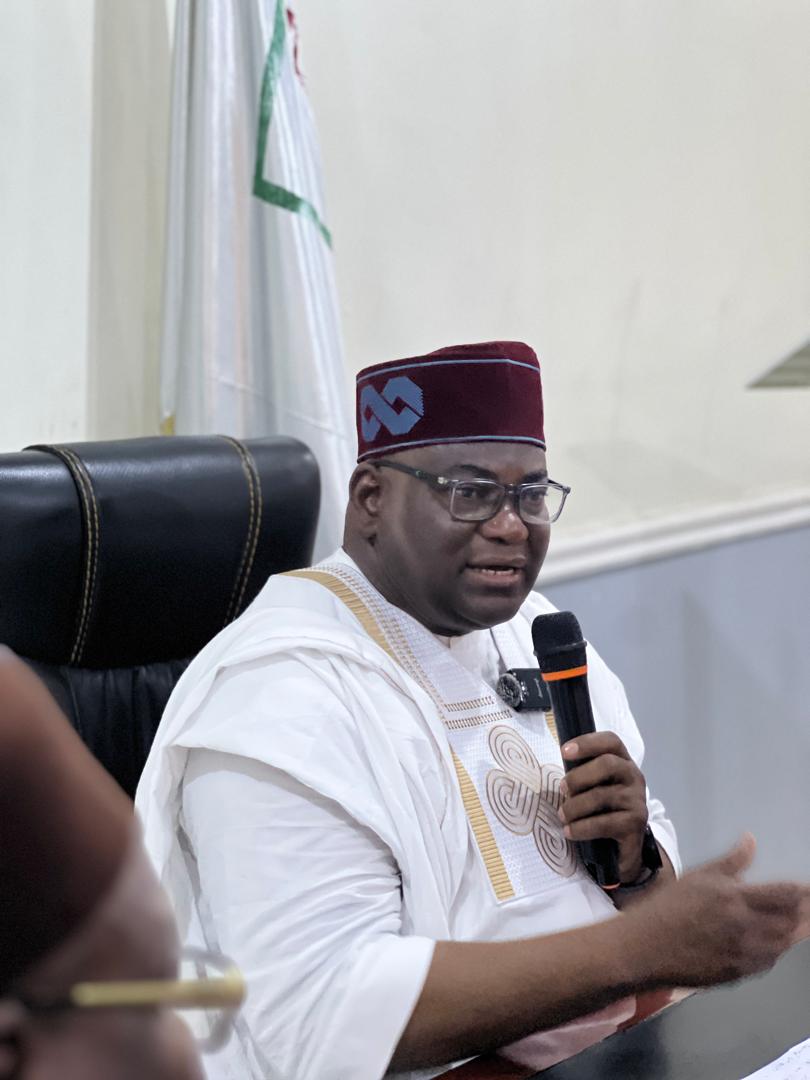
Nigeria Forward, a national socio-political group, has urged politicians and political parties participating in the 2027 general elections to focus on issue-based campaigns and refrain from hate speech, personality attacks and dangerous rhetoric capable of threatening national unity and peaceful coexistence.
In a press release issued on Monday, October 12, 2026, the group called on political candidates, parties and other stakeholders to conduct their campaigns responsibly by prioritising policies, manifestoes and programmes that address the needs of Nigerians.
The group’s position was contained in a statement issued by its Directorate of Communications and Strategy in response to the commencement of public political campaigns ahead of the 2027 general elections.
According to Nigeria Forward, the growing tendency among some political stakeholders to engage in personal attacks rather than discuss policies and governance issues could undermine peaceful coexistence and deepen divisions across the country.
The organisation expressed concern over what it described as campaigns of calumny, character assassination and other negative political practices, warning that such tendencies could turn the political environment into an arena for personality clashes rather than a platform for exchanging ideas.
Nigeria Forward maintained that election campaigns should provide voters with an opportunity to assess candidates based on their policies, proposed programmes, leadership priorities and capacity to address the country’s challenges.
The group also criticised the alleged abuse of the media space, particularly digital platforms, which it said some political actors and groups use to spread fake news, hate speech and misinformation in pursuit of political advantage.
It called on politicians and their supporters to exercise restraint in their use of social media and other communication channels, stressing that the dissemination of misleading information could heighten tensions and weaken public trust during the electioneering period.
While acknowledging that the pursuit of political power is a legitimate feature of democracy, Nigeria Forward said political ambitions should be pursued with decency, decorum, mutual respect, responsibility and patriotism.
The organisation urged Nigerian politicians to draw lessons from established democracies where, according to the group, election campaigns focus on issues, manifestoes, policies and programmes intended to improve the welfare of the electorate.
“Our politicians must take a cue from their contemporaries in the advanced and developed democracies, where electioneering campaigns are based on issues, manifestoes, policies and programmes that are intended to be implemented for the benefit of the electorates,” the statement said.
Nigeria Forward further called on political leaders to demonstrate a sense of responsibility and patriotism in their conduct as the country approaches the 2027 elections.
The group said responsible political engagement would encourage voters to embrace patriotism and civic responsibility, while placing national unity, peace and development above partisan interests.
“Our politicians must show sense of responsibility and patriotism in their approach towards the 2027 electioneering campaign activities, thereby setting the pace and tune for a more responsive and patriotic electorates that are alive to their responsibility of being patriotic and committed citizens whose focus is national unity, peace and development,” the statement added.
The organisation also appealed to individuals, corporate organisations, civil society groups and other well-meaning Nigerians to hold politicians accountable for their public statements and actions, particularly where such conduct could promote division among citizens.
According to Nigeria Forward, sustained public scrutiny of political rhetoric and campaign activities would help promote responsible political participation and discourage conduct capable of threatening national cohesion ahead of the elections.
The group said all stakeholders had a responsibility to contribute to a peaceful electoral environment by encouraging issue-based debates and rejecting inflammatory statements that could undermine democratic engagement.
It further expressed the hope that greater accountability and responsible campaigning would contribute to the emergence of leaders committed to democratic principles, national unity and peaceful coexistence.
The statement was signed by Comrade Ibrahim Abdullahi Waiya, PhD, Co-Convener of Nigeria Forward.

Muhammad Hussari Makes INEC Final List as APM Governorship Candidate in Kano

Court Directs ICPC to Produce El-Rufai for Next Hearing

2027: Nigeria Forward Calls for Issue-Based Campaigns, Warns Against Personal Attacks

Beyond Connectivity: How a Community Network Is Changing Life in Dakwa

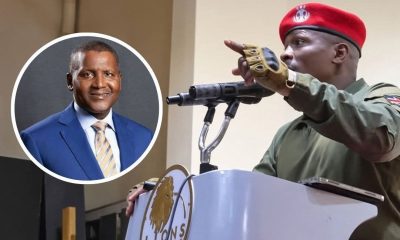
Kenyan Presidential Aspirant Warns Dangote: ‘Don’t Rush Lamu Refinery, I’ll Send You Back to Nigeria’

Zamfara Varsity ASUU Threatens Warning Strike Over FG-ASUU Agreement, Promotion Arrears

PCACC Arrests Man Over Alleged ₦4.5m Sale, Illegal Leasing of Kano Government Horse Stable

Goje’s Electoral War:The Confrontation With Tinubu,Governor Inuwa,Usman Kumo And APC candidates Ahead Of 2027

Prof Yusuf Adamu Delivers BUK’s 63rd Professorial Inaugural Lecture, Reflects on Medical Geography and Academic Legacy

Al-Istiqama University to Hold Convocation, Honours Late Aminu Dantata, Sheikh Ibrahim Khalil
Muhammad Hussari Makes INEC Final List as APM Governorship Candidate in Kano
Court Directs ICPC to Produce El-Rufai for Next Hearing
2027: Nigeria Forward Calls for Issue-Based Campaigns, Warns Against Personal Attacks
Beyond Connectivity: How a Community Network Is Changing Life in Dakwa
Kenyan Presidential Aspirant Warns Dangote: ‘Don’t Rush Lamu Refinery, I’ll Send You Back to Nigeria’
Zamfara Varsity ASUU Threatens Warning Strike Over FG-ASUU Agreement, Promotion Arrears
PCACC Arrests Man Over Alleged ₦4.5m Sale, Illegal Leasing of Kano Government Horse Stable
Goje’s Electoral War:The Confrontation With Tinubu,Governor Inuwa,Usman Kumo And APC candidates Ahead Of 2027
Prof Yusuf Adamu Delivers BUK’s 63rd Professorial Inaugural Lecture, Reflects on Medical Geography and Academic Legacy
Al-Istiqama University to Hold Convocation, Honours Late Aminu Dantata, Sheikh Ibrahim Khalil
-

 Opinion5 years ago
On The Kano Flyovers And Public Perception
-

 Features5 years ago
How I Became A Multimillionaire In Nigeria – Hadiza Gabon
-

 Opinion6 years ago
Kano As future Headquarters Of Poverty In Nigeria
-

 History5 years ago
Sheikh Adam Abdullahi Al-Ilory (1917-1992):Nigeria’s Islamic Scholar Who Wrote Over 100 Books And Journals
-

 Opinion5 years ago
My First Encounter with Nasiru Gawuna, the Humble Deputy Governor
-

 History5 years ago
The History Of Borno State Governor Professor Babagana Umara Zulum
-

 History6 years ago
The Origin Of “Mammy Market” In Army Barracks (Mammy Ochefu)
-

 News5 years ago
Federal University Of Technology Babura To Commence Academic Activities September