
News
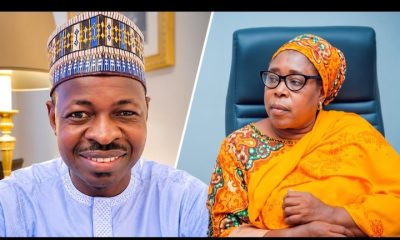
Breaking:Kano Tertiary Institutions to resume October 26

Kano state government has slated 26 of October 2020 for the opening of the states tertiary institutions.
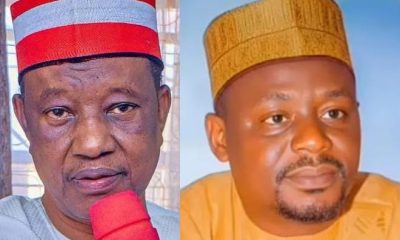
The states commissioner for Higher Education Dr Mariya Mahmud Bunkure stated this while addressing Journalists at the Headquarters of the ministry.
Kano To Enact Laws On Public Breast Feeding
The commissioner said as a result of the re-opening of the schools teams from the ministry of higher education will go round the schools and assess the levels of preparation for the full return of the students.
She said all the tertiary institutions have prepared well and Kano state government has encouraged the tertiary institutions by providing hand sanitizers and face masks to ensure compliance with Covid 19 protocols








News
A Moment in Time-Binta Spikin
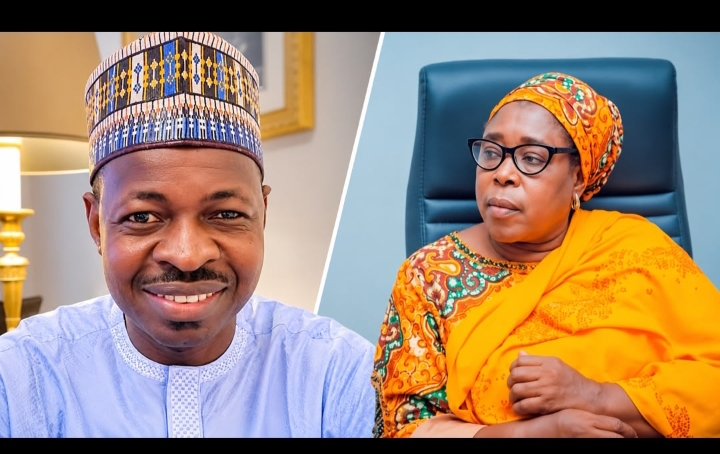
By Binta Spikin
bintaspikin@gmail.com
There are moments that stand out, either because of the importance they hold or the magnitude of their impact on people. These rare and exceptional moments become part of us because we cherish the lessons we learn from them. That is what Saturday, the 21st of this month, means to me. It was a moment in time, and a great one at that.
It all started with a WhatsApp message from a friend, Malam Abdulaziz Abdulaziz, for whom I have tremendous respect and with whom I have shared so much in the past. Although politics and life’s events have made it difficult for us to stay in touch, we have maintained our mutual respect whenever we happen to cross paths. It was, therefore, only natural that I accepted his invitation to participate in a workshop they were organising in Abuja.
We arrived in Abuja a day before the workshop, and I was, and still am, in awe of the incredible women I met, all of whom had come to attend. Each one is a powerhouse in her own right, particularly in terms of her thinking and professional accomplishments. They also represent exceptional institutions and command impressive followings and strong personal brands. All of them are leaders in their own right. I am honoured to have had the opportunity to be in their company and learn from their wealth of experience and knowledge. For this, I am eternally grateful.
However, that was just the tip of the iceberg. The real game-changer came when we settled down for the workshop. Lo and behold, there was the National Security Adviser himself, Malam Nuhu Ribadu!
He is calm, friendly and accommodating. With every statement he made, certain qualities about him became increasingly evident: he is a patriot through and through; he genuinely wants this country to work; he is determined to succeed in the responsibility entrusted to him; and he has tremendous respect for women. This last quality particularly caught my attention.
Subconsciously, he kept reiterating the words: “Nobody can do it better than you, because, as wives and mothers, you have absolute control over what men do.”
I am no feminist, but I liked his statement because I want people to trust me when I say that women are truly powerful. Do you want to test just how powerful they are? Cross your wife and watch how she turns on you!
Anyway, my takeaways from the workshop are simple, and that is why I have decided to write this piece.
First, we learnt that Nigeria is winning the war against terror. Even though some of the progress may be evident, there is certainly no harm in reminding ourselves of where we were so that we can appreciate where we are today. We may not have achieved everything, but at least we now enjoy relative peace.
As he spoke, I found myself comparing different scenarios in my mind. I want all of us to remember what travelling by road from Abuja to Kano was like before this administration came into office. It was virtually impossible. The road had been abandoned, even by contractors engaged to rehabilitate the Abuja-Kaduna-Kano route.
In fact, kidnappers had become so brazen that they attacked a moving train in broad daylight!
When we compare the scale of the terror Nigerians experienced before this administration with the situation today, we cannot help but appreciate the progress made so far. For example, the Tony Blair Institute reports that, in the period following the 2013 general elections in Nigeria, there were 168 attacks by IPOB alone, resulting in the destruction of several police stations. In 2014, Boko Haram killed 6,644 people, with the figure rising to 7,000 in 2015.
Now, consider these alarming figures alongside recent developments, including the frequency and scale of Boko Haram attacks and the destruction they leave behind. Only then can we begin to appreciate the significance of the progress recorded so far.
It is worth noting that only one attack was reported this year, with no lives lost. Equally impressive is the report that Nigeria lost 750 people in 2025. The figure is frightening, but when compared with previous years, we can still regard the trend as a step in the right direction.
According to SBM Intelligence, if we want to understand how far we have come in the war against terror, we should follow the money. Following that logic, it is encouraging to know that terrorist organisations reportedly collected ₦1.7 billion in ransom payments in 2024, compared with ₦7.5 million last year.
These are significant developments, particularly because we know that terrorist groups use such funds to purchase ammunition and drugs, thereby strengthening their capacity to wage war. Less money means reduced purchasing power for them.
There are several other examples, but my point is that we should at least acknowledge the modest achievements recorded so far. Progress may be slow, but its impact cannot be denied. If we continue along this path, we may eventually reach a point where Nigerians no longer live under the threat of terrorism.
This brings me to another important point, particularly as the 2027 general elections draw closer.
Choosing our leaders is a constitutional right provided for under the Constitution of the Federal Republic of Nigeria. However, I believe it is only fair that we give President Asiwaju Bola Ahmed Tinubu another four years to govern Nigeria.
This has nothing to do with the fact that I belong to the APC. Rather, it has everything to do with the political stability of a country we all deeply care about.
There is a dominant narrative surrounding Hausa-Fulani political hegemony, and those who subscribe to that view have their reasons. One of them is that, in the 66 years since Nigeria gained independence, the Hausa-Fulani have governed the country for almost 40 years.
In addition, there is the unwritten understanding of power rotation between the North and the South.
Therefore, at this moment in time, I believe we need to give this President of southern extraction, a performing president, a listening president and a forgiving president, the opportunity to complete his eight-year tenure.
The South deserves this. In fact, it has earned it.
This is about the political stability of Nigeria, our Nigeria. We want our country to continue to exist and prosper. However, longevity and prosperity are products of the choices we make and the actions we take every day.
The truth is that Nigeria’s myriad problems are partly of our own making. They are not solely the responsibility of our leaders. It is unfortunate that Nigerians constantly demand accountability from their leaders while often refusing to accept responsibility as citizens. This simply does not add up.
Let me be clear: I am not absolving our leaders of their wrongdoings. What I am saying is that we, too, have our own shortcomings.
Interestingly, we have a President who is not afraid to make difficult decisions, no matter how painful, in an effort to put the country back on track. He takes responsibility for both the assets and liabilities of his administration. He does not spend his time complaining; rather, he appears more concerned about the development of the country than about receiving praise.
This is a President extraordinaire!
What is more? There are tangible results to show for it.
From the inception of this administration to date, it is an open secret that state governments can now pay salaries without having to borrow from banks or other financial institutions, while still having funds left over to execute projects. They no longer have to alternate between ministries when allocating funds for projects.
This represents a departure from what was obtainable in the past, when the norm was either to slash salaries or accumulate months of unpaid wages, plunging families into financial distress. This was not necessarily because state governors wanted to be unfair, but because it was the only way they could make ends meet.
Even the stories on the front pages of our national dailies are now more encouraging.
Malam Abdulaziz Abdulaziz told me that when he was an editor at Daily Trust (his last assignment before his current position), they often had to search for positive stories to feature on the front pages of their newspaper. It was that bad.
Bandits, kidnappers and other criminal elements had trapped us in a sea of unhappiness. We can still remember how bandits operated with impunity, riding in convoys and gleefully terrorising entire communities.
Not any more!
So, if you ask me why I believe we should give Asiwaju Bola Ahmed Tinubu a second term, my talking points are simple: political stability, improved security and economic growth.
The man has a knack for growing the economy. Let us give him a chance to consolidate on the progress he has made so far.
Let us make Nigeria work again.
APC from top to bottom, for a better Nigeria!
All in all, the workshop was worthwhile. We left better informed about Nigeria and, more importantly, with renewed hope and a deeper appreciation of the issues confronting our country.
News
2027: Amupitan Raises Alarm over Threats to His Life, Warns RECs Against Operational Lapses
By Yusuf Danjuma Yunusa
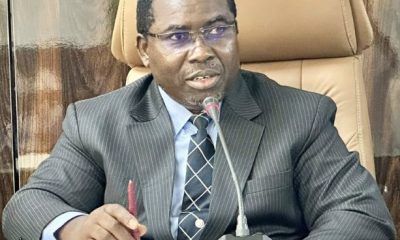
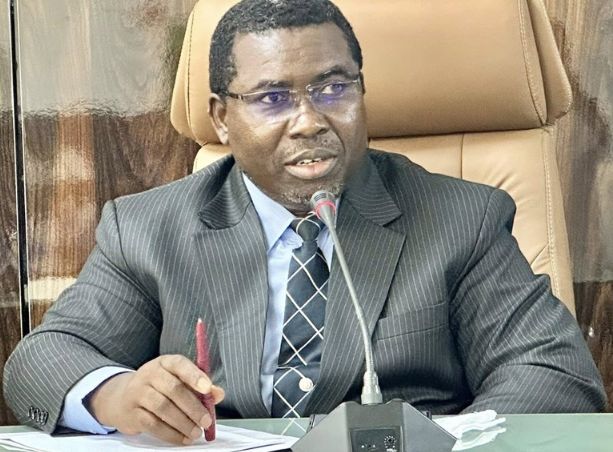
Chairman of the Independent National Electoral Commission (INEC), Professor Joash Amupitan, has revealed that he receives threats to his life almost daily, describing his responsibility as the country’s chief electoral officer as a thankless job.
Amupitan also warned Resident Electoral Commissioners (RECs) against operational lapses in the conduct of the 2027 general elections, insisting that the commission had no margin for error as Nigeria approaches the polls.
Speaking on Wednesday in Abuja during a strategic consultative meeting with RECs from the 36 states and the Federal Capital Territory (FCT), the INEC chairman said the commission had come under increasing attacks from different groups seeking to intimidate electoral officials.
“On a daily basis, I receive threat messages, and sometimes, you just feel like whether those distractions are necessary,” he said.
Amupitan warned that attempts to undermine the electoral commission amounted to attacks on Nigeria’s democracy, urging officials not to allow intimidation to distract them from their constitutional responsibilities.
“If you think you are destroying INEC, you are only destroying democracy in Nigeria,” he said.
The INEC chairman lamented the intense public scrutiny and hostility faced by electoral officials, irrespective of their efforts to discharge their duties.
“Working for the commission is like a thankless job. No matter what you do, you are under serious scrutiny and sometimes even abused,” he said.
He expressed concern that Resident Electoral Commissioners were also being subjected to similar intimidation.
“I am also sure that some of you (RECs) have been receiving same threats from different groups trying to intimidate and harass us,” he added.
With the presidential and National Assembly elections scheduled for January 16, 2027, and the governorship and state Houses of Assembly elections slated for February 6, Amupitan said the commission had entered a decisive stage of preparations requiring immediate action rather than further deliberations.
He announced that INEC would conduct a nationwide mock accreditation and result transmission exercise on Saturday, November 28, across the 36 states and the FCT to test its upgraded electoral technology, logistics and result management systems.
The chairman stressed that the credibility and public legitimacy of the forthcoming elections would depend largely on the competence, vigilance, neutrality and administrative discipline of electoral officials.
“At this decisive stage of the electoral cycle, the calendar no longer allows for leisurely deliberation or deferred action. Broad policy frameworks, legal mandates, and technical architectures designed at Headquarters must now translate into disciplined, verifiable, and flawless operational execution in every state, Local Government Area, and Registration Area,” Amupitan said.
“As Resident Electoral Commissioners, you are the Commission’s chief operational commanders in the field. You stand at the intersection of national policy and grassroots reality.”
Amupitan said INEC had tested its electoral systems through off-cycle governorship elections in Anambra, Ekiti and Osun states, the FCT Area Council elections and 16 legislative bye-elections over the past 13 months.
He noted that the exercises had provided valuable lessons on logistics, supervision and the performance of upgraded electoral technology under actual election conditions.
However, he warned that the scale of the 2027 general elections presented significantly greater operational challenges, with a verified register of more than 100 million voters, 57,000 newly procured Bimodal Voter Accreditation System (BVAS) devices and over 1.41 million ad hoc election personnel.
The commission, he said, would be required to coordinate election activities across densely populated urban centres, remote riverine communities, insurgency-affected areas and locations hosting internally displaced persons.
“In an exercise of that scale, even minor administrative lapses in one state can trigger national headlines and cast doubt on otherwise solid work elsewhere. Margin for error simply does not exist,” he said.
News
NASCON to Unveil New Dangote Seasoning Products at 2026 Kano Trade Fair
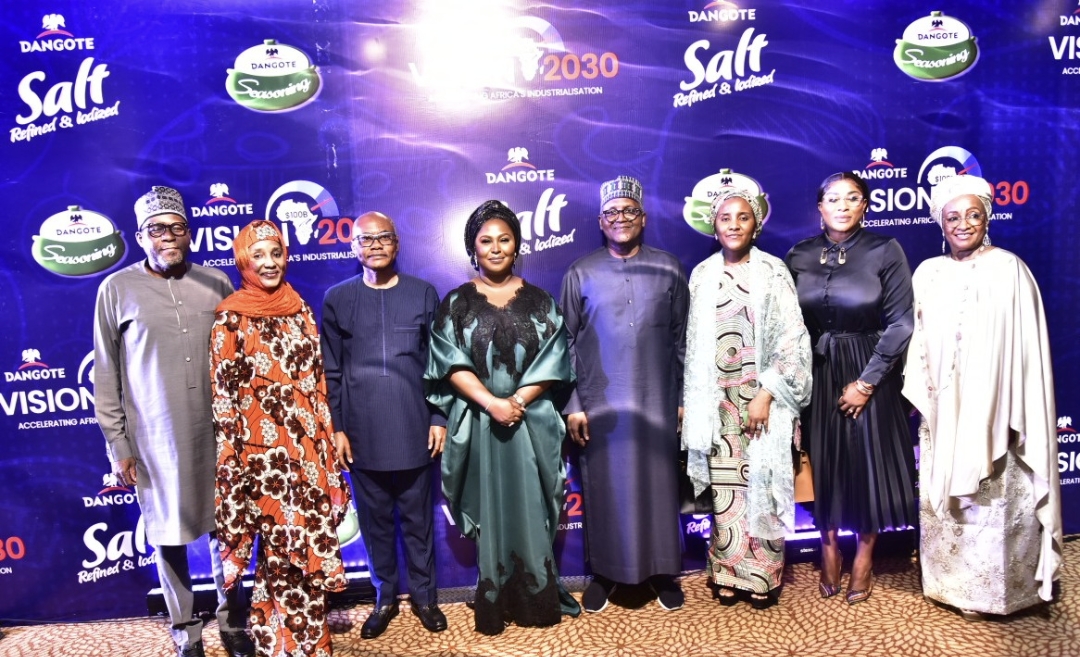
Nascon Allied Industries Plc, a subsidiary of Dangote Industries Limited, and manufacturer of the popular Dangote Salt and Dangote Seasoning brands is set to unveil its research-driven seasoning products at the 2026 Kano Trade Fair.
The diversified food products portfolio will be unveiled during the Dangote Special Day on Thursday November 3, 2026, at the ongoing Kano International Trade Fair.
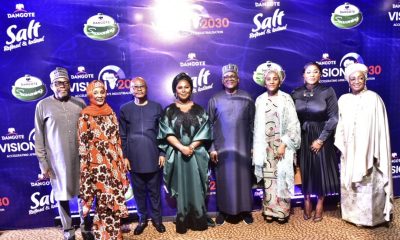
The new seasoning range, comprising Dangote Classic, Dangote Beef Seasoning and Dangote Chicken Seasoning, will be unveiled to customers and participants at the Kano Trade Fair by the Regional Director and Senior Adviser to the President of Dangote Group, Fatima Wali-Abdurrahman, and the Managing Director/Chief Executive Officer of NASCON Allied Industries Plc, Aderemi Saka, in collaboration with the Kano Chamber of Commerce, Industry, Mines and Agriculture (KACCIMA).
Dangote Industries Limited is one of the sponsors of the 47th Kano International Trade Fair with the theme: Repositioning Nigeria’s Economy Through Industrialization, Innovation and Sustainable Trade Development Strategy.
A statement from the Branding and Corporate Communication Department of the company said other strategic business units of the company participating in the Kano Trade Fair include: Dangote Cement Plc, Dangote Sugar Refinery, Dangote Sinotruk, Dangote Packaging, Dangote Fertiliser Limited and Dangote Petroleum Refinery.
However, the unveiling of Nascon’s new seasoning range is expected to be one of the major highlights of the Dangote Group Special Day.
The statement said: “Kano’s rich commercial heritage, extensive distribution networks and strategic position as one of West Africa’s leading trading centres make it a vital market for Nascon and the Dangote brand.
“We therefore invite consumers, visitors and other stakeholders to visit our pavilion to discover and experience our new Dangote Seasoning products. We also extend a warm invitation to distributors, prospective investors and business partners interested in exploring opportunities and becoming part of our expanding distribution network.”
Speaking on Dangote’s sponsorship, participation and unveiling of new products, President of the Kano Chamber of Commerce, Industry, Mines and Agriculture (KACCIMA), Ambassador Ambassador Usman Hassan Darma commended the company for the partnership, adding that the new research-based Seasonings will be accepted by customers and consumers, not only in Kano, but the entire Northern Nigeria.
He said the KACCIMA was ready to partner with the company in deepening market acceptability for the newly innovative products, adding that the KACCIMA-Dangote relationship has come a long way.
He said: “Kano has remained one of West Africa’s foremost commercial centres, with a rich trading heritage that predates modern Nigeria. For generations, the city has built a strong reputation as a hub for commerce, agriculture, textiles, manufacturing and enterprise.
“Its vibrant entrepreneurial culture is driven by a well-established network of traders, manufacturers, distributors and small and medium-sized enterprises, making Kano a critical player in Nigeria’s commercial and industrial landscape.
“Beyond Kano, Northern Nigeria holds immense economic potential across key sectors, including agriculture, livestock, mining, solid minerals, food processing, renewable energy and manufacturing. These sectors offer significant opportunities for investment, industrial growth, job creation and sustainable economic development.

A Moment in Time-Binta Spikin

2027: Amupitan Raises Alarm over Threats to His Life, Warns RECs Against Operational Lapses

NASCON to Unveil New Dangote Seasoning Products at 2026 Kano Trade Fair

EVERY WOMAN IS HER EXCELLENCY: GIRL’S GATE INITIATIVE BRINGS THE CONVERSATION ON INCLUSIVE LEADERSHIP TO THE FOREFRONT

Tarbiyya Trust to hold maiden summit on youth moral decline in Kano

Kano’s War On Drugs: How Barr. Muhyi’s Taskforce Is Changing The Game

Begging in Northern Nigeria: What Future Are We Preparing for Our Society?

NDC Deputy Governorship Candidate Gives Kano Information Commissioner 48-Hour Ultimatum Over Alleged Defamation

Bauchi Govt Suspends Emir over Alleged Misconduct, Inaugurates Probe Panel

Tinubu’s Jigawa Rally Signals Growing Northern Support, TMS Says as President Defends Economic Reforms
A Moment in Time-Binta Spikin
2027: Amupitan Raises Alarm over Threats to His Life, Warns RECs Against Operational Lapses
NASCON to Unveil New Dangote Seasoning Products at 2026 Kano Trade Fair
EVERY WOMAN IS HER EXCELLENCY: GIRL’S GATE INITIATIVE BRINGS THE CONVERSATION ON INCLUSIVE LEADERSHIP TO THE FOREFRONT
Tarbiyya Trust to hold maiden summit on youth moral decline in Kano
Kano’s War On Drugs: How Barr. Muhyi’s Taskforce Is Changing The Game
Begging in Northern Nigeria: What Future Are We Preparing for Our Society?
NDC Deputy Governorship Candidate Gives Kano Information Commissioner 48-Hour Ultimatum Over Alleged Defamation
Bauchi Govt Suspends Emir over Alleged Misconduct, Inaugurates Probe Panel
Tinubu’s Jigawa Rally Signals Growing Northern Support, TMS Says as President Defends Economic Reforms
-

 Opinion5 years ago
On The Kano Flyovers And Public Perception
-

 Features5 years ago
How I Became A Multimillionaire In Nigeria – Hadiza Gabon
-

 Opinion6 years ago
Kano As future Headquarters Of Poverty In Nigeria
-
 History6 years ago
Sheikh Adam Abdullahi Al-Ilory (1917-1992):Nigeria’s Islamic Scholar Who Wrote Over 100 Books And Journals
-
 Opinion5 years ago
My First Encounter with Nasiru Gawuna, the Humble Deputy Governor
-
 History5 years ago
The History Of Borno State Governor Professor Babagana Umara Zulum
-
 History6 years ago
The Origin Of “Mammy Market” In Army Barracks (Mammy Ochefu)
-
 News5 years ago
Federal University Of Technology Babura To Commence Academic Activities September