
News
NAHCON Chairman, Secretary in EFCC Custody Over Mismanagement of N90bn Hajj Subsidy
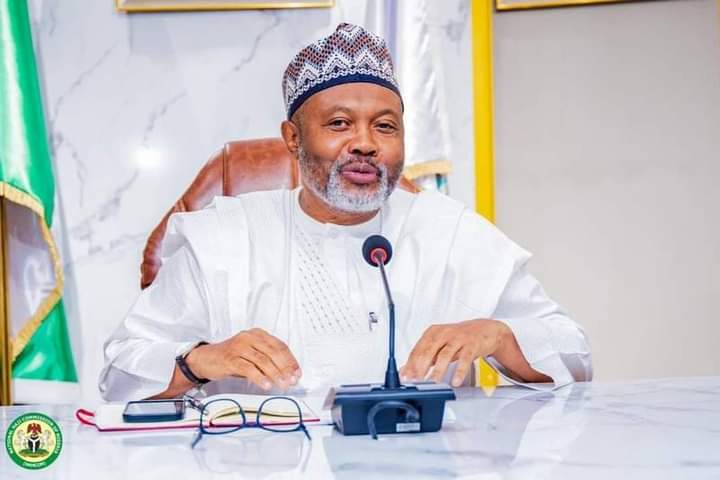
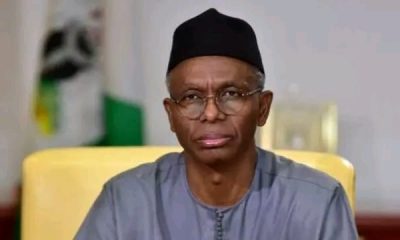
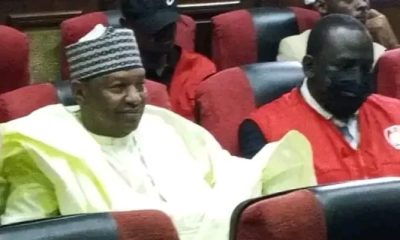
The Executive Chairman of the National Hajj Commission of Nigeria, Jalal Arabi, and the commission’s secretary, Abdullahi Kontagora, are currently in the custody of the Economic and Financial Crimes Commission over the alleged mismanagement of the N90bn 2024 Hajj subsidy, it was learnt on Wednesday.
In a document sighted by our correspondent on Wednesday, the anti-graft agency said, “A total of
SR314,098 was recovered,” from the NAHCON chairman and other ranking officials.
The EFCC said its investigation revealed that from the N90bn Hajj subsidy, Arabi, fraudulently overpaid himself and others the necessary operational cost.
Also according to the document, the approved 2024 Hajj operational cost for the Chairman/CEO
Commissioners, Secretary and Directors/Chief of Staff in the 2024 budget are stipulated as $4,250, $12,750, $3,825 and $15,300, respectively.
The EFCC, however, alleged that: “The chairman fraudulently overpaid himself, the commissioners, secretary and directors for the 2024 hajj operational cost.
“The chairman was entitled to SR15,929 but he got SR50,000; three commissioners who were meant to get SR 15,929 each received SR 40,000 each. The secretary got SR 30,000 instead of SR14,336. Directors/Chief of Staff received SR 30,000 instead of the SR2,550 they were entitled to. The total of
SR314,098 were recovered from all of them.”
The anti-graft agency had first grilled Arabi for hours on July 29 and released him on bail.
Also, last week Wednesday, some top officials of the Hajj commission were arrested by the Independent Corrupt Practices and Other Related Offences Commission over alleged mismanagement or diversion of the N90bn subsidy.
On Wednesday, a source in the EFCC told our correspondent that the NAHCON Chairman was taken in again on Wednesday for questioning and was detained.
“The Secretary and Chairman of the commission are in our custody and are facing serious interrogations on the N90bn subsidy, among other allegations,” the source said on condition of anonymity because they could not speak officially.
A document exclusively sighted by our correspondent revealed that SR 8,614,175.27 cash withdrawal out of the N90bn released by the Federal Government to the commission is yet to be accounted for by NAHCON.
Punch









News
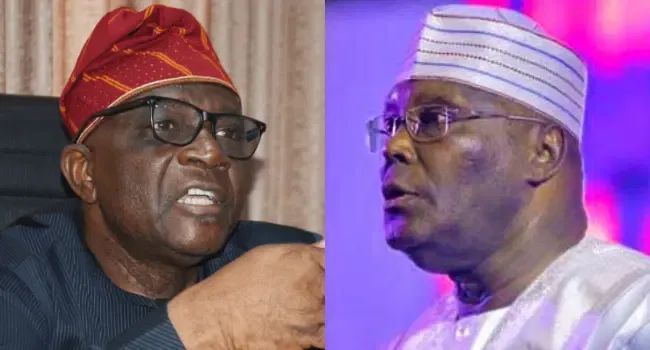
Increased FAAC Allocation Most Visible Impact of Petrol Subsidy Removal, Presidency Replies Atiku
By Yusuf Danjuma Yunusa
The presidency says the most visible impact of the petrol subsidy removal is the increased allocation for states and local government areas (LGAs) in the country.
In a statement on Sunday, Bayo Onanuga, special adviser on information & strategy to President Bola Tinubu, responded to the recent comment of former Vice-President Atiku Abubakar on the petrol subsidy removal policy.
Atiku said Nigerians deserve explanation on the petrol subsidy savings, adding that it is false to say the savings are being used to fund workers’ welfare.
His statement followed the comment by Taiwo Oyedele, minister of finance and coordinating minister of the economy, that the federal government will soon publish a detailed account of how savings from the removal of petrol subsidy has been utilised.
According to the minister, a significant portion of the savings went into financing obligations that were previously funded through central bank financing, servicing higher debt costs following tighter monetary conditions, and implementing the new national minimum wage.
Onanuga said prior to the assumption of office by Tinubu’s administration, international institutions have called for the removal of petrol subsidy.
The spokesperson said Nigerians were suffering when resources were being used to pay “fuel-subsidy merchants”.
He added that the government in which Atiku served from 1999 to 2007, did not stop the payment of petrol subsidy.
Onanuga said increased revenue allocation has made states and LGAs to raise spending on infrastructure and salaries.
“It must be said that the government in which Alhaji Atiku was Vice President waded through that toxic phenomenon, and never did the needful,” Onanuga said.
“The current administration deserves commendation for being able to get rid of something that has become a lodestone around the neck of our collective patrimony.
“The visible consequence of subsidy removal has been the sharp improvement in revenues accruing to states and local governments through the Federation Account.
“Higher statutory allocations have expanded fiscal space at the subnational level, enabling many states to increase spending on roads, schools, hospitals, salaries, pensions, and social programmes. Independent assessments, including those from the World Bank, have noted improvements in public revenues and subnational capital spending, which is another word for infrastructural development, following major fiscal reforms.
“This means that President Tinubu has tactically placed more responsibility for socioeconomic development on states and local governments, while providing requisite funding.
“This is true federalism and a bold statement on the much-vaunted subject of economic restructuring – another important issue gallantly avoided by the government in which Alhaji Atiku served and wielded great influence.”
Tinubu announced the removal of petrol subsidy during his inaugural speech as president in 2023.
News
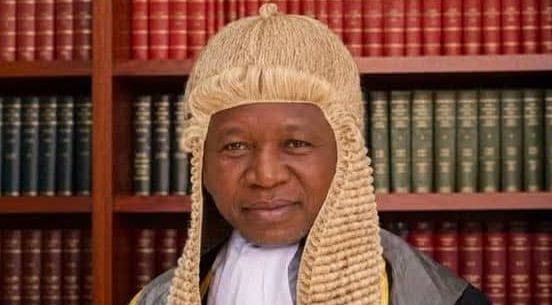
Abducted Kebbi High Court Judge Regains Freedom
By Yusuf Danjuma Yunusa
The police confirmed the release of Justice Faruk Hassan Bunza, a judge of the Kebbi State High Court, who was abducted from his residence in the Bunza council area.
Bandits abducted Mr Bunza from his residence on July 26.
A statement on Monday by Bashir Usman, the command’s spokesman, said the judge’s family and the state ministry of justice confirmed his freedom.
“His release has been confirmed by his family and the State Ministry of Justice. Although the kidnappers made a ransom demand, the command maintains its firm stance against ransom payments,” he said.
He stated that with Mr Bunza now released, police and other security agencies had intensified investigative efforts to track down the perpetrators and bring them to justice.
News
Dangote Cement Deepens Education Support In Kogi
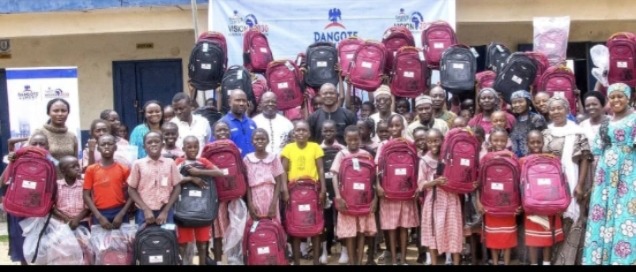
Dangote Cement Plc, Obajana Plant, has deepened its social footprint by distributing educational materials in Lokoja, the Kogi State capital.
General Manager, Social Performance Department, Dangote Cement, Obajana Plant, Ademola Adeyemi, described it as an extension of the company’s Corporate Social Responsibility (CSR) schemes.
According to him, the Lokoja educational intervention came days after Dangote Cement Plc distributed similar education materials to pupils in public schools in its catchment communities of Oyo, Iwaa, Obajana and Apata; and commissioned a multi-million-naira hospital in Obajana,which added to the growing list of social investments that includes an earlier hospital project in Iwaa and Oyo Communities.
He noted that while, over the years, the company has invested billions of naira in a wide range of social programmes for host communities, including empowerment programmes, road construction, and potable water projects, it remains resolute in its commitment to sustaining and expanding its interventions.
He noted that the company’s corporate social responsibility programmes are aligned with government development priorities and are implemented through sustained, mutually beneficial partnerships.
A statement from the company and made available to newsmen in Lokoja said: “The educational materials distributed included school bags, exercise books, writing materials, water bottles, and other essential learning aids aimed at enhancing the learning experience of the pupils and preparing them for the next academic session.”
It said:” The intervention was informed by findings from a needs assessment conducted by Dangote Cement Plc. During the assessment, it was observed that several pupils attended school without school bags, while others carried their books by hand. It was also discovered that many students lacked essential learning materials such as exercise books, pens, pencils, and other basic learning materials.”
Speaking, Head Teacher of UBE LGEA School, St. Luke Model II, Adankolo, Lokoja Local Government Area, Abubakar Sanni, expressed profound appreciation to the management of Dangote Cement Plc for the gesture.
The Head Teacher expressed gratitude to the Group President of the conglomerate, Aliko Dangote, for extending the company’s educational support programme beyond its host and impacted communities to schools located at the state headquarters.
The beneficiaries, school management, parents, and community stakeholders expressed gratitude to Dangote Cement Plc for the timely intervention and prayed for the continued growth and success of the company in its efforts to improve lives and support sustainable community development.

Borders, Visas and the Beautiful Game: How U.S. Immigration Policies Shaped Global Perceptions During the 2026 FIFA World Cup

How Social Media Is Creating Jobs for Young Nigerians-Uzoamaka

Increased FAAC Allocation Most Visible Impact of Petrol Subsidy Removal, Presidency Replies Atiku

Why Sports Betting Is Becoming a Lifestyle Among Nigerian Youths-Yusuf Faizah

Abducted Kebbi High Court Judge Regains Freedom

Alhaji Tijjani Rabiu Spikin: A Neighbour, Philanthropist, and Friend of Children

Is N100,000 Worth the Risk?’ Nigerians React to Soldiers’ Salary Increase

MAAUN Clarifies Status of Former Visiting Lecturer, Reaffirms Zero-Tolerance Policy on Sexual Harassment

Goodwill, Visibility, and Operational Security: A Strategic Communication Reading of Senator Ahmad Lawan’s DIA Post

Kano Governor Yusuf Shortlisted for Africa’s SANKOFA Award of Excellence in Infrastructural Development
Borders, Visas and the Beautiful Game: How U.S. Immigration Policies Shaped Global Perceptions During the 2026 FIFA World Cup
How Social Media Is Creating Jobs for Young Nigerians-Uzoamaka
Increased FAAC Allocation Most Visible Impact of Petrol Subsidy Removal, Presidency Replies Atiku
Why Sports Betting Is Becoming a Lifestyle Among Nigerian Youths-Yusuf Faizah
Abducted Kebbi High Court Judge Regains Freedom
Alhaji Tijjani Rabiu Spikin: A Neighbour, Philanthropist, and Friend of Children
Is N100,000 Worth the Risk?’ Nigerians React to Soldiers’ Salary Increase
MAAUN Clarifies Status of Former Visiting Lecturer, Reaffirms Zero-Tolerance Policy on Sexual Harassment
Goodwill, Visibility, and Operational Security: A Strategic Communication Reading of Senator Ahmad Lawan’s DIA Post
Kano Governor Yusuf Shortlisted for Africa’s SANKOFA Award of Excellence in Infrastructural Development
-

 Opinion4 years ago
On The Kano Flyovers And Public Perception
-

 Features5 years ago
How I Became A Multimillionaire In Nigeria – Hadiza Gabon
-

 Opinion6 years ago
Kano As future Headquarters Of Poverty In Nigeria
-

 History5 years ago
Sheikh Adam Abdullahi Al-Ilory (1917-1992):Nigeria’s Islamic Scholar Who Wrote Over 100 Books And Journals
-

 Opinion5 years ago
My First Encounter with Nasiru Gawuna, the Humble Deputy Governor
-

 History5 years ago
The History Of Borno State Governor Professor Babagana Umara Zulum
-

 History5 years ago
The Origin Of “Mammy Market” In Army Barracks (Mammy Ochefu)
-

 News4 years ago
Federal University Of Technology Babura To Commence Academic Activities September