
Features
All That Glitters is Dr. Abdullahi Al-Hassan
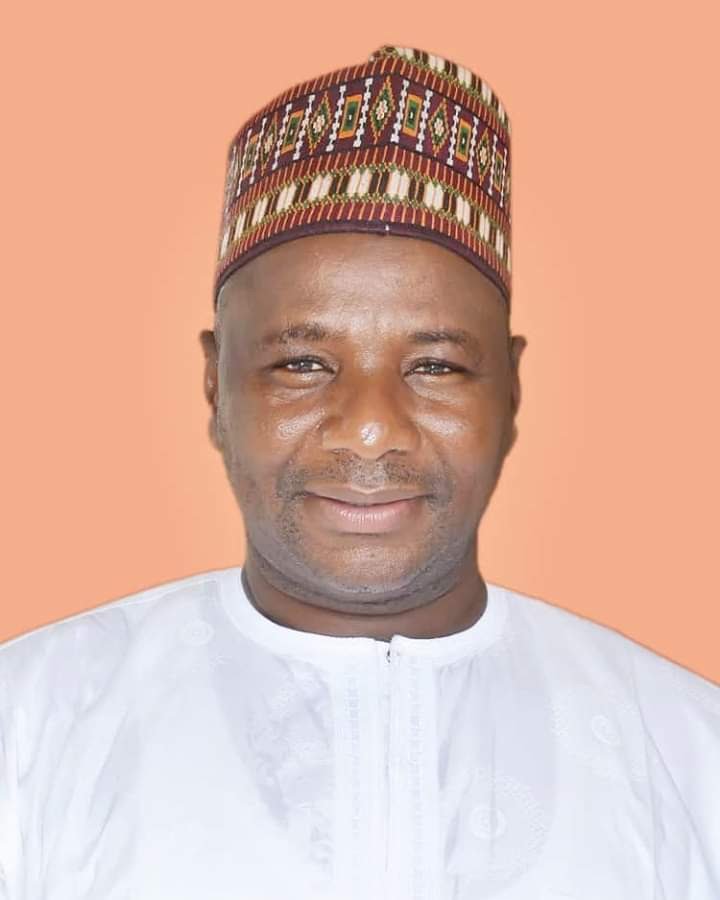
By: Farouk Maigari
With all modesty and by the special grace of God, we have been working earnestly since our coming on board in the last one year to sustain, consolidate and improve on the developments we met on the ground to further develop the Institution. Dr. Al-Hassan is determined to further develop the Polytechnic so as to create a conducive environment for research, teaching, and learning. Accordingly, he has identified and prioritized the major challenges facing the Polytechnic, and he has taken the bull by the horn in addressing these challenges among which include:
- Restoration of Peace and Stability:
Peace, which is paramount for any meaningful development to take place was restored by me immediately on the assumption of duty. This singular achievement gave room and atmosphere for other activities to be carried out perfectly.
Our effort in restoring peace was aptly captured by our august Visitor, the Honourable Minister of Education, in his speech during the Institution’s last combined 9th Convocation Ceremony where he asserted that: ‘I am aware that the Polytechnic is a peaceful one. It is to the credit of the Acting Rector and the entire Polytechnic that they have been able to arrest the drift and restore stability, peace, and order to the Institution. I commend him and his management team …’
- The Hosting of the Combined 9th Convocation Ceremony:
This convocation ceremony has lingered for years, as the last ceremony was hosted in 2013. Dr. Abdullahi Al- Hassan’s administration was able to host the convocation ceremony on 30th June 2018, exactly, five (5) months after assumption of office as the
Acting Rector. Over 20,000 graduands were graduated comprising of the 2013/2014, 2014/2015, 2015/2016, and 2016/2017 academic year graduands. With this development, the polytechnic has no single backlog of graduands awaiting convocation.
iii. The Completion of the Construction and Furnishing of the Administrative Block Extension:
Office accommodation for some of the principal officers was among our major challenges. Surprisingly, the two (2) deputy rectors appointed had no. In this regard, the effort was made to complete the administrative block extension through our finite IGR, to provide more offices.
FUD ranked No.1 University in Nigeria,21st in Africa – Scimago, Spain.
- Rehabilitation of the entire Administrative Block and Landscaping:
The entire Administrative Block was equally rehabilitated and landscaped to give it a facelift and a conducive environment.
- Complete Rehabilitation of Students’ Hostel:
Students hostels were in a dilapidated condition, at the time Dr. Abdullahi Al- Hassan took over as the Rector. Accordingly, his administration has succeeded in rehabilitating the hostels for the comfort of our Power, water, and toilet problems were thoroughly addressed.
- Procurement/Rehabilitation of Classroom/Laboratory Furniture:
More furniture was procured for the classrooms and laboratories to address the acute shortage we were experiencing, which consequentially was hindering effective teaching and learning, and our admission.
vii. Rehabilitation and Equipping of the Polytechnic Clinic: The Clinic facility was rehabilitated and cached with drugs for effective service delivery to staff, students, and the host community. With this development, revenue is being generated from the services being rendered in the Clinic, with which we will continue to maintain the Clinic and provide essential facilities.
viii. Procurement and Installation of a New 500KVA
Transformer: As at the time Dr. Abdullahi came on board, one of the power transformers that services the Academic area was faulty, hence affecting the power supply in the Polytechnic. We have since procured and Installed a brand new 500KVA transformer in the polytechnic.
- Provision of Students’ Transportation To and Fro the Students’ Village and the Permanent Site as well as within the Campus:
Transporting students from the student’s hostels to the campus for lectures was a grave problem, as there were no means of transportation except the few commercial buses that charge exorbitant fares.
In this case, buses were provided through an arrangement with Abuja Transport Authority as an interim measure. And already, Dr. Abdullahi’s administration has secured approval from the Tetfund to procure a Marcopolo Bus for the students. Also as the campus is fast-growing, there was a problem of transportation, especially for mo Accordingly, the arrangement was made with the motorcycle riders, and he now has regulated commercial motorcycles on the campus.
- Repair of Potholes to make the Roads Motorable:
We have repaired the potholes on our roads, to make it motorable and ease the sufferings of those plying the roads.
- Provision of Identity Cards for Staff and Students:
The issue of identity cards for staff and students has remained a major challenge in the Polytechnic, such that some of our students graduated without being provided with ID cards. Dr. Abdullahi has since addressed this challenge.
RESEARCH GRANTS AND DEVELOPMENT FACILITIES
Within a few months on the saddle of activities, the first indigenous rector of the host community was able to attract the following funds and interventions:
(a) Secure the release of AIP for the merged normal intervention to 2014, 2015, and 2016 for TETFUND.
(b) Secure the release of funds for the execution of merged normal intervention for the period.
(c) Secure zonal intervention for the supply of furniture as well as the procurement of library books.
(d) Secure the release of research grants.
(e) Secure the release of grants for fabrication.
(f) Attract collaboration from Ahmadu Bello University Zaria to month BSc in all Engineering Courses of which resource visitation has already been conducted by ABU Research Persons).
(g) We are in the top and fruitful discussions with PTDF, NCC, and CBN for their direct intervention in our various activities.
(h) I have ensured the release of funds for staff training and development.
(i) I have ensured the release of funds for conferences/workshops for staff.



















Features
EVERY WOMAN IS HER EXCELLENCY: GIRL’S GATE INITIATIVE BRINGS THE CONVERSATION ON INCLUSIVE LEADERSHIP TO THE FOREFRONT
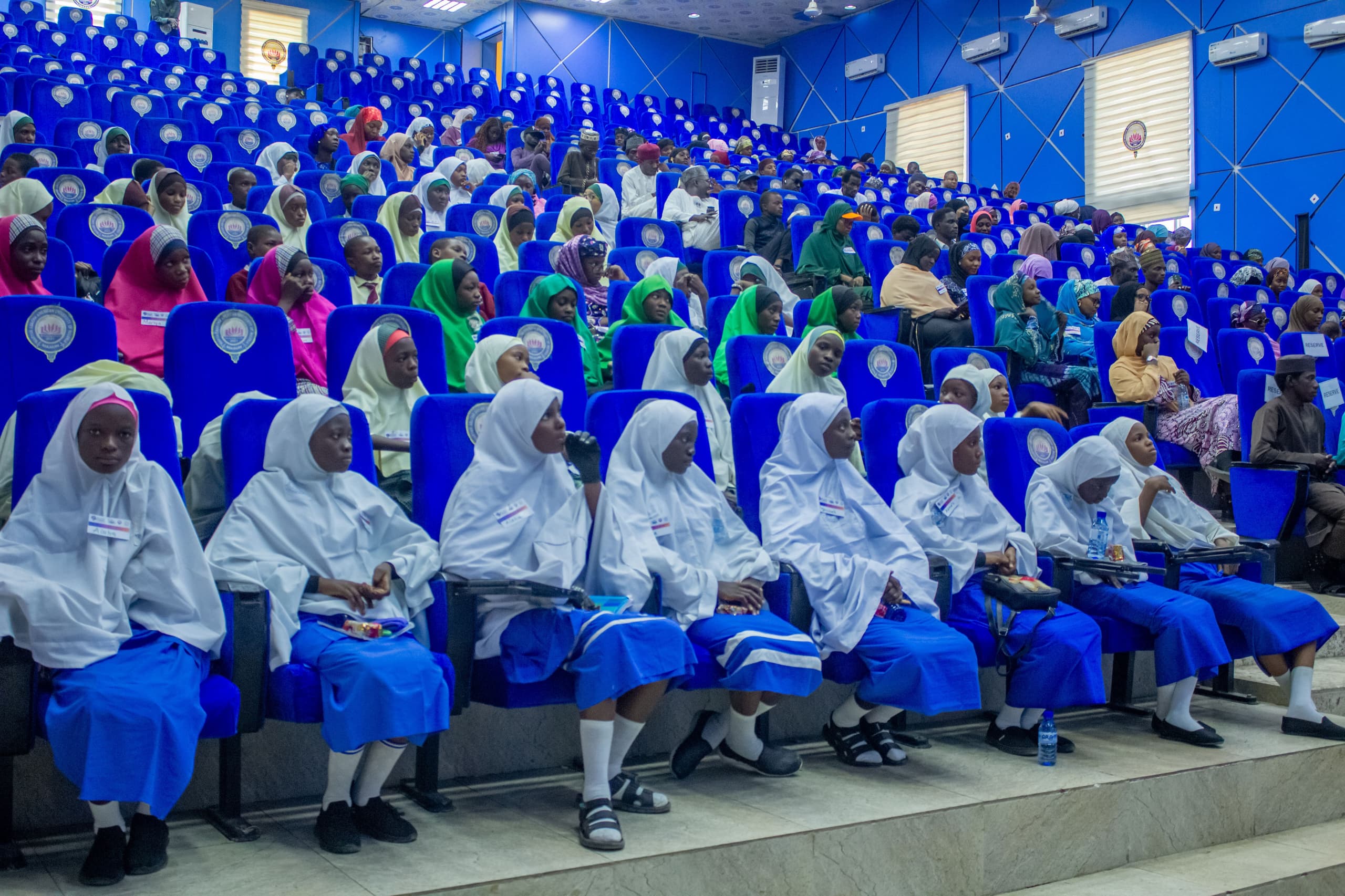
At SHE IS THE FUTURE CONFERENCE 4.0, Girls’ Gate Initiative brought together women leaders, professionals, advocates and young people to examine women’s representation, leadership opportunities and the importance of making decision-making more inclusive.
Who gets to lead? Whose voices are heard when important decisions are made? And what would it take to ensure that women and girls are not just represented, but are able to influence the decisions that shape their lives and communities?
These questions were at the heart of the fourth edition of the SHE IS THE FUTURE CONFERENCE, organised by Girls’ Gate Initiative for Empowerment and Development (GGI) on 21 November 2026 at Maryam Abacha American University of Nigeria (MAAUN), Kano Campus.
Held under the theme “Inclusive Leadership: Every Woman is HER Excellency,” the conference created a platform for conversations around women’s leadership, representation, civic participation and the importance of preparing young people, particularly girls, to take up leadership roles.
The theme was built around an important idea: leadership should not be determined by gender, background or social position. Women and girls should have opportunities to contribute their knowledge, experiences and perspectives to decisions affecting their families, institutions, communities and the wider society.
For Girls’ Gate Initiative, this conversation is closely connected to its broader commitment to girls’ empowerment, education, leadership development and meaningful participation.
The conference featured a keynote presentation by Dr Khadija Sunusi Gumbi, Keynote Speaker and Co-Convener, who addressed the theme of inclusive leadership and women’s participation in decision-making.
The presentation contributed to the wider conversation about the need to recognise women’s leadership potential, address barriers to participation and create environments where women can contribute meaningfully across different sectors.
The discussion was particularly relevant in considering how leadership opportunities are created, who has access to them and how institutions can become more inclusive.
A major part of the programme was the panel session titled “Women’s Leadership Journey from Lived Experiences.” Rather than approaching leadership only as a question of titles and positions, the session brought attention to the experiences, challenges and perspectives of women navigating different professional and social environments.
Moderated by Dr Hadiza Shettima, the panel featured Her Worship, Aisha Ismail; Jamila Musa, Gender and Community Inclusion Specialist and SRHR Advocate; Simbiat Bakare, representing RFLD virtually; and Bilkisu Ado Zango, a journalist, communications professional and disability rights advocate.
The diversity of the panellists’ backgrounds allowed the discussion to consider leadership from different perspectives, including professional experience, gender inclusion, disability rights and women’s participation in public life.
A key issue running through these conversations was the distinction between simply having women represented and ensuring that their contributions are taken seriously. Meaningful inclusion requires more than inviting women into leadership spaces; it requires recognising their voices, experiences and capacity to influence decisions.
The discussion also brought attention to the importance of including women with disabilities in leadership conversations and ensuring that inclusion extends beyond statements of commitment to practical opportunities for participation.
The conference did not limit the conversation to women already occupying leadership positions. It also turned attention to the girls and young women who will shape the next generation.
Students from Bayero University Kano (BUK), Khalifa Isyaku Rabiu University (KHAIRUN), Northwest University and Maryam Abacha American University of Nigeria (MAAUN), alongside students from more than 10 selected secondary schools, participated in the conference.
Their involvement reflected the importance of introducing leadership conversations to girls early and allowing them to interact with different experiences, perspectives and possibilities.
For many young participants, such platforms provide opportunities to ask questions, engage with people from different professional backgrounds and begin considering the roles they can play in their communities.
The conference also featured the Presidential Mock Debate, where students representing the FGC Party and MIA Party presented their manifestos and discussed issues affecting Nigeria. The exercise, followed by a mock election supervised by the Girls Independent Electoral Commission (GINEC), provided practical exposure to leadership, public speaking and democratic participation.
These activities reinforced the conference’s wider message that young people should not only be encouraged to aspire to leadership but should also have opportunities to practise participation and develop the skills needed to take responsibility.
Another major highlight was the launch of the HER EXCELLENCY Project, further reflecting GGI’s commitment to promoting girls’ empowerment and leadership.
The conference also featured a documentary highlighting the stories of Asiya and Sadiya. Through their experiences, dreams and aspirations, the documentary brought a human perspective to the broader conversations about girls’ opportunities, education and personal development.
For Huzaifa Jamil Kmata, Executive Director of Girls’ Gate Initiative and Convener of the conference, the vision is to create platforms where girls and young people can develop confidence, express themselves, engage with important issues and participate in shaping their future.
Huzaifa Jamil Kofar Mata
In his welcome address, he emphasised the importance of moving beyond conversations about empowerment to creating opportunities that allow young people to take an active role in their communities and society.
That vision is reflected in the conference’s approach: bringing together established voices and emerging leaders, connecting discussions to practical experiences and ensuring that girls are part of conversations about the future they will inherit.
Since its first edition in 2023, SHE IS THE FUTURE has provided a platform for young people to engage with issues around education, girls’ empowerment, technology, innovation and leadership.
The fourth edition expanded that conversation by placing particular emphasis on inclusive leadership, women’s representation and civic participation.
But the question raised by the conference extends beyond one day or one gathering. How can institutions, communities and society create environments where women and girls have genuine opportunities to lead? How can young people be prepared to participate in decisions rather than remain spectators? And how can the experiences of those often excluded become part of the decisions that affect everyone?
These are questions that require continued engagement, collaboration and practical action.
For Girls’ Gate Initiative, the message behind “Every Woman is HER Excellency” is not simply about giving women titles. It is about recognising their capacity, creating opportunities for their participation and ensuring that leadership spaces reflect the diversity of the people they serve.
The conference offered a platform for that conversation, bringing together women with lived experiences and young people with aspirations for the future.
Because inclusive leadership is not achieved when women are merely invited to the table. It is achieved when their voices help shape the decisions made there and when the next generation has the opportunity to take its place.
Features
Why I want To Rewrite Kannywood’s Playbook – Dan Hausa

By Saif Ibrahim, Kano
Who is Dan Hausa?
I am Kamilu Ibrahim born 31 years ago, but most people know me as Dan Hausa. I was born in Fagge, Kano State, and from the very beginning I knew I wanted to tell stories that reflect the realities of my people. I trained at the High Definition Film Academy in Abuja, SAE Institute, and also took part in the U.S. Embassy’s Filmmaking for Impact program. I join the fikm making industry and started directing in 2017 because I wanted full control over how my stories are told.
Can you tell us a bit about yourself and your journey into film directing?
My journey began with a love for storytelling—I started as a scriptwriter, then worked closely with experienced filmmakers before directing my first film. Over the years, I’ve learned that directing isn’t just about cameras and lights, but about understanding people, culture, and the power of narrative.
Growing up, I saw how films could educate and inspire people. In Arewa, cinema is more than entertainment—it’s a mirror of society. I wanted to use that mirror to reflect our values, challenges, and hopes. That desire to make meaningful films pushed me into directing.
What sets your work apart in today’s Kannywood?
For me, it’s about merging modern cinematic techniques with our Hausa cultural identity. I love bold visuals and tight storytelling, but I never want to lose that traditional heartbeat of my origin. My goal has always been to raise our production quality to international standards while staying true to our roots”, proof of that is clear in my current and biggest project, “Wata Shida.
How would you describe your directing style?
I like to call my style “realism with purpose.” I focus on authenticity—every scene, every performance, every frame must feel true to life. But I also ensure that there’s always a message, something the audience can take home and reflect on.
Can you highlight some of your notable works?
Sure, there is Wata Shida which is currently airing and has an overwhelming response from the public and the likes of Lulu Da Andalu a myth-inspired adventure series showing on AREWA24 and YouTube. YouTube pushed us to think bigger in terms of story and production. Mijin Hajiya earned me Best Director at the 2024 Kano Entertainment Awards, while Tataburza made waves at film festivals. Earlier films like Bakon Yanayi (2019) and my debut Kulba Na Barna (2017) helped me define my style. My latest project, Amaryar Lalle, starring Rahama Sadau, premieres August 2025 on Sadau Pictures TV. Each project is a step forward in showing what Kannywood can achieve.
What awards and recognitions have you earned?
I have also been recognized by the Arewa5050 Awards and Kaduna International Film Festival (KIFF) for Lulu Da Andalu, which even won Best Indigenous Hausa Film. There’s also an AMVCA nomination for best Africanindigenous language , which is exciting because it means Hausa stories are getting wider attention.”
Who are your key collaborators?
Filmmaking is teamwork; TY Shaba has been a creative partner on several projects, especially on Lulu Da Andalu. I have WORKED with Rahama Sadau on Amaryar Lalle has been fantastic; she brings so much energy to the screen.”
What themes do you explore in your films?
I like telling stories where modern life clashes with traditional values—family conflict, cultural identity, gender roles. These are real issues in our society, and I try to explore them honestly but cinematically. I believe film should make people feel and also think.”
What is your next project?
I am working on Wata Shida Season 2, a story about a woman who enters a six-month sham marriage to protect her inheritance. It’s socially meaningful but also very entertaining. I will also continue with season 2 of “Amaryar Lalle.”
Can you tell us a little about your latest project?
This project is very close to my heart. It follows a young girl fighting to get an education in a society full of obstacles. Through her eyes, we see how family, tradition, and resilience collide, and how hope can survive even in the harshest situations.”
What inspired you to make this story?
Growing up, I saw so many bright young girls whose dreams were cut short just because they were girls. I felt a responsibility to tell this story—not as fiction, but as a mirror of what is happening around us.
How do you balance tradition and modernity in your work?
A: It’s about respect. I respect our traditions, but I also embrace new technology and ideas. In my films, I make sure traditional values are represented truthfully, while using modern techniques to improve production quality.
What challenges do you face as a director in Kannywood?
Budgets are often limited, and resources can be scarce. But the biggest challenge is sometimes societal misunderstanding of what we do as filmmakers. People forget that film is also an art form and a tool for change, not just entertainment.
Can you tell us your favourite project
Every project has its own special memory, but I’m proudest when a film sparks conversation or impacts people’s lives. For example, one of my recent films about youth unemployment led to community discussions and even small initiatives to help young people. That’s when I feel film is doing its job.
What advice would you give to aspiring directors?
Learn the craft—don’t rush. Watch films, study scripts, spend time on set even if it’s just to observe. Most importantly, stay humble and focused. Filmmaking is about patience, teamwork, and vision.
What should audiences expect from your upcoming projects?
Expect more powerful stories rooted in our culture, with better technical quality. I’m working on projects that tackle real societal issues, and I believe they’ll resonate with audiences not just in Arewa, but globally.
Features
Antenatal Care: Why some women misses several sessions

By Aisha Muhammad Rabiu
In many parts of Northern Nigeria, antenatal care is a vital step in ensuring the health of both mother and the unborn child. Yet, an increasing number of women are neglecting this crucial stage of pregnancy, putting themselves and their babies at serious risk, hence the high infant, mother mortality rate.
Health experts have been warning that antenatal visits help detect pregnancy complications at its early stage, provide essential supplements for healthy mother/child development, and educate mothers on safe delivery practices. But for some women, they find antenatal care as a burden either due to poverty or lack of awareness based on cultural practices and beliefs. As such antenatal remains a neglected priority.
In Kadawa, Fatima Sani, a 28-year-old expectant mother, admits she has not attended a single session of antenatal since the start of her pregnancy. she said “It’s not that I don’t want to go, but the clinic is far from my house, and my husband says we should save the transport money for delivery day. I just pray Allah protects me and my baby.”
From Dan Bare, Shago Tara precisely, Khairat a mother of 4 shares her reasons for not attending antenatal session even though she is fully aware that the session is very important to pregnant women. She said “I feel healthy, so I don’t see the need to go for antenatal. My mother gave birth to all her children at home without any clinic visits, and they all survived.”
In Rijiyar Zaki, Hadiza Mukhtar recalls her previous pregnancy, where she skipped antenatal visits entirely. “The nurses were rude to me when I first went. I decided I would not return. This pregnancy, I haven’t gone at all,” she confesses.
For Usaina Muhammad of Kurna, the problem is financial. “I can’t afford the registration fee, and I also have other children to feed. I know antenatal is important, but survival comes first.”
Meanwhile, Maryam Lawan of Layi Kaji reveals that misinformation has influenced her decision. “Someone told me that the iron tablets they give at the clinic make the babies grow too big, making delivery harder. So, I decided to avoid it altogether.”
Medical professionals emphasize that skipping antenatal care increases the risk of complications such as anemia, high blood pressure, infections, and even maternal or infant death. Dr. Ibrahim Musa, a gynecologist in Kano, warns: “We see many emergencies that could have been avoided if the mother had attended antenatal. Most of these cases arrive late, making it harder for the doctors to save lives.”
Experts and community leaders agree that raising awareness is key in addressing the matter. Antenatal care should be made more affordable, accessible, and culturally acceptable for all women. Religious leaders, health workers, and family members all have a role to play in encouraging expectant mothers to attend regular check-ups.
Neglecting antenatal care is not just a personal choice; it’s a public health concern that affects families, communities, and the future of the nation. Ensuring that every mother has the knowledge, resources, and support to seek antenatal care is a step toward a healthier society.
Aisha Muhammad Rabiu writes from Bayero University Kano (BUK) and she can be reached at Email: aishatama2020@gmail.com
Phone no.08084273341

EVERY WOMAN IS HER EXCELLENCY: GIRL’S GATE INITIATIVE BRINGS THE CONVERSATION ON INCLUSIVE LEADERSHIP TO THE FOREFRONT

Tarbiyya Trust to hold maiden summit on youth moral decline in Kano

Kano APC Cautions Sagagi Against ‘Baseless’ Criminal Allegations

KANO STATE POLYTECHNIC: BEYOND THE HEADLINES, THE FACTS, THE CHALLENGES AND THE RECORD OF LEADERSHIP

Hon.Abduljabbar Umar Garko:Beyond Land Administration, A Commitment To People And The Future Of Kano

Kano’s War On Drugs: How Barr. Muhyi’s Taskforce Is Changing The Game

Begging in Northern Nigeria: What Future Are We Preparing for Our Society?

NDC Deputy Governorship Candidate Gives Kano Information Commissioner 48-Hour Ultimatum Over Alleged Defamation

Bauchi Govt Suspends Emir over Alleged Misconduct, Inaugurates Probe Panel

Tinubu’s Jigawa Rally Signals Growing Northern Support, TMS Says as President Defends Economic Reforms
EVERY WOMAN IS HER EXCELLENCY: GIRL’S GATE INITIATIVE BRINGS THE CONVERSATION ON INCLUSIVE LEADERSHIP TO THE FOREFRONT
Tarbiyya Trust to hold maiden summit on youth moral decline in Kano
Kano APC Cautions Sagagi Against ‘Baseless’ Criminal Allegations
KANO STATE POLYTECHNIC: BEYOND THE HEADLINES, THE FACTS, THE CHALLENGES AND THE RECORD OF LEADERSHIP
Hon.Abduljabbar Umar Garko:Beyond Land Administration, A Commitment To People And The Future Of Kano
Kano’s War On Drugs: How Barr. Muhyi’s Taskforce Is Changing The Game
Begging in Northern Nigeria: What Future Are We Preparing for Our Society?
NDC Deputy Governorship Candidate Gives Kano Information Commissioner 48-Hour Ultimatum Over Alleged Defamation
Bauchi Govt Suspends Emir over Alleged Misconduct, Inaugurates Probe Panel
Tinubu’s Jigawa Rally Signals Growing Northern Support, TMS Says as President Defends Economic Reforms
-

 Opinion5 years ago
On The Kano Flyovers And Public Perception
-

 Features5 years ago
How I Became A Multimillionaire In Nigeria – Hadiza Gabon
-

 Opinion6 years ago
Kano As future Headquarters Of Poverty In Nigeria
-

 History6 years ago
Sheikh Adam Abdullahi Al-Ilory (1917-1992):Nigeria’s Islamic Scholar Who Wrote Over 100 Books And Journals
-

 Opinion5 years ago
My First Encounter with Nasiru Gawuna, the Humble Deputy Governor
-
 History5 years ago
The History Of Borno State Governor Professor Babagana Umara Zulum
-

 History6 years ago
The Origin Of “Mammy Market” In Army Barracks (Mammy Ochefu)
-

 News5 years ago
Federal University Of Technology Babura To Commence Academic Activities September