
News
NUT Launches ‘Go Public’ Campaign to Promote Public Education in Nigeria
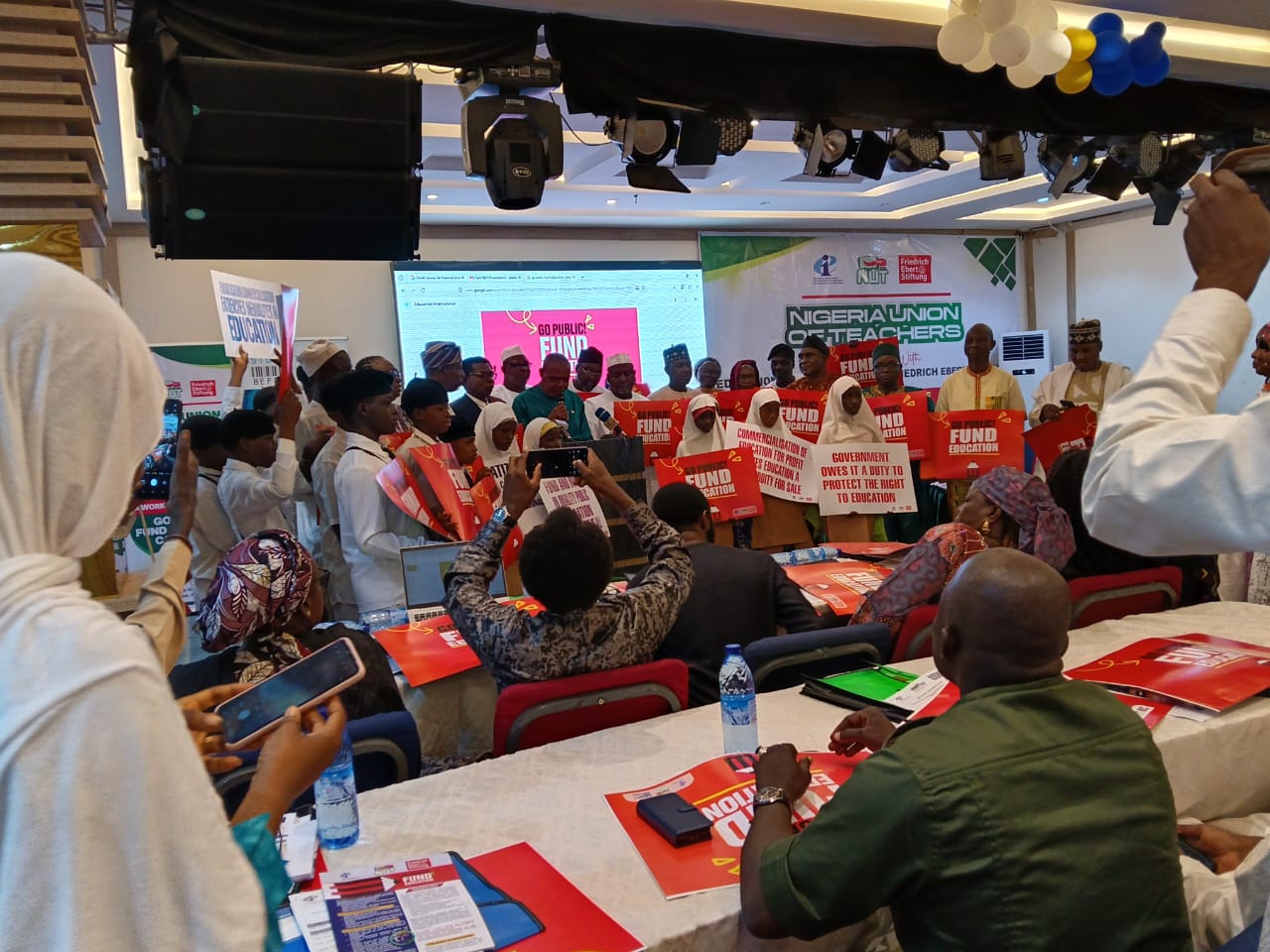
The Nigerian Union of Teachers (NUT) has launched a nationwide campaign tagged “Go Public, Fund Education”, calling for increased government investment in public education and urgent measures to improve the quality of teaching and learning across the country.
The campaign is aimed at drawing attention to the challenges confronting Nigeria’s public education system, particularly inadequate funding, poor learning conditions, teacher welfare and the growing number of out-of-school children.
Speaking at the launch, the NUT National Vice President, Comrade Kitzo A. Kalu, who represented the National President of the union, Comrade Audu Titus Samba, said Nigeria’s education system had yet to attain the required benchmark for a standard education system.
Kalu said the union was advocating for an education system capable of meeting international standards and providing Nigerian children with the knowledge and skills required to compete effectively in a changing world.
«“The education system in Nigeria is not up to benchmark. All we want is an education system that will take us to the standard. All we want is a good educational system,” he said.»
He stressed that adequate funding remained critical to improving the quality of education, noting that the welfare of teachers must also be prioritised if they were expected to perform effectively.
According to him, teachers who are well cared for are more likely to give their best to the profession, while poor welfare could negatively affect their effectiveness in the classroom.
“When the teacher’s wellbeing is taken care of, they will give their best. There is no way you can teach under an empty stomach,” Kalu said.
He therefore called on governments at all levels to take concrete steps to improve teachers’ welfare and working conditions, while also addressing the various challenges responsible for children remaining outside the formal education system.
Kalu particularly urged the government to intensify efforts to tackle the out-of-school children crisis, describing it as an issue requiring urgent and coordinated intervention.
He said the “Go Public, Fund Education” campaign was intended to mobilise stakeholders and draw greater attention to the need for sustained investment in public schools.
The NUT official maintained that strengthening public education was essential to the development of the country, stressing that government must provide the necessary resources for schools, teachers and learners.
Also speaking, the Kano State Commissioner for Education, Ali Haruna Makoda, represented by the Permanent Secretary of the ministry, Dr Bashir Muhammad, welcomed the initiative and expressed the state government’s support for the campaign.
Dr Muhammad said the initiative was timely and capable of contributing to efforts to address the challenges confronting public education, particularly the problem of out-of-school children.
He said the campaign was a welcome development and commended the NUT for organising it.
«“It’s a good initiative and it is highly welcomed by the Kano State Government under the leadership of Governor Abba Kabir Yusuf,” he said.»
According to him, the campaign would contribute to efforts aimed at bringing more children into school and improving access to education.
He expressed optimism that governments across the country would support the initiative, describing the campaign as well organised and relevant to the current challenges facing the education sector.
The launch brought renewed attention to the need for stronger collaboration between governments, teachers’ unions and other stakeholders in addressing the challenges facing Nigeria’s education system.
The NUT maintained that increased public investment, improved teacher welfare and decisive action to reduce the number of out-of-school children were necessary steps towards building a stronger and more effective education system in Nigeria.











News
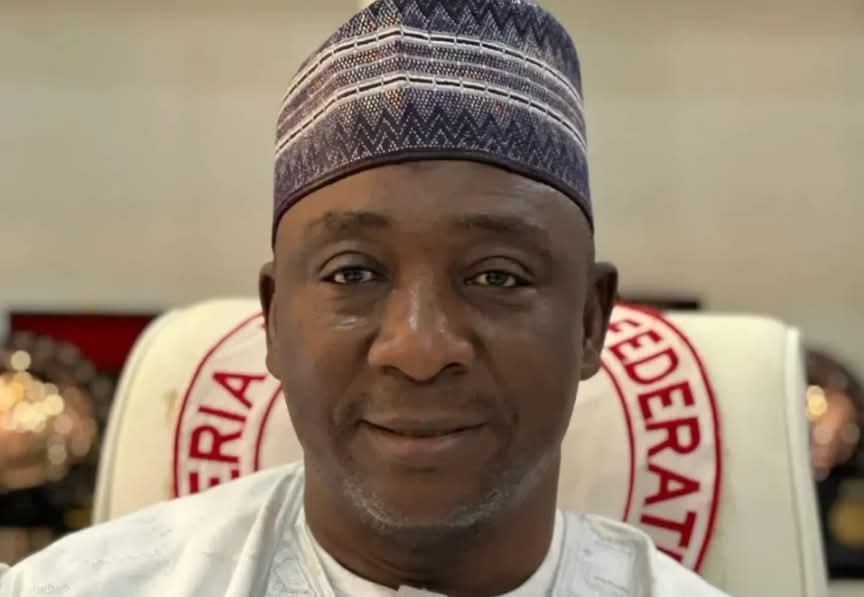
NFF President Gusau Resigns
By Yusuf Danjuma Yunusa
Nigeria Football Federation President, Ibrahim Gusau, has resigned from office, announcing his decision during a press conference in Abuja on Thursday.
According to the Super Eagles news account on X (@SSE_NGA), Gusau was joined by board members of the Executive Committee in resignation.
The crisis follows the Super Falcons’ failure to qualify for the 2027 FIFA Women’s World Cup, a first in Nigeria’s history, after a 2-1 defeat to South Africa in the play-off.
The Falcons had earlier been knocked out of the Women’s Africa Cup of Nations at the quarter-final stage by Cameroon. The Super Eagles also failed to qualify for the 2026 World Cup.
The NFF has separately faced scrutiny over its handling of a ₦17bn Federal Government intervention fund released in 2024, as well as a fact-finding committee report alleging that board members and officials influenced national team invitations for financial gain.
Gusau’s exit comes ahead of the NFF’s elective congress, scheduled for September 27 in Lafia, Nasarawa State.
News
2027: Tinubu Holds Strongest Pathway to Re-election Amid Obi, Atiku Challenges — ADSC Report
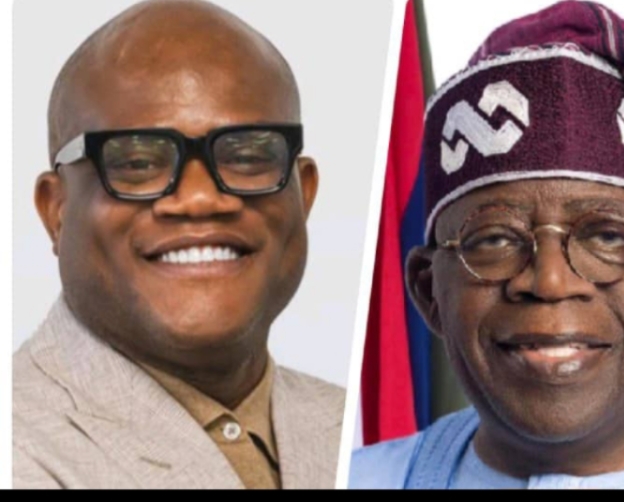
President Bola Ahmed Tinubu currently has the strongest pathway to securing re-election in the 2027 presidential election, despite emerging challenges from Peter Obi and former Vice President Atiku Abubakar, according to a report by ADSC META.
The report, signed by Sir Victor Walsh Oluwafemi, President and Chief Executive Officer of ADSC META, assessed the evolving political landscape ahead of the 2027 general elections, focusing on governance performance, political structures, coalition dynamics, voter behaviour, economic indicators, institutional influence and leadership capacity.
The report noted that the contest is increasingly being shaped by three major political figures: President Tinubu of the All Progressives Congress (APC), Peter Obi of the New Democratic Congress (NDC), and Atiku Abubakar of the African Democratic Congress (ADC).
It stated: “While political conversations remain highly emotional and often driven by partisan loyalties, the responsibility of policy institutions is to examine the evidence, assess the realities, and identify the factors that are most likely to shape electoral outcomes.
“Following an extensive review of governance performance, political structures, coalition dynamics, voter behaviour, economic indicators, institutional influence, and leadership capacity, ADSC META finds that President Bola Ahmed Tinubu presently maintains the strongest pathway towards securing a second term in office.
“This conclusion is not founded upon political preference. It is derived from a comparative assessment of the political environment as it currently exists.”
Incumbency, APC structure favour Tinubu
According to the report, the power of incumbency remains President Tinubu’s most significant advantage going into the election.
“The first and perhaps most significant advantage enjoyed by President Tinubu is the power of incumbency,” it stated.
It added: “Across Africa and indeed much of the democratic world, incumbency remains one of the most powerful political assets available to any leader seeking re-election. Incumbent leaders enjoy visibility, access to state institutions, policy influence, extensive media attention, and a level of national presence that opposition candidates often struggle to match.”
The report also described Tinubu as “arguably the most experienced coalition builder in contemporary Nigerian politics,” citing his longstanding reputation for political strategy, alliance-building and management of competing interests.
“Long before becoming President, he established a reputation as a political strategist capable of identifying talent, building alliances, managing competing interests, and constructing durable political structures,” the report stated.
It further noted that the political architecture that helped produce the APC as a governing party remains one of the major political achievements of the Fourth Republic.
“The APC today possesses extensive structures across the federation, including governors, legislators, local government networks, political stakeholders, traditional institutions, and strategic alliances.
“Regardless of public opinion regarding the administration’s policies, these structures provide a formidable electoral foundation.”
Economic challenges could determine Tinubu’s fate
ADSC META, however, acknowledged the economic challenges confronting the Tinubu administration, including inflation, rising food prices and the impact of fuel subsidy removal and exchange-rate reforms.
“The report acknowledges that President Tinubu’s administration continues to face significant criticism. Inflation remains a major concern. Rising food prices continue to place pressure on households.
“The removal of fuel subsidies created substantial economic discomfort. The exchange rate reforms introduced uncertainty during their initial implementation.
Many Nigerians continue to express frustration regarding the pace at which economic relief is reaching ordinary citizens.
“These concerns are legitimate and should not be dismissed.”
The report nevertheless argued that present economic hardship may not by itself determine the outcome of the 2027 election.
“However, elections are rarely determined solely by present hardship. They are often influenced by voter expectations regarding the future,” it stated.
It said the critical question for the Tinubu administration would be whether its reforms begin to deliver visible benefits before the final phase of the election cycle.
“Should inflation decline, infrastructure delivery improve, foreign investment increase, employment opportunities expand, and economic confidence strengthen, the administration may successfully transform what currently appears to be political liabilities into electoral advantages.”
Obi’s challenge is converting popularity into structure
The report described Peter Obi as one of the most compelling figures in Nigeria’s contemporary political environment, particularly among young voters, professionals, entrepreneurs and members of the diaspora.
“His reputation for fiscal prudence, administrative discipline, accountability, and modest leadership style continues to resonate strongly among young voters, professionals, entrepreneurs, members of the diaspora community, and citizens seeking a different model of governance.
“His greatest political asset remains credibility.”
It also acknowledged Obi’s ability to build a movement-driven political following rather than relying solely on traditional political structures.
“Unlike many politicians whose support is largely dependent on traditional structures, Peter Obi has successfully cultivated a movement-driven political following,” the report stated.
However, ADSC META identified the conversion of his popularity into an effective nationwide political organisation as a major challenge.
“Yet national elections demand more than popularity.
“Nigeria’s electoral reality requires extensive organisational capacity, nationwide penetration, grassroots mobilisation, coalition management, regional acceptance, vote protection systems, and political structures capable of operating effectively in thousands of wards and polling units.
“The challenge confronting Peter Obi is not visibility. The challenge is conversion. The ability to convert public enthusiasm into a nationwide electoral machine remains one of the defining questions surrounding his candidacy.”
Atiku’s experience, national reach acknowledged
The report also recognised Atiku Abubakar’s extensive political and executive experience, describing him as one of Nigeria’s most experienced political figures.
“Atiku’s greatest strengths remain experience, national reach, political relationships, and policy familiarity,” it stated.
However, the report identified generational change as a potential challenge for the former vice president.
“A growing segment of the electorate increasingly associates his candidacy with the old political establishment at a time when younger voters are demanding generational renewal and alternative leadership models.”
Opposition unity key to 2027 contest
According to ADSC META, opposition cohesion could prove to be one of the most decisive factors in determining the 2027 presidential election.
“Perhaps the most important variable identified by ADSC META is opposition cohesion.
“If opposition forces remain divided between multiple platforms, President Tinubu’s pathway towards re-election becomes significantly clearer. A fragmented opposition disperses votes, weakens organisational efficiency, and reduces the likelihood of a unified national alternative emerging.
“Conversely, a disciplined and united opposition coalition could substantially alter the political landscape.”
The report also compared the leadership strengths of the three major contenders.
“President Tinubu’s strengths are most visible in political organisation, coalition engineering, strategic negotiation, and institutional management.
“Peter Obi’s strengths are most visible in fiscal discipline, administrative efficiency, public accountability, and reform-oriented governance.
“Atiku Abubakar’s strengths are most visible in executive experience, economic policy familiarity, and national political engagement.”
It added: “Each candidate possesses significant leadership qualities.
However, elections are not won solely by competence. They are won through a combination of competence, structure, alliances, timing, public sentiment, and organisational strength.”
Tinubu remains candidate to beat, report says
Based on its assessment, ADSC META concluded that Tinubu currently occupies the strongest strategic position ahead of the 2027 presidential election.
“Based on the evidence available today, ADSC META concludes that President Bola Ahmed Tinubu remains the candidate with the clearest institutional pathway to victory in 2027.”
The report, however, cautioned against interpreting the assessment as a prediction of an inevitable victory.
“This assessment should not be interpreted as a declaration of inevitability. Elections remain dynamic. Economic conditions can change. Political alliances can shift.
“New coalitions can emerge. Public opinion can evolve rapidly. Political history repeatedly demonstrates that electoral outcomes are rarely determined years before voting begins.”
It nevertheless maintained that Tinubu’s incumbency, party structure, coalition-building capacity, political organisation, institutional reach and electoral preparedness currently give him an advantage over his major challengers.
“Nevertheless, when measured against the realities of incumbency, party structure, coalition capacity, political organisation, institutional reach, and electoral preparedness, President Bola Ahmed Tinubu currently occupies the strongest strategic position among the leading contenders.
“The road to 2027 remains open. The opposition still possesses opportunities to redefine the contest. Yet as matters stand today, the incumbent remains the candidate to beat.”
News
Kano Spends N26.5bn on Govt House, Governor’s Office, Travels in Six Months
By Yusuf Danjuma Yunusa
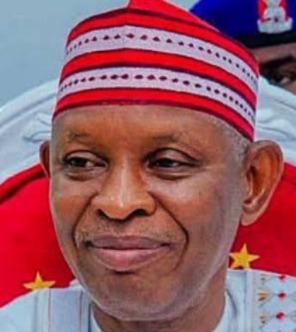
The Kano State Government spent approximately N26.50 billion on the Government House, Governor’s Office and official travels during the first six months of 2026, according to an analysis of state budget implementation reports.
Data compiled by PUNCH showed that Kano spent N25.87 billion on the Government House and Governor’s Office between January and June 2026, while an additional N626.95 million was recorded under travel and transportation expenditure.
Spending Declines from 2025
Despite the substantial expenditure, Kano recorded a notable decline in spending on the Government House and Governor’s Office compared with the corresponding period in 2025. According to the analysis, expenditure dropped from N28.84 billion in the first half of 2025 to N25.87 billion in 2026.
The reduction amounts to approximately N2.98 billion, representing a decline of about 10.32 per cent.
The figures, however, do not represent the personal salary or private expenditure of Governor Abba Kabir Yusuf. Rather, the Government House and Governor’s Office expenditure covers various official and administrative activities, including personnel costs, maintenance of facilities, security, official functions and other expenses associated with the operation of the executive arm of the state government.
Kano Among Top Spenders Nationwide
The analysis by PUNCH further showed that Kano’s expenditure formed part of a wider spending pattern across the country. In the 33 states for which data were available, governments collectively spent N512.10 billion on Government Houses, governors’ offices and travels during the first six months of 2026.
The total comprises N420.01 billion spent under Government House, Governor’s Office and related executive administration budget heads, while another N92.09 billion went to travel and transport.
How Other States Compared
Highest Government House/Governor’s Office Expenditure
– Kogi recorded the highest identifiable expenditure at N65.34 billion, representing more than 15 per cent of the total Government House and Governor’s Office spending captured in the 2026 dataset.
– Ogunfollowed with N45.26 billion.
– Lagos recorded N45.04 billion.
– Ekiti spent N25.22 billion.
– Cross River recorded N23.92 billion.
– Bayelsa spent N22.99 billion.
– Imo recorded N19.43 billion.
– Enugu spent N16.20 billion.
Lowest Government House/Governor’s Office Expenditure
At the lower end of the spectrum:
– Oyo recorded about N1.95 billion.
– Sokoto spent N2.20 billion.
– Kwara recorded N2.59 billion.
– Abiaspent N2.78 billion.
Travel and Transport Expenditure
On travel and transport:
– Plateau recorded the highest identifiable expenditure at N10.11 billion.
– Lagosfollowed with N8.23 billion.
– Taraba recorded N5.16 billion.
– Niger spent N4.45 billion.
– Ekiti recorded N4.41 billion.
– Bauchi spent N3.75 billion.
– Yobe recorded N3.68 billion.
– Oyo recorded about N667.52 million.
Governors’ Salaries vs. Office Maintenance Costs
The analysis highlights a striking contrast. While a governor’s stated monthly salary of N503,000 translates to N3.018 million over six months, the combined six-month salary of all 36 governors amounts to just N108.65 million.
The N512.10 billion spent on executive offices and travel is therefore about 4,713 times the combined basic salaries of the 36 governors over the same period. The six-month salary of all 36 governors represented only 0.02 per cent of the identified expenditure on executive offices and travel.
Nationwide Spending Declines from 2025
The analysis showed that expenditure under the comparable categories was lower in the first half of 2026 than in the corresponding period of 2025. Available records showed that states spent N465.07 billion under Government House, Governor’s Office and similar executive administration heads in the first six months of 2025, with a further N92.73 billion recorded for travel and transport, bringing the combined 2025 figure to N557.80 billion.
The 2026 figure of N512.10 billion represents a decline of about N45.70 billion, or 8.19 per cent. Government House and Governor’s Office spending accounted for most of the reduction, falling from N465.07 billion in 2025 to N420.01 billion in 2026 — a decline of N45.05 billion, or 9.69 per cent.

NFF President Gusau Resigns

NUT Launches ‘Go Public’ Campaign to Promote Public Education in Nigeria

2027: Tinubu Holds Strongest Pathway to Re-election Amid Obi, Atiku Challenges — ADSC Report

Re: “Kano Spends #26.5BN On Govt House,Governors Office, Travels In Six Months

Olodo Uprising:The Debate Over Fame, Knowledge And Nigeria’s Digital Future-Peter Peace
How Kano Digitized Land Turns N50m to N750m Monthly

Borders, Visas and the Beautiful Game: How U.S. Immigration Policies Shaped Global Perceptions During the 2026 FIFA World Cup

ADC Youths Call on Atiku to Intervene Over Allegations of Injustice in Primary Elections, Demand Resignation of David Mark

I Gave Tijjani Gandu N10 Million to Support Musicians, Media but Funds Were Allegedly Not Distributed – Governor Yusuf’s Spokesperson

Atiku Replies Obasanjo, Says He Has No Regret Thwarting the Third Term Agenda
NFF President Gusau Resigns
NUT Launches ‘Go Public’ Campaign to Promote Public Education in Nigeria
2027: Tinubu Holds Strongest Pathway to Re-election Amid Obi, Atiku Challenges — ADSC Report
Re: “Kano Spends #26.5BN On Govt House,Governors Office, Travels In Six Months
Olodo Uprising:The Debate Over Fame, Knowledge And Nigeria’s Digital Future-Peter Peace
How Kano Digitized Land Turns N50m to N750m Monthly
Borders, Visas and the Beautiful Game: How U.S. Immigration Policies Shaped Global Perceptions During the 2026 FIFA World Cup
ADC Youths Call on Atiku to Intervene Over Allegations of Injustice in Primary Elections, Demand Resignation of David Mark
I Gave Tijjani Gandu N10 Million to Support Musicians, Media but Funds Were Allegedly Not Distributed – Governor Yusuf’s Spokesperson
Atiku Replies Obasanjo, Says He Has No Regret Thwarting the Third Term Agenda
-

 Opinion5 years ago
On The Kano Flyovers And Public Perception
-

 Features5 years ago
How I Became A Multimillionaire In Nigeria – Hadiza Gabon
-

 Opinion6 years ago
Kano As future Headquarters Of Poverty In Nigeria
-

 History5 years ago
Sheikh Adam Abdullahi Al-Ilory (1917-1992):Nigeria’s Islamic Scholar Who Wrote Over 100 Books And Journals
-

 Opinion5 years ago
My First Encounter with Nasiru Gawuna, the Humble Deputy Governor
-

 History5 years ago
The History Of Borno State Governor Professor Babagana Umara Zulum
-

 History5 years ago
The Origin Of “Mammy Market” In Army Barracks (Mammy Ochefu)
-

 News4 years ago
Federal University Of Technology Babura To Commence Academic Activities September