
News
Adamawa Flood Claims Lives of 10 Children, Displaces Thousands in Yola

Tragedy struck the heart of Adamawa State as massive flooding swept through several communities in Yola, killing at least 10 children and displacing thousands of families, according to eyewitness reports and preliminary assessments.
The Worst-Hit: Ibn Abbas Quarters
The epicenter of the disaster appears to be Ibn Abbas area, where the flood’s fury left unimaginable devastation. Local resident Malam Jamilu Abdullahi, speaking to Nigerian Tracker, shared his anguish after losing three of his own children to the deluge. “We were helpless. The water came suddenly and fiercely. My neighbors lost at least seven children. The pain is beyond words,” he said, his voice heavy with emotion.
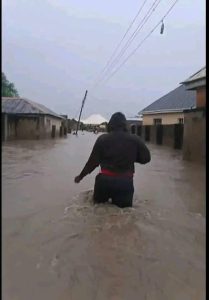
One of the affected areas
Other Affected Communities
In addition to Ibn Abbas, the flooding impacted multiple residential zones across Yola, including:
– Sabon Pegi
– Shagari Quarters
– Modire
– Unguwar Tashan Sani
– Yolde Pate
Hundreds of homes were submerged, leaving families without shelter, access to clean water, or food. Community leaders report critical infrastructure damage, with roads washed away and access to healthcare now heavily constrained.
Calls for Urgent Government Intervention
As the displaced seek refuge in schools, mosques, and open spaces, local voices have grown louder. Residents are appealing to Governor Ahmad Umaru Fintiri and the Federal Government for immediate intervention.

One of the affected areas
“The situation is dire. Our children are dying, our homes are gone. We need shelter, medical aid, and protection,” said a community elder in Modire, expressing fear that without swift action, disease outbreaks could follow.
What Happens Next?
Relief agencies and emergency services are reportedly mobilizing, but logistics remain a challenge due to the scale of the disaster. Climate experts warn that more rainfall is expected in the coming days, prompting worries of further flooding.
The Adamawa flood is yet another reminder of the pressing need for resilient infrastructure, effective disaster planning, and environmental safeguards in flood-prone areas of Nigeria.







News
ADC Urges INEC to Bar Partisan Lecturers from Serving as Returning Officers in 2027 Elections
By Yusuf Danjuma Yunusa
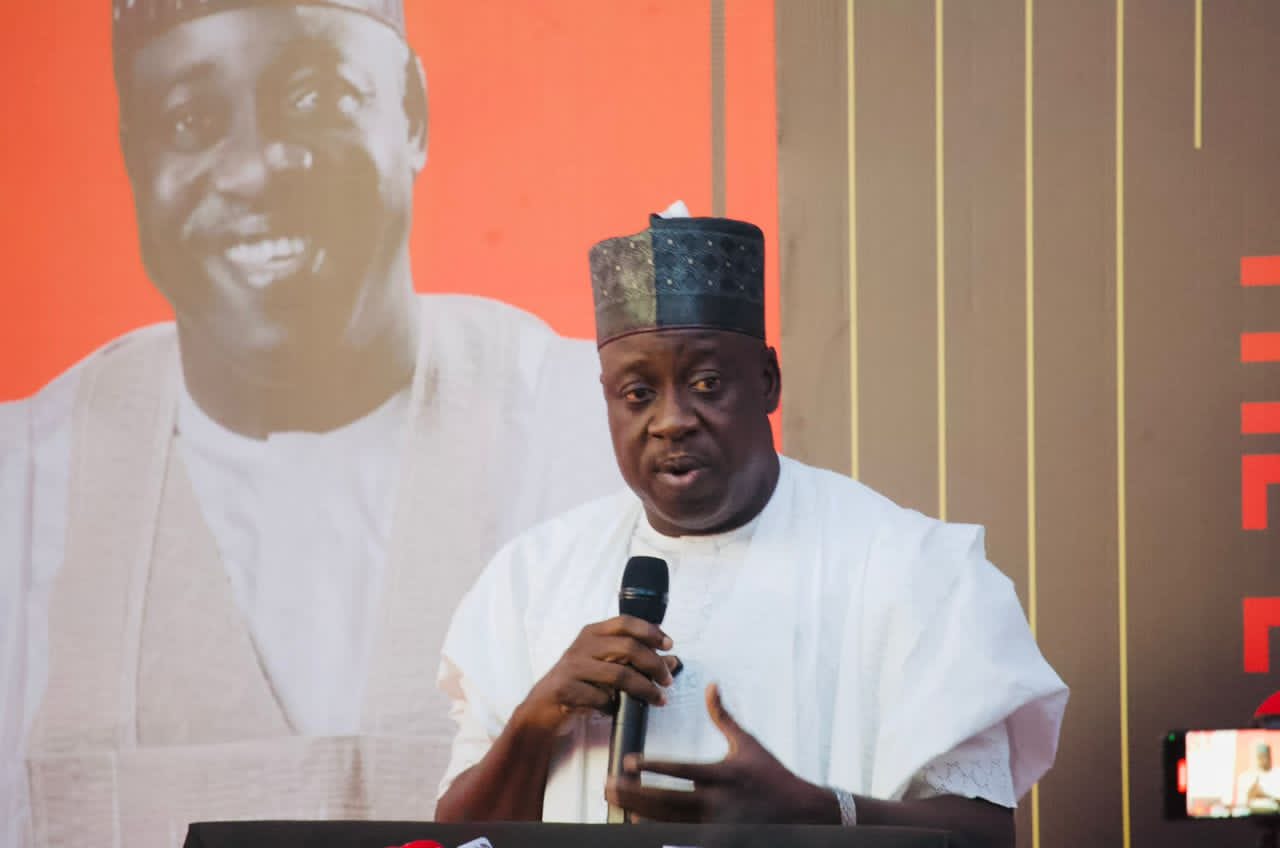
The African Democratic Congress (ADC) has called on the Independent National Electoral Commission (INEC) to review the appointment of politically exposed academics as Returning and Collation Officers for the 2027 general elections.
In a press statement issued on Monday, the party expressed concern over a newspaper report revealing that over 600 senior lecturers from public universities across Northern Nigeria have endorsed President Bola Ahmed Tinubu for the 2027 presidential election.
The ADC argued that this development raises fundamental questions regarding electoral credibility and conflict of interest, noting that university lecturers and vice chancellors are routinely entrusted with the sensitive responsibility of collating election results and declaring winners.
While acknowledging the constitutional right of every Nigerian, including academics, to support or endorse any political candidate, the party insisted that no individual who has openly taken a partisan position should be entrusted with determining the outcome of an election involving that candidate.
“The principle is straightforward,” the ADC stated. “You cannot campaign for a candidate and then be entrusted with counting the votes and declaring winners in the same election that your candidate is contesting in.”
The party, therefore, urged INEC to establish and publish clear criteria disqualifying academics and other prospective election officials who have publicly endorsed candidates, participated in partisan political activities, or otherwise demonstrated an obvious political affiliation.
Additionally, the ADC called on INEC to publish the names of proposed Returning and Collation Officers sufficiently ahead of the elections. This, the party said, would allow political parties and the public to identify and raise legitimate conflict-of-interest concerns.
“The integrity of an election does not begin when the first ballot is cast,” the statement read.
“It begins with the neutrality of the people entrusted to administer, collate, and declare its outcome. Nigerians must never be placed in a position where those who have publicly chosen a side are subsequently presented as neutral arbiters of the contest.”
The statement was signed by Mallam Bolaji Abdullahi, National Publicity Secretary of the African Democratic Congress.
News
Male Heir Not My Priority ; My Daughters Are Doing Well, Says Dangote
By Yusuf Danjuma Yunusa
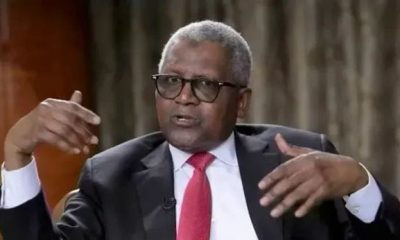
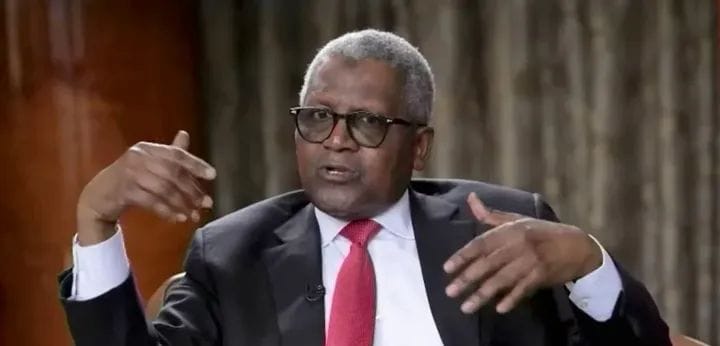
Aliko Dangote, President of the Dangote Group
Africa’s richest man, Aliko Dangote, says having a male child to sustain his family name and business empire is not his priority.
He noted that he has three daughters doing well.
Mr Dangote, 69, who is the president of Dangote Group and Dangote Refinery, made the statement during an interview on Arise TV, on Tuesday.
Asked if he was making efforts to have a son to sustain his legacy, Mr Dangote said, “That’s not really my priority. Let me say it blurntly. It is not really my priority. God controls everything. Sometimes you can pray to have a son but the son could be the one to drag the family name down.”
The Africa’s richest man further said he didn’t think a son would do better than the three girls he already has.
“Sometimes when God does give you a something don’t push it. I don’t think a son would have done better than the three girls I have,” he said.
Mr Dangote’s three daughters; Fatima, Halima and Mariya are holding key executive and leadership positions in the Dangote Group.
News
BREAKING: APC Governors Hold Closed-Door Meeting Over Wike’s ‘Rainbow Coalition’
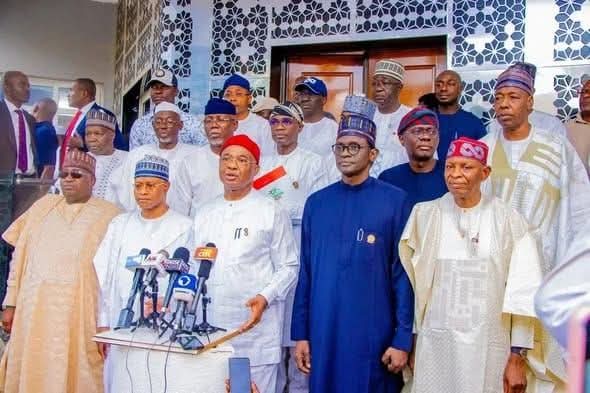
By Yusuf Danjuma Yunusa
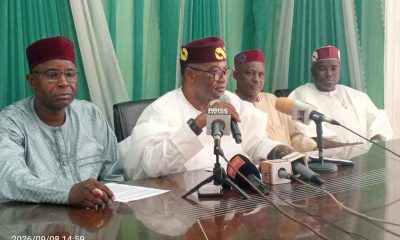
Governors elected on the platform of the All Progressives Congress (APC) are currently meeting behind closed doors at the Imo State Governors’ Lodge in Abuja, amid rising political tension over the “rainbow coalition” being promoted by the Minister of the Federal Capital Territory (FCT), Nyesom Wike.
The meeting, which began on Tuesday, is understood to be centred on recent political realignments that party leaders fear could undermine President Bola Ahmed Tinubu’s interests and weaken APC candidates at all levels.
It was gathered that the governors are expected to issue a statement distancing themselves from any political alliance or arrangement that could work against the President or the ruling party.
The move is widely seen as a direct response to Wike’s coalition, which has reportedly set some APC governors against the FCT minister. The governors are particularly aggrieved over allegations that Wike is sponsoring candidates who lost in the APC under the platform of the Peoples Democratic Party (PDP).
The APC governors are said to be determined to draw a clear line between legitimate political engagement and actions that could damage the party’s electoral fortunes.
As of the time of filing this report, the meeting was still ongoing, and no official communiqué had been issued. A statement is expected shortly.
More details later…

ADC Urges INEC to Bar Partisan Lecturers from Serving as Returning Officers in 2027 Elections

Male Heir Not My Priority ; My Daughters Are Doing Well, Says Dangote

BREAKING: APC Governors Hold Closed-Door Meeting Over Wike’s ‘Rainbow Coalition’

Oil Prices Rise After Saudi Pipeline Halt and Delayed Hormuz Talks

Atiku Accuses Tinubu of ‘Economic Deception’ Over Subsidy Savings, Demands ‘Where Is the Money?’ as ASUU Threatens Fresh Strike

From World’s 9th Most Populous City to Perfect: As Gov Yusuf Revisits Kano Master Plan

95% of Governor Abba Kabir Yusuf’s Promises Have Been Fulfilled — CPS Interview By Musa Diso, In Kano

Bello Sharada: A Great Writer, A Bookish Soul, Gone Too Soon

Call Me Chairman, Not Tony!’: Elumelu’s Blunt Correction of Trainee Splits Internet as Old Video Sparks Double Standard Fury

Nigerians Are Tired of Promises’ — CAN Demands Action on Insecurity, Hardship In Eid-el-Maulud Message
ADC Urges INEC to Bar Partisan Lecturers from Serving as Returning Officers in 2027 Elections
Male Heir Not My Priority ; My Daughters Are Doing Well, Says Dangote
BREAKING: APC Governors Hold Closed-Door Meeting Over Wike’s ‘Rainbow Coalition’
Oil Prices Rise After Saudi Pipeline Halt and Delayed Hormuz Talks
Atiku Accuses Tinubu of ‘Economic Deception’ Over Subsidy Savings, Demands ‘Where Is the Money?’ as ASUU Threatens Fresh Strike
From World’s 9th Most Populous City to Perfect: As Gov Yusuf Revisits Kano Master Plan
95% of Governor Abba Kabir Yusuf’s Promises Have Been Fulfilled — CPS Interview By Musa Diso, In Kano
Bello Sharada: A Great Writer, A Bookish Soul, Gone Too Soon
Call Me Chairman, Not Tony!’: Elumelu’s Blunt Correction of Trainee Splits Internet as Old Video Sparks Double Standard Fury
Nigerians Are Tired of Promises’ — CAN Demands Action on Insecurity, Hardship In Eid-el-Maulud Message
-

 Opinion5 years ago
On The Kano Flyovers And Public Perception
-

 Features5 years ago
How I Became A Multimillionaire In Nigeria – Hadiza Gabon
-

 Opinion6 years ago
Kano As future Headquarters Of Poverty In Nigeria
-

 History5 years ago
Sheikh Adam Abdullahi Al-Ilory (1917-1992):Nigeria’s Islamic Scholar Who Wrote Over 100 Books And Journals
-

 Opinion5 years ago
My First Encounter with Nasiru Gawuna, the Humble Deputy Governor
-

 History5 years ago
The History Of Borno State Governor Professor Babagana Umara Zulum
-

 History5 years ago
The Origin Of “Mammy Market” In Army Barracks (Mammy Ochefu)
-

 News4 years ago
Federal University Of Technology Babura To Commence Academic Activities September