
News
Federal University of Kashere to Graduate 6,870 Students

By Imran Sulaiman & Muhammad Sani Uba
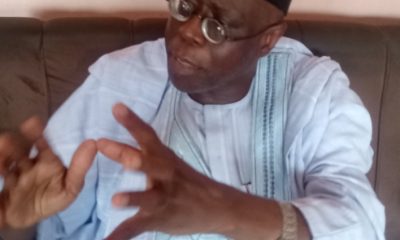
As the Federal University of Kashere (FUK) prepares for its much-anticipated combined convocation ceremony, the institution is not only celebrating academic achievement but also showcasing a bold era of transformation, innovation, and growth.
The convocation will witness the graduation of 6,870 students across four academic sessions (2019/2020 to 2023/2024), including 91 First Class graduates, 1,899 Second Class Upper, 3,917 Second Class Lower, 960 Third Class, and 3 graduates with Pass.
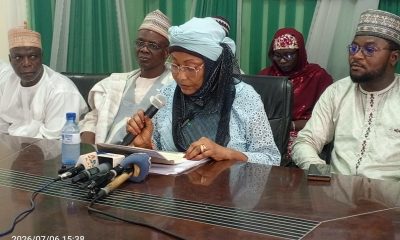
At a press briefing held ahead of the ceremony, the Vice Chancellor, Professor Umaru A. Pate, highlighted a series of groundbreaking reforms and projects that have redefined the university’s trajectory. Topping the list is the commencement of a ₦4 billion chancellery building complex, set to become the administrative nerve center of the university.
Professor Pate also disclosed that the university, through the Federal Government’s Nigeria Education Loan Fund (NELFUND), secured approximately ₦1 billion in financial support for 8,266 students, who are now also receiving monthly upkeep allowances a milestone in student welfare and access to higher education.
The Vice Chancellor extended heartfelt appreciation to philanthropic individuals including Prof. Isa Ali Pantami, Alhaji Yuguda, Hon. Habu Muazu, Alhaji Bello Tinka Point, and Alhaji Ibrahim Danbarde, whose sponsorships and interventions have played a significant role in enhancing student support and infrastructure at FUK.
Beyond academics, the university has also expanded its physical and academic infrastructure. According to Dr. Umar Muhammad, Director of Academic Research, the institution has grown from two faculties to six, created new departments, and completed major capital projects such as modern student hostels, a College of Medical Sciences complex, and a 500-capacity lecture theatre.
Dr. Muhammad noted that the university has also upgraded its ICT systems, installed solar power panels, and fully equipped its radio and television stations, positioning them as hubs for hands-on media training and professional broadcasting.
On research and academic partnerships, he stated that FUK has hosted 15 academic conferences and entered into 10 institutional collaborations both locally and internationally. Notable partners include the National Institute for Policy and Strategic Studies (NIPSS) and the British Broadcasting Corporation (BBC), further elevating the university’s global academic profile.
The Vice Chancellor also thanked the Gombe State Government for its continuous support especially in providing security and commended traditional leaders from Gombe, Billiri, Kaltungo, Pindiga, and other neighboring communities for fostering peaceful coexistence.
Convocation Ceremony Schedule
The Investiture of the Chancellor and Undergraduate Combined Convocation Ceremonies for the Award of First Degrees and Prizes, alongside the Convocation Lecture, will take place on Friday, July 4th, 2025.
The lecture titled: “Evolution of Medical Sciences: Past, Present, and Future” will be delivered by none other than Professor Muhammad Ali Pate, CON, the Coordinating Minister of Health and Social Welfare.
The grand finale the Combined Convocation Ceremonies for the Award of Higher Degrees and Conferment of Honorary Doctorate Degrees will be held on Saturday, July 5th, 2025.










News
Is N100,000 Worth the Risk?’ Nigerians React to Soldiers’ Salary Increase
By Yusuf Danjuma Yunusa
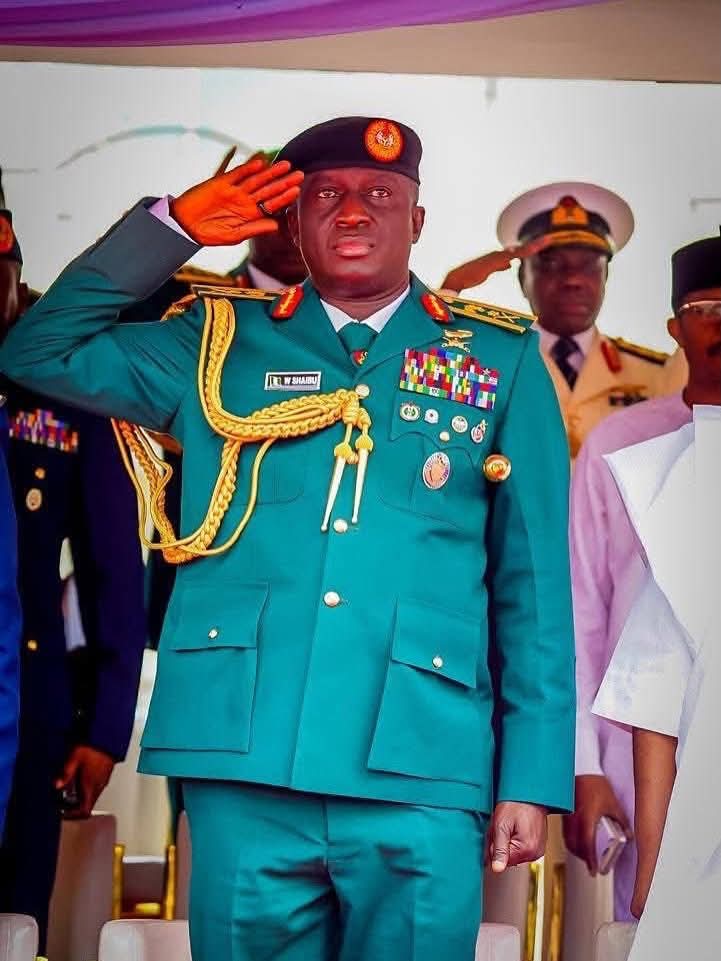
The Federal Government has approved a N51,000 monthly salary increase for Nigerian soldiers, raising their basic pay from N49,000 to N100,000, Minister of Defence Gen. Christopher Musa announced during an appearance on News Central TV earlier today.
The disclosure, while intended to signal the administration’s commitment to improving welfare for military personnel, has instead ignited a firestorm of criticism across social media platforms, with many Nigerians questioning whether the increment adequately reflects the dangers and sacrifices inherent in military service.
“When you consider the operational environment our troops operate in, the compensation must match the risk,” one commenter, Victor, suggested, proposing that soldiers’ basic salary should fall between N400,000 and N500,000.
The announcement has drawn particular scrutiny from citizens who note the disparity between the pay hike and the perilous conditions facing troops engaged in counterinsurgency operations across the country’s northeastern and northwestern regions.
Public Reaction:
Social media users were quick to voice their discontent, with many questioning the scale of the increment.
“I don’t understand, the 100k is for feeding allowance or what?” asked Chinyere, reflecting widespread confusion about the nature of the increase.
Another commenter, Celestine, remarked with apparent sarcasm: “This must be in dollars.”
Niyoo David offered a more measured observation: “To them na achievement oo” — a comment suggesting the government views the increase as a significant accomplishment even as critics deem it insufficient.
Titilope highlighted the inherent contradiction: “So 100k is big money for the job with the highest risk?”
Some commenters, including Ahmad Abubakar and Yusuf Auwal, drew a direct connection between compensation and security outcomes, with both stating: “Now we know the meaning of Insecurity and its components” and “This is exactly the meaning of Insecurity,” respectively — remarks that appear to suggest inadequate pay contributes to the nation’s security challenges.
Despite the announcement, Gen. Musa acknowledged that the military remains underfunded relative to its operational requirements.
“The military is currently underfunded for it to meet its full operational needs,” the minister stated, without providing specific figures regarding the funding gap or detailing what additional resources would be required.
The admission raises questions about whether the salary increment, while representing a significant percentage increase of over 104 percent from the previous N49,000 base pay, will be sufficient to boost morale and recruitment in a force that has faced mounting casualties in ongoing counterterrorism campaigns.
The public discourse following the announcement has inevitably turned to the broader question of military compensation in Africa’s most populous nation, where insecurity remains a pressing concern across multiple regions.
As Nigerians continue to debate the adequacy of the N100,000 monthly salary, the question now being posed is: What is a fair wage for those who risk their lives in defence of the nation?
We ask our readers: How much do you believe a Nigerian soldier should be paid? Share your thoughts in the comments section below.
News
FG to Implement 112 as Nigeria’s Single Emergency Number
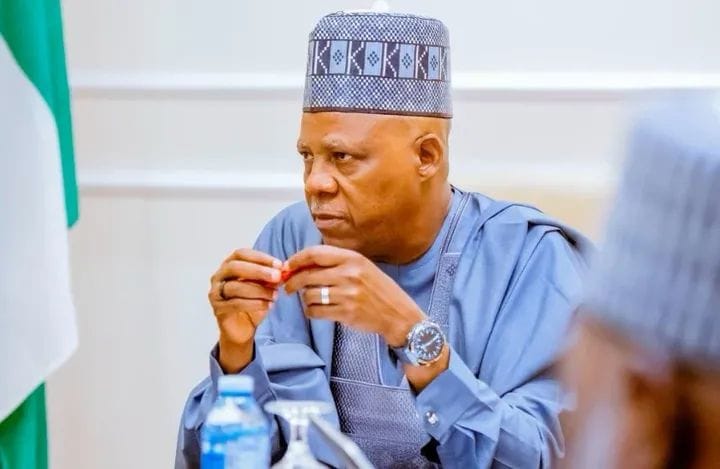
The Federal Government has said it would engage state governors and emergency response agencies to finalise plans for the nationwide adoption of 112 as Nigeria’s single emergency telephone number.
The move was disclosed in a statement released on Thursday by the Senior Special Assistant to the President on Media and Communications (Office of the Vice President), Stanley Nkwocha.
The statement followed a meeting between a delegation from the Nigerian Communications Commission, led by the Chairman of its Governing Board, Chief Idris Ibikunle Olorunnimbe, and the Vice President, Senator Kashim Shettima, at the Presidential Villa on Tuesday.
It said the engagement came days after the National Economic Council, chaired by the Vice President, approved the adoption of 112 as the national emergency number across all levels of government and relevant agencies, as part of measures to build a unified national emergency response system.
At the meeting, Shettima directed the NCC to develop a roadmap for implementing the initiative and to work with the National Emergency Management Agency to strengthen coordination of emergency response nationwide.
“He assured the delegation that the project would be sustained, noting that the required funding would be mobilised through the National Economic Council and the private sector.
“The Vice President also called for high-level engagement and commitment from emergency responders to drive the successful implementation of the 112 initiative,” the statement read.
Earlier, Olorunnimbe said the NCC had established about 35 Emergency Communications Centres across the country and called for greater support from state governments and emergency agencies to keep the facilities operational.
He said governors, the Nigeria Police Force, ambulance services and NEMA must work together to ensure people in distress receive prompt assistance.
“Everyone is expected to buy into this initiative and recognise its importance. It is a patriotic duty to our country to ensure that anyone in distress can get the help they need in a very swift manner,” he added.
News
Outrage in Kano: Women Give Birth in Tricycles as Abandoned Road Project Leaves Thousands Stranded
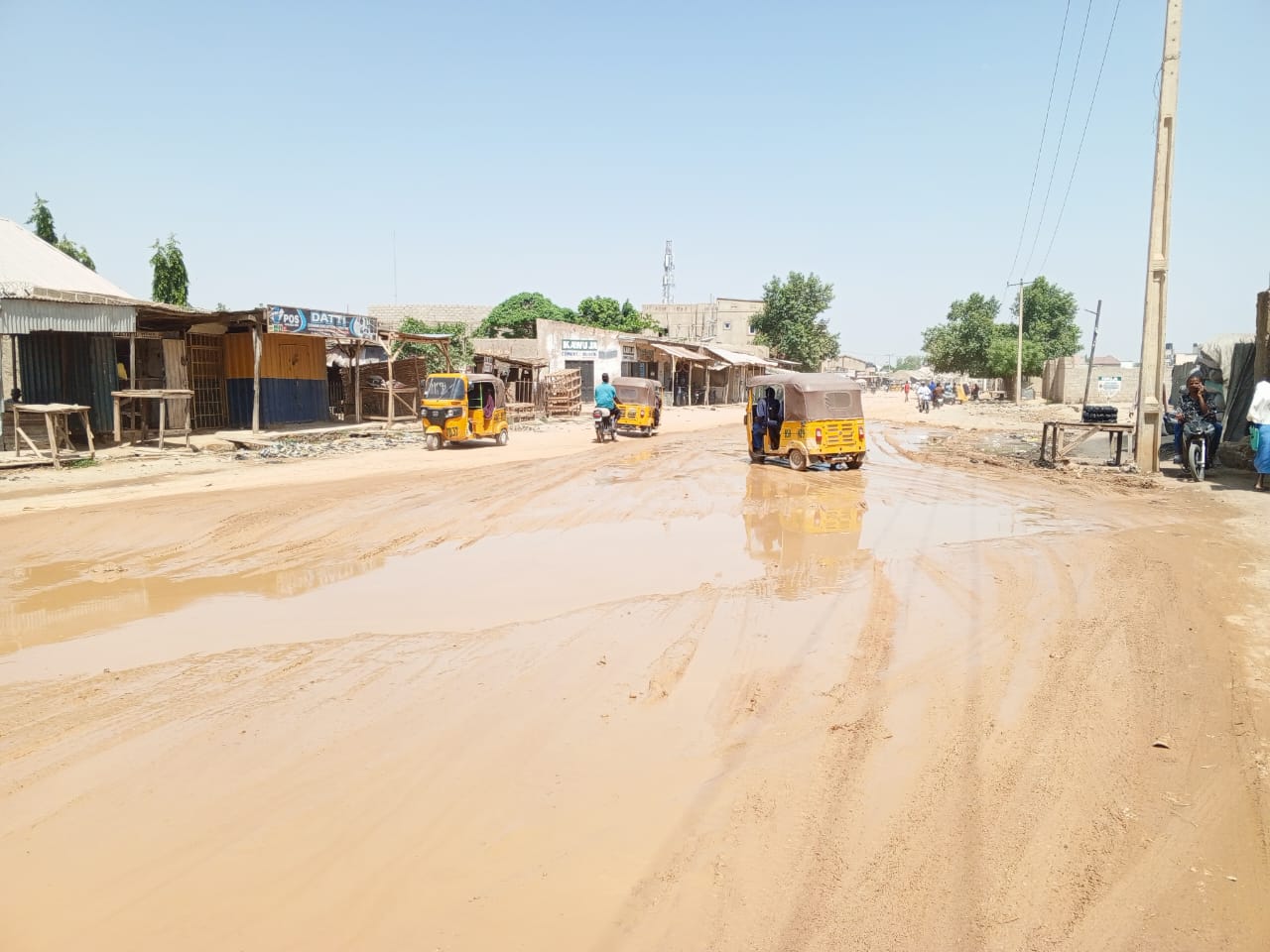
Residents of communities in Nassarawa, Kumbotso, and Gezawa LGAs are crying out over the worsening condition of the Yandodo–Mai-Allo–Oromi–Mariri road, where deep potholes, flooding, and years of neglect have reportedly forced pregnant women to give birth inside tricycles and left thousands battling daily hardship despite the government’s road contract award.
By Sani Magaji Garko and Abbas Yushau Yusuf
Residents of several communities across Nassarawa, Kumbotso, and Gezawa Local Government Areas have appealed to the Kano State Government to urgently commence full-scale work on the Yandodo–Mai-Allo–Oromi–Mariri road project, lamenting that the prolonged delay has exposed thousands of residents to hardship and danger.
The affected road links Yandodo, Mai-Allo, Oromi, and Mariri, with another section extending from Oromi to Yargana and Tsamiya Babba in Gezawa Local Government Area. Residents described it as a major transport corridor serving densely populated communities.
They said that although the Kano State Government awarded the project to a construction company, full-scale work has yet to commence, leaving the road riddled with deep potholes, severe erosion, and persistent flooding.
Speaking a tricycle operator, Adamu Alhassan, recounted what he described as one of the most heartbreaking consequences of the deteriorating road.
According to him, four different pregnant women gave birth inside his tricycle on separate occasions because the poor condition of the road prevented them from reaching hospitals in time.
«”I have personally witnessed four pregnant women deliver inside my tricycle at different times because we could not get them to the hospital quickly due to the condition of this road,” he said.»
He explained that whenever labour became too advanced during the journey, he had no option but to stop his tricycle at a safe location.
«”I would park the tricycle and cover the woman to provide some privacy until the delivery was completed. After that, I would immediately continue the journey to the hospital so that the mother and newborn could receive proper medical treatment and professional care,” he added.»
Another resident and Chairman of Tricycle Operators in the area, Hussaini Sa’idu, said the stalled road project has become a major source of suffering for residents, especially pregnant women, children, elderly persons, and other vulnerable members of the communities.
He said years of neglect had left the road filled with potholes and extensive erosion, making movement extremely difficult.
According to him, the situation worsens during the rainy season when floodwaters overtop sections of the road.
«”When there is heavy rainfall, residents cannot cross the road for several hours because of the volume and speed of the floodwater. People are afraid of being swept away, so they wait until the water subsides before continuing their journey,” he said.»
Sa’idu noted that the poor condition of the road has disrupted transportation, delayed access to hospitals, schools, and markets, and increased transportation costs for residents.
He appealed to Governor Abba Kabir Yusuf to intervene by ensuring that the contractor handling the project returns to the site without further delay.
Global Tracker recalls that in October 2025, the Kano State Commissioner for Works, Marwan Ahmed, announced the award of the contract for the construction of the strategic road.
A few months later, the government erected the project’s signboard at the site, signalling the commencement of the project.
However, despite the placement of the signboard, residents said full-scale construction has yet to begin, with the road remaining in a deplorable condition.
Several other residents who spoke expressed concern that despite the strategic importance of the road, the project has failed to take off, exposing road users to avoidable hardship and safety risks.
They said the completion of the road would significantly improve socio-economic activities, ease transportation, enhance access to healthcare and education, and reduce the suffering currently experienced by thousands of residents across the affected communities.
Another resident, Alhaji Mukhtar Adamu, told a Nigerian Tracker correspondent that the number of pregnant women who have delivered babies inside tricycles (Adaidaita Sahu) due to the deplorable condition of the road is impossible to quantify, despite the road being located within the Kano metropolis.
He added that thousands of residents are often dropped along the Kano Major Ring Road because tricycle operators cannot convey them to their doorsteps due to the impassable condition of the Mai-Allo Road.
According to him, residents were hopeful when the government erected the signboard announcing the reconstruction of the road. However, they said nothing has happened since then, apart from the dust and hardship caused by the deteriorating road.
The residents urged the Kano State Government to investigate the cause of the delay, ensure accountability in the execution of the project, and facilitate its speedy commencement and completion in the public interest.
Efforts to obtain official comments from the relevant government authorities and the contractor handling the project were unsuccessful as of the time of filing this report.

Arewa Media Summit:A Political Jamboree-Tijjani Sarki

Is N100,000 Worth the Risk?’ Nigerians React to Soldiers’ Salary Increase

FG to Implement 112 as Nigeria’s Single Emergency Number

Outrage in Kano: Women Give Birth in Tricycles as Abandoned Road Project Leaves Thousands Stranded

Murtala Sule Garo: A Deputy Governor Earning His Principal’s Trust

Governor Yusuf Apppoints Ibrahim Adam Special Adviser On Social Media, Other Advisers

In a leaked letter: Deputy Senate President Writes Minister, Seeks Revocation of multi billion Naira Kano–Gwarzo–Dayi Road Contract Over Poor Performance

IMF Recommends New Taxes on Fuel Products, Telecom Services in Nigeria

Northern Youths Hail National Assembly’s Approval of State Police, Describe Move as Landmark Security Reform

Ebola: President Tinubu Releases N10bn for Emergency Preparedness
Arewa Media Summit:A Political Jamboree-Tijjani Sarki
Is N100,000 Worth the Risk?’ Nigerians React to Soldiers’ Salary Increase
FG to Implement 112 as Nigeria’s Single Emergency Number
Outrage in Kano: Women Give Birth in Tricycles as Abandoned Road Project Leaves Thousands Stranded
Murtala Sule Garo: A Deputy Governor Earning His Principal’s Trust
Governor Yusuf Apppoints Ibrahim Adam Special Adviser On Social Media, Other Advisers
In a leaked letter: Deputy Senate President Writes Minister, Seeks Revocation of multi billion Naira Kano–Gwarzo–Dayi Road Contract Over Poor Performance
IMF Recommends New Taxes on Fuel Products, Telecom Services in Nigeria
Northern Youths Hail National Assembly’s Approval of State Police, Describe Move as Landmark Security Reform
Ebola: President Tinubu Releases N10bn for Emergency Preparedness
-

 Opinion4 years ago
On The Kano Flyovers And Public Perception
-

 Features5 years ago
How I Became A Multimillionaire In Nigeria – Hadiza Gabon
-

 Opinion5 years ago
Kano As future Headquarters Of Poverty In Nigeria
-

 History5 years ago
Sheikh Adam Abdullahi Al-Ilory (1917-1992):Nigeria’s Islamic Scholar Who Wrote Over 100 Books And Journals
-

 Opinion5 years ago
My First Encounter with Nasiru Gawuna, the Humble Deputy Governor
-

 History4 years ago
The History Of Borno State Governor Professor Babagana Umara Zulum
-

 History5 years ago
The Origin Of “Mammy Market” In Army Barracks (Mammy Ochefu)
-

 News4 years ago
Federal University Of Technology Babura To Commence Academic Activities September