
News
Economic Concerns Dominate IIUM Alumni Nigeria Chapter’s 5th Annual Conference and AGM

In the spirit of unity and national development, the International Islamic University (IIUM) of Malaysia Alumni Association Nigeria Chapter recently held its 5th Annual Conference and Annual General Meeting (AGM). Founded in 2017, the association, boasting about 750 members, primarily composed of PhD and Master’s holders, convened to address pressing issues under the theme, “Nigeria’s Economic Conditions: Realities and Remedies.”
In a statement signed by the chairman Local organizing committee Dr Aliyu Dahiru Muhammad said The conference, which took place Via Zoom featured distinguished speakers, including Senator Mal. Ibrahim Shekarau, represented by Dr. Muhammad Sagagi, and His Highness Dr. Shehu Chindo Yamusa, the Emir of Keffi, Nassarawa State. The President of the Association, Prof. Bashiru Adeniyi Omipidan, and lead paper presenters, Shaykh Prof. Abdul Razzaq Abdul-Majeed Alaro and Prof. Ganiyat A. Adesina-Uthman, contributed to the discussions.
According to Dr Aliyu the conference noted several challenges affecting Nigeria’s socio-economic landscape, with security concerns at the forefront. The recent tragic bombing in Kaduna raised questions about the capacity and willingness of security personnel to address national security challenges. Youth unemployment, inflation reaching 26 percent in November 2023, poor infrastructure, and inconsistent government policies were among the key issues highlighted.
Aliyu said the conference proposed recommendations aimed at steering the nation toward economic stability and prosperity. Urging the government to prioritize security, provide humanitarian aid to victims of the Kaduna bombing, and implement effective job creation policies to tackle youth unemployment were key focal points. The empowerment of women and youth, investment in human capital development, and measures to curb inflation were also highlighted.
Dr Aliyu and the organising secretary Dr Maryam Abimbola Mikail said the conference emphasized an Islamic perspective on higher education, considering it an investment rather than a right or service. The call for the integration of Zakat, an Islamic form of almsgiving, into poverty reduction schemes was particularly stressed. The role of well-to-do individuals in providing social and economic assistance to the poor was highlighted, drawing parallels with the successful implementation of Sukuk for road construction in Nigeria.
They said the Association expressed gratitude to participants, speakers, and partners for contributing to the success of the conference. The signed communiqué, issued at the end of the event, calls for concerted efforts in addressing economic challenges and integrating Islamic principles for sustainable development.









News
Call Me Chairman, Not Tony!’: Elumelu’s Blunt Correction of Trainee Splits Internet as Old Video Sparks Double Standard Fury

By Yusuf Danjuma Yunusa
A seemingly brief exchange between United Bank for Africa (UBA) Group Chairman, Tony Elumelu, and a female graduate trainee has erupted into a nationwide conversation about cultural values, corporate etiquette, and the politics of address, after a video of the interaction went viral on social media.
The incident occurred on Thursday, August 20, 2026, during an interactive session at the graduation ceremony for UBA’s Graduate Management Accelerated Programme (GMAP) in Lagos. In the now-viral clip, the trainee began her question by greeting the billionaire businessman with a casual, “Good morning, Tony.”
Mr. Elumelu, who was serving as a mentor at the event, promptly and firmly corrected her. According to multiple reports, he told her: “No, you won’t call me Tony. You call me Mr. Elumelu, or TOE, or Chairman.” He further justified his stance, explaining that he does not subscribe to what he termed the casual, Western-style familiarity in professional settings. “I don’t subscribe to that kind of Oyinbo life, okay!” he added.
The exchange has since polarized the Nigerian public, sparking a fierce debate on social media.
One faction of netizens has rallied behind Mr. Elumelu, arguing that the trainee’s address was a clear sign of disrespect, given his status as the chairman of a major financial institution and his seniority in age. Commentators argued that in a formal setting, the use of a title is a basic sign of respect. One social media user remarked, “Common sense should make you understand that at that moment, you are not talking to your friend, but what he is, a chairman or boss, or at least an adult that is obviously older than you.”
Conversely, a second group has come to the trainee’s defense. They argue that modern corporate culture, even within Nigerian banks, often encourages a first-name basis to foster a more egalitarian and open work environment. A former UBA staff member, Innocent Istifanus Moses, confirmed that GMAP graduates are typically taught to address colleagues, including senior executives, by their first names. In his view, the trainee’s mistake was not irredeemable, and he advised her to issue a brief, sincere apology. “Mistake–briefly acknowledge–correct it– move on confidently,” wrote one observer.
Accusations of Double Standard Emerge
The debate took a sharper turn when an old video resurfaced online, showing Mr. Elumelu in a 2022 interview with Chisom Obi-Okoye, an MBA student at Stanford Graduate School of Business in the United States. In that footage, the student interviewer addressed him as “Hi Tony” multiple times without any objection or correction from the businessman.
This discovery has led to widespread accusations of a double standard. Critics argue that Mr. Elumelu is willing to accept the casual, “Oyinbo” culture he decried when it suits him in an international setting but enforces a rigid traditional hierarchy at home. One Facebook user, Awuzie Frankline, questioned the inconsistency, stating, “Respect should be consistent not dependent on someone’s status, location or social class.”
Defense: ‘When in Rome, Behave Like The Romans’
In defense of the UBA Chairman, supporters have argued that there is no contradiction, as the two situations occurred in vastly different cultural contexts. They contend that Mr. Elumelu was simply adapting to the norms of his environment—behaving like the Romans while in Rome, as it were. In a formal corporate setting in Nigeria, they argue, it is appropriate to demand the traditional respect that is due to one’s elders and superiors. As one commentator put it, the issue is about “the need to adjust to culture and nuance as they come.”
Beyond the immediate controversy, the incident has opened a wider conversation about generational differences, the clash between traditional African values and Western corporate norms, and the importance of navigating social cues in professional environments.
Jide Akintunde, a social commentator, expressed surprise at Mr. Elumelu’s objection, noting that his first name has been central to his public and industry branding for years. He suggested that the public correction, while perhaps justified, could have been handled privately to avoid humiliating the young trainee.
As of Friday, the young woman at the center of the storm has not made a public statement. The video, however, continues to trend, serving as a potent reminder of the intricate and often unspoken rules that govern professional and social interactions in Nigeria.
News
President Tinubu Suspends Three Perm Secs as ICPC Uncovers Another Fake Agency in SGF Office
By Yusuf Danjuma Yunusa
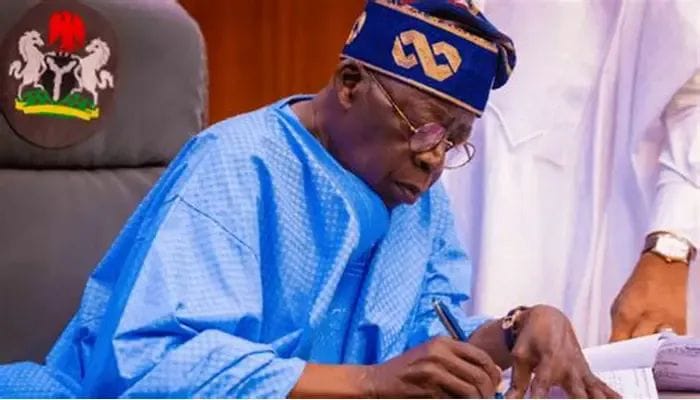
President Bola Tinubu has ordered the immediate arrest of George Nwabueze over the alleged operation of a fake government agency within the premises of the office of the secretary to the government of the federation (OSGF).
The president also ordered the immediate suspension of three permanent secretaries following fresh findings by the Independent Corrupt Practices and Other Related Offences Commission (ICPC) in its investigation into alleged fake government agencies and weaknesses in public service processes.
News
3 Brigade wins army Inter-brigade combat proficiency competition in Kano
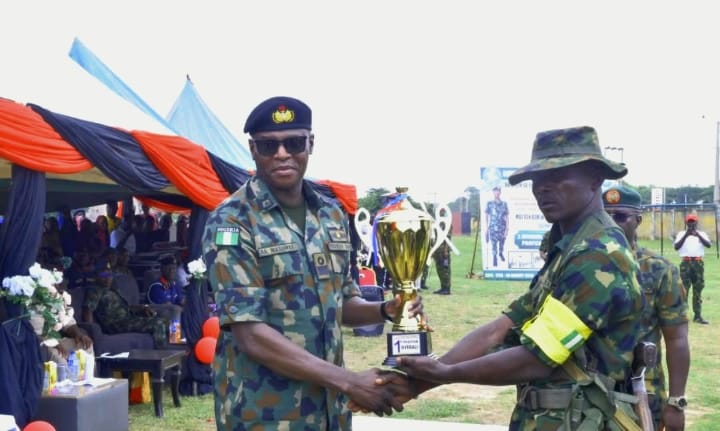
3 Brigade Nigerian Army, Kano, has emerged overall winner of the 2026 One Division Inter-Brigade Combat Proficiency Competition held in Kano.
The brigade secured the first position with 565.5 points, while 31 Artillery Brigade, Minna, Niger State, came second with 539 points. 1 Division Garrison, Kaduna, placed third with 534 points.
The three-day competition featured various military exercises aimed at testing the combat readiness, tactical awareness, physical fitness, leadership skills and professional competence of participating junior and middle-level officers.
The events included weapon handling, combat training, map reading, shooting and obstacle crossing, providing participants with opportunities to sharpen their skills and improve their preparedness for contemporary security operations.
Speaking at the closing ceremony, the Commander, 3 Brigade Nigerian Army, Kano, Brig.-Gen. Saka Jimoh, said the exercise was part of the numerous training programmes organised by Army Headquarters to ensure troops remained adequately prepared to tackle evolving security challenges.
Jimoh said continuous training and improved welfare of personnel remained key components of the Nigerian Army’s efforts to enhance operational effectiveness.
He added that the competition demonstrated the commitment of the Army to developing officers with the required skills, discipline and leadership qualities needed for effective command responsibilities.
“Welfare is one of the pillars of our command philosophy, and one very important aspect of it is the soldiers’ health concept. That is what we, as commanders in the Nigerian Army, are after to ensure the welfare of both our officers and men,” he said.
On security challenges within the brigade’s area of responsibility, including Kano and neighbouring states, Jimoh said criminal elements were feeling the impact of sustained Army operations.
He attributed the progress recorded to the training of troops and effective use of credible intelligence, assuring that the Army would continue to work towards eliminating criminal elements within its area of responsibility.
Earlier, the Special guest of honor, the Commandant, Nigeria Navy Logistics College, Dawakin Tofa, Kano, Commodore Abubakar Madawaki, commended participants for demonstrating courage, discipline, leadership, tactical awareness, physical fitness and commitment to duty throughout the competition.
Madawaki said continuous training remained critical to preparing officers for the complex demands of modern military operations, adding that the competition provided an avenue for junior and middle-level officers to improve their combat skills and decision-making abilities.
He congratulated the winners and encouraged other participants to regard the experience gained as an opportunity for professional growth.

Call Me Chairman, Not Tony!’: Elumelu’s Blunt Correction of Trainee Splits Internet as Old Video Sparks Double Standard Fury

President Tinubu Suspends Three Perm Secs as ICPC Uncovers Another Fake Agency in SGF Office

3 Brigade wins army Inter-brigade combat proficiency competition in Kano

Bank of Ghana Appoints Prof. Bashir to Chair Islamic Banking Council

MURIC Writes ICPC, Demands Access to Elrufai

How Kano Digitized Land Turns N50m to N750m Monthly
Kano Governor Yusuf Shortlisted for Africa’s SANKOFA Award of Excellence in Infrastructural Development

From the struggle for Gombe State to life in the Senate: Senator Umar Usman Dukku reflects on politics, democracy, and his relationship with the late General Sani Abacha.

Borders, Visas and the Beautiful Game: How U.S. Immigration Policies Shaped Global Perceptions During the 2026 FIFA World Cup

Breaking: President Tinubu Approves Establishment of Four New Divisions of the Nigerian Army, Bringing the Total to 12
Call Me Chairman, Not Tony!’: Elumelu’s Blunt Correction of Trainee Splits Internet as Old Video Sparks Double Standard Fury
President Tinubu Suspends Three Perm Secs as ICPC Uncovers Another Fake Agency in SGF Office
3 Brigade wins army Inter-brigade combat proficiency competition in Kano
Bank of Ghana Appoints Prof. Bashir to Chair Islamic Banking Council
MURIC Writes ICPC, Demands Access to Elrufai
How Kano Digitized Land Turns N50m to N750m Monthly
Kano Governor Yusuf Shortlisted for Africa’s SANKOFA Award of Excellence in Infrastructural Development
From the struggle for Gombe State to life in the Senate: Senator Umar Usman Dukku reflects on politics, democracy, and his relationship with the late General Sani Abacha.
Borders, Visas and the Beautiful Game: How U.S. Immigration Policies Shaped Global Perceptions During the 2026 FIFA World Cup
Breaking: President Tinubu Approves Establishment of Four New Divisions of the Nigerian Army, Bringing the Total to 12
-

 Opinion5 years ago
On The Kano Flyovers And Public Perception
-

 Features5 years ago
How I Became A Multimillionaire In Nigeria – Hadiza Gabon
-

 Opinion6 years ago
Kano As future Headquarters Of Poverty In Nigeria
-

 History5 years ago
Sheikh Adam Abdullahi Al-Ilory (1917-1992):Nigeria’s Islamic Scholar Who Wrote Over 100 Books And Journals
-

 Opinion5 years ago
My First Encounter with Nasiru Gawuna, the Humble Deputy Governor
-

 History5 years ago
The History Of Borno State Governor Professor Babagana Umara Zulum
-

 History5 years ago
The Origin Of “Mammy Market” In Army Barracks (Mammy Ochefu)
-

 News4 years ago
Federal University Of Technology Babura To Commence Academic Activities September