
News
Breaking:Governor Ganduje presents transition report to Kano Gov-Elect

The outgoing Kano state governor Dr. Abdullahi Umar Ganduje has presented the 2023 transition report to the Kano State Governor-elect H.E Engr. Abba Kabir Yusuf.
In a short meeting at the Kano Government House Ante Chamber Hall, Ganduje who was represented by the secretary to the state government Alhaji Usman Alhaji reiterated his commitment in ensuring a seamless transition on 29th May 2023.
He urged the incoming administration to study the transition report and make feedback where necessary as he appreciated the members of the outgoing government transition committee for producing three volumes of the report that covers all sectors of the state.
In his remarks, the Kano State Governor-elect H.E Abba Kabir Yusuf, also represented the Chairman, NNPP Gubernatorial Transition Committee Dr Abdullahi Baffa Bichi indicates that his committee will report to the incoming governor and revert with any observations if any.
“At this time, we have just 105 hours to formal handover and takeover of government in Kano state, as such we are committed to a hitch free transition in the interest of Kano and its people.”
A statement issued by Sanusi Bature Dawakin Tofa, the Chief Press Secretary to the Kano State Governor-elect said that details of the inauguration ceremony would be made available to public after some certain agreements are reached between the outgoing and incoming governments.









News
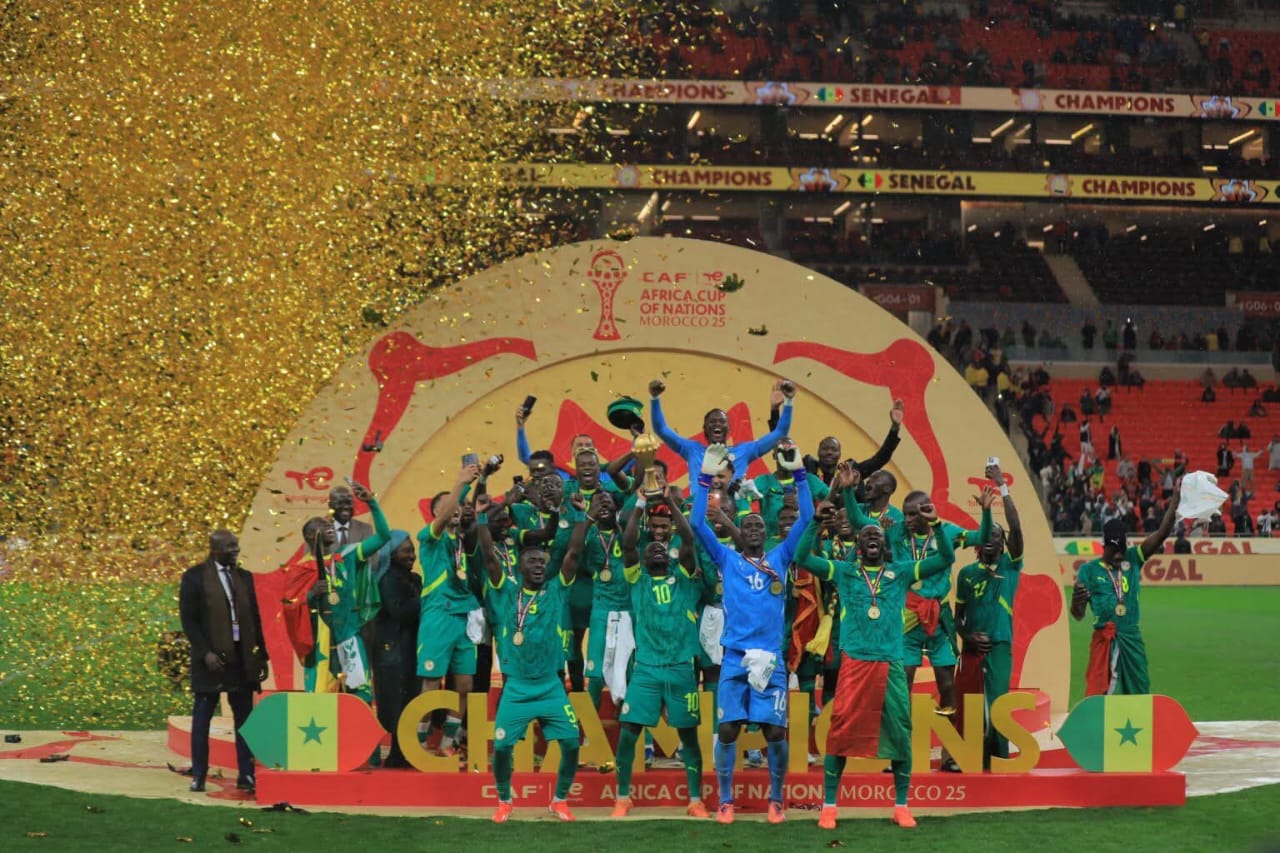
BREAKING: Senegal Reinstated As 2025 AFCON Champions
By Yusuf Danjuma Yunusa
Senegal have been reinstated as champions of the 2025 Africa Cup of Nations (AFCON) after the Court of Arbitration for Sport (CAS) overturned the Confederation of African Football (CAF) decision to strip the country of the title and award it to Morocco.
The ruling, delivered on Tuesday in Lausanne, Switzerland, brings an end to a legal dispute that had left the outcome of Africa’s premier football competition contested for more than ten months.
The dispute followed the final played in Rabat on January 18, 2026, where Senegal defeated host nation Morocco 1-0 after extra time, courtesy of Pape Gueye’s winning goal.
However, the match was overshadowed by dramatic scenes in second-half stoppage time after referee Jean-Jacques Ndala Ngambo awarded Morocco a penalty following a VAR review of a foul by El Hadji Malick Diouf on Brahim Diaz.
In protest against the decision, several Senegalese players walked off the pitch, with some heading into the dressing room, forcing a 14-minute interruption.
Senegal captain Sadio Mane subsequently persuaded his teammates to return to the field, but Morocco’s Diaz missed the resulting penalty, allowing the match to continue into extra time.
On March 17, 2026, CAF’s Appeal Board ruled that Senegal had forfeited the match by abandoning the field of play, invoking Articles 82 and 84 of the competition regulations.
The board consequently awarded Morocco a 3-0 victory and declared the North African country champions.
The decision triggered widespread reactions in Senegal, with the government describing it as “unprecedented and exceptionally serious” and pledging to pursue all available legal options.
The Senegalese Football Federation (FSF) subsequently appealed to CAS on March 25, arguing that the referee’s decision to allow the match to resume and reach its conclusion was final and that the result on the pitch should be upheld.
A three-member CAS panel, presided over by French sports law expert Gerald Simon, with Italian professor Luigi Fumagalli and Hamburg-based attorney Ulrich Haas as members, heard the case behind closed doors in Lausanne on October 8, 2026.
In its ruling, CAS set aside the CAF Appeal Board’s decision and reinstated the earlier ruling of the CAF Disciplinary Board, which had dismissed Morocco’s complaint.
“The CAS panel finds that the referee did not commit any error in law,” CAS Secretary General Matthieu Reeb said.
The court further confirmed that “the result obtained at the end of the AFCON 2025 final is confirmed (1-0 for Senegal).”
The verdict restores Senegal’s continental title and confirms the country’s second AFCON triumph, following its maiden victory in 2021.
It also overturns Morocco’s 3-0 administrative victory, which had replaced the result recorded on the pitch.
The FSF has been recognised as the official winner, with all associated rights and privileges, while CAF is expected to amend its official records and return the trophy to the Senegalese federation.
News
NNPC Denies Missing $2.04bn in Duke Oil Crude Cargoes, Says All Transactions Fully Accounted For
The Nigerian National Petroleum Company Limited NNPC Denies Missing $2.04bn in Duke Oil Crude Cargoes, Says All Transactions Fully Accounted For has dismissed media reports alleging discrepancies in crude oil transactions involving Duke Oil Company Incorporated, now known as NNPC Trading S.A., insisting that no money is missing, unaccounted for or unpaid in respect of crude cargoes lifted under the Direct Sale Direct Purchase (DSDP) programme.
The company described the allegations as misleading, explaining that the absence of separate dollar receipts for some crude cargoes resulted from contractual arrangements under which proceeds from crude sales were offset against the cost of refined petroleum products supplied to the Nigerian market.
In a press statement issued on Tuesday, November 24, 2026, and signed by its Chief Corporate Communications Officer, Andy Odeh, NNPC said the US$2.04 billion cited in the media reports represented the gross value of 29 crude cargoes and did not constitute missing funds.
According to the company, the transactions were conducted under the DSDP programme, through which Duke Oil and other participating trading companies lifted Nigerian crude oil and supplied refined petroleum products, including petrol, to meet domestic consumption requirements.
NNPC explained that while crude oil was priced in US dollars, the refined petroleum products supplied under the arrangement were sold in Nigerian naira, making it necessary to reconcile the value of products delivered against the corresponding value of crude oil lifted.
The company maintained that the arrangement was provided for in the relevant contracts and that the complete transactions were captured in the audited financial statements of the entities involved.
NNPC further argued that the media report itself contained information that contradicted allegations of missing funds, noting that all 59 crude cargoes referenced in the report had been accounted for and reconciled with their respective beneficiaries.
Providing a breakdown of the transactions, the company disclosed that 30 of the cargoes were paid for in US dollars, while proceeds from 28 cargoes, valued at approximately US$1.96 billion, were remitted in naira to the NNPC Group Treasury or the accounts of NNPC Upstream Investment Management Services (NUIMS).
The company added that the remaining cargo, involving a February 2023 Bonga tax-oil lifting valued at approximately US$75.9 million, was paid directly into the then-designated dollar account of the Federal Inland Revenue Service (FIRS).
According to NNPC, the payment structure and reconciliation arrangements demonstrate that the crude oil transactions were properly accounted for and that the absence of separate dollar receipts for certain cargoes should not be interpreted as evidence of financial impropriety.
The national oil company also defended the corporate status of Duke Oil, dismissing suggestions that the company was merely NNPC operating under another name as an attempt to portray a longstanding and publicly documented corporate arrangement as a new discovery.
NNPC explained that Duke Oil was incorporated in 1989 as a wholly owned trading subsidiary of the national oil company, adding that its ownership structure had been disclosed in NNPC’s corporate history, audited financial statements and the Nigeria Extractive Industries Transparency Initiative (NEITI) 2023 industry report.
It further maintained that the use of dedicated trading subsidiaries was an established practice in the international petroleum industry, stressing that transactions between NNPC and its subsidiaries were reported as related-party transactions in accordance with International Financial Reporting Standards (IFRS).
Reaffirming its commitment to financial accountability, NNPC said it remained committed to transparent reporting of crude oil liftings, petroleum product deliveries and payments made to every beneficiary involved in its operations.
The company, however, cautioned against what it described as false and misleading publications capable of damaging its corporate reputation and that of its subsidiaries.
While acknowledging the importance of responsible journalism and constructive public scrutiny, NNPC warned that it would not tolerate publications intended to misrepresent its financial transactions, adding that it reserved the right to pursue legal action against those responsible.
The statement was signed by Andy Odeh, Chief Corporate Communications Officer of NNPC Limited, in Abuja on November 24, 2026.
News
2027: Kano APC Campaign Council Warns NDC Against Political Victimisation of Civil Servants
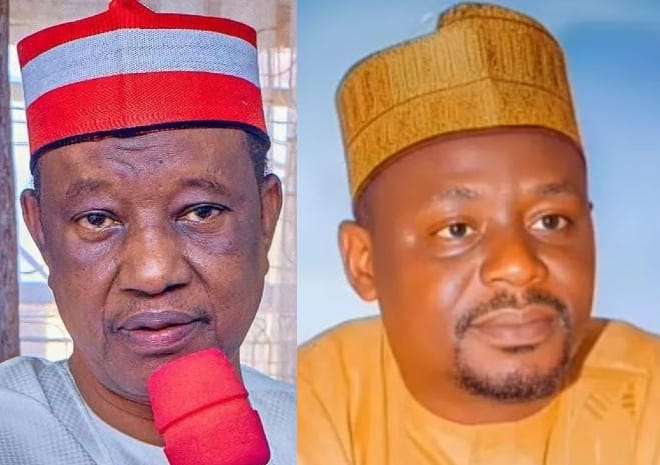
The Kano State Presidential/Gubernatorial Campaign Council of the All Progressives Congress (APC) has warned the New Nigeria Democratic Congress (NDC) against using political differences as grounds to intimidate, punish or victimise civil servants, following a statement attributed to its Kano State gubernatorial candidate, Comrade Aminu Abdussalam Gwarzo.
The council has also challenged the NDC leadership to clarify the employment and appointment status of 26 professors and doctors whose names reportedly appeared on a circulated list titled “NDC Kano State Professors and Doctors”, questioning whether some of them are serving employees of government institutions.
The controversy followed a Hausa statement attributed to Gwarzo, in which he reportedly warned government employees whose names appeared on the APC Presidential/Gubernatorial Campaign Council (PGCC) list to be prepared to face the consequences of their political involvement if the NDC eventually assumes power.
Reacting in a rejoinder, the council’s Campaign Spokesperson II, Hon. Sanusi Majidadi Kiru, described the warning as a matter of serious concern, raising questions about constitutional rights, political tolerance and the protection of public servants under a possible future administration.
In challenging the NDC leadership to clarify the status of its own political associates, Kiru listed the following 26 individuals whose names appeared on the circulated document:
1. Prof. Bello Ibrahim
2. Prof. Abubakar Jafar Usman
3. Prof. Ahmad Jibril Sulaiman
4. Prof. Dahiru Sani Shu’aibu
5. Prof. Taufiq Abubakar Hussain
6. Ass. Prof. Mansur Hassan
7. Dr. Ali Kuraish
8. Dr. Salisu Ahmad Dambazau
9. Dr. Shuaibu Abdurashid
10. Dr. Mukhtar Danlami Bunkure
11. Dr. Muhammad Inuwa Shuaibu
12. Dr. Umar Danbaito
13. Dr. Mustapha Shehu Uba Sharada
14. Dr. Ashiru Sani
15. Dr. Musa Muhammad Bello Rano
16. Dr. Muhammad Sulaiman Fagge
17. Dr. Rabi’u Musa
18. Dr. Sadiq Uba Jalli
19. Dr. Nazifi Umar Alaramma
20. Dr. Abdallah Muhammad Ahmad
21. Dr. Umar Isa Ahmad Tudun Wada
22. Dr. Umar Garba Sheka
23. Dr. Mustapha Yusuf Abubakar
24. Dr. Tahir Ahmad Ungoggo
25. Dr. Yusuf Danbaba Dakata
26. Dr. Abdullahi Garba
Kiru challenged the NDC leadership to establish whether the individuals were formally associated with its campaign structure and disclose whether any of them were serving employees of federal or state government institutions, universities, colleges and other publicly funded establishments.
He claimed that information available to the council indicated that some of the individuals were employees of state-owned universities and other government establishments, receiving salaries and benefits under the administration of Governor Abba Kabir Yusuf.
According to him, the APC had neither questioned their political associations nor attempted to use their employment status as an instrument of political harassment, insisting that democratic governance requires fairness, equal treatment and respect for citizens’ constitutional rights.
He maintained that the Kano State Government under Governor Abba Kabir Yusuf had no intention of intimidating, harassing or victimising anyone on account of political affiliation.
The spokesperson, however, expressed concern that Gwarzo’s warning could suggest a willingness to subject public servants to politically motivated punishment if the NDC comes to power.
He questioned whether civil servants could face arbitrary dismissal, punitive transfers to remote locations, denial of deserved promotions or fabricated disciplinary allegations simply because of their political preferences.
Kiru stressed that the civil service belonged to the state and its people, not to any political party, arguing that public servants should not have their legitimate employment rights made dependent on the political preferences of successive administrations.
He called for an end to political witch-hunts, intimidation, arbitrary transfers and unjustified removal of public officers, describing such practices as incompatible with democratic governance.
On the legal implications, Kiru cited Section 40 of the 1999 Constitution of the Federal Republic of Nigeria, as amended, which guarantees freedom of association, and referred to the Supreme Court’s decision in INEC v. Musa (2003) on constitutional protection of political association.
He, however, acknowledged that applicable public service regulations impose restrictions on certain forms of active partisan political participation, stressing the need to distinguish constitutional rights from the professional obligations of public officers.
The APC spokesperson also accused the NDC leadership of risking a double standard if it questioned the political associations of public employees linked to the opposition without applying the same scrutiny to individuals associated with its own political structure.
Quoting the equitable maxim, “He who comes to equity must come with clean hands,” Kiru argued that those demanding accountability from others must be prepared to submit themselves to equivalent scrutiny.
He further cautioned that the appearance of a person’s name on a campaign list did not, in itself, establish a breach of public service regulations, just as professional titles such as Professor or Doctor did not automatically establish public employment.
Kiru consequently called on Gwarzo to clarify his warning and categorically assure Kano residents that no civil servant would face politically motivated dismissal, removal from office, punitive transfer, denial of promotion or fabricated disciplinary proceedings under any administration he might lead.
He insisted that allegations of misconduct should be determined by established laws, competent authorities and due process rather than political considerations or anticipated changes in government.
The spokesperson reiterated the council’s demand for the NDC leadership to clarify the employment and appointment status of the 26 individuals, demonstrate consistency in its interpretation of public service regulations and respect the rights of civil servants irrespective of their political affiliations.
He maintained that political competition should never become a justification for intimidation or discrimination against public servants, adding that Kano residents deserved fairness, accountability and equal protection under the law.
Hon. Sanusi Majidadi Kiru
Campaign Spokesperson II
Kano State Presidential/Gubernatorial Campaign Council, 2027

BREAKING: Senegal Reinstated As 2025 AFCON Champions

NNPC Denies Missing $2.04bn in Duke Oil Crude Cargoes, Says All Transactions Fully Accounted For

2027: Kano APC Campaign Council Warns NDC Against Political Victimisation of Civil Servants

TMS Accuses APC Members of Sabotage Over Barau’s Omission at Bichi Rally

2027: Barau mobilises Kano clerics for Tinubu, says President means well for North

Kano’s War On Drugs: How Barr. Muhyi’s Taskforce Is Changing The Game

Begging in Northern Nigeria: What Future Are We Preparing for Our Society?

NDC Deputy Governorship Candidate Gives Kano Information Commissioner 48-Hour Ultimatum Over Alleged Defamation

Bauchi Govt Suspends Emir over Alleged Misconduct, Inaugurates Probe Panel

Tinubu’s Jigawa Rally Signals Growing Northern Support, TMS Says as President Defends Economic Reforms
BREAKING: Senegal Reinstated As 2025 AFCON Champions
NNPC Denies Missing $2.04bn in Duke Oil Crude Cargoes, Says All Transactions Fully Accounted For
2027: Kano APC Campaign Council Warns NDC Against Political Victimisation of Civil Servants
TMS Accuses APC Members of Sabotage Over Barau’s Omission at Bichi Rally
2027: Barau mobilises Kano clerics for Tinubu, says President means well for North
Kano’s War On Drugs: How Barr. Muhyi’s Taskforce Is Changing The Game
Begging in Northern Nigeria: What Future Are We Preparing for Our Society?
NDC Deputy Governorship Candidate Gives Kano Information Commissioner 48-Hour Ultimatum Over Alleged Defamation
Bauchi Govt Suspends Emir over Alleged Misconduct, Inaugurates Probe Panel
Tinubu’s Jigawa Rally Signals Growing Northern Support, TMS Says as President Defends Economic Reforms
-

 Opinion5 years ago
On The Kano Flyovers And Public Perception
-

 Features5 years ago
How I Became A Multimillionaire In Nigeria – Hadiza Gabon
-

 Opinion6 years ago
Kano As future Headquarters Of Poverty In Nigeria
-
 History6 years ago
Sheikh Adam Abdullahi Al-Ilory (1917-1992):Nigeria’s Islamic Scholar Who Wrote Over 100 Books And Journals
-
 Opinion5 years ago
My First Encounter with Nasiru Gawuna, the Humble Deputy Governor
-

 History5 years ago
The History Of Borno State Governor Professor Babagana Umara Zulum
-
 History6 years ago
The Origin Of “Mammy Market” In Army Barracks (Mammy Ochefu)
-
 News5 years ago
Federal University Of Technology Babura To Commence Academic Activities September