
News
Only Old 200 Naira Remains Legal Tender Till April-Buhari
NATIONAL BROADCAST BY HIS EXCELLENCY MUHAMMADU BUHARI, PRESIDENT, FEDERAL REPUBLIC OF NIGERIA ON THE CHALLENGES OF THE CURRENCY SWAP AND STATE OF THE NATION, ON 16th FEBRUARY, 2023
My Dear Compatriots,
I have found it necessary to address you today, on the state of the nation and to render account on the efforts of our administration to sustain and strengthen our economy, enhance the fight against corruption and sustain our gains in the fight against terrorism and insecurity which has, undoubtedly, been impacted by several internal and external factors.
2. Particularly, I am addressing you, as your democratically elected President, to identify with you and express my sympathy, over the difficulties being experienced as we continue the implementation of new monetary policies, aimed at boosting our economy and tightening of the loopholes associated with money laundering.
3. Let me re-assure Nigerians, that strengthening our economy, enhancing security and blockage of leakages associated with illicit financial flows remain top priority of our administration. And I shall remain committed to my oath of protecting and advancing the interest of Nigerians and the nation, at all times.
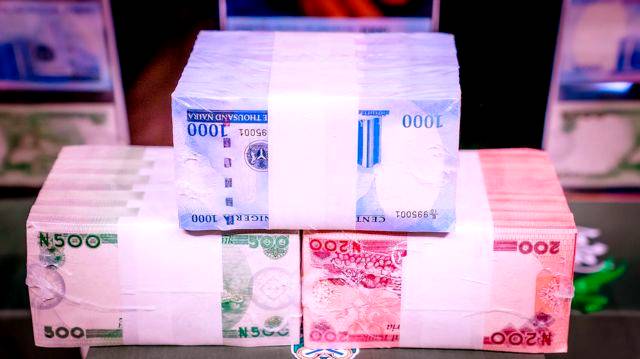
4. In the last quarter of 2022, I authorised the Central Bank of Nigeria (CBN) to redesign the N200, N500, and N1000 Nigerian banknotes.
5. For a smooth transition, I similarly approved that the redesigned banknotes should circulate concurrently with the old bank notes, till 31 January 2023, before the old notes, cease to be legal tender.
6. In appreciation of the systemic and human difficulties encountered during implementation and in response to the appeal of all citizens, an extension of ten days was authorized till 10th February, 2023 for the completion of the process. All these activities are being carried out within the ambit of the Constitution, the relevant law under the CBN Act 2007 and in line with global best practices.
7. Fellow citizens, while I seek your understanding and patience during this transient phase of implementation, I feel obliged to avail you a few critical points underpinning the policy decision. These include:
a. The need to restore the statutory ability of the CBN to keep a firm control over money in circulation. In 2015 when this administration commenced its first term, Currency-in-Circulation was only N1.4trillion.
b. The proportion of currency outside banks grew from 78%in 2015 to 85% in 2022. As of October 2022, therefore, currency in circulation had risen to N3.23 trillion; out of which only N500 billion was within the Banking System while N2.7 trillion remained permanently outside the system; thereby distorting the financial policy and efficient management of inflation;
c. The huge volume of Bank Notes outside the banking system has proven to be practically unavailable for economic activities and by implication, retard the attainment of potential economic growth;
d. Economic growth projections make it imperative for government to aim at expanding financial inclusion in the country by reducing the number of the unbanked population; and
e. Given the prevailing security situation across the country, which keeps improving, it also becomes compelling for government to deepen its continuing support for security agencies to successfully combat banditry and ransom-taking in Nigeria
8. Notwithstanding the initial setbacks experienced, the evaluation and feedback mechanism set up has revealed that gains have emerged from the policy initiative.
9. I have been reliably informed that since the commencement of this program, about N2.1 trillion out of the banknotes previously held outside the banking system, had been successfully retrieved.
10. This represents about 80% of such funds. In the short to medium and long terms, therefore, it is expected that there would be:
a. A strengthening of our macro economic parameters;
b. Reduction of broad money supply leading to a deceleration of the velocity of money in the economy which should result in less pressures on domestic prices;
c. Lowering of Inflation as a result of the accompanying decline in money supply that will slow the pace of inflation;
d. Collapse of Illegal Economic Activities which would help to stem corruption and acquisition of money through illegal ways;
e. Exchange Rate stability;
f. Availability of Easy Loans and lowering of interest rates; and
g. Greater visibility and transparency of our financial actions translating to efficient enforcement of our anti- money laundering legislations.
11. I am not unaware of the obstacles placed on the path of innocent Nigerians by unscrupulous officials in the banking industry, entrusted with the process of implementation of the new monetary policy. I am deeply pained and sincerely sympathise with you all, over these unintended outcomes.
12. To stem this tide, I have directed the CBN to deploy all legitimate resources and legal means to ensure that our citizens are adequately educated on the policy; enjoy easy access to cash withdrawal through availability of appropriate amount of currency; and ability to make deposits.
13. I have similarly directed that the CBN should intensify collaboration with anti-corruption agencies, so as to ensure that any institution or person(s) found to have impeded or sabotaged the implementation should be made to bear the full weight of the law.
14. During the extended phase of the deadline for currency swap, I listened to invaluable pieces of advice from well meaning citizens and institutions across the nation.
15. I similarly consulted widely with representatives of the State Governors as well as the Council of State. Above all, as an administration that respects the rule of law, I have also noted that the subject matter is before the courts of our land and some pronouncements have been made.
16. To further ease the supply pressures particularly to our citizens, I have given approval to the CBN that the old N200 bank notes be released back into circulation and that it should also be allowed to circulate as legal tender with the new N200, N500, and N1000 banknotes for 60 days from February 10, 2023 to April 10 2023 when the old N200 notes ceases to be legal tender.
17. In line with Section 20(3) of the CBN Act 2007, all existing old N1000 and N500 notes remain redeemable at the CBN and designated points.
18. Considering the health of our economy and the legacy we must bequeath to the next administration and future generations of Nigerians, I admonish every citizen to strive harder to make their deposits by taking advantage of the platforms and windows being provided by the CBN.
19. Let me assure Nigerians that our administration will continue to assess the implementation with a view to ensuring that Nigerians are not unnecessarily burdened. In this regard, the CBN shall ensure that new notes become more available and accessible to our citizens through the banks.
20. I wish to once more appeal for your understanding till we overcome this difficult transient phase within the shortest possible time.
21. Fellow citizens, on the 25th of February, 2023 the nation would be electing a new President and National Assembly members. I am aware that this new monetary policy has also contributed immensely to the minimization of the influence of money in politics.
22. This is a positive departure from the past and represents a bold legacy step by this administration, towards laying a strong foundation for free and fair elections.
23. I urge every citizen therefore, to go out to vote for their candidates of choice without fear, because security shall be provided and your vote shall count.
24. I however admonish you to eschew violence and avoid actions capable of disrupting the electoral processes. I wish us all a successful General Elections.
Thank you for listening. God bless the Federal Republic of Nigeria.









News
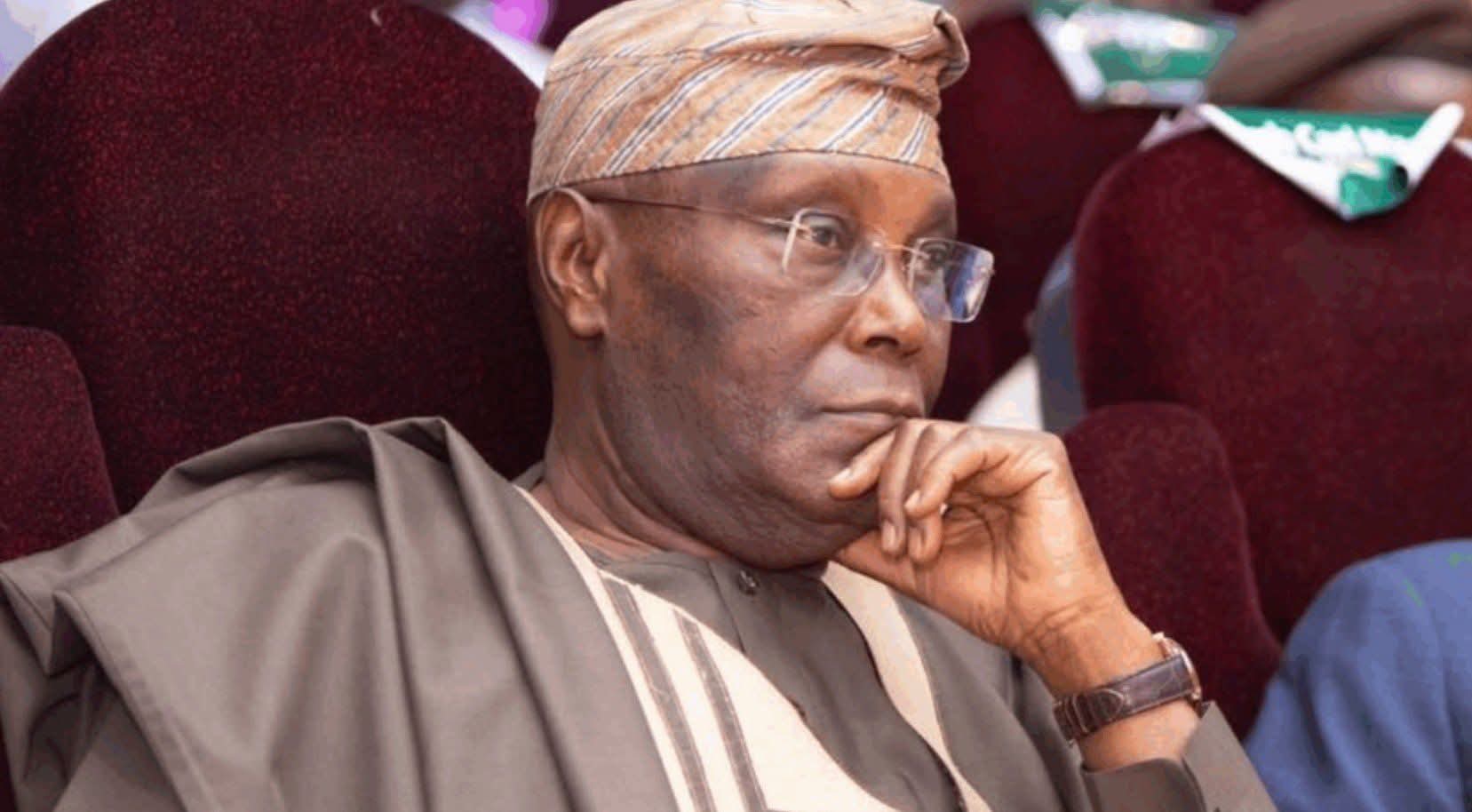
EFCC Reopens Atiku’s Alleged Financial Crimes Probe
By Yusuf Danjuma Yunusa
The Economic and Financial Crimes Commission (EFCC) has reopened its investigation into allegations against former Vice President Atiku Abubakar following a petition by former House of Representatives member, Hon. Ehiozuwa Johnson Agbonayinma, seeking his prosecution over alleged financial crimes.
The petition seeks to revive a case dating back to 2006, asking the anti-graft agency to revisit its investigation under former chairman, Mallam Nuhu Ribadu, and consider a subsequent report by a United States Senate subcommittee.
Speaking on the development, Agbonayinma said the EFCC had acknowledged his petition, dated August 27, 2026, and received on September 1. Filed through his lawyer, Chief Hannibal Egbe Uwaifo, SAN, the petition asks the commission to reactivate its earlier report and act on the allegations.
The former lawmaker appeared at the EFCC headquarters in Jabi, Abuja, where he adopted the petition and answered questions from investigators.
Agbonayinma said the matter should not be allowed to remain unresolved.
“I want to thank Nigerians, the EFCC, and those praying for me in this struggle. The laws are meant for both the rich and the poor. After the EFCC has done a fantastic job, it should not be kept under the table,” he said.
In the petition, Agbonayinma urged the EFCC to revisit its September 2006 report on Atiku and a February 4, 2010, report by the US Senate Permanent Subcommittee on Investigations, arguing that both documents should form the basis for renewed action.
The petition alleged that the EFCC had previously indicated that Atiku could face prosecution after leaving office as vice-president, when his constitutional immunity ceased to apply, but that no prosecution followed.
Agbonayinma described the alleged failure to act as a dereliction of duty and argued that pursuing the matter would demonstrate the commission’s resolve to hold politically influential figures accountable.
He also disclosed that he had petitioned US President Donald Trump over the allegations.
The EFCC spokesman, Dele Oyewale, had yet to respond to messages seeking an update on the investigation as of the time of filing this report.
News
APC Presidential Campaign Council: Nigerians Devoid Of Party Affiliations Endorses Tinubu’s 2nd Term-Kwankwaso
From Muhammad Kabir Kano
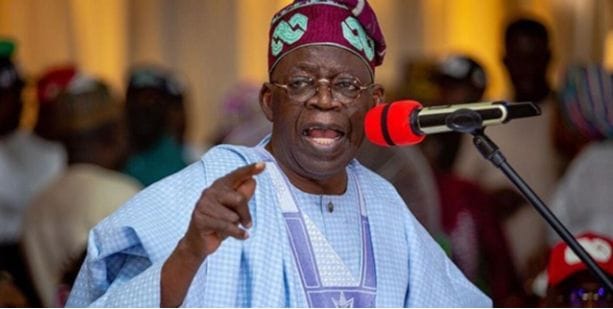
The Collection of Nigerians of different Political Parties that openly not only attended the inauguration of the APC Presidential Campaign Council, Wednesday, clearly shows that President Tinubu today is been accepted by all and sundry, regardless of Party Affiliations.
Making this submission, a member of the Presidential Campaign Council, and who is the Director Finance Hadejia Jammaare River Basin, Musa Illiyasu Kwankwaso, said that, from APGA, to Labour Party and others who were introduced, all firmly stands with Tinubu continuity in office.
Kwankwaso, said that remarks of Men of proven integrity likes Chukuma Charles Soludo the Governor of Anambara State and others, they said it all that President Tinubu Economic blueprint is a masterpiece that only Economic gurus and those who are awake to global economic realities will appreciate.
“It has never happened in the political Nigerian history that one Man attract collection of nearly all opposition Parties not only Opposition Politicians but those who have never agreed to sit together, but because Tinubu they accepted to come onboard and pursued his common goal”.
Dr Musa Illiyasu Kwankwaso, notes that, today the issues at stake is not about Tinubu’s reelection alone but the prosperity of Nigeria, which despite the difficulties, President Tinubu accepted to uphold and ensure it’s total achievement.
He said, “to me the inauguration of the Campaign Council is just like a congregation of celebration of the reelection of President Tinubu back to office, because what else remains, the same Nigerians that we will campaign for, have collectively came forward themselves in unison for one Person(Tinubu).
Musa Illiyasu Kwankwaso, who assured that just like what it is obtained at the National levels, the same things will be done in Kano and other states, adding that the open recognition of Governor Abba Kabir Yusuf by the President and his symbolic Cap shows a clear victory for the Governor Yusuf/Murtala Sule Garo his Deputy.
“One will agree with me that Governor Yusuf, Senator Barau Jibrin, House of Representatives Committee Chairman on Appropriation Abubakar Kabir Abubakar Bichi, Alhassan Ado Doguwa, Abdulmumini Jibrin Kofa, Senator Kawu Sumaila, Senator Mallam Ibrahim Shekarau, Honorable Alhassan Rirum, and all other contestants including our Father former National Chairman of APC, Dr Umar Abdullahi Ganduje are working in tandem for the President Tinubu/ Governor Yusuf/Garo 2 term bids”.
Kwankwaso, assured that before noon, they will bring forward the entire Northern Nigeria votes for Tinubu.
News
IMF to Nigeria: Don’t Bring Back Petrol Subsidy for Everyone, Help the Poor Instead
By Yusuf Danjuma Yunusa
The International Monetary Fund (IMF) has advised Nigeria against restoring broad petrol subsidy, recommending targeted support for vulnerable households to cushion the impact of rising energy costs.
IMF said blanket petrol subsidies were expensive, often benefited higher-income consumers disproportionately and could worsen fiscal pressures amid rising borrowing costs.
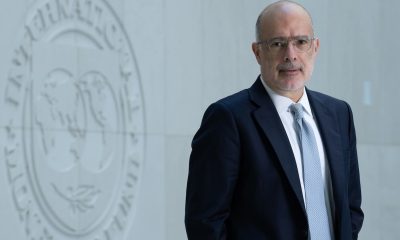
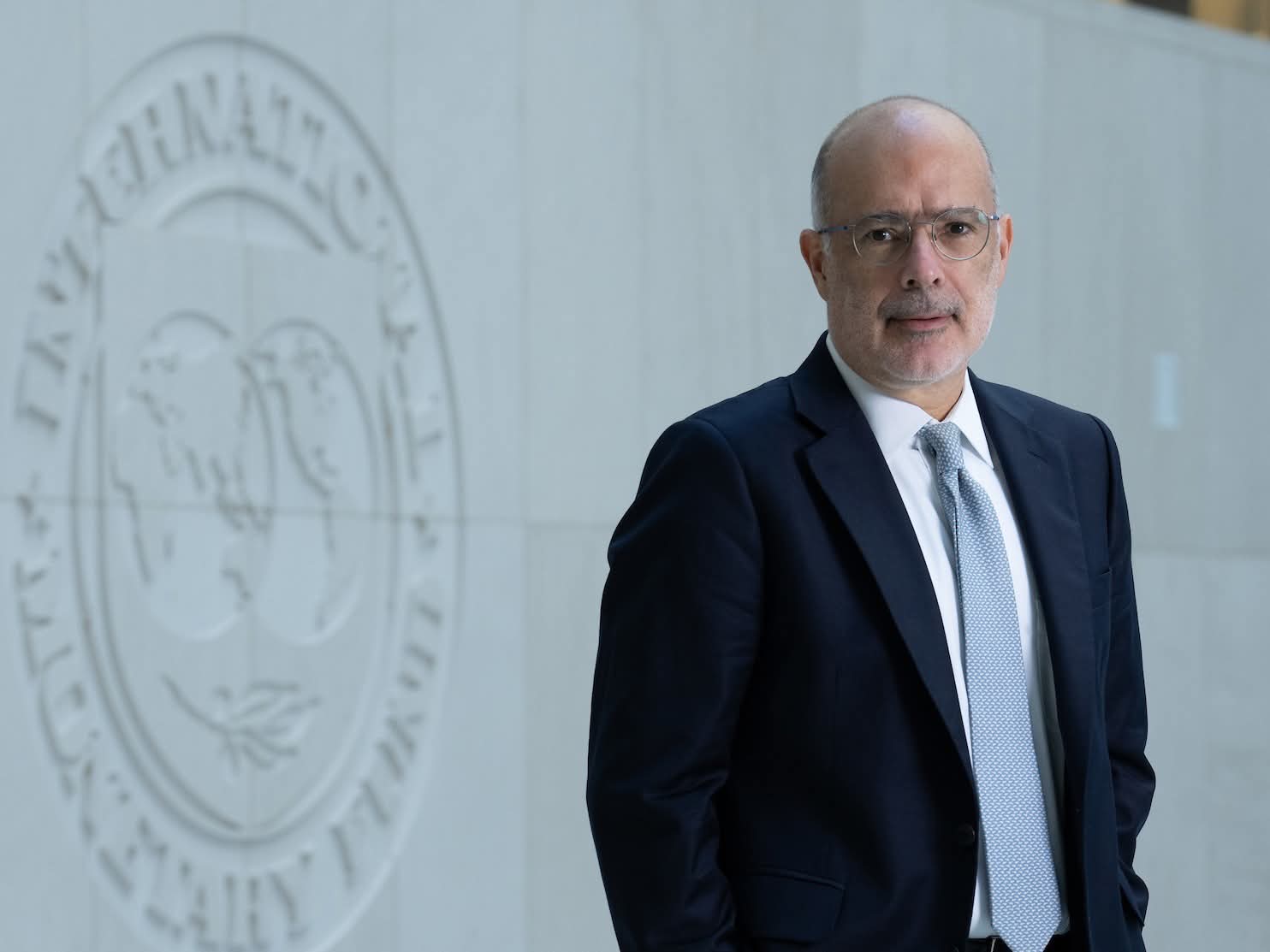
Rodrigo Valdés, director of the IMF’s fiscal affairs department, spoke during a press briefing on the fund’s fiscal monitor at the 2026 annual meetings of the IMF and World Bank in Bangkok, Thailand, on Wednesday.
His comments followed a question on how the fund could recommend allowing energy prices to reflect scarcity when higher fuel prices in Nigeria could raise transport costs, worsen inflation and deepen poverty, particularly when the government was facing calls to restore petrol subsidy ahead of an election year.
“Protecting people is not the same as protecting the price of fuels,” Valdés said.
He said fuel subsidies or measures preventing prices from adjusting fully to an energy shock had cost countries between 1 percent and 1.5 percent of gross domestic product (GDP) in 2026.
“It’s first fiscally very costly, and second, if you look at the pattern of consumption, it’s easy to see that that subsidy is readily regressive in many places,” he said.
Valdés said governments should instead use social safety nets and household data to identify people who need assistance.
“There are better tools to deal with this,” he said.
The federal government recently announced a 30-day petrol discount at Nigerian National Petroleum Company (NNPC) Limited retail stations, with priority for public transport operators, to cushion the impact of rising fuel prices.
Taiwo Oyedele, minister of finance, said NNPC retail would sell petrol at cost by foregoing its retail profit margin, describing the measure as temporary relief rather than a return to petrol subsidy.
The government also proposed negotiating a ceiling of N1,350 per litre on petrol’s ex-gantry or landing cost, subject to monthly reviews.
The IMF also recommended targeted interventions to cushion the effect of higher fuel prices on transportation costs.
Davide Furceri, a division chief in the fund’s fiscal affairs department, said governments could redirect some of the resources spent on blanket subsidies towards vulnerable consumers.
“For example, you mentioned transportation costs. Yeah, gasoline could go up, and perhaps bus fees may be subsidised in a way that is a much better policy at the end of the day than just a blanket subsidy for everybody,” Furceri said.
He also suggested alternatives such as school feeding programmes, geographical targeting and assistance for vulnerable farmers.
Furceri acknowledged that some countries lacked household registries and digital payment systems needed to deliver targeted support effectively.
However, he said governments could adopt alternative approaches in the short term while developing stronger systems.
He recommended that assistance should be limited, targeted and temporary.
Valdés explained that fuel subsidies could worsen global energy pressures by preventing demand from adjusting when supplies were constrained.
“When you subsidise, you don’t allow, at the end of the day, demand to adjust,” he said.
“And reality is that we have less fuels in the world economy. That means that someone else has to adjust more, and the market produces a higher price for that.”
The IMF official said subsidies were not only costly and regressive but could also have spillover effects on the global economy.

EFCC Reopens Atiku’s Alleged Financial Crimes Probe

APC Presidential Campaign Council: Nigerians Devoid Of Party Affiliations Endorses Tinubu’s 2nd Term-Kwankwaso

IMF to Nigeria: Don’t Bring Back Petrol Subsidy for Everyone, Help the Poor Instead

Alhaji Abba Yusuf At 81: A Life Of Service, Leadership And Traditional Responsibility

Ahmad Hamisu Gwale Wins NBMA National Award for Best Male Newscaster 2026

Zamfara Varsity ASUU Threatens Warning Strike Over FG-ASUU Agreement, Promotion Arrears

PCACC Arrests Man Over Alleged ₦4.5m Sale, Illegal Leasing of Kano Government Horse Stable

Goje’s Electoral War:The Confrontation With Tinubu,Governor Inuwa,Usman Kumo And APC candidates Ahead Of 2027

Prof Yusuf Adamu Delivers BUK’s 63rd Professorial Inaugural Lecture, Reflects on Medical Geography and Academic Legacy

RE:WE ARE UNDER SIEGE: TARABA MONARCH BREAKS SILENCE AS FULANI BANDITS OVERRUN THE ANCIENT KWARARAFA KINGDOM:
EFCC Reopens Atiku’s Alleged Financial Crimes Probe
APC Presidential Campaign Council: Nigerians Devoid Of Party Affiliations Endorses Tinubu’s 2nd Term-Kwankwaso
IMF to Nigeria: Don’t Bring Back Petrol Subsidy for Everyone, Help the Poor Instead
Alhaji Abba Yusuf At 81: A Life Of Service, Leadership And Traditional Responsibility
Ahmad Hamisu Gwale Wins NBMA National Award for Best Male Newscaster 2026
Zamfara Varsity ASUU Threatens Warning Strike Over FG-ASUU Agreement, Promotion Arrears
PCACC Arrests Man Over Alleged ₦4.5m Sale, Illegal Leasing of Kano Government Horse Stable
Goje’s Electoral War:The Confrontation With Tinubu,Governor Inuwa,Usman Kumo And APC candidates Ahead Of 2027
Prof Yusuf Adamu Delivers BUK’s 63rd Professorial Inaugural Lecture, Reflects on Medical Geography and Academic Legacy
RE:WE ARE UNDER SIEGE: TARABA MONARCH BREAKS SILENCE AS FULANI BANDITS OVERRUN THE ANCIENT KWARARAFA KINGDOM:
-

 Opinion5 years ago
On The Kano Flyovers And Public Perception
-

 Features5 years ago
How I Became A Multimillionaire In Nigeria – Hadiza Gabon
-

 Opinion6 years ago
Kano As future Headquarters Of Poverty In Nigeria
-

 History6 years ago
Sheikh Adam Abdullahi Al-Ilory (1917-1992):Nigeria’s Islamic Scholar Who Wrote Over 100 Books And Journals
-

 Opinion5 years ago
My First Encounter with Nasiru Gawuna, the Humble Deputy Governor
-

 History5 years ago
The History Of Borno State Governor Professor Babagana Umara Zulum
-

 History6 years ago
The Origin Of “Mammy Market” In Army Barracks (Mammy Ochefu)
-

 News5 years ago
Federal University Of Technology Babura To Commence Academic Activities September