
Opinion
Of COVID-19 Palliative Hoarders and Citizen Looters

Mujahid Yushau Yusuf
“And if the women grew up illiterate,
the men will be suckled in ignorance and stupidity”
Ahmed Shauky
The above stanza of a poem written by one of the famous Arabic poetry laureate, Ahmed Shauky captures the exact situation Nigeria finds itself today.
Nigeria can be seen as the woman who grew up as an illiterate due to the deliberate policies and inactions of it’s past and present leaders. This woman (Nigeria), will breastfeed the population in ignorance and stupidity, and then looters and thieves will grow.
An illiterate woman will breastfeed a nation of illiterates. When I say illiterates, I do not mean the real illiteracy as the inability to read and write but as not knowing right from wrong.
When a nation failed to educate her population, provide basic amenities, secure the country then, looting, banditry, and terrorism will be the order of the day.
Nigerian leaders are a group of wicked and Soulless people who are United in their quest for power. They do not know the difference in religion, ethnicity or party.
The recent happenings in the country are an eye-opener to all. What began as a peaceful protest against Police brutality tagged ENDSARS forced the government to ban the SARS outfit and replace it with SWAT.
Instead of the protesters coming to the negotiating table and give the government benefit of the doubt, they continued and criminal elements began to burn police stations, burn properties associated with some political heavyweights. Then looters among them took over.
This led to the Lagos State govt to declare a curfew that was not obeyed. Soldiers were sent to disperse the protesters at Lekki whereby they shot at them. Then claims of people been killed by online activists and celebrities went viral. And even called it massacre and genocide. The Governor also said no one was killed but was rebuked by these celebrities and then fake and unsubstantiated news took over.
The looting of COVID-19 palliatives warehouses by Nigerians across the country calls for reflection. It appears that most of the palliatives to cushion the effect of the lockdown were not shared by States.
From Lagos to Kaduna, Cross Rivers to Plateau, Taraba to Ekiti, warehouses full of COVID-19 palliatives material were ransacked by hoodlums and criminals and then looted.
Here, we will be confused as to who the criminal elements are, between those hoarding and hiding the food that belongs to the poor masses and the army of looters that are ransacking and looting the warehouses and other food reserves across the country.
Can we now say that it is hunger that is driving these hoodlums to loot the palliatives or just that Nigerians from the leaders to the led are all thieves or have a criminal mind? In a country where there is a rule of law, both the looters and the leaders who hid the palliatives should be punished.
POST-COVID-19: UNDP, WFP, Japan Launched Unconditional Cash Transfer Programme In Kano
But in my opinion, whatever has happened was bound to happen. The Federal government has deliberately taken education to the back seat as we are in the 8th month of strike with no end in sight.
The Northern part of the country is ravaged by terrorism and banditry, kidnapping, and other security problems and the government has failed to tackle that.
As Nigerians, we need to unite and condemn these atrocities by both the leaders and the looters and justice must be done to all.










Opinion
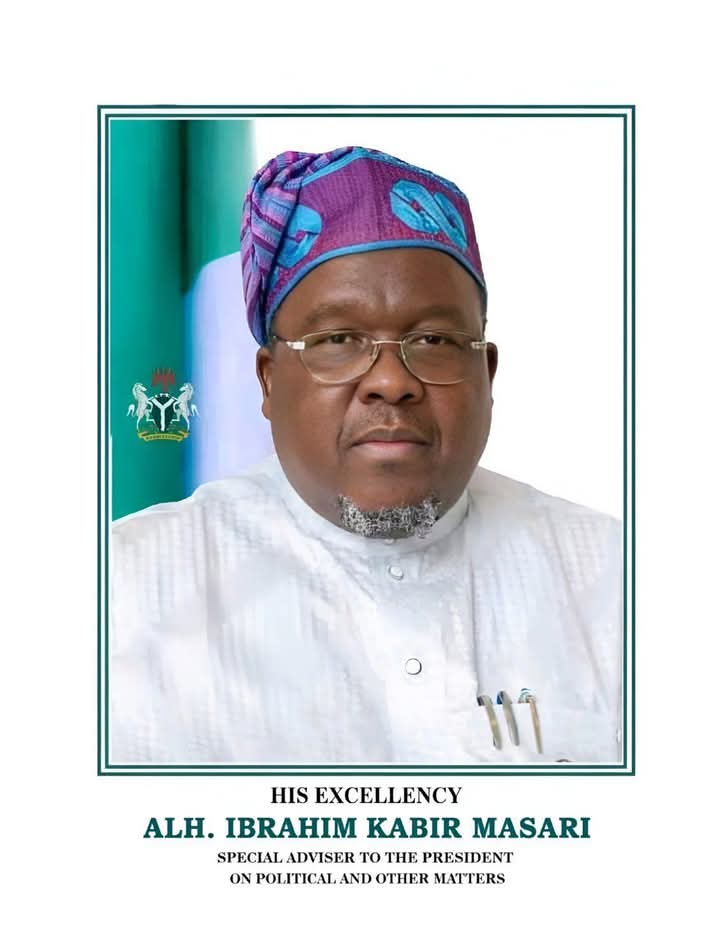
Masari: The Quite Architect With No Rivalry, Only Results for APC in 2027
By Abba Anwar
One name that rings bell and attracts all manner of attentions is Honourable Ibrahim Kabiru Masari, Special Adviser on Political and Other Matters, to President Bola Ahmed Tinubu, GCFR, Commander-in-Chief of the Armed Forces of the Federal Republic of Nigeria. The gentleman whose love for the ruling All Progressives Congress (APC) is undeniably visible across all Northern states and even beyond. His elevation from Senior Special Assistant to Special Adviser was a good stamp from the Presidency.
As the 2027 general election draws closer and the race for relevance intensifies within the ruling APC, one name keeps surfacing and resurfacing in quiet rooms where party unity is negotiated and in loud ones where it is celebrated; comes the name Masari.
As Special Adviser very close the President he has not chosen the path of noise or rivalry, with other party heavyweights or appointees. Instead, he has positioned himself as a stabilizing force, a bridge between the Presidency and the party base, and between the North and the center. In a political season often defined by competition for slots and spotlight, his reputation for humility, fairness in appointments, and commitment to party hegemony has made him one of APC’s most valuable assets.
In what usually becomes nation’s political practice under the guise of politics of camps and blocs, Masari is described by party insiders as someone who does not engage in rivalry with other Northern appointees. He has become a rallying point because he prioritizes APC first, region second. For sure he doesn’t ask where you are from before he asks how the party can win.
His special care, concern and love for Kano state are some of the things why he becomes endeared to Kano people. The appointment of Hon Yahuza Ado Inuwa, as the Chairman Standard’s Council, Standard Organization of Nigeria (SON) was birthed, facilitated and secured by Hon Masari and the appointment of Eng Abdullahi Garba Ramat, to the position of Chairman/CEO, Nigerian Electricity Regulatory Commission (NERC), though short-lived, was a singular effort of this gentleman, Masari.
Apart from many more employment opportunities he secured for Kano people at the federal ministries and agencies. He contributed immensely in many other political appointments of Kano citizens in President Tinubu administration.
The same thing, he has special interest and love for Kano’s political development. During 2019 gubernatorial election when the then Governor of Kano state Dr Abdullahi Umar Ganduje was running for the second term and Eng Abba Kabir Yusuf (current governor of Kano), was running on the platform of the opposition People’s Democratic Party (PDP), the atmosphere was in cul-de-sac, he performed wonders for APC and Ganduje.
When both parties were in absolute fear, uncertainty and frustration, Hon Masari played a significant role in APC’s victory. From the electioneering campaign to the declaration of inconclusive result. Up to the Gama tug-of-war, in Nassarawa local government area. He came to the rescue of Ganduje that time. As Tinubu, APC National Leader then, supervised the project. Tinubu and Masari, not even federal government under late President Muhammadu Buhari, saved APC, Ganduje and Kano people from the clutches of PDP.
So to me, whatever good thing Ganduje did to Tinubu and/or Masari, is just a returning match. No more no less. And politics is an envelope of returning matches. At whatever level you can think of.
To also tell you that the Special Adviser, Political, to President Tinubu cares much about healthy political development in Kano, he played an important and unmatched role, in making sure that His Excellency Murtala Sule Garo becomes the Deputy Governor of Governor Abba Kabir Yusuf. Even if I said singlehandedly, is not a derailed exercise. I was privy to many efforts then.
The same Masari moved in quickly when some forces wanted Ganduje, to be bundle out of the APC’s National Headquarters, as National Chairman of the party. It Masari who instantly intervened and saved the situation from total collapse. He did that to save Ganduje, Kano state image in the national scheme of things and to consolidate the strength of the party in Northern Nigeria. We all saw how Ganduje resigned unscathed.
I once called him the Distributor of Opportunity. It is obvious to say that his strength is in opening doors at the federal level for capable hands, not just from Katsina state, but across the North and beyond. This has earned him goodwill and cemented the perception that the Tinubu administration is rewarding loyalty and competence, not just geography.
In his home state Katsina, he was instrumental to the appointment of the following people, in different federal agencies. These are the Executive Director, National Social Insurance Trust Fund (NSITF) Barr. Samaila Abdu, Board Chairman, Badagry College, Lagos, Kabiru Musa Kafur, Chief of Staff to the Honourable Minister of Housing and Urban Development, Dr. Abba, Executive Director, Monitoring and Implementation, Nigeria–São Tomé and Príncipe Joint Development Authority, Alhaji Abdullahi Muhammed Yari and Hon. Dr. Jabiru Salisu Abdullahi Tsauri as the National Coordinator and Chief Executive Officer of AUDA-NEPAD Nigeria, among others.
He facilitated for the employment of hundreds of Katsina people and other Northern states. Without any consideration of where one comes from. It is undoubtedly clear to note that, quintessential individuals like Masari are great assets to the President and the ruling APC, as we are inching towards general election of 2027.
Without any doubt or rethink, this man is an embodiment of victory, political sophistication, foresight, deeply rooted influence among his people, needed experience, domineering political architecture and relevance.
Another good thing about this gentleman is his simplicity in dealing with all other political appointees, who come from the North. He is different, as he has no political rival under whose rivalry the party and the President suffer technically. He has good understanding with all the Ministers from the North, all appointees of federal government agencies and departments and all party leaders from his geo-political zone, North West and beyond, among others.
He is in good term with Distinguished members of the National Assembly, especially the leadership of the two Chambers, these are His Excellency Deputy Senate President, Barau I Jibrin, CFR, Phd and Right Honourable Speaker, House of Representatives, Tajuddeen Abbas.
All Governors from his zone and even beyond have good working relationship with this gentleman. No wonder whenever he organizes Empowerment Programmes in Katsina state, you see Governors trooping to bless the gatherings. Clear indication of harmonious relationship.
So what a perfect Special Adviser, Political and Other Matters to the President? Lest I forget, the spend stupendous amount of money in empowering his people. To them, their Tinubu is Masari. Without fear of mincing words, I can say with people like Masari in the North, 2027 will be an easy ride for Mr President.
He definitely matters for 2027 general elections. Not only Presidential election. His contribution to the welfare of youth and women in his domain means a lot in aiding the ruling APC. With a youthful voting population and high expectations, APC needs figures who can hold the party together without inflaming divisions. Masari’s role in consultation, conflict management, and mobilization makes him central to the party’s electoral machinery.
Another good thing about him is what prompted me to call him The Humble Operator. Yes despite holding a strategic position close to the President, Masari maintains a low-profile, service-driven approach. In politics where ego often fractures parties, his humility is being read as strength.
The ocean of difference that stands between him and other political leaders from this part of the country, is his no-nonsense response to political rumor mongers, who always plant seed of acrimony among party members, leaders and elders. Whoever takes rumor to him is at his (rumor monger) own peril. His straightforwardness is encouraging and always timely. Masari Gabas ne!
What further differentiates him with other political big shots from North, is his non-rivalry posture. While it is common to see political office holders, elected or appointed, souped in sour relationship between themselves, in Masari the situation is not that bad and terrifying.
He is in good term with all our Ministers from the North, all leaders of the National Assembly who come from the North, ranging from Right Honourable Speaker, Abbas, Deputy President of the Senate, Senator Jibrin and all Chairmen of Senate Committees and House Committees, who hailed from the North.
When you want to see his red eye, sabotage Tinubu’s government. This has been his character since the coming of Tinubu as President.
Let me note and conclude that as APC heads into another defining election, the party may need fewer loud voices and more steady hands. In Ibrahim Kabiru Masari, it appears to have found both.
HAPPY MAULUD TO ALL MY READERS!
Anwar writes from Kano
Tuesday, 25th August, 2026
Opinion
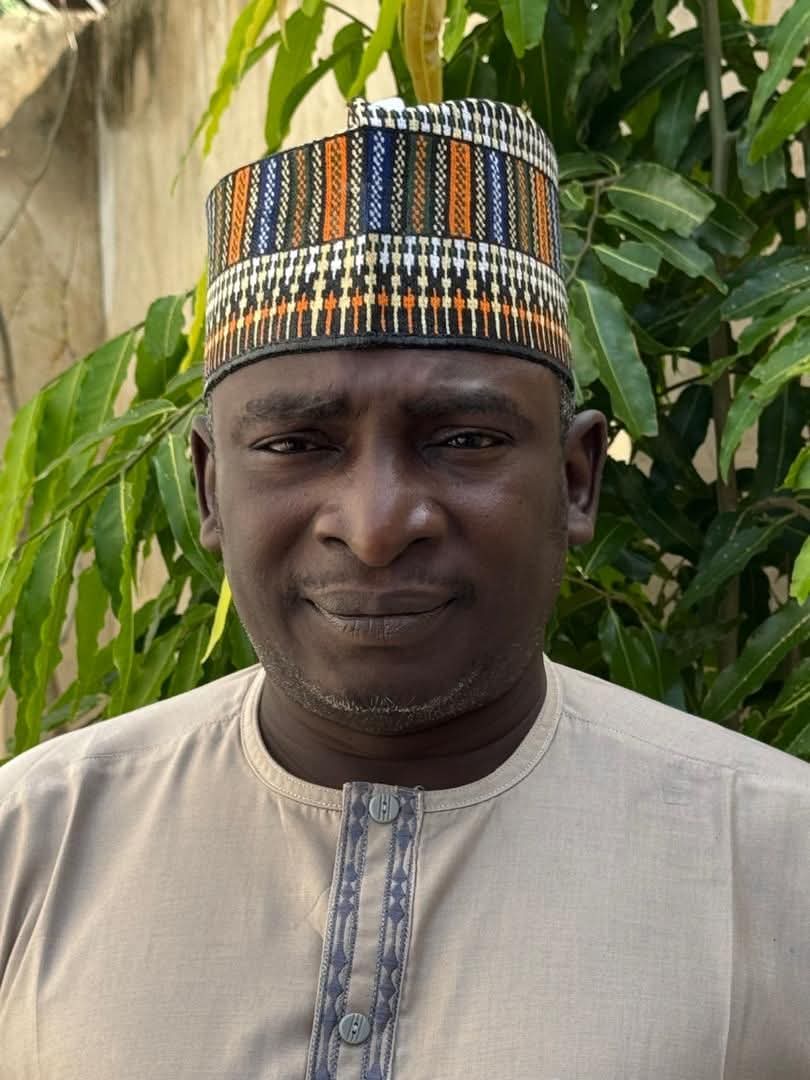
95% of Governor Abba Kabir Yusuf’s Promises Have Been Fulfilled — CPS Interview By Musa Diso, In Kano
Q: Can we meet you?
A: My name is Mustapha Muhammad, the Chief Press Secretary to the Kano State Governor, Alhaji Abba Kabir Yusuf. My background is in media and communication. I obtained my first degree in Mass Communication from Bayero University, Kano, and later earned a Master’s degree in Development Studies. I am currently pursuing a PhD in Communication, focusing my research on the safety of journalists.
I began my academic journey at Rumfa College and later attended CAS, where I obtained my IJMB qualification before proceeding to Bayero University, Kano.
Q: What are the responsibilities of the Chief Press Secretary and public relations office to the Governor?
A: The responsibility of my office is to project a positive image of His Excellency, the Executive Governor of Kano State, as well as the government as a whole. Whatever affects the Governor affects the government, and whatever affects the government also affects the Governor.
My primary responsibility is therefore to inform the public about the Governor’s activities, achievements, projects, programmes and policies. We also maintain a strong relationship with the media by providing access and responding to issues concerning the Governor and the government.
Q: How would you assess the leadership of Governor Abba Kabir Yusuf after three years in office?
A: Honestly, I believe Governor Abba Kabir Yusuf deserves a very good mark based on his performance in Kano State. Even if you are not a member of the APC, a right-thinking person can assess his administration and acknowledge that he has done well.
In the last three years and a few months, the administration has made significant interventions in healthcare, education, youth empowerment, agriculture, economic development, investment and housing, among other sectors.
Let me start with education. When the Governor came into office, he identified serious challenges, including shortages of teachers, poor infrastructure and inadequate learning materials. He consequently declared a state of emergency in the education sector.
Beyond that, the administration has continued to increase budgetary allocation to education. The allocation rose from 29.5 per cent in 2024 to 30.5 per cent in 2025 and 31.5 per cent in 2026. The 2026 state budget is about N1.47 trillion. This demonstrates the importance attached to education as one of the administration’s cardinal objectives.
In healthcare, the Governor also inherited significant gaps, including obsolete equipment and infrastructural decay in some hospitals. His administration has renovated about 340 primary healthcare centres across the 44 local government areas.
The government has also embarked on the renovation of general hospitals and constructed about 10 new general hospitals in various local government areas, while six others are in the pipeline. This is aimed at taking healthcare services closer to the people and reducing pressure on facilities within the metropolitan area.
The administration has also revitalised the revolving drug fund. We are told that about 90 per cent of drugs prescribed to patients are now available through the system. Modern medical equipment has also been provided to various hospitals.
Agriculture is another major area of focus. The Governor considers modern agricultural development one of the cardinal objectives of his administration. Farmers have been trained in improved farming practices to enable them to achieve higher yields from smaller parcels of land.
The government has also distributed improved and drought-tolerant seeds to farmers. Mechanisation has equally received attention, with the procurement of tractors, combine harvesters and other farming equipment. The state was divided into three zones to ensure that farmers across different areas benefit from the programme.
Youth empowerment is another area where we have recorded progress. Young people have been trained in various skills, including tailoring, poultry farming, journalism and other forms of entrepreneurship. There are also 26 entrepreneurial schools where young people are being trained.
All these initiatives are designed to empower young people to become self-reliant, create employment and contribute to the growth of the economy.
Looking at the administration’s blueprint, the records show that about 90 to 95 per cent of the promises have been fulfilled at the moment. Almost every area covered by the blueprint has received attention.
Q: What type of Kano State do you envision—the Kano State of your dream?
A: Our dream is to see the Governor re-elected so that this continuous development can proceed in the next four years. We are hopeful and praying that the people of Kano State will give him another mandate.
The objective is to ensure that people-oriented projects and policies continue and that the people continue to benefit, irrespective of whether they are APC members or supporters of the Governor.
If you love Kano and want to see the state progress, then you should support initiatives that improve the lives of the people. The Governor’s projects, policies and programmes have touched many aspects of life in the state.
Q: What is your message to the people of Kano State?
A: My message is that the people should obtain their Permanent Voter Cards because without a voter’s card, you cannot participate effectively in the electoral process or make the change you desire.
I urge the people to vote wisely and support a government that they believe has performed well and deserves another opportunity to continue its work.
There may still be areas where the Governor needs to do more, and those areas should be identified and strengthened. The important thing is that the people should participate actively in the democratic process.
We are praying that the people will cast their votes for the Governor and also support APC members in the House of Assembly. If the Governor and legislators can work together with a clear mandate, it will create a smoother working relationship and strengthen the implementation of government programmes for the benefit of the people.
Opinion
From World’s 9th Most Populous City to Perfect: As Gov Yusuf Revisits Kano Master Plan
By Abba Anwar
Most recent report from World Population Review 2026, reveals that the ancient city of Kano becomes world’s 9th most populous city, ranked alongside Beijing, Guangzhou, Shenzhen, and Chengdu in China, Karachi in Pakistan and Kinshasa in DR Congo.
With an estimated population of 17.5 million, Kano grew by over 536,000 within the last year, which means an annual growth rate of 3.16 percent. With this growth rate, it is projected that the population can reach over 20 million by 2030.
Before looking at the flipside of a densely populated space, it is good to understand that sustainable growth brings forth significant opportunities for economic growth and development, infrastructure expansion and investment opportunities.
Taking over from Lagos in numbers, the nation’s commercial capital, Lagos is estimated at 14.8 million in 2026. It therefore means that, Kano is in dire need of good managers in running the affairs of the state.
Alas! With the current administration of Governor Abba Kabir Yusuf, whose foresight and creativity in the art of governance, prompted his intention of undusting Kano Master Plan, even before the release of World Population Review 2026 Report, which places Kano as the world’s 9th most populous city, we are indeed moving from density to perfection.
As quoted by the Weekend Trust of Saturday 8th August, 2026, on the Report, it clearly mentioned that, “The report warns, however, that such expansion comes with enormous challenges in overstreched infrastructure, housing shortages, environmental risks, and governance pressures that could overwhelm local authorities if not managed carefully.”
Let’s look at the figures before advancing my arguments on how Governor Yusuf is putting effort to address the burden aspect of this population growth.
Quoting the data document, the Report, Trust newspaper reveals that, “The data shows that Kano’s population in 1991 was 3,005,222. By 2026, the figure had climbed to 17,510,247, representing more than a five-fold increase in just 35 years.
The report notes that Kano grew by over 536,000 people in the last year alone, an annual growth rate of 3.16 percent. If this pace continues, the population is projected to surpass 20 million by 2030, cementing its place among the world’s megacities.”
Contrasting, or rather comparing, with our national agency in Kano’s place, Trust puts it this way, that, “Similarly, the National Population Commission (NPC) data shows that Kano has consistently ranked among Nigeria’s most densely populated states. In 1991, the official census recorded 5,810,470 residents.
By 2006, the figure had surged to 9,401,288, representing a growth rate of nearly 62 percent in just 15 years. Subsequent estimates by the National Bureau of Statistics (NBS) and NPC placed the population in 13.4 million in 2016 and 15.46 million in 2022.
By early 2026, the NPC estimated 16,253,549 residents, with an annual growth rate of 3.27 percent.”
As indices to the upsurge of Kano’s population it is important, to first and foremost, understand that, the position isn’t accidental. It is indeed a fallout of many indices and factors. In the fertility angle, Nigeria remains one with the highest rate, with Northern Nigeria carrying the heavier weight and Kano in the frontline, among others.
There is consistent migration of people to Kano. Especially from North East and other states from North West, where insecurity takes a field day consistently. As observed that, “The city offers relative stability, economic opportunities, and cultural familiarity, making it a natural destination for displaced people. This influx has swelled Kano’s numbers dramatically in recent years.”
When Trust’s cover story of 8th August, 2026, with the caption.”How Kano emerged world’s 9th most populous city” examines that, “… Kano’s enduring role as a commercial hub continues to pull people in. Its sprawling markets, from Kurmi to Sabon Gari, remain centres of trade and industry.
The city’s textile heritage, agro-processing ventures, and growing service sector provide livelihoods for millions. Expansion into surrounding local governments has created a vast metropolitan area, absorbing rural communities into the city’s orbit and blurring the line between urban and rural life,” I exclaimed that Governor Yusuf is by the side making positive reactions against all odds.
To react positively to these emerging challenges, he decided to undust Kano Master Plan of over 30 years. The first metropolitan 20- year development plan, Master Plan, was in place between 1963 to 1983. While the second, which stopped at an effort stage, was in 2017 during the reign of the then Governor Abdullahi Umar Ganduje. But it failed and stopped at early stage.
Under the current administration, Governor Yusuf is putting forth Kano Master Plan 2025-2045, to squarely address all challenges embedded in the population upsurge. Hovering around economy, health, housing, education, businesses, environment and planning challenges.
Part of the effort in addressing housing challenges, the state government initiated Rural Model City Housing Project, covering 36 rural government areas. A pilot effort is already in place with N113.19 billion Mass Housing Project at Dawakin Kudu local government.
To decongest and make life easy and bearable within the state capital, there are 598 projects of the contract sum of N299.36 billion, spread across 8 metropolitan local government areas of Dala, Fagge, Gwale, Municipal, Kumbotso, Nassarawa, Tarauni and Ungogo. Included here are city expansion projects.
Responding to warning at all levels, global, national and local concerns, for each existing society on our planet, that unchecked population growth, especially at high speed, could erode the relative stability societies like Kano enjoy, which to a large extent, makes cities attractive to either migrants or businesses, Governor Yusuf, brings forth cross-cutting interventions.
These are in the areas of improved healthcare system, provision of employment opportunities, providing ease of doing business environment, fight against drug/substance abuse, aiding educational development for now and future challenges and sticking to a new Kano Master Plan- which is in the pipeline waiting for some finishing touches and implementation- among others.
So also in the area of infrastructural development, housing project is there, with modern-city project in place, construction and renovation of critical infrastructure, across board and roads construction. There is approximately N159.50 billion associated with some cross-cutting interventions like, solar-powered street-lighting projects, wireless solar traffic lights, traffic management and traffic-light systems, major road expansion projects, metropolitan road corridors, pedestrian bridges and inter-local government areas roads and bridges among others.
The fact that, “The city’s commerce strength is most visible in its market. The historic Kurmi market, established in the fifteenth century, remains an important trading centre. Kantin Kwari is widely recognized as one of the West Africa’s largest textile markets, while Dawanau is regarded as the largest grain market in sub-Saharan Africa. Sabon Gari market is another major commercial centre, offering a wide range of consumer goods,” His Excellency, the Governor is battling hard to see that insecurity finds no resting place in Kano.
Hence the establishment of Kano State Neighborhood Watch Corps for community – based security system to tackle banditry, thuggery, phone-snaching, drug abuse and provide the conventional security agencies with intelligence. With 2,000 personnel, 1,870 men and 130 women deployed across all the 44 LGAs. Equipped with 88 Hilux vehicles and 440 motorcycles.
The hope on how to cope with the rising population growth in Kano, is on the high side, so long as Governor Yusuf continues to be in power after 2027.
There are visible hands and effort aiding the Governor in coping with all challenges attached to the rising population. These are Commissioner for Public Procurement Projects Monitoring and Evaluation, Comrade Nura Ma’aji Sumaila, Commissioner for Land and Physical Planning, Abdujjabbar Muhammad Umar, Commissioner for Education, Ali Haruna Makoda, Commissioner for Environment and Supervising Commissioner Water Resources, Dr Dahiru Muhammad Hashim and Director General, Kano Geographic Information System (KANGIS), Dr Dalhatu Sani, among few others.
The onerous task of fight against drug and substance abuse, apart from the federal government government agencies, like Police, National Drugs Law Enforcement Agency (NDLEA), National Food Drugs Administration and Control (NAFDAC) etc, under the state control, is the newly established Kano State Special Task Force on Drug Abuse and Illicit Trafficking, under the Chairmanship of Barrister Muhiyi Magaji Rimingado.
On top of that, is His Excellency the Deputy Governor Murtala Sule Garo, who has consistently been by the side of the Governor as a reliable co-traveller in running the state affairs and a very loyal Deputy, as widely acknowledged by the Governor in many occasions.
Anwar writes from Kano
Thursday, 20th August, 2026

Masari: The Quite Architect With No Rivalry, Only Results for APC in 2027

95% of Governor Abba Kabir Yusuf’s Promises Have Been Fulfilled — CPS Interview By Musa Diso, In Kano

Singapore to Give Families Nearly ₦94m for Every Child Born as Birth Rate Record Drops

Imam Jingir Sells Out, Deploys Muslim-Muslim Chants Minutes After ₦600 Million APC Windfall

It’s a Lie: Nigeria Is Not Africa’s Wealthiest but One of Its Poorest — Donald Duke

How Kano Digitized Land Turns N50m to N750m Monthly

Borders, Visas and the Beautiful Game: How U.S. Immigration Policies Shaped Global Perceptions During the 2026 FIFA World Cup

President Tinubu Declines Meeting with S’African Envoy, Directs Delegation to Foreign Affairs Minister

ADC Youths Call on Atiku to Intervene Over Allegations of Injustice in Primary Elections, Demand Resignation of David Mark

I Gave Tijjani Gandu N10 Million to Support Musicians, Media but Funds Were Allegedly Not Distributed – Governor Yusuf’s Spokesperson
Masari: The Quite Architect With No Rivalry, Only Results for APC in 2027
95% of Governor Abba Kabir Yusuf’s Promises Have Been Fulfilled — CPS Interview By Musa Diso, In Kano
Singapore to Give Families Nearly ₦94m for Every Child Born as Birth Rate Record Drops
Imam Jingir Sells Out, Deploys Muslim-Muslim Chants Minutes After ₦600 Million APC Windfall
It’s a Lie: Nigeria Is Not Africa’s Wealthiest but One of Its Poorest — Donald Duke
How Kano Digitized Land Turns N50m to N750m Monthly
Borders, Visas and the Beautiful Game: How U.S. Immigration Policies Shaped Global Perceptions During the 2026 FIFA World Cup
President Tinubu Declines Meeting with S’African Envoy, Directs Delegation to Foreign Affairs Minister
ADC Youths Call on Atiku to Intervene Over Allegations of Injustice in Primary Elections, Demand Resignation of David Mark
I Gave Tijjani Gandu N10 Million to Support Musicians, Media but Funds Were Allegedly Not Distributed – Governor Yusuf’s Spokesperson
-

 Opinion5 years ago
On The Kano Flyovers And Public Perception
-

 Features5 years ago
How I Became A Multimillionaire In Nigeria – Hadiza Gabon
-

 Opinion6 years ago
Kano As future Headquarters Of Poverty In Nigeria
-

 History5 years ago
Sheikh Adam Abdullahi Al-Ilory (1917-1992):Nigeria’s Islamic Scholar Who Wrote Over 100 Books And Journals
-

 Opinion5 years ago
My First Encounter with Nasiru Gawuna, the Humble Deputy Governor
-

 History5 years ago
The History Of Borno State Governor Professor Babagana Umara Zulum
-

 History5 years ago
The Origin Of “Mammy Market” In Army Barracks (Mammy Ochefu)
-

 News4 years ago
Federal University Of Technology Babura To Commence Academic Activities September